
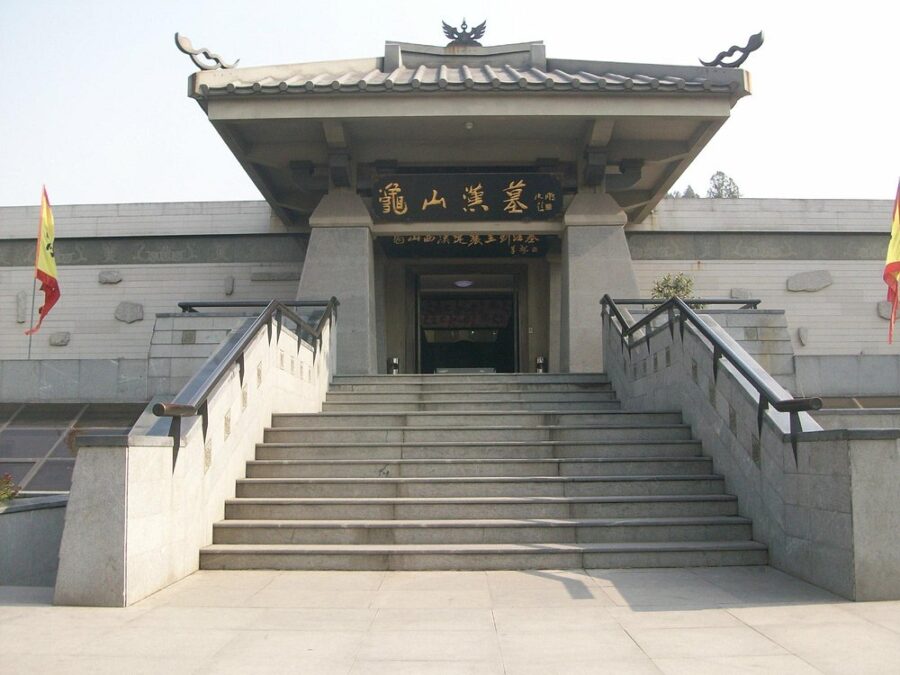
Guishan Han Dynasty Tombs (Southwest Gate)
About Guishan Han Dynasty Tombs (Southwest Gate)
History and Significance
If you’re fascinated by ancient history and want to step back into the golden era of China’s Han Dynasty, then the Guishan Han Dynasty Tombs (Southwest Gate) in Xuzhou is a spot you have to check out. This site is the resting place of Liu Zhu, the sixth Western Han King of Chu, and his queen. What blows me away is the sheer scale and ingenuity of this tomb complex, carved meticulously into the Guishan Mountain itself. Dating back over two thousand years, it’s a masterpiece of ancient engineering and cultural expression reflecting the Han Dynasty’s views on death and the afterlife. The tomb complex is often dubbed the "Oriental Pyramid" because of its grand underground palace-style layout with numerous chambers, corridors, and even an elaborate drainage system. The discovery of a silver turtle-shaped seal inside confirmed the identity of the tomb’s occupant, linking it deeply to the Han legacy. This site isn’t just a tomb; it’s a portal into the bold, rough, and exquisite craftsmanship and the fascinating burial customs of one of China's most influential dynasties.
Main Attractions and Activities
When you visit, the main draw is strolling through the tomb’s fifteen intricately connected chambers. You’ll find yourself wandering through ancient bedrooms, stables, kitchens, armories, and banquet halls—all underground and hand-carved. It’s mind-boggling how the tomb architects achieved almost perfect alignment with minimal error margins, which modern infrared measurements still marvel at. The mysterious stone seals that block certain corridors, especially the “hundredth stone” with its long, ancient inscription, add to the tomb's enigmatic aura. Besides the tomb, your ticket covers entry to the Dianshi Garden and the Xuzhou Imperial Edict Museum, where you can dive deeper into the era’s artifacts like incense burners, pottery figurines, and royal edicts. For a more immersive experience, many visitors recommend taking a guided tour to uncover the rich stories and historical insider details behind the tomb’s design and the people it honors.
Visitor Experience
Walking into the Guishan Han Tomb, you instantly feel the mix of awe and a touch of eeriness. The dimly lit corridors and intricately carved chambers immerse you in the atmosphere of a bygone era, almost like exploring an ancient underground maze. You might feel a strange sense of "yin qi" or ancient energy, as many locals describe it. Despite its vast underground expanse, the tomb retains a personal touch with artifacts and murals telling tales of ancient life, warfare, and mythology in cartoon-like detail. The connection between the two tombs—King and Queen—via an inner door is a fascinating insight into burial practices and royal companionship in death. Just a heads-up, though, the narrow passages and subdued lighting aren’t ideal for those prone to claustrophobia. And since the site is huge, expect to spend a few hours fully exploring it and soaking in the history.
Tips for Visitors
Here’s a little wisdom if you’re planning your trip: wear sturdy, comfortable shoes because the tomb and surrounding area invite a lot of wandering on uneven stone floors. Taking a guided tour is worth every penny because the history is rich, and some parts of the site are hard to grasp without context. Also, check the opening hours and plan your visit on a weekday to avoid crowds; weekends can get busy as this site is a favorite for both domestic and international tourists. Don’t forget to bring a flashlight or use your phone’s light to better appreciate the tomb’s details, though many areas are already well-lit, just dim. Lastly, if you’re not a fan of confined spaces or steps, be aware that accessibility can be a bit challenging here.
Accessibility and Facilities
The Guishan Han Dynasty Tomb is located at the western foot of Guishan Mountain, in Xuzhou’s Gulou District. Getting there is easiest by taxi or car, as public transport does not directly service the site. Once there, you’ll mostly be on foot, navigating ancient stone corridors and outdoor pathways in the scenic area. Facilities are functional but basic—expect clean but simple restrooms, minimal signage in English, and modest visitor amenities. If you have mobility issues, the uneven terrain and stairs inside the tomb could pose difficulties, so it’s best to plan accordingly. The surrounding area is a well-maintained park, so you can rest and refresh after your underground expedition.
Unique Features
What sets the Guishan Han Dynasty Tomb apart is the breathtaking integration of natural mountain terrain with elaborate human craftsmanship. This tomb isn’t just dug underground—it’s like an entire palace carved out of the mountain rock, reflecting an astounding feat of ancient engineering. The precision of the tomb’s central axis, with an error margin as tiny as 5 millimeters, is nothing short of remarkable even by today’s standards. The presence of a detailed drainage system shows innovative thinking in burial architecture. One of the quirkiest yet mysterious features is the "shadow mystery" —an unexplained shadow on a back wall that was not visible at the time of discovery but appeared later, adding an aura of unsolved enigma. The tomb’s dual burial design for the King and Queen, connected by a door, also gives a unique glimpse into ancient Chinese royal customs. Plus, the discovery of different-sized chariots and horses for the King and Queen points to the symbolism and status differences even in the afterlife.
Overall Impressions
Visiting the Guishan Han Dynasty Tombs feels like stepping into a secret world frozen in time but buzzing with ancient stories. It’s an extraordinary archaeological site that combines awe-inspiring craftsmanship with historical richness. The atmosphere—the dim lighting, the echoes in the stone hallways, the artwork, and artifacts—makes you feel deeply connected to a civilization that revered the afterlife as a continuation of life itself. It’s not a flashy tourist spot but a profound cultural treasure. If you’re really into history and archaeology, this site will leave a lasting impression, much like stepping inside an ancient epic. It feeds the imagination about the Han Dynasty’s power, artistry, and spiritual beliefs.
Pros and Cons
-
Pros:
-
Incredible and precise ancient engineering and architecture
-
Rich historical and cultural significance is linked to the Western Han Dynasty
-
An extensive underground palace with many chambers showcasing burial customs
-
Combined ticket for multiple attractions, including museums and gardens
-
Relatively less crowded compared to other famous ancient Chinese sites
-
-
Cons:
-
Limited facilities and accessibility for visitors with mobility issues
-
Confined, dimly lit spaces may be uncomfortable for claustrophobic visitors
-
Few English language signs and guides, so a local guide is advisable
-
Not a casual stroll—requires a good amount of walking and some physical effort
-
Less commercialized, so fewer amenities compared to major tourist hubs
-
If you’re someone who loves peeling back the layers of history, exploring off-the-beaten paths, and appreciating the blend of natural landscape and human achievement, Guishan Han Dynasty Tombs (Southwest Gate) will be a rewarding destination for your travel list. Plan your visit well, dive into the guided stories, and prepare to be amazed by the mysteries and marvels of ancient China.
Key Features
- History and Significance
- Main Attractions and Activities
- Visitor Experience
- Tips for Visitors
- Accessibility and Facilities
- Unique Features
More Details
Updated August 9, 2025
Table of Contents
- History and Significance
- Main Attractions and Activities
- Visitor Experience
- Tips for Visitors
- Accessibility and Facilities
- Unique Features
- Overall Impressions
- Pros and Cons
- Key Highlights
- Location
- Places to Stay Near Guishan Han Dynasty Tombs (Southwest Gate)
- Find and Book a Tour
- Explore More Travel Guides
- Nearby Places You Might Like
- Traveler Reviews for Guishan Han Dynasty Tombs (Southwest Gate)
- Share Your Experience
History and Significance
If you’re fascinated by ancient history and want to step back into the golden era of China’s Han Dynasty, then the Guishan Han Dynasty Tombs (Southwest Gate) in Xuzhou is a spot you have to check out. This site is the resting place of Liu Zhu, the sixth Western Han King of Chu, and his queen. What blows me away is the sheer scale and ingenuity of this tomb complex, carved meticulously into the Guishan Mountain itself. Dating back over two thousand years, it’s a masterpiece of ancient engineering and cultural expression reflecting the Han Dynasty’s views on death and the afterlife. The tomb complex is often dubbed the “Oriental Pyramid” because of its grand underground palace-style layout with numerous chambers, corridors, and even an elaborate drainage system. The discovery of a silver turtle-shaped seal inside confirmed the identity of the tomb’s occupant, linking it deeply to the Han legacy. This site isn’t just a tomb; it’s a portal into the bold, rough, and exquisite craftsmanship and the fascinating burial customs of one of China’s most influential dynasties.
Main Attractions and Activities
When you visit, the main draw is strolling through the tomb’s fifteen intricately connected chambers. You’ll find yourself wandering through ancient bedrooms, stables, kitchens, armories, and banquet halls—all underground and hand-carved. It’s mind-boggling how the tomb architects achieved almost perfect alignment with minimal error margins, which modern infrared measurements still marvel at. The mysterious stone seals that block certain corridors, especially the “hundredth stone” with its long, ancient inscription, add to the tomb’s enigmatic aura. Besides the tomb, your ticket covers entry to the Dianshi Garden and the Xuzhou Imperial Edict Museum, where you can dive deeper into the era’s artifacts like incense burners, pottery figurines, and royal edicts. For a more immersive experience, many visitors recommend taking a guided tour to uncover the rich stories and historical insider details behind the tomb’s design and the people it honors.
Visitor Experience
Walking into the Guishan Han Tomb, you instantly feel the mix of awe and a touch of eeriness. The dimly lit corridors and intricately carved chambers immerse you in the atmosphere of a bygone era, almost like exploring an ancient underground maze. You might feel a strange sense of “yin qi” or ancient energy, as many locals describe it. Despite its vast underground expanse, the tomb retains a personal touch with artifacts and murals telling tales of ancient life, warfare, and mythology in cartoon-like detail. The connection between the two tombs—King and Queen—via an inner door is a fascinating insight into burial practices and royal companionship in death. Just a heads-up, though, the narrow passages and subdued lighting aren’t ideal for those prone to claustrophobia. And since the site is huge, expect to spend a few hours fully exploring it and soaking in the history.
Tips for Visitors
Here’s a little wisdom if you’re planning your trip: wear sturdy, comfortable shoes because the tomb and surrounding area invite a lot of wandering on uneven stone floors. Taking a guided tour is worth every penny because the history is rich, and some parts of the site are hard to grasp without context. Also, check the opening hours and plan your visit on a weekday to avoid crowds; weekends can get busy as this site is a favorite for both domestic and international tourists. Don’t forget to bring a flashlight or use your phone’s light to better appreciate the tomb’s details, though many areas are already well-lit, just dim. Lastly, if you’re not a fan of confined spaces or steps, be aware that accessibility can be a bit challenging here.
Accessibility and Facilities
The Guishan Han Dynasty Tomb is located at the western foot of Guishan Mountain, in Xuzhou’s Gulou District. Getting there is easiest by taxi or car, as public transport does not directly service the site. Once there, you’ll mostly be on foot, navigating ancient stone corridors and outdoor pathways in the scenic area. Facilities are functional but basic—expect clean but simple restrooms, minimal signage in English, and modest visitor amenities. If you have mobility issues, the uneven terrain and stairs inside the tomb could pose difficulties, so it’s best to plan accordingly. The surrounding area is a well-maintained park, so you can rest and refresh after your underground expedition.
Unique Features
What sets the Guishan Han Dynasty Tomb apart is the breathtaking integration of natural mountain terrain with elaborate human craftsmanship. This tomb isn’t just dug underground—it’s like an entire palace carved out of the mountain rock, reflecting an astounding feat of ancient engineering. The precision of the tomb’s central axis, with an error margin as tiny as 5 millimeters, is nothing short of remarkable even by today’s standards. The presence of a detailed drainage system shows innovative thinking in burial architecture. One of the quirkiest yet mysterious features is the “shadow mystery” —an unexplained shadow on a back wall that was not visible at the time of discovery but appeared later, adding an aura of unsolved enigma. The tomb’s dual burial design for the King and Queen, connected by a door, also gives a unique glimpse into ancient Chinese royal customs. Plus, the discovery of different-sized chariots and horses for the King and Queen points to the symbolism and status differences even in the afterlife.
Overall Impressions
Visiting the Guishan Han Dynasty Tombs feels like stepping into a secret world frozen in time but buzzing with ancient stories. It’s an extraordinary archaeological site that combines awe-inspiring craftsmanship with historical richness. The atmosphere—the dim lighting, the echoes in the stone hallways, the artwork, and artifacts—makes you feel deeply connected to a civilization that revered the afterlife as a continuation of life itself. It’s not a flashy tourist spot but a profound cultural treasure. If you’re really into history and archaeology, this site will leave a lasting impression, much like stepping inside an ancient epic. It feeds the imagination about the Han Dynasty’s power, artistry, and spiritual beliefs.
Pros and Cons
-
Pros:
-
Incredible and precise ancient engineering and architecture
-
Rich historical and cultural significance is linked to the Western Han Dynasty
-
An extensive underground palace with many chambers showcasing burial customs
-
Combined ticket for multiple attractions, including museums and gardens
-
Relatively less crowded compared to other famous ancient Chinese sites
-
-
Cons:
-
Limited facilities and accessibility for visitors with mobility issues
-
Confined, dimly lit spaces may be uncomfortable for claustrophobic visitors
-
Few English language signs and guides, so a local guide is advisable
-
Not a casual stroll—requires a good amount of walking and some physical effort
-
Less commercialized, so fewer amenities compared to major tourist hubs
-
If you’re someone who loves peeling back the layers of history, exploring off-the-beaten paths, and appreciating the blend of natural landscape and human achievement, Guishan Han Dynasty Tombs (Southwest Gate) will be a rewarding destination for your travel list. Plan your visit well, dive into the guided stories, and prepare to be amazed by the mysteries and marvels of ancient China.
Key Highlights
- History and Significance
- Main Attractions and Activities
- Visitor Experience
- Tips for Visitors
- Accessibility and Facilities
- Unique Features
Location
Places to Stay Near Guishan Han Dynasty Tombs (Southwest Gate)
Find and Book a Tour
Explore More Travel Guides
No reviews found! Be the first to review!
Traveler Reviews for Guishan Han Dynasty Tombs (Southwest Gate)
There are no reviews yet. Be the first one to write one.
Have you visited Guishan Han Dynasty Tombs (Southwest Gate)? Help other travelers by sharing your review.
You Might Also Like
Jining No.1 Folk Collection Antiquities Musuem
Five Dragon Pool

Shimen Mountain Forest Park
Find Accommodations Nearby
Recommended Tours & Activities
Visitor Reviews
There are no reviews yet. Be the first one to write one.
Share Your Experience
Have you visited Guishan Han Dynasty Tombs (Southwest Gate)? Help other travelers by leaving a review.