
Great Synagogue
About Great Synagogue
Key Features
More Details
Updated April 15, 2024
37 Obiective Turistice în Iași
## Great Synagogue (Sinagoga Mare) in Iași: what to know before you go
The Great Synagogue of Iași sits on Strada Sinagogilor (Synagogue Street) in the historic Târgu Cucului area—an address that still signals how central Jewish life once was to this part of the city. The site is widely cited as the oldest surviving synagogue in Romania, with major rebuilds and restorations across centuries.
Quick facts (from your dataset + corroborating sources where available):
– Name: Great Synagogue (Sinagoga Mare din Iași)
– Address: Strada Sinagogilor (commonly listed as no. 1 or no. 7 depending on source/listing; your record uses 7)
– City: Iași, Romania
– Coordinates: 47.1656169, 27.5920095 (matches your record; Wikipedia lists essentially the same point)
– Rating (your data): 4.3
– Type (your data): Tourist attraction
## Visiting in 2026: what’s reliably true (and what may be outdated)
Several travel references note restoration/renovation periods and suggest that access can be limited or require coordination. Planet
What I can say confidently:
– The synagogue has undergone multiple major restoration phases, including a long project frequently described as spanning 2006–2018 (with earlier repairs after events like the 1977 earthquake).
– Some visitor-facing sources still describe it as being in a restoration phase or not consistently open.
Practical move: treat opening as conditional (not a walk-in guarantee). If you want the most dependable alternative, Iași’s Jewish Community Centre is described as having a museum with stated visiting hours (and an ID requirement).
## Why this building matters in Iași’s story
In the 1930s, Iași had 100+ Jewish houses of prayer/synagogues, with only a small number remaining open today. That fact changes how you experience this place: the Great Synagogue isn’t just “an attraction,” it’s a surviving anchor of a neighborhood and a community that was once large, complex, and institutionally dense.
One of the most useful details for visitors is that the synagogue’s history is not a single “built on X date” narrative. Sources describe:
– An earlier Jewish prayer place in the area dating back to at least the 16th century, with the synagogue erected in 1671 after a fire destroyed a prior structure.
– Rebuilds/major renovations after damage in 1761, 1822, and the 1860s (often tied to fires and structural deterioration), plus later restoration work in the modern era.
## Architecture details you’ll notice fast (and what they mean)
Even if you spend only 15 minutes here, a few design choices stand out—and they’re not random.
### 1) The “downward” entrance
A widely repeated local explanation is that the synagogue was built partly below ground level as a workaround for historic restrictions on synagogue height relative to prominent Christian buildings, while still creating a substantial interior.
Visitor tip: if access is permitted, watch your footing—steps down at the entrance are part of the experience.
### 2) A restrained exterior vs a richer interior
Descriptions emphasize a contrast between a sober exterior and a more ornate interior, with chandeliers and the focal liturgical furnishings drawing your eye.
### 3) The dome and later structural changes
The building is described as having a prominent dome (sources cite a dome diameter around 10m or an interior height near 9.8m/32ft; one source notes a dome added in the early 20th century).
Why it matters: you’re looking at a structure that evolved—its “final form” is the product of repeated rebuilding, not a single architectural moment.
### 4) The Aron Kodesh (Torah Ark) as a conservation story
One of the most concrete, well-documented recent chapters is the conservation of the ornate Aron Kodesh (Torah Ark), described as a 19th-century carved and painted structure in extremely fragile condition. A detailed report describes dismantling, treatment against biological infestation, and careful documentation and reinstallation planning as part of the restoration effort. Heritage Europe
If you like heritage travel that goes beyond “pretty building,” this is your hook: the Great Synagogue is also a case study in how endangered interior art survives (or doesn’t) when buildings sit mid-restoration for years.
## Visiting respectfully (and with fewer surprises)
This is still a religious site and community landmark, even when functioning as a heritage stop.
– Dress: aim for modest, non-provocative attire. (No special claims here—this is a general best practice for active religious sites.)
– Photography: assume restrictions may apply, especially around sacred furnishings. Ask first when possible.
– Noise & behavior: keep voices low, avoid phone calls inside.
– Inclusivity note: Jewish communities are not monolithic; customs vary by community and context. If you’re unsure about what’s appropriate on the day, defer to posted guidance or staff direction.
## Add depth: pair it with nearby Jewish heritage stops
If the Great Synagogue isn’t accessible when you arrive, your trip still isn’t wasted.
### Jewish Community Centre museum option
Iași travel resources describe a Jewish Community Centre with a museum exhibiting Judaica and community materials, and they list visiting hours plus an ID requirement.
### Pogrom memorial context (essential, but emotionally heavy)
A local account notes an obelisk memorial placed in 1976 in the park in front of the Grand Synagogue commemorating victims of the Iași Pogrom, and mentions the square being named “Romanian-Israeli Friendship Square” in 2015.
If you include this in your visit, plan for emotional bandwidth—this isn’t “bonus sightseeing,” it’s confronting a historical rupture.
## A tight, practical itinerary (60–120 minutes)
If access is possible:
1. Arrive with context: read the exterior plaques/signage first, then go inside (it helps you “see” the layers).
2. Scan for structural clues: steps down, thickness of walls, window shapes, the dome geometry.
3. Focus on one detail: the Ark story (conservation), or the dome, or the women’s gallery/museum references (if open).
4. Step outside to the memorial area (if you’re doing the full historical arc).
If access is not possible:
– Swap the interior portion for the Jewish Community Centre museum stop.
## Data freshness flags (important)
– A key Iași tourism page discussing the synagogue and its “final phase of restoration” is dated 2017, so its “visiting hours” language may be stale.
– Multiple sources still describe closure/renovation at the time of their research, so do not assume daily public opening without confirming locally. Planet
If you want, paste your existing RealJourneyTravels.com Iași-related URLs (or your preferred slugs), and I’ll weave the two internal links directly into the body in a way that reads natural and conversion-friendly.
Table of Contents
Key Highlights
Great Synagogue
Location
Places to Stay Near Great Synagogue
Find and Book a Tour
Explore More Travel Guides
No reviews found! Be the first to review!
Traveler Reviews for Great Synagogue
There are no reviews yet. Be the first one to write one.
Have you visited Great Synagogue? Help other travelers by sharing your review.
You Might Also Like
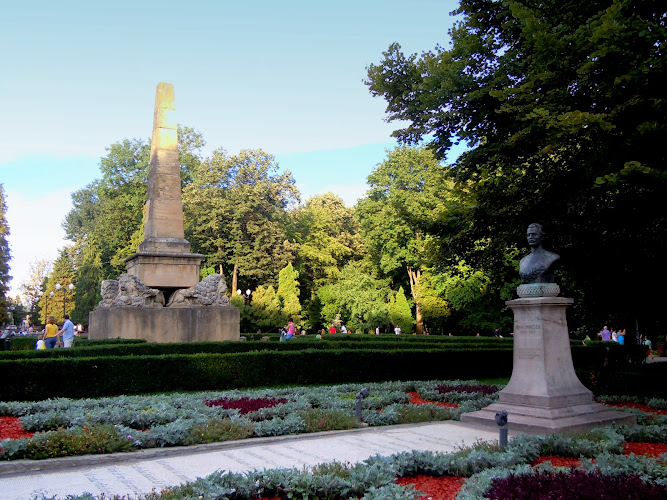
Copou Park
Lookout Point over Iasi
Golia Monastery
Find Accommodations Nearby
Recommended Tours & Activities
Visitor Reviews
There are no reviews yet. Be the first one to write one.
Share Your Experience
Have you visited Great Synagogue? Help other travelers by leaving a review.