
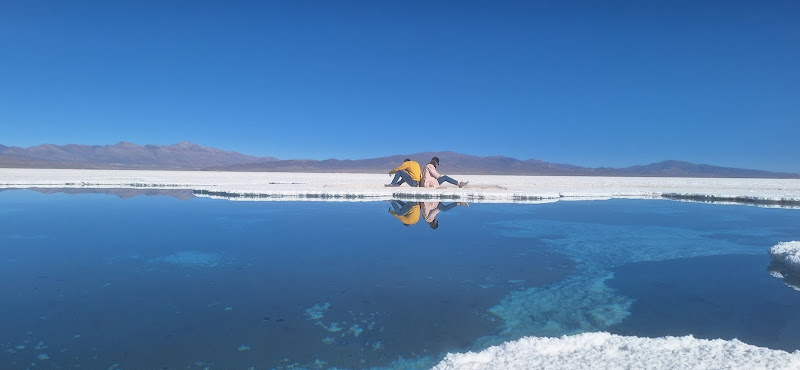
Great Salt Flat
About Great Salt Flat
Description
The Great Salt Flat, or Salinas Grandes, is one of those rare places that makes you stop mid-sentence and just stare. Stretching endlessly across the high plains of Argentina, it’s a landscape that feels almost otherworldly—like walking across the surface of the moon, but brighter. The first time I visited, I remember squinting against the intense glare bouncing off the salt crust, wondering how something so stark could feel so alive. The ground crunches softly underfoot, and the horizon shimmers in a way that tricks your eyes. It’s surreal and strangely calming all at once.
This massive salt flat covers thousands of hectares between the provinces of Jujuy and Salta. It’s not just a tourist stop—it’s a living, breathing piece of Argentina’s natural and cultural identity. Local communities have worked these flats for generations, harvesting salt and guiding curious travelers across the dazzling expanse. And while it’s undeniably beautiful, it’s also humbling. You feel small here, in the best possible way.
Visitors often describe the Great Salt Flat as a photographer’s dream, and that’s no exaggeration. The reflections after a light rain turn the surface into a perfect mirror, blending sky and earth into one endless panorama. But what I personally love most isn’t the photos (though they’re incredible); it’s the silence. There’s a kind of peace here that’s hard to find anywhere else—a stillness that makes you want to linger just a little longer.
Key Features
- Expansive salt crust that stretches for miles, creating a mesmerizing white landscape perfect for photography.
- Accessible facilities including wheelchair-friendly entrances, parking, and seating areas, making it inclusive for all travelers.
- Family-friendly environment with discounts for children and kid-oriented activities that keep younger visitors engaged.
- Restrooms and on-site services available for convenience during your visit.
- LGBTQ+ friendly and designated as a transgender-safe space, ensuring a welcoming atmosphere for everyone.
- Free on-site parking and easy payment options including debit, credit, and NFC mobile payments.
- Local artisans and guides offering handmade crafts, salt sculptures, and fascinating insights into the region’s heritage.
What stands out most about this place is how it manages to balance accessibility with authenticity. Even with the growing number of visitors, it hasn’t lost its raw charm. You’ll still find local families sharing stories, kids running between the salt mounds, and that endless horizon that seems to stretch right into your imagination.
Best Time to Visit
Timing your visit can completely change your experience of the Great Salt Flat. The dry season, typically from May to November, offers that classic cracked salt pattern—those geometric shapes that look like nature’s own mosaic. It’s ideal for walking, driving, and taking those iconic perspective photos (you know, the ones where someone looks like they’re standing in your palm).
Then there’s the wet season, roughly December through March, when rainwater transforms the flat into a giant mirror. It’s absolutely magical, though a bit unpredictable. Roads can get muddy, and reflections depend on recent rainfall. I once arrived just after a storm, and the entire landscape looked like a dream—sky above, sky below, and me floating somewhere in between. If you’re into photography or just want that once-in-a-lifetime view, this is the moment to come.
Early mornings and late afternoons are the best times to avoid the harsh midday sun and capture the soft glow of sunrise or sunset. Bring sunglasses—seriously, the glare can be intense—and sunscreen, because even when it’s cool, that high-altitude sun doesn’t play around.
How to Get There
Reaching the Great Salt Flat is part of the adventure. Most travelers start their journey from the nearby towns of Purmamarca or Salta. The drive winds through the dramatic landscapes of the Andes, climbing high into the altiplano before revealing that sudden, jaw-dropping expanse of white. It’s about a two-hour drive from Purmamarca, but honestly, you’ll want to stop along the way. There are viewpoints where the mountains shift in color—from deep reds to soft purples—and you can feel the altitude rising with every turn.
If you’re not up for driving, guided tours run regularly from major tourist hubs. They usually include stops at scenic lookouts and local markets, which is a nice way to see more of the region. And for the more adventurous souls, renting a car gives you the freedom to explore at your own pace. Just make sure your vehicle can handle the altitude and the occasional rough patch of road.
Public transportation options are limited, so planning ahead is key. And while the journey might sound long, it’s one of those drives that feels like part of the experience rather than just a way to get somewhere. The anticipation builds as the landscape flattens and brightens until suddenly, there it is—the Great Salt Flat, gleaming under the sun like a giant sheet of glass.
Tips for Visiting
Visiting the Great Salt Flat isn’t complicated, but a few insider tips can make your trip a lot smoother—and more memorable. First off, bring layers. The weather can swing from hot to chilly in a matter of hours. I learned that the hard way when I showed up in a T-shirt and ended up borrowing a jacket from a kind local vendor who probably thought I was a bit clueless (and she wasn’t wrong).
Hydration is key. You’re at high altitude, and even if you don’t feel thirsty, your body’s working harder than usual. Drink plenty of water and take it slow if you start feeling lightheaded. If you’re prone to altitude sickness, consider spending a night or two in a nearby town before heading up—it helps your body adjust.
Don’t forget your sunglasses and sunscreen. The reflection off the salt can be blinding, and sunburn happens faster than you’d expect. A hat helps too, especially during midday hours. And if you’re planning to take photos (which, let’s be honest, you definitely are), bring props—small toys, hats, even a chair. The flat, featureless landscape makes for hilarious and creative optical illusions.
Be respectful of the environment. It might look tough, but the salt crust is delicate in places. Stick to designated areas and follow local guidance. The people who live and work here take pride in preserving it, and it’s only fair that visitors do the same.
Lastly, talk to the locals. They’ve got stories that don’t show up in any guidebook—like how the salt shifts color through the seasons, or how the stars at night seem close enough to touch. I once spent an hour chatting with a guide who told me about growing up nearby, helping his father harvest salt by hand. His stories added a layer of meaning to the landscape that no photo could capture.
So, whether you come for the photos, the peace, or just the sheer wonder of standing on a natural masterpiece, the Great Salt Flat leaves a mark. It’s the kind of place that stays with you long after you’ve brushed the last grains of salt from your shoes. And honestly, that’s the best kind of travel memory there is.
Key Features
- Expansive salt crust that stretches for miles, creating a mesmerizing white landscape perfect for photography.
- Accessible facilities including wheelchair-friendly entrances, parking, and seating areas, making it inclusive for all travelers.
- Family-friendly environment with discounts for children and kid-oriented activities that keep younger visitors engaged.
- Restrooms and on-site services available for convenience during your visit.
- LGBTQ+ friendly and designated as a transgender-safe space, ensuring a welcoming atmosphere for everyone.
- Free on-site parking and easy payment options including debit, credit, and NFC mobile payments.
- Local artisans and guides offering handmade crafts, salt sculptures, and fascinating insights into the region’s heritage.
More Details
Updated December 1, 2025
Table of Contents
Description
The Great Salt Flat, or Salinas Grandes, is one of those rare places that makes you stop mid-sentence and just stare. Stretching endlessly across the high plains of Argentina, it’s a landscape that feels almost otherworldly—like walking across the surface of the moon, but brighter. The first time I visited, I remember squinting against the intense glare bouncing off the salt crust, wondering how something so stark could feel so alive. The ground crunches softly underfoot, and the horizon shimmers in a way that tricks your eyes. It’s surreal and strangely calming all at once.
This massive salt flat covers thousands of hectares between the provinces of Jujuy and Salta. It’s not just a tourist stop—it’s a living, breathing piece of Argentina’s natural and cultural identity. Local communities have worked these flats for generations, harvesting salt and guiding curious travelers across the dazzling expanse. And while it’s undeniably beautiful, it’s also humbling. You feel small here, in the best possible way.
Visitors often describe the Great Salt Flat as a photographer’s dream, and that’s no exaggeration. The reflections after a light rain turn the surface into a perfect mirror, blending sky and earth into one endless panorama. But what I personally love most isn’t the photos (though they’re incredible); it’s the silence. There’s a kind of peace here that’s hard to find anywhere else—a stillness that makes you want to linger just a little longer.
Key Features
- Expansive salt crust that stretches for miles, creating a mesmerizing white landscape perfect for photography.
- Accessible facilities including wheelchair-friendly entrances, parking, and seating areas, making it inclusive for all travelers.
- Family-friendly environment with discounts for children and kid-oriented activities that keep younger visitors engaged.
- Restrooms and on-site services available for convenience during your visit.
- LGBTQ+ friendly and designated as a transgender-safe space, ensuring a welcoming atmosphere for everyone.
- Free on-site parking and easy payment options including debit, credit, and NFC mobile payments.
- Local artisans and guides offering handmade crafts, salt sculptures, and fascinating insights into the region’s heritage.
What stands out most about this place is how it manages to balance accessibility with authenticity. Even with the growing number of visitors, it hasn’t lost its raw charm. You’ll still find local families sharing stories, kids running between the salt mounds, and that endless horizon that seems to stretch right into your imagination.
Best Time to Visit
Timing your visit can completely change your experience of the Great Salt Flat. The dry season, typically from May to November, offers that classic cracked salt pattern—those geometric shapes that look like nature’s own mosaic. It’s ideal for walking, driving, and taking those iconic perspective photos (you know, the ones where someone looks like they’re standing in your palm).
Then there’s the wet season, roughly December through March, when rainwater transforms the flat into a giant mirror. It’s absolutely magical, though a bit unpredictable. Roads can get muddy, and reflections depend on recent rainfall. I once arrived just after a storm, and the entire landscape looked like a dream—sky above, sky below, and me floating somewhere in between. If you’re into photography or just want that once-in-a-lifetime view, this is the moment to come.
Early mornings and late afternoons are the best times to avoid the harsh midday sun and capture the soft glow of sunrise or sunset. Bring sunglasses—seriously, the glare can be intense—and sunscreen, because even when it’s cool, that high-altitude sun doesn’t play around.
How to Get There
Reaching the Great Salt Flat is part of the adventure. Most travelers start their journey from the nearby towns of Purmamarca or Salta. The drive winds through the dramatic landscapes of the Andes, climbing high into the altiplano before revealing that sudden, jaw-dropping expanse of white. It’s about a two-hour drive from Purmamarca, but honestly, you’ll want to stop along the way. There are viewpoints where the mountains shift in color—from deep reds to soft purples—and you can feel the altitude rising with every turn.
If you’re not up for driving, guided tours run regularly from major tourist hubs. They usually include stops at scenic lookouts and local markets, which is a nice way to see more of the region. And for the more adventurous souls, renting a car gives you the freedom to explore at your own pace. Just make sure your vehicle can handle the altitude and the occasional rough patch of road.
Public transportation options are limited, so planning ahead is key. And while the journey might sound long, it’s one of those drives that feels like part of the experience rather than just a way to get somewhere. The anticipation builds as the landscape flattens and brightens until suddenly, there it is—the Great Salt Flat, gleaming under the sun like a giant sheet of glass.
Tips for Visiting
Visiting the Great Salt Flat isn’t complicated, but a few insider tips can make your trip a lot smoother—and more memorable. First off, bring layers. The weather can swing from hot to chilly in a matter of hours. I learned that the hard way when I showed up in a T-shirt and ended up borrowing a jacket from a kind local vendor who probably thought I was a bit clueless (and she wasn’t wrong).
Hydration is key. You’re at high altitude, and even if you don’t feel thirsty, your body’s working harder than usual. Drink plenty of water and take it slow if you start feeling lightheaded. If you’re prone to altitude sickness, consider spending a night or two in a nearby town before heading up—it helps your body adjust.
Don’t forget your sunglasses and sunscreen. The reflection off the salt can be blinding, and sunburn happens faster than you’d expect. A hat helps too, especially during midday hours. And if you’re planning to take photos (which, let’s be honest, you definitely are), bring props—small toys, hats, even a chair. The flat, featureless landscape makes for hilarious and creative optical illusions.
Be respectful of the environment. It might look tough, but the salt crust is delicate in places. Stick to designated areas and follow local guidance. The people who live and work here take pride in preserving it, and it’s only fair that visitors do the same.
Lastly, talk to the locals. They’ve got stories that don’t show up in any guidebook—like how the salt shifts color through the seasons, or how the stars at night seem close enough to touch. I once spent an hour chatting with a guide who told me about growing up nearby, helping his father harvest salt by hand. His stories added a layer of meaning to the landscape that no photo could capture.
So, whether you come for the photos, the peace, or just the sheer wonder of standing on a natural masterpiece, the Great Salt Flat leaves a mark. It’s the kind of place that stays with you long after you’ve brushed the last grains of salt from your shoes. And honestly, that’s the best kind of travel memory there is.
Key Highlights
- Expansive salt crust that stretches for miles, creating a mesmerizing white landscape perfect for photography.
- Accessible facilities including wheelchair-friendly entrances, parking, and seating areas, making it inclusive for all travelers.
- Family-friendly environment with discounts for children and kid-oriented activities that keep younger visitors engaged.
- Restrooms and on-site services available for convenience during your visit.
- LGBTQ+ friendly and designated as a transgender-safe space, ensuring a welcoming atmosphere for everyone.
- Free on-site parking and easy payment options including debit, credit, and NFC mobile payments.
- Local artisans and guides offering handmade crafts, salt sculptures, and fascinating insights into the region’s heritage.
Location
Places to Stay Near Great Salt Flat
Find and Book a Tour
Explore More Travel Guides
No reviews found! Be the first to review!
Traveler Reviews for Great Salt Flat
There are no reviews yet. Be the first one to write one.
Have you visited Great Salt Flat? Help other travelers by sharing your review.
Find Accommodations Nearby
Recommended Tours & Activities
Visitor Reviews
There are no reviews yet. Be the first one to write one.
Share Your Experience
Have you visited Great Salt Flat? Help other travelers by leaving a review.