
Gonbad Kavous University
About Gonbad Kavous University
Key Features
More Details
Updated April 15, 2024
Gonbad Kavous University
## Gonbad Kavous University (GKU): what it is, where it sits, and what a visitor can realistically expect
If you’re trying to place Gonbad Kavous University on the map—either as a prospective student, an academic visitor, or a traveler curious about civic life in Gonbad-e Kavus (Golestan Province)—the basics are refreshingly clear: it’s a public, coeducational university recognized by Iran’s Ministry of Science, Research and Technology (MSRT), and it operates across five faculties (including branches in Minoodasht and Azadshahr).
Below is what’s verifiable from primary/authoritative sources, plus a few “check-before-you-publish” flags where sources disagree or may be dated.
—
## Quick facts (from your listing + university contact page)
– Name: Gonbad Kavous University (GKU)
– City: Gonbad-e Kavus, Golestan Province, Iran
– Your coordinates (for map embeds): 37.2628327, 55.1862267 (as provided)
– Your address string: Golestan Province, Gonbad-e Kavus, Asbdavani Rd, 757P+4FQ (as provided)
– Rating / type (your data): 4.3, University (as provided)
University postal/contact address (published by the university):
– Basirat Blvd, Shahid Fallshi Str, Gonbad Kavous, P.O. 163
– Phone: (+98 17) 33266802
– Fax: (+98 17) 33264060
– Postal code: 4971799151
—
## A short history (and why it matters to visitors)
GKU’s own history page frames the institution as growing out of a Gonbad Kavous Agricultural School that began activity in 1983 as a campus connected to Mazandaran University, initially offering two associate-degree fields of study.
From there, the official timeline highlights a few turning points:
– 1983–1996: expansion in fields of study and an upgrade to a faculty connected to Gorgan University of Agricultural Sciences and Natural Resources.
– 2007: described as a shift to an independent higher education institution, starting with 3 faculties and 25 fields of study, across associate, bachelor’s, and master’s levels.
– 2013 (official claim): “from the beginning of May 2013,” the college was promoted to Gonbad Kavous University.
– Branch expansion: a Technical Engineering College in Minoodasht (2009) and a Humanities faculty in Azadshahr (2011) are specifically mentioned on the history page.
Why this matters: GKU isn’t just “a campus.” It’s positioned (in its own institutional narrative) as a regional hub for eastern Golestan, and its faculty structure reflects that multi-site footprint.
—
## Faculties and academic shape (what you can say with confidence)
On the university’s official site navigation (and echoed on its English history page), GKU lists five faculties:
– Faculty of Agriculture and Natural Resources
– Faculty of Basic Sciences & Engineering
– Faculty of Humanities & Physical Education
– Minoodasht Engineering Faculty
– Azadshahr Humanities Faculty
The same official page also describes the university as offering degree programs up to PhD level (bachelor’s, master’s, PhD) and calls out research activity in areas such as watershed management, horticulture, desert management, rangelands management, and agriculture.
—
## Campus facilities you can mention without guessing
GKU explicitly lists (in its own English-language history page) that it provides facilities and services including:
– Library
– Laboratories (described as “well-equipped and advanced”)
– On-campus dormitories
– Sports courts and artificial grass fields
If you’re writing this for travelers rather than applicants, this matters because it tells you the campus is built for resident student life, not purely commuter instruction.
—
## What’s nearby that’s genuinely worth the detour: Gonbad-e Qābus (UNESCO)
Even if you don’t plan to “visit a university,” Gonbad-e Kavus is internationally known for the Gonbad-e Qābus monument (also spelled Qabus/Qābus), a UNESCO World Heritage Site.
UNESCO’s official listing describes it as a 53 m high tomb tower built in AD 1006 for Qābus Ibn Voshmgir, near the ruins of ancient Jorjan. World Heritage Centre
This is a clean, factual way to connect a university stop to a destination-level cultural site—without drifting into filler.
—
## Two internal link placements (safe, editor-friendly)
Because I can’t “know” your site’s existing URLs from this prompt, these are written as conditional link opportunities (drop them in only if the destination page exists):
1. If you have a Gonbad-e Qābus Tower guide: link the first mention in the UNESCO section to that guide. (Anchor example: “Gonbad-e Qābus (UNESCO World Heritage Site)”). World Heritage Centre
2. If you have a Gonbad-e Kavus city guide or Golestan Province hub: link the first mention of “Gonbad-e Kavus” near the top to your broader destination page.
—
## Data quality flags (important if you’re serious about factual accuracy)
These are the spots where you should verify before publishing, because sources either conflict or may be dated:
– Promotion year discrepancy:
– GKU’s official history page says promotion to university status happened May 2013.
– Wikipedia summarizes a promotion announcement in May 2011.
If you want to be bulletproof, cite the official page and avoid repeating the Wikipedia year.
– Student counts / program counts vary by source:
– Official page states “more than 3600 students” and “68 fields of study,” plus “136 full-time faculty members.”
– Other sources quote different program totals (e.g., 74 fields).
Best practice: keep the phrasing exactly as the official source, and don’t mix numbers.
– City stats (population/rainfall) on the university history page may age fast:
The official English page states a city population figure and annual rainfall estimate.
Those are plausible, but they’re the kind of figures that drift; treat them as “as stated by the university page,” not as timeless facts.
—
## Practical takeaway
With the information that’s actually verifiable, you can confidently frame Gonbad Kavous University as:
– a public MSRT-recognized university in Gonbad-e Kavus,
– operating across five faculties (including Minoodasht and Azadshahr),
– offering programs up through PhD,
– with tangible campus infrastructure (library, labs, dorms, sports facilities),
– and located in a city anchored by a UNESCO World Heritage landmark (Gonbad-e Qābus, AD 1006, 53 m). World Heritage Centre
If you want, I can also generate the WordPress-ready schema (JSON-LD) for a “Place + EducationalOrganization” combo using your coordinates/address—staying strictly within what’s confirmed here.
Table of Contents
Key Highlights
Gonbad Kavous University
Location
Places to Stay Near Gonbad Kavous University
Find and Book a Tour
Explore More Travel Guides
No reviews found! Be the first to review!
Traveler Reviews for Gonbad Kavous University
There are no reviews yet. Be the first one to write one.
Have you visited Gonbad Kavous University? Help other travelers by sharing your review.
You Might Also Like
Bureau of Meteorology Gonbad-e Qabus
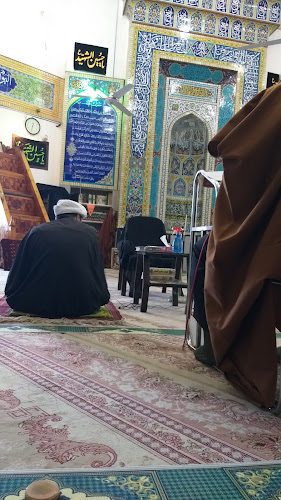
مسجد جامع گنبد کابوس

Carpet Museum of Gonbad
Find Accommodations Nearby
Recommended Tours & Activities
Visitor Reviews
There are no reviews yet. Be the first one to write one.
Share Your Experience
Have you visited Gonbad Kavous University? Help other travelers by leaving a review.