
estacion Meteorologica CAPE
About estacion Meteorologica CAPE
Key Features
More Details
Updated April 15, 2024
## Estación Meteorológica CAPE (Catamarca, Argentina): why it matters and how travelers can actually use it
If you’re the kind of traveler who plans a hike, a long drive, or a photography day around the sky—not just the map—the Estación Meteorológica del CAPE is one of the most practical “attractions” in Catamarca: it’s a public-facing weather station whose main value is the live and historical data you can check before you go.
Based on provincial reporting, the station was installed at the Centro Administrativo del Poder Ejecutivo Provincial (CAPE) in Catamarca (installation noted in 2015, public launch reported in 2016). Education Ministry
—
## What this place is (and what it isn’t)
This “tourist attraction” label can be misleading.
What’s clearly documented is that the CAPE station is a meteorological monitoring installation created/managed through provincial government structures and shared with the public via a web portal. Education Ministry
What you should not assume (because it’s not reliably documented in the sources above) is that it functions like a museum, visitor center, or guided experience. The most defensible way to treat it as a traveler is: a public data source tied to a physical station location.
—
## What the station measures (useful variables for trip planning)
Reporting about the station and its public portal describes a set of variables that are especially relevant in Catamarca’s conditions—heat, sun exposure, sudden wind shifts, and rainfall timing.
From the station’s public portal description (as reported at launch), you can consult:
– Air temperature
– Relative humidity
– Atmospheric pressure
– Solar radiation
– Daily accumulated precipitation
– Wind speed Digital
A separate report about the station notes wind readings at two heights (2 m and 10 m), which matters if you’re comparing “feels like” conditions between sheltered streets and open terrain. Ancasti
Also documented: the station’s data was described as being updated every 15 minutes (at least at the time of the portal launch). Digital
—
## The single best reason to care: Catamarca rewards tight timing
Catamarca is one of those places where small weather differences change the quality (and safety) of your day—especially if you’re doing anything outdoors or driving longer distances.
Here’s how each variable becomes “trip-relevant” in real life:
– Solar radiation: not just comfort—this is a proxy for sun intensity, which helps you decide whether you need more sun protection, earlier start times, or shaded stops. Digital
– Wind speed/direction: useful for open viewpoints, dusty conditions, and deciding whether a high-exposure stop is worth it that day. Ancasti
– Precipitation totals: helpful for road conditions and whether you’re likely to run into stormy interruptions. Digital
– Pressure trend (when available): travelers often ignore this, but pressure shifts can signal weather changes—valuable when you’re trying to avoid getting caught out. Digital
—
## How to check the data (and what may be outdated)
There are two key facts here:
1) The older site associated with the station (meteo.sucytca.gob.ar) displays a notice indicating it will stop working and points users to a new official address: meteorologia.catamarca.gob.ar. Sucytca
2) Access reliability can change. In this browsing session, the newer site returned a 403 Forbidden (access restricted) and the older site returned a 502 Bad Gateway (temporary failure). That doesn’t prove the sites are permanently down—only that access was blocked/unavailable at the time of this check. URL
Practical takeaway: treat the web dashboard as the main “experience,” but expect occasional access issues and have a fallback (e.g., national forecasts) if you’re planning something time-sensitive.
—
## A simple, traveler-first workflow for using the CAPE station
Use this before you commit to any outdoors-heavy day:
1) Check wind + radiation first
If wind is high or radiation is extreme, you can still have a great day—just shift timing (earlier/later) or pick more sheltered activities. (The station explicitly reports wind and solar radiation among its headline metrics.) Digital
2) Look at precipitation for the day, not just “is it raining now”
The station reports daily accumulated precipitation, which can be more useful than a single snapshot if you’re thinking about road conditions or whether storms already passed through. Digital
3) Use humidity + temperature together
Separately, each number is incomplete. Together, they tell you whether conditions are likely to feel harsher than expected. (Both variables are called out on the station’s reporting.) Digital
4) If you can access historical views, compare today to recent days
At launch, the portal was described as allowing recent-day views and downloads for analysis. That’s unusually useful if you’re planning multiple days and want to choose the best “big day” for outdoor plans. Digital
—
## Location note (what we can safely say)
From your provided place data, the station is in Catamarca, Catamarca Province, Argentina, with coordinates:
– -28.4542761, -65.7636381
That places it in/around Catamarca’s administrative area as labeled (CAPE). I’m not adding claims about access, hours, signage, or whether it’s visitor-friendly on-site, because those details are not confirmed in the sources above.
—
## Inclusivity and safety notes (non-negotiables in a place like this)
– If you’re traveling with kids, older adults, or anyone sensitive to heat/sun, solar radiation + temperature data is especially actionable for planning shorter blocks outdoors and longer shaded breaks. Digital
– If you’re mobility-limited, a data-first stop like this can still be valuable: you can use the station readings to pick the most comfortable time window for the parts of Catamarca you do want to see—without gambling on conditions.
—
## About internal links (RealJourneyTravels.com)
You asked for two contextual internal links “if possible.” I can do that only if I know which relevant pages already exist on RealJourneyTravels.com (e.g., a Catamarca city guide, Catamarca Province guide, or Argentina weather/seasonality explainer). Since I don’t have that site map here, I’m not going to invent URLs.
If you paste two target URLs (or even just two slugs), I’ll weave them in naturally in-context without fluff.
Table of Contents
Key Highlights
estacion Meteorologica CAPE
Location
Places to Stay Near estacion Meteorologica CAPE
Find and Book a Tour
Explore More Travel Guides
No reviews found! Be the first to review!
Traveler Reviews for estacion Meteorologica CAPE
There are no reviews yet. Be the first one to write one.
Have you visited estacion Meteorologica CAPE? Help other travelers by sharing your review.
You Might Also Like
Dique de Collagasta
Archaeological Museum Adán Quiroga
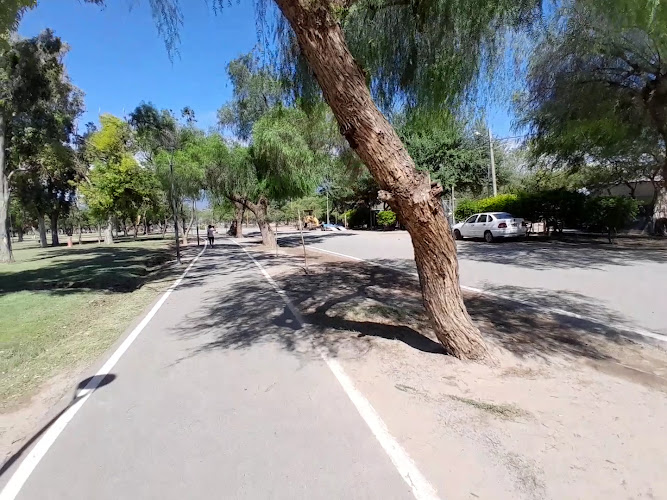
Adán Quiroga Park
Find Accommodations Nearby
Recommended Tours & Activities
Visitor Reviews
There are no reviews yet. Be the first one to write one.
Share Your Experience
Have you visited estacion Meteorologica CAPE? Help other travelers by leaving a review.