
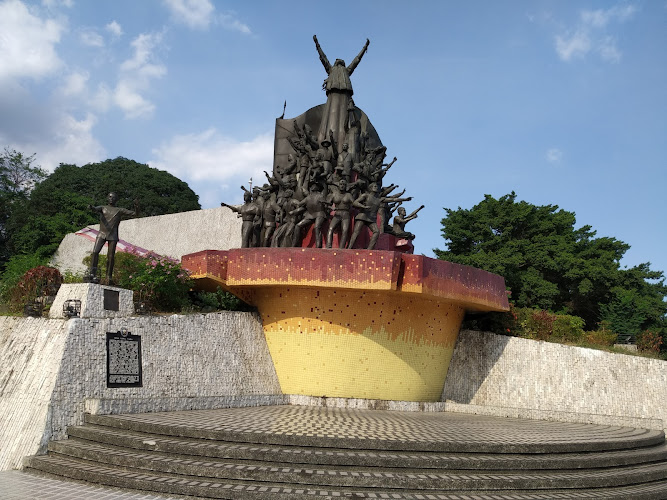
EDSA People Power Monument
About EDSA People Power Monument
Description
The EDSA People Power Monument stands as a powerful reminder of one of the most significant moments in Philippine history—the bloodless revolution of 1986 that changed the course of an entire nation. Created by renowned sculptor Eduardo Castrillo, this striking landmark commemorates the courage of ordinary Filipinos who gathered along Epifanio de los Santos Avenue (EDSA) to stand against authoritarian rule and demand democracy. The monument isn't just another statue you'd pass by; it's a testament to peaceful resistance and the power of unity. When you first lay eyes on the monument, you'll notice its dramatic presence immediately. The bronze and granite structure features larger-than-life figures frozen in moments of defiance and hope, their expressions capturing the raw emotion of those historic days in February 1986. I've seen quite a few revolutionary monuments across different countries, and what makes this one particularly moving is how it doesn't glorify war or violence—instead, it celebrates ordinary people who became heroes simply by showing up and standing their ground. The monument sits at the corner of EDSA and White Plains Avenue in Quezon City, right where some of the most pivotal moments of the revolution unfolded. It's become more than just a tourist attraction over the years; locals use it as a landmark for giving directions, and it remains a gathering point for civic activities and commemorations. The site has witnessed countless demonstrations and peaceful assemblies since its inauguration, continuing the spirit of that original People Power movement. For travelers interested in understanding the Philippines beyond its beaches and islands, this monument offers genuine insight into the Filipino spirit. The revolution it commemorates was watched by the entire world, and many historians consider it a blueprint for peaceful democratic transitions. Standing here, you're not just observing history from a distance—you're literally standing where history happened.Key Features
The monument presents several remarkable elements that make it worth your visit:- The towering sculpture features multiple figures representing different sectors of Philippine society—religious leaders, students, mothers, workers—all united in their cause for freedom
- Bronze reliefs wrap around the base of the monument, depicting scenes from the actual revolution including people offering flowers to soldiers and nuns praying in front of tanks
- The central figure reaches upward with outstretched arms, symbolizing the Filipino people's aspiration for democracy and their triumph over dictatorship
- Eduardo Castrillo's artistic vision captured not just the political aspect but the deeply human and spiritual dimensions of the revolution
- A small park surrounds the monument, providing space for reflection and photography
- Information plaques explain the historical context, though honestly they could use better maintenance and more detailed narratives
- The monument is illuminated at night, creating an entirely different atmosphere that's quite dramatic against the Manila skyline
- Wheelchair accessible pathways allow visitors of all mobility levels to approach and appreciate the monument
- The location itself holds significance—you're standing on the very avenue where millions gathered in peaceful protest
Best Time to Visit
Timing your visit to the EDSA People Power Monument can significantly affect your experience, and I'd recommend planning around a few key considerations. The absolute best time historically is during the anniversary period around February 25th, when the country commemorates the revolution. You'll find special programs, sometimes reenactments, and a genuine sense of the monument's living significance. But fair warning—it gets crowded, and the area becomes quite congested with both locals and tourists. If you want to feel the monument's connection to contemporary Filipino civic life, though, this is your moment. For a more contemplative visit where you can actually take your time examining the sculptural details without dodging crowds, early mornings during weekdays work wonderfully. The traffic along EDSA is still heavy (let's be real, it's always heavy), but fewer people stop at the monument itself. I visited once around 7 AM on a Tuesday, and having the space almost to myself made the experience far more personal and meaningful. Weather-wise, you'll want to avoid the rainy season from June through November if possible. The monument is completely outdoors with minimal shelter, and Manila's tropical downpours can be intense. The dry season from December through May offers more reliable conditions, though March through May brings oppressive heat. December through February provides the most comfortable temperatures for exploring outdoor sites. Late afternoons around 4 or 5 PM can be magical for photography enthusiasts—the golden hour light hits the bronze figures beautifully, creating dramatic shadows and highlights. However, this coincides with rush hour traffic, so getting there and leaving might test your patience. Sundays tend to be quieter traffic-wise compared to weekdays, making access somewhat easier. And if you're combining this with other Quezon City attractions, planning a Sunday itinerary makes practical sense.How to Get There
Getting to the EDSA People Power Monument requires navigating Manila's infamous traffic, but several options exist depending on your comfort level with local transportation. The most straightforward approach involves taking the MRT-3 (Metro Rail Transit) and getting off at Quezon Avenue Station. From there, it's roughly a 10-minute walk to the monument. The MRT can be packed during rush hours—and I mean sardine-can packed—but it bypasses the gridlocked traffic that makes car travel frustratingly slow. Follow the signs toward White Plains Avenue, and you'll spot the monument's distinctive silhouette before long. Taxis and ride-sharing services like Grab work well if you're not comfortable with public transit. Just tell your driver "EDSA People Power Monument" or "White Plains corner EDSA," and they'll know exactly where you mean. Budget for traffic delays though; what should be a 20-minute drive from Makati could easily become an hour during peak times. The monument sits along EDSA itself, so access is straightforward once you're in the area. Jeepneys—those colorful local vehicles that are practically Philippine icons themselves—run along EDSA constantly. Look for ones with "EDSA" on their signboards, and ask the driver or other passengers to alert you when you reach the monument. This is the most economical option but requires some confidence in navigating local transport. Filipinos are generally helpful to confused tourists, so don't hesitate to ask. If you're staying in Quezon City already, the monument might be within reasonable walking distance depending on your exact location. The surrounding area is urban and developed, with sidewalks (though their quality varies). For those renting cars, parking near the monument can be challenging. There's no dedicated parking lot for the monument itself, so you'll need to find street parking or use nearby commercial establishments. Circle the area a bit, and you'll usually find something, but securing your vehicle properly is important.Tips for Visiting
Making the most of your visit to the EDSA People Power Monument involves some practical preparation and realistic expectations. First off, manage your time expectations. This isn't a destination where you'll spend hours—most visitors find that 30 to 45 minutes is sufficient to view the monument, read the informational plaques, take photos, and reflect on the history. You might want to combine this with other nearby attractions like the Quezon Memorial Circle or the Ninoy Aquino Parks and Wildlife Center to make a fuller day of it. Bring water and maybe a small snack. The immediate vicinity doesn't have much in terms of cafes or convenience stores right at the monument site, though you'll find plenty of options within a few blocks. The heat and humidity in Manila can be draining, especially if you're visiting midday. Dress comfortably and practically. You're visiting a historical monument, not a religious site, so there's no strict dress code. However, wearing something respectful seems appropriate given what the monument represents. Comfortable walking shoes are essential since you'll be on your feet and potentially walking from transit stops. Photography is absolutely allowed and encouraged, but be mindful of other visitors trying to enjoy the space. The monument photographs beautifully from multiple angles—walk around it completely to find perspectives that capture different sculptural elements. The bronze figures look particularly striking in directional sunlight. If you're traveling with children, the monument is suitable and actually provides a great educational opportunity. The open space around it lets kids move around safely, and the dramatic sculptures tend to capture their imagination. Take time to explain the history in age-appropriate ways—this revolution was fundamentally about standing up for what's right, which resonates with young people. The area can feel somewhat neglected maintenance-wise, which is unfortunate for such an important landmark. You might notice some litter or wear on the informational plaques. This reflects broader urban management challenges rather than anything about the monument's significance. Bring hand sanitizer and wet wipes just in case. Safety-wise, the location is generally secure, especially during daytime hours. Like anywhere in a major metropolitan area, keep your belongings close and stay aware of your surroundings. The constant traffic and pedestrian activity actually provides a degree of safety through visibility. Consider reading up on the 1986 People Power Revolution before visiting. Understanding what happened—how nuns offered flowers to soldiers, how civilians formed human barricades, how the event unfolded over four remarkable days—will deepen your appreciation of what you're seeing. The monument becomes far more moving when you know the stories it represents. And here's something locals know: the monument looks completely different at night when it's lit up. If your schedule allows, try visiting twice—once during the day for detail viewing and again after dark for the atmospheric experience.Key Features
- The towering sculpture features multiple figures representing different sectors of Philippine society—religious leaders, students, mothers, workers—all united in their cause for freedom
- Bronze reliefs wrap around the base of the monument, depicting scenes from the actual revolution including people offering flowers to soldiers and nuns praying in front of tanks
- The central figure reaches upward with outstretched arms, symbolizing the Filipino people's aspiration for democracy and their triumph over dictatorship
- Eduardo Castrillo's artistic vision captured not just the political aspect but the deeply human and spiritual dimensions of the revolution
- A small park surrounds the monument, providing space for reflection and photography
- Information plaques explain the historical context, though honestly they could use better maintenance and more detailed narratives
- The monument is illuminated at night, creating an entirely different atmosphere that's quite dramatic against the Manila skyline
- Wheelchair accessible pathways allow visitors of all mobility levels to approach and appreciate the monument
More Details
Updated January 18, 2026
Table of Contents
Description
The EDSA People Power Monument stands as a powerful reminder of one of the most significant moments in Philippine history—the bloodless revolution of 1986 that changed the course of an entire nation. Created by renowned sculptor Eduardo Castrillo, this striking landmark commemorates the courage of ordinary Filipinos who gathered along Epifanio de los Santos Avenue (EDSA) to stand against authoritarian rule and demand democracy. The monument isn’t just another statue you’d pass by; it’s a testament to peaceful resistance and the power of unity.
When you first lay eyes on the monument, you’ll notice its dramatic presence immediately. The bronze and granite structure features larger-than-life figures frozen in moments of defiance and hope, their expressions capturing the raw emotion of those historic days in February 1986. I’ve seen quite a few revolutionary monuments across different countries, and what makes this one particularly moving is how it doesn’t glorify war or violence—instead, it celebrates ordinary people who became heroes simply by showing up and standing their ground.
The monument sits at the corner of EDSA and White Plains Avenue in Quezon City, right where some of the most pivotal moments of the revolution unfolded. It’s become more than just a tourist attraction over the years; locals use it as a landmark for giving directions, and it remains a gathering point for civic activities and commemorations. The site has witnessed countless demonstrations and peaceful assemblies since its inauguration, continuing the spirit of that original People Power movement.
For travelers interested in understanding the Philippines beyond its beaches and islands, this monument offers genuine insight into the Filipino spirit. The revolution it commemorates was watched by the entire world, and many historians consider it a blueprint for peaceful democratic transitions. Standing here, you’re not just observing history from a distance—you’re literally standing where history happened.
Key Features
The monument presents several remarkable elements that make it worth your visit:
- The towering sculpture features multiple figures representing different sectors of Philippine society—religious leaders, students, mothers, workers—all united in their cause for freedom
- Bronze reliefs wrap around the base of the monument, depicting scenes from the actual revolution including people offering flowers to soldiers and nuns praying in front of tanks
- The central figure reaches upward with outstretched arms, symbolizing the Filipino people’s aspiration for democracy and their triumph over dictatorship
- Eduardo Castrillo’s artistic vision captured not just the political aspect but the deeply human and spiritual dimensions of the revolution
- A small park surrounds the monument, providing space for reflection and photography
- Information plaques explain the historical context, though honestly they could use better maintenance and more detailed narratives
- The monument is illuminated at night, creating an entirely different atmosphere that’s quite dramatic against the Manila skyline
- Wheelchair accessible pathways allow visitors of all mobility levels to approach and appreciate the monument
- The location itself holds significance—you’re standing on the very avenue where millions gathered in peaceful protest
Best Time to Visit
Timing your visit to the EDSA People Power Monument can significantly affect your experience, and I’d recommend planning around a few key considerations.
The absolute best time historically is during the anniversary period around February 25th, when the country commemorates the revolution. You’ll find special programs, sometimes reenactments, and a genuine sense of the monument’s living significance. But fair warning—it gets crowded, and the area becomes quite congested with both locals and tourists. If you want to feel the monument’s connection to contemporary Filipino civic life, though, this is your moment.
For a more contemplative visit where you can actually take your time examining the sculptural details without dodging crowds, early mornings during weekdays work wonderfully. The traffic along EDSA is still heavy (let’s be real, it’s always heavy), but fewer people stop at the monument itself. I visited once around 7 AM on a Tuesday, and having the space almost to myself made the experience far more personal and meaningful.
Weather-wise, you’ll want to avoid the rainy season from June through November if possible. The monument is completely outdoors with minimal shelter, and Manila’s tropical downpours can be intense. The dry season from December through May offers more reliable conditions, though March through May brings oppressive heat. December through February provides the most comfortable temperatures for exploring outdoor sites.
Late afternoons around 4 or 5 PM can be magical for photography enthusiasts—the golden hour light hits the bronze figures beautifully, creating dramatic shadows and highlights. However, this coincides with rush hour traffic, so getting there and leaving might test your patience.
Sundays tend to be quieter traffic-wise compared to weekdays, making access somewhat easier. And if you’re combining this with other Quezon City attractions, planning a Sunday itinerary makes practical sense.
How to Get There
Getting to the EDSA People Power Monument requires navigating Manila’s infamous traffic, but several options exist depending on your comfort level with local transportation.
The most straightforward approach involves taking the MRT-3 (Metro Rail Transit) and getting off at Quezon Avenue Station. From there, it’s roughly a 10-minute walk to the monument. The MRT can be packed during rush hours—and I mean sardine-can packed—but it bypasses the gridlocked traffic that makes car travel frustratingly slow. Follow the signs toward White Plains Avenue, and you’ll spot the monument’s distinctive silhouette before long.
Taxis and ride-sharing services like Grab work well if you’re not comfortable with public transit. Just tell your driver “EDSA People Power Monument” or “White Plains corner EDSA,” and they’ll know exactly where you mean. Budget for traffic delays though; what should be a 20-minute drive from Makati could easily become an hour during peak times. The monument sits along EDSA itself, so access is straightforward once you’re in the area.
Jeepneys—those colorful local vehicles that are practically Philippine icons themselves—run along EDSA constantly. Look for ones with “EDSA” on their signboards, and ask the driver or other passengers to alert you when you reach the monument. This is the most economical option but requires some confidence in navigating local transport. Filipinos are generally helpful to confused tourists, so don’t hesitate to ask.
If you’re staying in Quezon City already, the monument might be within reasonable walking distance depending on your exact location. The surrounding area is urban and developed, with sidewalks (though their quality varies).
For those renting cars, parking near the monument can be challenging. There’s no dedicated parking lot for the monument itself, so you’ll need to find street parking or use nearby commercial establishments. Circle the area a bit, and you’ll usually find something, but securing your vehicle properly is important.
Tips for Visiting
Making the most of your visit to the EDSA People Power Monument involves some practical preparation and realistic expectations.
First off, manage your time expectations. This isn’t a destination where you’ll spend hours—most visitors find that 30 to 45 minutes is sufficient to view the monument, read the informational plaques, take photos, and reflect on the history. You might want to combine this with other nearby attractions like the Quezon Memorial Circle or the Ninoy Aquino Parks and Wildlife Center to make a fuller day of it.
Bring water and maybe a small snack. The immediate vicinity doesn’t have much in terms of cafes or convenience stores right at the monument site, though you’ll find plenty of options within a few blocks. The heat and humidity in Manila can be draining, especially if you’re visiting midday.
Dress comfortably and practically. You’re visiting a historical monument, not a religious site, so there’s no strict dress code. However, wearing something respectful seems appropriate given what the monument represents. Comfortable walking shoes are essential since you’ll be on your feet and potentially walking from transit stops.
Photography is absolutely allowed and encouraged, but be mindful of other visitors trying to enjoy the space. The monument photographs beautifully from multiple angles—walk around it completely to find perspectives that capture different sculptural elements. The bronze figures look particularly striking in directional sunlight.
If you’re traveling with children, the monument is suitable and actually provides a great educational opportunity. The open space around it lets kids move around safely, and the dramatic sculptures tend to capture their imagination. Take time to explain the history in age-appropriate ways—this revolution was fundamentally about standing up for what’s right, which resonates with young people.
The area can feel somewhat neglected maintenance-wise, which is unfortunate for such an important landmark. You might notice some litter or wear on the informational plaques. This reflects broader urban management challenges rather than anything about the monument’s significance. Bring hand sanitizer and wet wipes just in case.
Safety-wise, the location is generally secure, especially during daytime hours. Like anywhere in a major metropolitan area, keep your belongings close and stay aware of your surroundings. The constant traffic and pedestrian activity actually provides a degree of safety through visibility.
Consider reading up on the 1986 People Power Revolution before visiting. Understanding what happened—how nuns offered flowers to soldiers, how civilians formed human barricades, how the event unfolded over four remarkable days—will deepen your appreciation of what you’re seeing. The monument becomes far more moving when you know the stories it represents.
And here’s something locals know: the monument looks completely different at night when it’s lit up. If your schedule allows, try visiting twice—once during the day for detail viewing and again after dark for the atmospheric experience.
Key Highlights
- The towering sculpture features multiple figures representing different sectors of Philippine society—religious leaders, students, mothers, workers—all united in their cause for freedom
- Bronze reliefs wrap around the base of the monument, depicting scenes from the actual revolution including people offering flowers to soldiers and nuns praying in front of tanks
- The central figure reaches upward with outstretched arms, symbolizing the Filipino people's aspiration for democracy and their triumph over dictatorship
- Eduardo Castrillo's artistic vision captured not just the political aspect but the deeply human and spiritual dimensions of the revolution
- A small park surrounds the monument, providing space for reflection and photography
- Information plaques explain the historical context, though honestly they could use better maintenance and more detailed narratives
- The monument is illuminated at night, creating an entirely different atmosphere that's quite dramatic against the Manila skyline
- Wheelchair accessible pathways allow visitors of all mobility levels to approach and appreciate the monument
Location
Places to Stay Near EDSA People Power Monument
Find and Book a Tour
Explore More Travel Guides
No reviews found! Be the first to review!
Traveler Reviews for EDSA People Power Monument
There are no reviews yet. Be the first one to write one.
Have you visited EDSA People Power Monument? Help other travelers by sharing your review.
You Might Also Like
La Mesa Watershed

University of the Philippines Diliman
Archdiocesan Shrine of Mary, Queen of Peace – EDSA Shrine, Ugong Norte, Quezon City (Archdiocese of Manila)
Find Accommodations Nearby
Recommended Tours & Activities
Visitor Reviews
There are no reviews yet. Be the first one to write one.
Share Your Experience
Have you visited EDSA People Power Monument? Help other travelers by leaving a review.