
Diocletian’s Cellars
About Diocletian’s Cellars
Key Features
More Details
Updated June 11, 2025
## Diocletian’s Cellars (Diocletian Palace Substructures), Split: What They Are and Why They Matter
Diocletian’s Cellars—often described locally as the “Substructures” of Diocletian’s Palace—are the extensive Roman-era underground halls beneath the southern part of the palace complex in Split’s historic core. They are widely recognized as one of the best-preserved ancient complexes of their kind, and they’re tightly linked to why Split’s historic core (with Diocletian’s Palace) was inscribed on UNESCO’s World Heritage List in 1979.
Unlike a single-room “cellar,” this is a network of large stone chambers and corridors that sit directly below what were once the emperor’s residential quarters.
—
## Quick facts
– Place name: Diocletian’s Cellars / Diocletian Palace Substructures (“The Substructures”)
– Address (given): Ul. Iza Vestibula 3, 21000 Split, Croatia (as provided in your dataset)
– City: Split, Croatia
– Coordinates: 43.5075475, 16.4397797 (as provided in your dataset)
– UNESCO context: The “Historical Complex of Split with the Palace of Diocletian” is a UNESCO World Heritage Site; the palace was built between the late 3rd and early 4th centuries AD. World Heritage Centre
—
## What the Substructures actually are
The Substructures were built in Roman times with a clear, practical purpose:
– They elevated the emperor’s chambers on the level above.
– They also served as storage space for the palace.
– Because the underground rooms are described as a faithful structural replica of the chambers above, they help researchers reconstruct how the imperial apartments would have been laid out.
This “mirror” relationship is one of the most important interpretive ideas for visitors: the underground isn’t just leftover space—it’s an architectural clue to the upper palace that has changed over many centuries.
—
## A brief timeline of how the Cellars were used (and misused)
The Substructures didn’t stay frozen in time after the Roman period:
– Early Middle Ages: part of the Substructures was used as a residential area.
– In one hall, parts of an ancient oil and wine press were found and are noted as being exhibited in the same spot.
– As housing expanded within the palace above, the Substructures were turned into a waste pit for the households built overhead.
– Mid-19th century: clearing and cleaning was conceived and begun by architect Vicko Andrić, described by the Split Tourist Board as the first Split and Croatian conservationist.
– The Substructures were excavated and reconstructed through the 1960s; the eastern part opened to the public in May 1995.
That sequence—Roman engineering → medieval adaptation → long period of dumping → modern conservation—helps explain why some halls feel more “museum-like” and others read as thoroughfares.
—
## Where the entrances are
The Split Tourist Board describes two primary ways into the Substructures:
– Through Porta Aenea from the Riva (the waterfront promenade), or
– Down the stairs from the Peristyle (the monumental central courtyard of the palace).
This matters because the Substructures aren’t an isolated attraction—they sit directly on one of Split’s most historically dense pedestrian routes, connecting the palace interior with the seafront.
—
## What you’ll see today inside
The Substructures are presented as both an archaeological space and a living cultural venue.
### The main passage and central hall
The Split Tourist Board describes a main communication line between the Riva and the Peristyle, with a central hall used for buying souvenirs and artworks.
### Events and exhibitions
The Substructures are stated to regularly host cultural programming, including:
– painting and sculpture exhibitions,
– theatre plays,
– fairs (the Tourist Board specifically mentions the International Flower Fair),
– gastronomic and oenological presentations,
– and other social/cultural events.
That contemporary use is not a side note—it’s part of why the halls feel “active” rather than sealed-off ruins.
—
## Why this site is part of a larger UNESCO landscape
UNESCO’s listing for Split emphasizes that the ruins of Diocletian’s Palace are integrated throughout the city and that later periods (Romanesque churches, medieval fortifications, Gothic/Renaissance/Baroque palaces) form a layered historic area. World Heritage Centre
In practical terms: the Cellars are one of the most direct ways to experience the Roman engineering footprint that underpins the rest of the historic core.
—
## Tickets, hours, and other details that can change
Your dataset includes a 4.5 rating and categorizes the site as a historical landmark. Those kinds of values are inherently changeable over time, and I can’t treat them as permanent facts. (Same goes for opening hours and ticket pricing, which vary by season and management.)
If you publish this post, it’s safest to avoid hard-coding hours/prices unless you’re pulling them from an official source at publish time and you have a process to keep them updated.
—
## Internal links (not included)
You asked for two contextual internal links “if possible.” I can’t add accurate internal links without knowing the exact URLs/slugs that already exist on RealJourneyTravels.com (and you also asked me to only return facts I’m 100% sure about). If you share 5–10 relevant existing URLs (e.g., your Split guide, Diocletian’s Palace overview, Peristyle, Riva promenade, Cathedral of St. Domnius), I can weave them in cleanly and naturally in one pass.
Table of Contents
Key Highlights
Diocletian’s Cellars
Location
Places to Stay Near Diocletian's Cellars"The number of things to see and do is unlimited, among other things, ..."
Find and Book a Tour
Explore More Travel Guides
No reviews found! Be the first to review!
Traveler Reviews for Diocletian’s Cellars
There are no reviews yet. Be the first one to write one.
Have you visited Diocletian’s Cellars? Help other travelers by sharing your review.
You Might Also Like

Museum of Fine Art
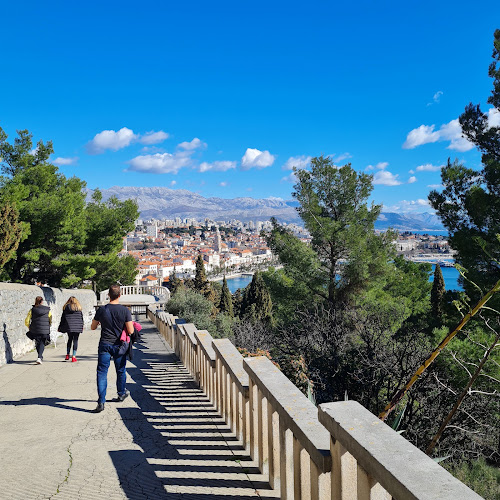
Forest Park Marjan
Froggyland
Find Accommodations Nearby
Recommended Tours & Activities
Visitor Reviews
There are no reviews yet. Be the first one to write one.
Share Your Experience
Have you visited Diocletian’s Cellars? Help other travelers by leaving a review.