
Croatian Maritime Museum
About Croatian Maritime Museum
The Croatian Maritime Museum in Split is an intimate, quietly proud institution that tells big stories in a small space. Housed in a building that has anchored maritime memory since the early 20th century, the museum dates back to 1925 and focuses on the seafaring life, shipbuilding craft, and coastal culture of this part of the Adriatic. It is not a sprawling, high-tech palace of exhibitions — and good, because that honesty is part of the charm. What visitors find here are carefully chosen relics, evocative maritime art, and one arresting centerpiece: a life-sized boat that practically fills the gallery and invites a kind of close-up, almost theatrical encounter with history.
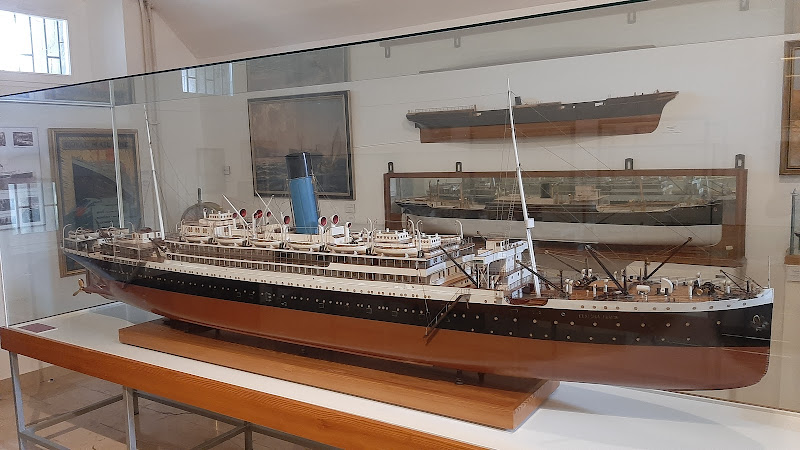
Visitors who love details will linger: old navigation instruments with brass worn to a warm patina, hand-carved figureheads and rope work that still smells faintly of salt, model ships lined up like a small fleet, and paintings that record weather, work, and the moods of fishermen and sailors. The collection leans more toward the local and the authentic than toward sensational artifacts; many objects were donated by island families, harbor workers, and retired skippers. That provenance shows. The labels are concise and factual, but often they suggest stories — a rope that held a rescue, a hull fragment from a boat repaired time and again, a captain’s log that hints at a life lived between port and horizon. It is the sort of place where one can imagine the ebb and flow of daily life in coastal Dalmatia over the last century.
The life-sized boat is the high point for most visitors. It has presence: not a museum case curiosity but an object that occupies space like someone’s memory of the sea. People take photographs next to it, compare the bench heights, inspect the weathered planks, and sometimes laugh at the absurd idea that wood could feel both fragile and stubbornly enduring. The boat anchors the narrative of the museum — the connection between object and human labor, between craft and community. It also makes a neat teaching moment for families and curious kids who like hands-on learning, even when touching is not allowed.
Artworks in the gallery deserve more than a glance. Local artists and maritime painters often portrayed the coastline, working boats, and the light that changes the sea from slate to glass. Those canvases are not just decorative; they are documentary in their way. The brushwork shows a harbor’s daily rhythms, and the paintings serve as visual records of ship types and fishing techniques that have evolved or, in some cases, disappeared. A visitor interested in the technical side of things will appreciate how models and drawings complement the art, creating a fuller picture of historical vessel types, rigging styles, and local shipbuilding solutions.
There is a definite focus on regional stories — fishermen’s knots, small-boat construction, local dive traditions, and the role Split played as a maritime hub. For someone planning a thematic visit (say, focusing on traditional boatbuilding or on how seafaring communities handled storms and trade), the museum can be surprisingly rich. For others, its strength is its intimacy: where some large museums can feel impersonal, this one feels like listening to a neighbor’s collection of sea tales. It’s the kind of place that rewards a slow pace and a little curiosity.
Accessibility is practical rather than performative. The entrance and parking have been adapted for wheelchair access, and there is an accessible restroom. These features make the museum a realistic option for visitors with mobility needs, families with strollers, and older travelers who prefer not to wrestle with stairs and narrow doorways. That said, the building is older, with some characteristic narrow corridors and smaller rooms; the museum has done well within those constraints, but people who use very large power chairs might want to phone ahead to confirm details. Still, overall it is one of the more approachable heritage museums in the center of Split when it comes to mobility concerns.
Practical amenities are straightforward: restrooms are available, but there is no on-site restaurant or café. That absence has pros and cons. The good side: the museum stays focused and tranquil, which is perfect for an hour of undistracted wandering. The downside: visitors should plan to grab a coffee or snack elsewhere before or after visiting — not a hardship in Split, where cafés are plentiful, but it’s a detail worth noting for families or anyone planning a longer afternoon of sightseeing.
Families will find the museum kid-friendly in a gentle way. It is not a splashy, interactive children’s museum, but it rewards inquisitive little guests. The life-sized boat is naturally appealing, and some exhibits are arranged at a lower viewing height that makes them visible to children. Museum staff are used to curious questions and are often ready with short, human explanations about how things were used and why the sea mattered so much to local livelihoods. If traveling with kids, allow an hour to 90 minutes. That’s enough time for a relaxed visit, photos, and maybe a quick chat with the staff about the more unusual objects in the collection.
On the subject of atmosphere, the museum tends to be peaceful. It attracts a mix of tourists who have read about Split’s maritime history, local visitors conducting research or nostalgia-driven visits, and school groups. Because it’s compact, it never feels like an expedition; instead, it feels like stepping into a focused, curated memory. That lends itself well to photography — low-ceilinged rooms and close-up artifacts produce images with texture and personality. Museums that try to be everything sometimes lose character; this one keeps it, and that is refreshing.
Expectation management matters. Because of its scale, the museum is not the place to spend half a day. Some visitors who arrive expecting an encyclopedic maritime complex are politely disappointed. But for those who appreciate concentrated collections, the museum offers a lot of depth for the time invested. A savvy traveler treats it as a complementary stop: pair it with a walk along the Riva, a visit to nearby Diocletian’s Palace, or a harbor-side lunch. In that combination, the museum’s stories add texture to an already rich Split itinerary.
There are occasional special displays and temporary exhibits, often tied to anniversaries, local shipbuilding events, or donations from community members. These rotating elements keep the museum feeling alive and connected to the present, not just archival. The staff — often small and passionate — will sometimes provide short guided talks or point out less obvious artifacts. If a visitor has even a passing interest in local maritime history, it pays to ask; these short conversations can reveal surprising details and add life to otherwise static displays.
One personal aside that the guide tends to share: on a grey morning when the Adriatic looked like pewter, the writer wandered into this museum to escape the drizzle and left with a small, odd sense of gratitude. It was the way a battered fishing buoy in a corner, labeled with the surname of a family, made the sea feel less abstract and more threaded into everyday life. That tiny human connection is the museum’s real strength — the objects are not just relics but traces of real people who made a living from wind, salt, and skill.
For travelers prioritizing search-engine friendly planning terms, the museum is often found under queries like maritime museum Split, Croatian Maritime Museum Split, and Split maritime history. Those looking for a compact, authentic experience of Dalmatian sea culture will find the museum hits the mark. It is particularly useful for anyone researching traditional boat types, local fishing practices, and naval craftsmanship in the Adriatic region. Because it’s centrally located in Split, it’s an easy add-on to almost any half-day plan in the city.
Finally, the museum’s tone is quietly encouraging: engage slowly, ask questions, notice the small labels and donors’ names, and take time with the boat. It is a place that rewards attention rather than ticking boxes. For a traveler who wants an unpretentious, informative stop that puts people, craft, and coastal life at the center of the display, this museum is a satisfying find. Bring curiosity, wear comfortable shoes for the narrow floors, and expect a short, meaningful encounter with the Adriatic past that lingers longer than the minutes spent inside.
Key Features
Croatian Maritime Museum
You Might Also Like

Archaeological Museum in Split
Diocletian’s Cellars
Diocletian’s Palace
Tours & Activities
GetYourGuide provides this tour inventory. We may earn a commission if you book through it; verify current availability, prices, and terms with the provider.
Visitor Reviews
There are no reviews yet. Be the first one to write one.
Share Your Experience
Have you visited Croatian Maritime Museum? Help other travelers by leaving a review.