
Detroit Riverfront Conservancy
About Detroit Riverfront Conservancy
Key Features
More Details
Updated June 26, 2025
The Riverwalk – Parks & Greenways | Detroit Riverfront Conservancy
## Detroit Riverfront Conservancy: how to experience Detroit’s Riverwalk like you actually know where you’re going
The Detroit Riverfront Conservancy is a nonprofit organization focused on keeping the Detroit riverfront “beautiful, exciting, safe and accessible” and acts as the steward behind major public-facing riverfront spaces and programming. Riverfront Conservancy
For visitors, that matters because you’re not just showing up to a single “attraction.” You’re tapping into an interconnected set of parks, plazas, greenways, and the Detroit Riverwalk—with consistent safety operations, public amenities, and wayfinding that can make a waterfront visit feel straightforward instead of chaotic. Riverfront Conservancy
Below is a practical, on-the-ground way to plan your time—especially if you want the riverfront experience (views, movement, people-watching, murals, skyline photos) without wasting half your visit solving logistics.
—
## Quick facts (so you can plan fast)
– Conservancy office address: 600 Renaissance Center, Suite 1720, Detroit, MI 48243-1802 Riverfront Conservancy
– Detroit Riverwalk hours: commonly listed as daily 6 a.m. to 10 p.m. Detroit
– Riverwalk length: currently just over four miles (with an overall vision of 5.5 miles)
– Restrooms: available in multiple riverfront parks, generally open during park hours (6 a.m. to 10 p.m.) Riverfront Conservancy
– Dequindre Cut Greenway: a nearly two-mile below-grade pedestrian/bike greenway connecting Eastern Market to the riverfront, with a 20-foot-wide paved path and separate lanes for walking and cycling Riverfront Conservancy
Outdated-data flag: hours and amenity schedules can change (events, seasonal staffing, maintenance). Treat posted hours as “current as of the sources” and verify day-of if you’re planning around a specific time window. Detroit
—
## What the Detroit Riverfront Conservancy actually “covers” (and why you should care)
If you only think of the riverfront as a single promenade, you’ll miss the real advantage: the riverfront is modular. You can stitch together shorter “micro-routes” depending on weather, mobility needs, daylight, or who you’re traveling with.
The Conservancy’s parks/greenways network includes (among others) Cullen Plaza, Gabriel Richard Park, Milliken State Park & Harbor, Mt. Elliott Park, Robert C. Valade Park, and the Riverwalk itself, plus major connectors like the Dequindre Cut. Riverfront Conservancy
Translation: you can build a waterfront visit that’s a quick scenic stroll, a longer walk/run, a family-friendly playground stop, or a bike-forward outing—without needing a car between segments.
—
## A simple “first-timer” route that works in real life
### Option A: The classic Riverwalk walk (low friction, big payoff)
If your goal is skyline views, river breeze, and a clean, safe-feeling public space, make the Riverwalk your anchor. The Conservancy notes the Riverwalk begins on the east at Gabriel Richard Park (near the MacArthur Bridge to Belle Isle) and currently ends on the west just past Riverfront Towers, with a temporary connection to Jefferson Avenue.
Why this matters: that “begin/end” detail helps you avoid the common mistake of expecting a perfectly continuous experience in every direction at every moment.
### Option B: The “city texture” route via Dequindre Cut (art + movement)
The Dequindre Cut Greenway is a smart choice when you want something more visually gritty and local-feeling (murals, concrete underpasses, that below-grade corridor vibe) while still being easy to follow.
Because it connects Eastern Market to the riverfront, it’s an efficient way to stack two very different Detroit environments in one outing. Riverfront Conservancy
Practical tip: the Cut is designed with separate lanes for pedestrian and bicycle traffic, which is great—until people ignore it. If you’re walking in a group, keep tighter to your side so faster riders can pass cleanly. Riverfront Conservancy
—
## Safety and accessibility: what’s in place (and what you should still do)
The Conservancy explicitly states that safety and security is a top priority and that it partners with a security provider for 24-hour monitoring throughout riverfront areas (Riverwalk, greenways, parks, plazas), with security cameras monitored 24/7/365. Riverfront Conservancy
That’s meaningful infrastructure, but it doesn’t replace common-sense planning:
– If you’re visiting at the edges of the day, aim to be within posted park hours (commonly 6 a.m.–10 p.m.). Detroit
– Keep your route simple if you’re unfamiliar with the area—Riverwalk segments and named parks are easier to navigate than improvising side streets.
Inclusivity note: the riverfront is designed as a shared public space—expect a mix of walkers, runners, cyclists, families, older visitors, and people using mobility devices. Give space, pass politely, and don’t assume everyone moves at the same pace.
—
## Amenities that save a visit from turning annoying
### Restrooms (the detail most guides skip)
The Riverwalk FAQ states that public restrooms are available in multiple parks and are generally open 6 a.m. to 10 p.m., including Gabriel Richard Park, Mt. Elliott Park, Robert C. Valade Park, and Cullen Plaza. Riverfront Conservancy
If you’re traveling with kids, managing hydration, or planning any kind of long walk, that’s the difference between “easy afternoon” and “we have to leave now.”
### Parks and plazas as “reset points”
Even if you’re not planning a park visit, these spaces function as reliable places to:
– stop and regroup
– take photos
– find lighting and sightlines that flatter the skyline
– avoid getting stuck in a “keep moving because there’s nowhere to pause” pattern
The Conservancy’s own listing of parks/greenways is a good menu for choosing those reset points. Riverfront Conservancy
—
## What’s changing (and why you should check before you go)
The Conservancy’s Riverwalk information describes an expansion into Ralph C. Wilson, Jr. Centennial Park as part of its completion vision, and local reporting has covered the park’s planned opening and new Riverwalk segments.
Because new segments and openings can shift routes, access points, and the “best place” to start, it’s worth checking the Conservancy’s site close to your visit if you want the most current conditions. Riverfront Conservancy
—
## Pair it with another Detroit essential (internal link)
If you want to balance outdoor riverfront time with world-class indoor culture, pair your Riverwalk plan with the Detroit Institute of Arts guide: Detroit Institute of Arts.
(I’m only including internal links I can verify from the details provided—if you share your Detroit category URL/slug structure, I can add a second internal link without guessing.)
Table of Contents
Key Highlights
Detroit Riverfront Conservancy
Location
Places to Stay Near Detroit Riverfront Conservancy"Definitely recommend visiting if you're looking for something to do in ..."
Find and Book a Tour
Explore More Travel Guides
No reviews found! Be the first to review!
Traveler Reviews for Detroit Riverfront Conservancy
There are no reviews yet. Be the first one to write one.
Have you visited Detroit Riverfront Conservancy? Help other travelers by sharing your review.
You Might Also Like
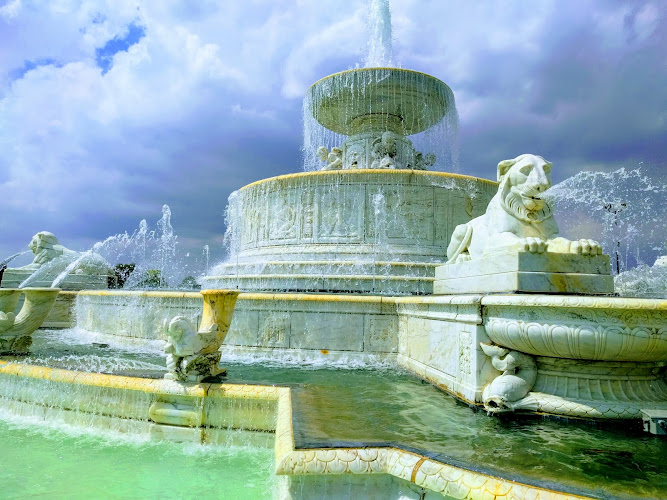
James Scott Memorial Fountain

Michigan Science Center
Hart Plaza
Find Accommodations Nearby
Recommended Tours & Activities
Visitor Reviews
There are no reviews yet. Be the first one to write one.
Share Your Experience
Have you visited Detroit Riverfront Conservancy? Help other travelers by leaving a review.