
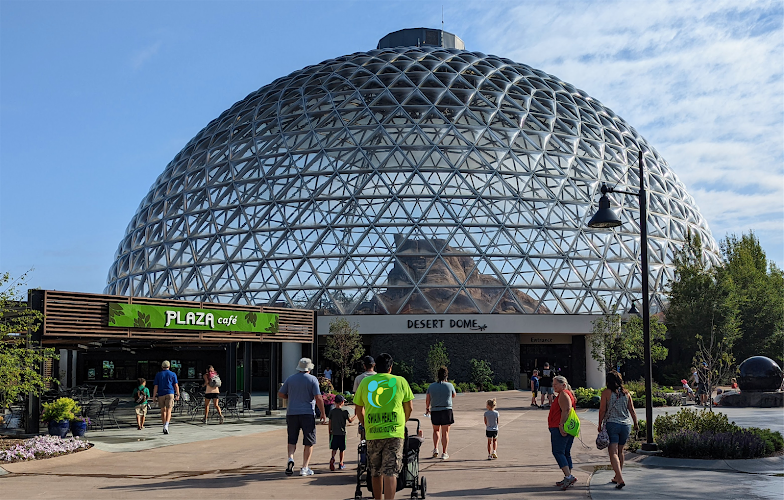
Desert Dome
About Desert Dome
Description
The Desert Dome is one of those places that surprises you even if you think you know what to expect. Imagine stepping into the world’s largest indoor desert, right in the heart of Omaha. The geodesic dome structure towers overhead—160 feet across and 137 feet tall—and it somehow manages to transport visitors across continents without leaving Nebraska. Inside, three distinct desert ecosystems are recreated in astonishing detail: the Namib Desert of southern Africa, the Red Center of Australia, and the Sonoran Desert of the American Southwest. Each one feels authentic, down to the plants, the rock formations, and the animals that call them home.
Walking through, you’ll notice the air feels warmer and drier, mimicking the desert climate. There’s even a simulated rainstorm that rolls through daily, which is both unexpected and oddly refreshing. You might spot reptiles basking under the artificial sun, birds darting between cacti, or small mammals scurrying in the sand. And here’s the kicker: beneath the dome lies the Kingdoms of the Night, the largest nocturnal exhibit in the world. It’s like two adventures stacked on top of each other—bright desert landscapes above and mysterious, moonlit habitats below.
Most visitors walk away impressed, and it’s not hard to see why. The place is massive, the design is clever, and the animals seem well cared for. Sure, a few people might find it a little overwhelming or wish for more interactive signage, but the overwhelming sentiment is that it’s a must-see. Personally, I think it’s one of those attractions you talk about long after you’ve left, because it’s not every day you get to stand inside a desert while it’s raining outside in Nebraska.
Key Features
- World’s largest indoor desert housed under a geodesic dome
- Three distinct desert ecosystems: Namib, Australian Red Center, and Sonoran
- 55-foot-tall central mountain dividing the habitats
- Daily simulated rainstorm creating a dynamic desert atmosphere
- Kingdoms of the Night, the world’s largest nocturnal exhibit located beneath the dome
- Wide variety of desert wildlife including reptiles, birds, and small mammals
- Wheelchair accessible with convenient parking and pathways
- Gift shop and guided tours available for deeper experiences
- Kid-friendly with nearby playgrounds and family-focused amenities
- Modern payment options including credit, debit, and mobile payments
Best Time to Visit
One of the perks of the Desert Dome is that it’s indoors, so weather doesn’t have to dictate your plans. That said, weekends and school holidays can get busy, especially in the middle of the day. If you’re like me and prefer a quieter experience, aim for weekday mornings right after opening. The lighting in the dome is especially nice then, and you can take your time without feeling rushed by the crowd behind you. Summer is peak tourist season in Omaha, so if you’re visiting then, just plan ahead and maybe grab tickets in advance. Winter visits have their charm too—there’s something surreal about stepping from freezing Nebraska air into a warm desert climate in seconds.
How to Get There
Reaching the Desert Dome is straightforward if you’re already in Omaha. It’s part of the larger zoo complex, which is a well-known landmark in the city. Driving is the easiest option, with plenty of parking available on site. For those who prefer not to drive, rideshare services and local buses also connect to the area. Once you arrive, the dome is hard to miss—it’s a striking geometric structure that dominates the skyline of the zoo grounds. If you’re traveling from out of town, Omaha’s airport is only a short drive away, making it an easy stop on a Midwest road trip or city visit.
Tips for Visiting
Here are a few things I’ve learned (sometimes the hard way) that might make your visit smoother:
- Buy tickets in advance: It saves time at the gate, especially on busy days.
- Wear comfortable shoes: The dome is bigger than it looks, and you’ll be walking a lot.
- Bring water: Even though it’s indoors, the warm, dry air can make you thirsty quickly.
- Take your time: Don’t rush through—there are details everywhere, from hidden lizards to unique plant species.
- Check out Kingdoms of the Night: It’s right underneath and often overlooked, but it’s just as fascinating as the dome itself.
- Travel light: A small bag is fine, but big backpacks can feel cumbersome in tighter walkways.
- Plan for kids: The playground nearby is a great way to let little ones burn off energy before or after the visit.
- Photography tip: The lighting can be tricky, so adjust your camera settings or phone exposure for better shots.
Visiting the Desert Dome is more than just ticking off another zoo exhibit—it feels like stepping into another world. And honestly, that’s what makes it special. Whether you’re a family with kids, a solo traveler who loves unique architecture, or just someone curious about deserts, it’s worth carving out a few hours to explore. Don’t rush it. Let yourself wander, look closely, and maybe even get lost in thought while staring up at that giant dome ceiling. It’s one of those rare attractions that manages to be both educational and genuinely awe-inspiring.
Key Features
- World’s largest indoor desert housed under a geodesic dome
- Three distinct desert ecosystems: Namib, Australian Red Center, and Sonoran
- 55-foot-tall central mountain dividing the habitats
- Daily simulated rainstorm creating a dynamic desert atmosphere
- Kingdoms of the Night, the world’s largest nocturnal exhibit located beneath the dome
- Wide variety of desert wildlife including reptiles, birds, and small mammals
- Wheelchair accessible with convenient parking and pathways
- Gift shop and guided tours available for deeper experiences
More Details
Updated September 23, 2025
Table of Contents
Description
The Desert Dome is one of those places that surprises you even if you think you know what to expect. Imagine stepping into the world’s largest indoor desert, right in the heart of Omaha. The geodesic dome structure towers overhead—160 feet across and 137 feet tall—and it somehow manages to transport visitors across continents without leaving Nebraska. Inside, three distinct desert ecosystems are recreated in astonishing detail: the Namib Desert of southern Africa, the Red Center of Australia, and the Sonoran Desert of the American Southwest. Each one feels authentic, down to the plants, the rock formations, and the animals that call them home.
Walking through, you’ll notice the air feels warmer and drier, mimicking the desert climate. There’s even a simulated rainstorm that rolls through daily, which is both unexpected and oddly refreshing. You might spot reptiles basking under the artificial sun, birds darting between cacti, or small mammals scurrying in the sand. And here’s the kicker: beneath the dome lies the Kingdoms of the Night, the largest nocturnal exhibit in the world. It’s like two adventures stacked on top of each other—bright desert landscapes above and mysterious, moonlit habitats below.
Most visitors walk away impressed, and it’s not hard to see why. The place is massive, the design is clever, and the animals seem well cared for. Sure, a few people might find it a little overwhelming or wish for more interactive signage, but the overwhelming sentiment is that it’s a must-see. Personally, I think it’s one of those attractions you talk about long after you’ve left, because it’s not every day you get to stand inside a desert while it’s raining outside in Nebraska.
Key Features
- World’s largest indoor desert housed under a geodesic dome
- Three distinct desert ecosystems: Namib, Australian Red Center, and Sonoran
- 55-foot-tall central mountain dividing the habitats
- Daily simulated rainstorm creating a dynamic desert atmosphere
- Kingdoms of the Night, the world’s largest nocturnal exhibit located beneath the dome
- Wide variety of desert wildlife including reptiles, birds, and small mammals
- Wheelchair accessible with convenient parking and pathways
- Gift shop and guided tours available for deeper experiences
- Kid-friendly with nearby playgrounds and family-focused amenities
- Modern payment options including credit, debit, and mobile payments
Best Time to Visit
One of the perks of the Desert Dome is that it’s indoors, so weather doesn’t have to dictate your plans. That said, weekends and school holidays can get busy, especially in the middle of the day. If you’re like me and prefer a quieter experience, aim for weekday mornings right after opening. The lighting in the dome is especially nice then, and you can take your time without feeling rushed by the crowd behind you. Summer is peak tourist season in Omaha, so if you’re visiting then, just plan ahead and maybe grab tickets in advance. Winter visits have their charm too—there’s something surreal about stepping from freezing Nebraska air into a warm desert climate in seconds.
How to Get There
Reaching the Desert Dome is straightforward if you’re already in Omaha. It’s part of the larger zoo complex, which is a well-known landmark in the city. Driving is the easiest option, with plenty of parking available on site. For those who prefer not to drive, rideshare services and local buses also connect to the area. Once you arrive, the dome is hard to miss—it’s a striking geometric structure that dominates the skyline of the zoo grounds. If you’re traveling from out of town, Omaha’s airport is only a short drive away, making it an easy stop on a Midwest road trip or city visit.
Tips for Visiting
Here are a few things I’ve learned (sometimes the hard way) that might make your visit smoother:
- Buy tickets in advance: It saves time at the gate, especially on busy days.
- Wear comfortable shoes: The dome is bigger than it looks, and you’ll be walking a lot.
- Bring water: Even though it’s indoors, the warm, dry air can make you thirsty quickly.
- Take your time: Don’t rush through—there are details everywhere, from hidden lizards to unique plant species.
- Check out Kingdoms of the Night: It’s right underneath and often overlooked, but it’s just as fascinating as the dome itself.
- Travel light: A small bag is fine, but big backpacks can feel cumbersome in tighter walkways.
- Plan for kids: The playground nearby is a great way to let little ones burn off energy before or after the visit.
- Photography tip: The lighting can be tricky, so adjust your camera settings or phone exposure for better shots.
Visiting the Desert Dome is more than just ticking off another zoo exhibit—it feels like stepping into another world. And honestly, that’s what makes it special. Whether you’re a family with kids, a solo traveler who loves unique architecture, or just someone curious about deserts, it’s worth carving out a few hours to explore. Don’t rush it. Let yourself wander, look closely, and maybe even get lost in thought while staring up at that giant dome ceiling. It’s one of those rare attractions that manages to be both educational and genuinely awe-inspiring.
Key Highlights
- World’s largest indoor desert housed under a geodesic dome
- Three distinct desert ecosystems: Namib, Australian Red Center, and Sonoran
- 55-foot-tall central mountain dividing the habitats
- Daily simulated rainstorm creating a dynamic desert atmosphere
- Kingdoms of the Night, the world’s largest nocturnal exhibit located beneath the dome
- Wide variety of desert wildlife including reptiles, birds, and small mammals
- Wheelchair accessible with convenient parking and pathways
- Gift shop and guided tours available for deeper experiences
Location
Places to Stay Near Desert Dome
Find and Book a Tour
Explore More Travel Guides
No reviews found! Be the first to review!
Traveler Reviews for Desert Dome
There are no reviews yet. Be the first one to write one.
Have you visited Desert Dome? Help other travelers by sharing your review.
You Might Also Like

The Durham Museum

The Capitol District
Zorinsky Lake Park
Find Accommodations Nearby
Recommended Tours & Activities
Visitor Reviews
There are no reviews yet. Be the first one to write one.
Share Your Experience
Have you visited Desert Dome? Help other travelers by leaving a review.