
Deir el-Shelwit Temple
About Deir el-Shelwit Temple
Key Features
More Details
Updated April 15, 2024
Isis Temple (Ptolemaic) – Deir El Shelwit – West Bank – My Luxor by …
## Deir el-Shelwit Temple (Luxor): a small Isis sanctuary that rewards slow looking
If you’re exploring Luxor’s West Bank beyond the headline sites, Deir el-Shelwit is one of the most satisfying “small stop, big payoff” temples in the Theban landscape. It’s a compact Greco-Roman–period temple dedicated to the goddess Isis, set a short distance south of the major monuments—close enough to combine with other West Bank visits, but quiet enough to feel like you’ve stepped out of the main circuit.
This guide focuses on what’s verifiable: what the site is, why it matters historically, what you’re likely to see on the ground, and how to plan a visit without wasting time or arriving unprepared.
—
## Quick facts (from reliable published sources)
– What it is: An ancient Egyptian temple dedicated to Isis, dating to the Greco-Roman period.
– Where it is: West Bank of Luxor, about 1 km from Malqata and roughly 4 km south of Medinet Habu (distance figures commonly cited in reference summaries).
– Construction timing: Inscriptions on the propylon indicate work began around the early 1st century CE.
– Iconography: The relief program is described as Greco-Roman in style and often compared (in scholarly/summary descriptions) to temple relief traditions seen at Dendera and Philae.
—
## Why Deir el-Shelwit is historically interesting
### It’s “late” Egypt, but not “less” Egypt
Many Luxor itineraries tilt heavily toward New Kingdom grandeur (Valley of the Kings, Hatshepsut, Karnak). Deir el-Shelwit is different: it reflects Egypt under Greek and Roman rule, when Egyptian religious life continued—sometimes with new patrons and political contexts—through temple building and decoration.
### The temple’s inscriptions preserve a roster of Roman-era names
One reason researchers and careful visitors pay attention here: the temple preserves cartouches/names associated with several Roman emperors (as summarized in standard references). That makes it a tangible “bridge site” between Pharaonic religious forms and imperial-era authority.
—
## What you’ll actually see on-site
Deir el-Shelwit is small enough that you can understand it spatially in minutes—but the walls are the point, and they deserve time.
### 1) A compact sacred layout
Expect a short sequence of spaces typical of many Egyptian temples (outer entry → columned/anteroom spaces → inner sanctuary areas). Even if you’re not mapping every architectural term, the progression is easy to feel: moving from bright exterior into darker, more symbolically charged interiors.
### 2) Reliefs worth a close look
Because the temple is associated with the Greco-Roman period, you’ll see carved religious scenes and inscriptions that reflect later temple conventions. If you’ve visited Dendera or Philae, you may notice familiar compositional logic—ritual presentation scenes, formalized divine imagery, and dense text fields—though Deir el-Shelwit is far more intimate in scale.
### 3) Quiet, low-crowd conditions (often)
Crowd levels can fluctuate, but this site is widely treated as a “secondary” stop compared with Medinet Habu or the Valley of the Kings—so you may find it calm enough to photograph details and read wall scenes without being rushed. (Treat this as a common experience, not a guarantee.)
—
## How to plan your visit without surprises
### Ticketing and official hours (and why you should double-check)
Luxor site pricing and hours can change, and it’s normal to see seasonal variations. The Egyptian Ministry of Tourism and Antiquities has published ticket lists that include Temple of Deir al-Shelwit with stated visiting hours and pricing at the time of that document’s update.
Outdated-data flag: the ministry PDF cited above is explicitly a “last update” document (dated in 2024 in the file title), so treat it as a reference point, not a promise. Always confirm current entry rules locally or through official channels before you build a tight schedule.
### Best way to combine it on the West Bank
Because it sits south of Medinet Habu and not far from other West Bank clusters, it works best as an add-on when you’re already routing through:
– Medinet Habu area visits (nearby per reference distances)
– Malqata vicinity (nearby per reference distances)
Practical point: small sites are easiest when they’re on your line of travel, not a special trip on their own.
### Timing tips that matter more than people admit
– Light: Carved relief reads best with angled light. If you care about wall detail, plan around sun angle rather than just “morning vs afternoon.”
– Pace: Give yourself permission to spend longer than you expect. Ten minutes is enough to “see it.” Thirty minutes is enough to understand what you’re seeing.
– Respectful behavior: As with all sacred/heritage sites, avoid touching carved surfaces, don’t climb, and keep voices low—especially if staff or local visitors are present.
—
## What this site is not (so expectations stay realistic)
– It’s not a sprawling complex like Karnak.
– It’s not a tomb site with painted burial chambers.
– It is a focused, decoration-forward temple stop: ideal for people who like inscriptions, reliefs, and the continuity of Egyptian religion into the Roman era.
—
## Suggested internal reading (contextual)
If you’re building a deeper Luxor/West Bank understanding, the best companion piece on many itineraries is your own site’s coverage of Deir el-Bahari (Temple of Hatshepsut), which anchors the New Kingdom side of the story and makes Deir el-Shelwit’s later chronology feel even more distinct.
—
## Accessibility and inclusivity notes
– Luxor archaeological sites often involve uneven stone, steps, and limited shade. If you’re traveling with mobility needs, heat sensitivity, or young kids, plan conservative timing and bring what you need (water, sun protection, rest breaks).
– If you use a guide, choose someone comfortable explaining religious imagery respectfully and clearly—Egyptian sacred art is not “myth trivia”; it’s a belief system expressed in state architecture.
—
## Location details (from your data)
– Name: Deir el-Shelwit Temple
– Address: MHWH+3CJ, Ad Dabaeyah, Al Qarna, Luxor Governorate 1340360, Egypt
– Coordinates: 25.6952173, 32.578501
– Rating: 4.6
– Type: Museum (often described in travel listings; academically it’s a temple site)
—
If you want, paste your two preferred internal URLs (or your Luxor hub slug), and I’ll weave two exact internal links into the body in a way that feels natural and not SEO-bolted-on.
Table of Contents
Key Highlights
Deir el-Shelwit Temple
Location
Places to Stay Near Deir el-Shelwit Temple
Find and Book a Tour
Explore More Travel Guides
No reviews found! Be the first to review!
Traveler Reviews for Deir el-Shelwit Temple
There are no reviews yet. Be the first one to write one.
Have you visited Deir el-Shelwit Temple? Help other travelers by sharing your review.
You Might Also Like
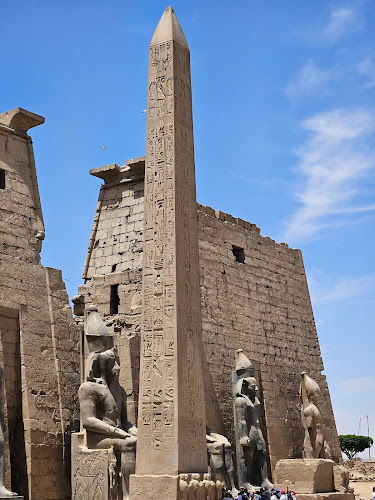
Luxor Temple

Sound & Light
Luxor Governorate 1362243
Find Accommodations Nearby
Recommended Tours & Activities
Visitor Reviews
There are no reviews yet. Be the first one to write one.
Share Your Experience
Have you visited Deir el-Shelwit Temple? Help other travelers by leaving a review.