
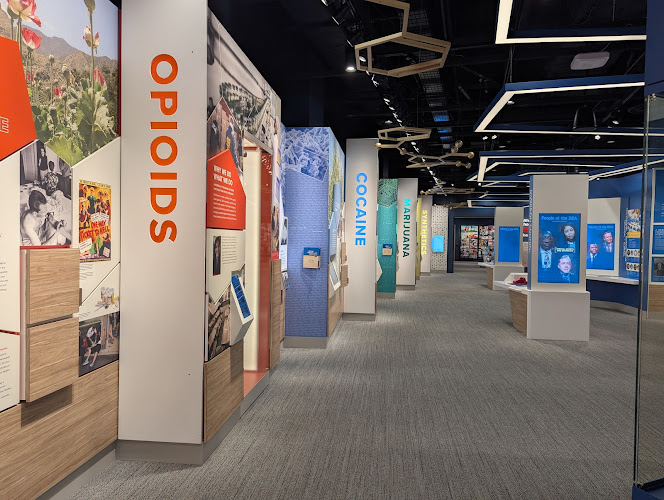
DEA Museum & Visitors Center
About DEA Museum & Visitors Center
Description
The DEA Museum & Visitors Center in Arlington offers a focused, often-surprising look at the history of drug enforcement in the United States. It is a compact but thoughtfully assembled space where visitors can trace policies, science, and the cultural ripple effects of narcotics laws from early 20th century prescriptions through modern federal enforcement efforts. The museum balances historical artifacts with hands-on displays and educational panels, so it doesn’t read like a dry government brochure; instead it feels like a short, intense crash course in a subject most people only encounter in headlines.
Exhibits chronicle the evolution of enforcement strategies, the role of science and forensics, and the public-health and legal debates that have shaped policy. There are artifacts and case materials, too—items that give an almost forensic sense of the agency’s role: lab tools, confiscated paraphernalia (presented for context and education), and multimedia stations that unpack how investigations and scientific methods work. The interactive parts are the ones that tend to stick with people: simulations explaining supply chains, timelines that let visitors flip between eras, and short films that summarize landmark moments. The emphasis is educational, not sensational. The displays aim for a measured tone: teaching visitors about the enforcement side while acknowledging the social complexities of drug use and addiction.
Travelers who come expecting a typical large-scale museum experience will find it refreshingly compact and approachable. Because the collection is concentrated, a thoughtful visit typically lasts 45–90 minutes; a curious visitor who reads every panel and uses the interactives can spend longer. It’s designed to be accessible for different ages—school groups often stop by for curriculum-aligned tours—but it’s not a children’s amusement space. Still, the museum is surprisingly kid-friendly in its approach: clear language, engaging kiosks, and age-appropriate ways of explaining difficult topics. Families who bring younger kids should be prepared to guide conversations about sensitive material, but there are plenty of learning moments that resonate with school-aged children.
One of the museum’s strengths is its candid presentation of a complex subject. Instead of glossing over controversy, the exhibits often present multiple viewpoints: the law-enforcement rationale, the science behind drug identification, and the societal consequences. That balanced approach makes it especially useful for travelers who want context beyond the news cycle: policy history, major legislation, and the evolving role of federal agencies are all laid out in a way that travelers can actually understand, not just skim.
Accessibility and practical visitor comforts are clearly considered. The entrance and restrooms are wheelchair accessible, and onsite services make the museum convenient for people traveling with mobility needs. There are docent-led tours available for groups or visitors who prefer a guided experience; those tours tend to add depth and anecdotes that enrich the static displays. A modest gift shop offers educational books, branded items, and resources for further learning. There is no onsite restaurant, so plan to grab a bite nearby before or after the visit if hunger strikes.
For travelers juggling tight schedules—say, a layover or a day near the Pentagon or downtown Washington—the museum is a logical stop: it’s close enough to other major sites to include in a half-day itinerary and offers a focused viewpoint that complements broader museums in the region. It’s not trying to compete with the big national museums; rather, it fills a niche. And that niche matters to many visitors: people curious about the intersection of federal policy, forensic science, and social impact frequently say they left with a clearer picture of how things connect.
Practical details matter if a traveler wants to make the most of the visit. Paid street parking is available nearby, which can be convenient but sometimes unpredictable during peak hours; budget extra time for finding a spot. Tours and onsite services mean visitors have options: a self-guided walkthrough will work for most people, but signing up for a guided tour—when available—adds valuable context. The museum emphasizes educational material and public information; expect straightforward, no-frills presentation rather than flashy theatrics. That actually works in its favor for many visitors looking to learn rather than be entertained.
The mood of the museum leans toward sober, informative, and occasionally reflective. Exhibits that cover addiction, public-health responses, and the human stories behind statistics can prompt quiet reflection—travelers often remark that parts of the museum feel unexpectedly moving. It’s not a glossy tourist attraction; it’s a place where information and history meet policy and people. For that reason, it tends to attract audiences who come prepared to think and ask questions: students, law-enforcement professionals, policy wonks, and curious travelers who prefer deeper dives into specific topics.
There are some visitor surprises worth flagging. First: the museum’s size is deceptive—though the footprint is modest, the content is dense. Give oneself time to read the panels. Second: the approach is deliberately multifaceted; one moment a display will explain forensic techniques, the next it will pull back to show cultural shifts and legislative milestones. That variety helps keep the experience digestible, but also requires visitors to switch mental gears a few times. Finally, because the museum covers topics that touch on crime and public health, the tone is often matter-of-fact; visitors expecting sensational exhibits will likely be disappointed. The museum’s strength is its clarity, not spectacle.
One small anecdote that resonates with many frequent visitors: someone once noted leaving the museum and realizing they could read a headline with more nuance. That’s the kind of gentle effect the museum achieves. It doesn’t try to persuade visitors to one side or another; it gives tools for understanding. For travelers who enjoy museums that change how they think about everyday news items—well, this place has that quiet power.
Finally, the museum’s location within Arlington makes it an efficient stop on a traveler’s route through the region. Visitors who pair the DEA Museum & Visitors Center with nearby memorials, shopping neighborhoods, or other museums will find the timing works well; the museum’s concise layout is actually an advantage in that kind of multi-stop day. And for those with limited time in the area, it’s an educational, relatively quick visit that still manages to deliver a fuller picture of the history and scope of drug enforcement in the United States.
Key Features
More Details
Updated August 29, 2025
Table of Contents
Description
The DEA Museum & Visitors Center in Arlington offers a focused, often-surprising look at the history of drug enforcement in the United States. It is a compact but thoughtfully assembled space where visitors can trace policies, science, and the cultural ripple effects of narcotics laws from early 20th century prescriptions through modern federal enforcement efforts. The museum balances historical artifacts with hands-on displays and educational panels, so it doesn’t read like a dry government brochure; instead it feels like a short, intense crash course in a subject most people only encounter in headlines.
Exhibits chronicle the evolution of enforcement strategies, the role of science and forensics, and the public-health and legal debates that have shaped policy. There are artifacts and case materials, too—items that give an almost forensic sense of the agency’s role: lab tools, confiscated paraphernalia (presented for context and education), and multimedia stations that unpack how investigations and scientific methods work. The interactive parts are the ones that tend to stick with people: simulations explaining supply chains, timelines that let visitors flip between eras, and short films that summarize landmark moments. The emphasis is educational, not sensational. The displays aim for a measured tone: teaching visitors about the enforcement side while acknowledging the social complexities of drug use and addiction.
Travelers who come expecting a typical large-scale museum experience will find it refreshingly compact and approachable. Because the collection is concentrated, a thoughtful visit typically lasts 45–90 minutes; a curious visitor who reads every panel and uses the interactives can spend longer. It’s designed to be accessible for different ages—school groups often stop by for curriculum-aligned tours—but it’s not a children’s amusement space. Still, the museum is surprisingly kid-friendly in its approach: clear language, engaging kiosks, and age-appropriate ways of explaining difficult topics. Families who bring younger kids should be prepared to guide conversations about sensitive material, but there are plenty of learning moments that resonate with school-aged children.
One of the museum’s strengths is its candid presentation of a complex subject. Instead of glossing over controversy, the exhibits often present multiple viewpoints: the law-enforcement rationale, the science behind drug identification, and the societal consequences. That balanced approach makes it especially useful for travelers who want context beyond the news cycle: policy history, major legislation, and the evolving role of federal agencies are all laid out in a way that travelers can actually understand, not just skim.
Accessibility and practical visitor comforts are clearly considered. The entrance and restrooms are wheelchair accessible, and onsite services make the museum convenient for people traveling with mobility needs. There are docent-led tours available for groups or visitors who prefer a guided experience; those tours tend to add depth and anecdotes that enrich the static displays. A modest gift shop offers educational books, branded items, and resources for further learning. There is no onsite restaurant, so plan to grab a bite nearby before or after the visit if hunger strikes.
For travelers juggling tight schedules—say, a layover or a day near the Pentagon or downtown Washington—the museum is a logical stop: it’s close enough to other major sites to include in a half-day itinerary and offers a focused viewpoint that complements broader museums in the region. It’s not trying to compete with the big national museums; rather, it fills a niche. And that niche matters to many visitors: people curious about the intersection of federal policy, forensic science, and social impact frequently say they left with a clearer picture of how things connect.
Practical details matter if a traveler wants to make the most of the visit. Paid street parking is available nearby, which can be convenient but sometimes unpredictable during peak hours; budget extra time for finding a spot. Tours and onsite services mean visitors have options: a self-guided walkthrough will work for most people, but signing up for a guided tour—when available—adds valuable context. The museum emphasizes educational material and public information; expect straightforward, no-frills presentation rather than flashy theatrics. That actually works in its favor for many visitors looking to learn rather than be entertained.
The mood of the museum leans toward sober, informative, and occasionally reflective. Exhibits that cover addiction, public-health responses, and the human stories behind statistics can prompt quiet reflection—travelers often remark that parts of the museum feel unexpectedly moving. It’s not a glossy tourist attraction; it’s a place where information and history meet policy and people. For that reason, it tends to attract audiences who come prepared to think and ask questions: students, law-enforcement professionals, policy wonks, and curious travelers who prefer deeper dives into specific topics.
There are some visitor surprises worth flagging. First: the museum’s size is deceptive—though the footprint is modest, the content is dense. Give oneself time to read the panels. Second: the approach is deliberately multifaceted; one moment a display will explain forensic techniques, the next it will pull back to show cultural shifts and legislative milestones. That variety helps keep the experience digestible, but also requires visitors to switch mental gears a few times. Finally, because the museum covers topics that touch on crime and public health, the tone is often matter-of-fact; visitors expecting sensational exhibits will likely be disappointed. The museum’s strength is its clarity, not spectacle.
One small anecdote that resonates with many frequent visitors: someone once noted leaving the museum and realizing they could read a headline with more nuance. That’s the kind of gentle effect the museum achieves. It doesn’t try to persuade visitors to one side or another; it gives tools for understanding. For travelers who enjoy museums that change how they think about everyday news items—well, this place has that quiet power.
Finally, the museum’s location within Arlington makes it an efficient stop on a traveler’s route through the region. Visitors who pair the DEA Museum & Visitors Center with nearby memorials, shopping neighborhoods, or other museums will find the timing works well; the museum’s concise layout is actually an advantage in that kind of multi-stop day. And for those with limited time in the area, it’s an educational, relatively quick visit that still manages to deliver a fuller picture of the history and scope of drug enforcement in the United States.
Key Highlights
DEA Museum & Visitors Center
Location
Places to Stay Near DEA Museum & Visitors Center
Find and Book a Tour
Explore More Travel Guides
No reviews found! Be the first to review!
Traveler Reviews for DEA Museum & Visitors Center
There are no reviews yet. Be the first one to write one.
Have you visited DEA Museum & Visitors Center? Help other travelers by sharing your review.
You Might Also Like
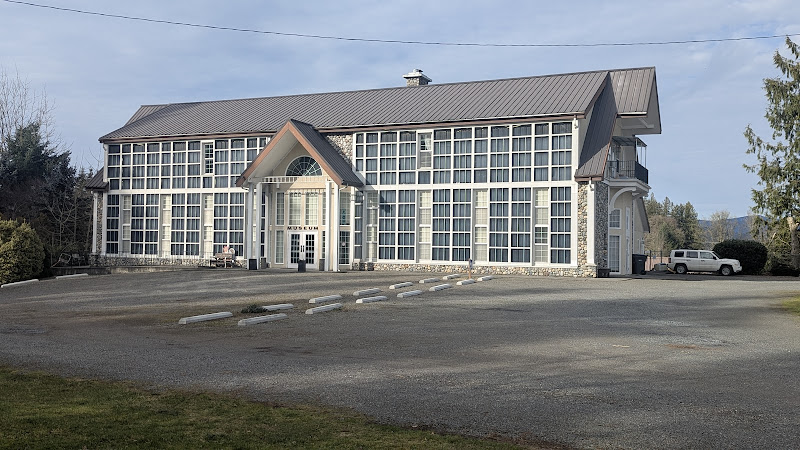
Stillaguamish Valley Pioneer Museum

Hurricane Harbor Arlington
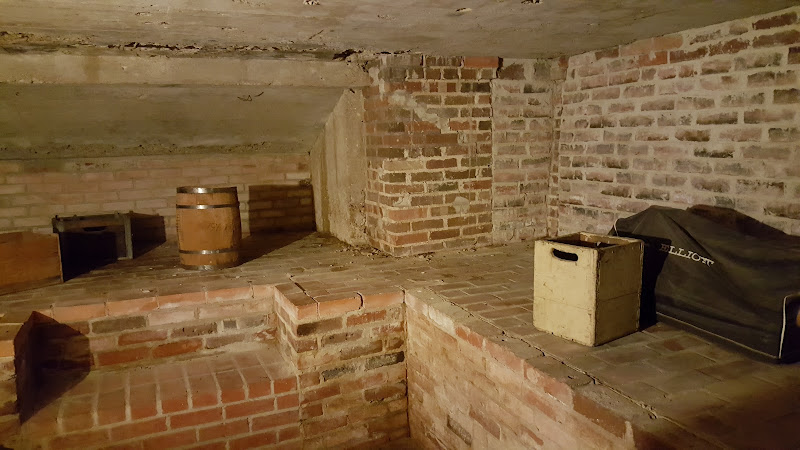
Fielder House Museum
Find Accommodations Nearby
Recommended Tours & Activities
Visitor Reviews
There are no reviews yet. Be the first one to write one.
Share Your Experience
Have you visited DEA Museum & Visitors Center? Help other travelers by leaving a review.