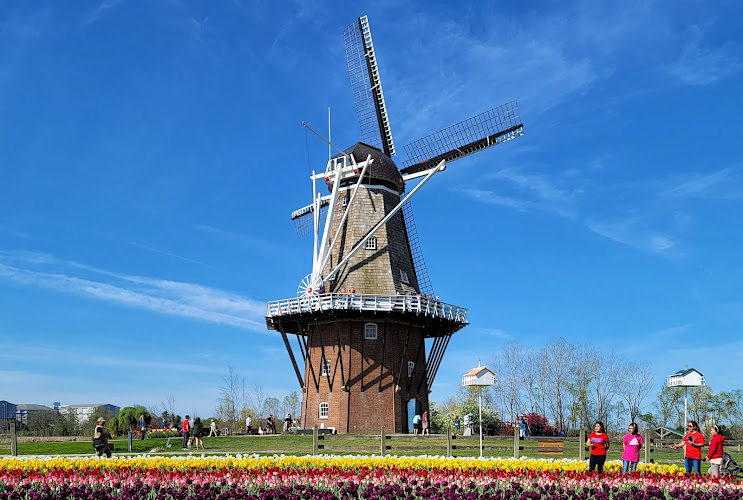
De Zwaan in the village of Holland is one of the few authentic Dutch windmills remaining in the United States, originally built in 1761 and reconstructed on site in 1965 using traditional wooden gears and sails.
Highlights & Key Features
Authentic Dutch windmill dating from 1761
Reconstructed in Holland, Michigan, in 1965
Traditional wooden gears and working milling machinery
Riverfront gardens, paths, bridges, and photo views
Gallery deck views reached by steep stairs
Visitor Guide & Information
Rising above a park-like stretch of the Macatawa River, De Zwaan brings a striking piece of Dutch history to Holland, Michigan. Its dark wooden structure, broad sails, and carefully engineered form stand apart from the town’s other Dutch-themed sights because this is an authentic mill rather than a modern replica. Originally built in the Netherlands in 1761, it was transported and reconstructed in Holland in 1965, becoming a lasting focal point for the community’s Dutch-American heritage.
The setting encourages visitors to slow down. Lawns, gardens, water, canals, bridges, and walking paths frame the windmill, while its changing appearance makes it a rewarding subject from several angles. A visit can be as simple as an exterior walk and photographs, or it can become a closer look at historic engineering through an interior tour. When conditions allow milling activity, the turning sails and working mechanisms add an especially vivid sense of purpose to the landmark.
What to See & Experience
De Zwaan’s appeal is both visual and mechanical. From outside, notice the scale of the sails and the mill’s traditional construction against the open riverfront landscape. Interior visits provide the fuller story, following the relationship between wind, gears, millstones, and grain. Costumed guides interpret the building’s history and its operation, helping visitors understand why its wooden machinery is more than decorative detail. The upper levels also reveal the compact, vertical arrangement required to turn wind power into usable work.
Historic structure: Examine an authentic Dutch windmill built in 1761 and reconstructed in Holland decades later.
Working mechanics: Learn how sails, wooden gears, and millstones channel wind energy into grain milling.
Guided interpretation: Hear practical stories about construction, operation, and Dutch connections to the Holland community.
Waterfront setting: Walk nearby paths for views of the river, gardens, bridges, and the mill’s changing profile.
Upper-level perspective: The outdoor gallery deck offers broad views, reached by a steep stair climb.
Mill products: Look for flour milled on site in the gift shop, when available.
Practical Visitor Strategy
Planning Factor
Visitor Advice
Best Time to Go
Choose a clear day for exterior views and allow time to enjoy the surrounding paths and gardens.
Suggested Duration
Plan a brief stop for the grounds, or allow additional time if taking an interior guided visit.
Crowd & Pacing Tips
Start with outdoor photos, then join an interior visit if offered; busy periods can make a slower, flexible approach useful.
Getting Oriented
Use the river, bridges, and garden paths to circle the site and view the mill from more than one direction.
For the most satisfying visit, treat the interior and exterior as complementary experiences. The grounds establish the windmill’s place in Holland’s riverfront landscape, while the guided portions explain details that are difficult to read from below. If photography is the priority, walk the paths before or after the tour and look for a composition that includes water or the nearby bridges. Windy weather can make the mill feel particularly animated, though operation depends on conditions and site practice.
Who Will Enjoy It Most (and Trade-Offs)
De Zwaan suits heritage travelers, design and engineering enthusiasts, families with curious older children, and photographers seeking a distinctly Holland scene. It is also a strong choice for visitors who prefer a focused cultural stop rather than a large museum. The primary trade-off is physical: interior levels and the gallery deck involve steep stairs, so they may not suit every mobility need; the outdoor grounds provide a more accessible way to appreciate the mill and setting. Pair the visit with a stroll through the surrounding park and riverfront paths, or combine it with Holland’s other Dutch-heritage attractions, downtown shops, and Lake Michigan-area sightseeing for a fuller day in the city.
Community & Insider Notes
Last modified November 23, 2026
Rising above a park-like stretch of the Macatawa River, De Zwaan brings a striking piece of Dutch history to Holland, Michigan. Its dark wooden structure, broad sails, and carefully engineered form stand apart from the town’s other Dutch-themed sights because this is an authentic mill rather than a modern replica. Originally built in the Netherlands in 1761, it was transported and reconstructed in Holland in 1965, becoming a lasting focal point for the community’s Dutch-American heritage.
The setting encourages visitors to slow down. Lawns, gardens, water, canals, bridges, and walking paths frame the windmill, while its changing appearance makes it a rewarding subject from several angles. A visit can be as simple as an exterior walk and photographs, or it can become a closer look at historic engineering through an interior tour. When conditions allow milling activity, the turning sails and working mechanisms add an especially vivid sense of purpose to the landmark.
De Zwaan’s appeal is both visual and mechanical. From outside, notice the scale of the sails and the mill’s traditional construction against the open riverfront landscape. Interior visits provide the fuller story, following the relationship between wind, gears, millstones, and grain. Costumed guides interpret the building’s history and its operation, helping visitors understand why its wooden machinery is more than decorative detail. The upper levels also reveal the compact, vertical arrangement required to turn wind power into usable work.
Historic structure: Examine an authentic Dutch windmill built in 1761 and reconstructed in Holland decades later.
Working mechanics: Learn how sails, wooden gears, and millstones channel wind energy into grain milling.
Guided interpretation: Hear practical stories about construction, operation, and Dutch connections to the Holland community.
Waterfront setting: Walk nearby paths for views of the river, gardens, bridges, and the mill’s changing profile.
Upper-level perspective: The outdoor gallery deck offers broad views, reached by a steep stair climb.
Mill products: Look for flour milled on site in the gift shop, when available.
Practical Visitor Strategy
Planning Factor
Visitor Advice
Best Time to Go
Choose a clear day for exterior views and allow time to enjoy the surrounding paths and gardens.
Suggested Duration
Plan a brief stop for the grounds, or allow additional time if taking an interior guided visit.
Crowd & Pacing Tips
Start with outdoor photos, then join an interior visit if offered; busy periods can make a slower, flexible approach useful.
Getting Oriented
Use the river, bridges, and garden paths to circle the site and view the mill from more than one direction.
For the most satisfying visit, treat the interior and exterior as complementary experiences. The grounds establish the windmill’s place in Holland’s riverfront landscape, while the guided portions explain details that are difficult to read from below. If photography is the priority, walk the paths before or after the tour and look for a composition that includes water or the nearby bridges. Windy weather can make the mill feel particularly animated, though operation depends on conditions and site practice.
Who Will Enjoy It Most (and Trade-Offs)
De Zwaan suits heritage travelers, design and engineering enthusiasts, families with curious older children, and photographers seeking a distinctly Holland scene. It is also a strong choice for visitors who prefer a focused cultural stop rather than a large museum. The primary trade-off is physical: interior levels and the gallery deck involve steep stairs, so they may not suit every mobility need; the outdoor grounds provide a more accessible way to appreciate the mill and setting. Pair the visit with a stroll through the surrounding park and riverfront paths, or combine it with Holland’s other Dutch-heritage attractions, downtown shops, and Lake Michigan-area sightseeing for a fuller day in the city.
Key Highlights
Authentic Dutch windmill dating from 1761
Reconstructed in Holland, Michigan, in 1965
Traditional wooden gears and working milling machinery
De Zwaan is the working heart of Windmill Island Gardens in Holland, Michigan, and it’s hard not to pause the moment you see those sails turning over the Macatawa River. The address—1 Lincoln Ave, Holland, MI 49423—puts you right at the entrance to the park. From there, a short walk brings you onto the island, where the windmill rises above flowerbeds, canals, and lawns that feel purpose-built for leisurely wandering.
The name De Zwaan means “The Swan,” and the windmill carries that poise. This isn’t a replica. It’s an authentic Dutch windmill, the last one permitted to leave the Netherlands, brought to Holland, Michigan in the 1960s and restored to working condition. Costumed guides lead tours through the interior, and the experience is wonderfully tactile—wooden beams that creak softly, bags of grain on pulleys, and the steady rhythm of the sails overhead. You can trace the path of grain from the hopper down to flour, understanding step by step how wind power still does honest work here.
I remember the first time I climbed the interior stairs—steep and narrow, exactly as you’d expect in a centuries-old mill—and reached the gallery deck. The view stretches across tulip fields in spring and green lawns and river channels in summer. The breeze hits you first, then the whoosh of the sails as they sweep past. Down below, you can hear children squeal at the antique Dutch carousel and the music of a street organ drifting across the island. It’s a park and a working site rolled into one, with that rare combination of hands-on history and easy charm.
If you’re traveling with kids, De Zwaan is one of the best Holland, MI attractions to balance energy and education. The guides keep tours lively, and the visual drama of those sails sells the story of wind power better than any signboard. Flour milled on-site is usually available for purchase at the gift shop, and the guides will happily talk about how the milling schedule depends on wind direction and speed. On blustery days, the action picks up; on still days, you get a calmer tour but more time to look over the mechanics.
Accessibility is thoughtfully handled. The entrance and parking lot are wheelchair accessible, and the grounds have wide, smooth paths. While the upper levels of the windmill require climbing stairs, the lower level exhibits make it easy to learn about milling history and Dutch heritage without a climb. Benches and shady spots are scattered throughout the park, which is helpful if you’re pacing a visit with grandparents or little ones.
Beyond the windmill, the island layers on details that reward curiosity: canals with little bridges, seasonal flower displays, and costumed staff who make the place feel lived-in rather than staged. You’ll find signage explaining the engineering behind the sails, the types of grain that pass through, and how Dutch water management shaped the landscape. I also appreciate that the park staff don’t rush you. If you want to linger at the viewing windows to watch the gears mesh, or take a quiet lap around the flowerbeds to see which tulips are peaking, you can.
What sets De Zwaan apart from other attractions in Holland, Michigan is that it isn’t just an Instagram moment. It’s a working machine with a story that unfolds best when you ask questions, look closely, and give yourself a little time. The wind decides the pace; you simply follow along.
Key Features
Authentic Dutch windmill: De Zwaan is a functioning mill brought from the Netherlands, the only one of its kind operating in the USA.
Costumed, guided tours: Knowledgeable guides in traditional dress lead you through each level, sharing milling history and local Dutch heritage.
Working flour mill: On windy days, you can see grain actively being milled; look for bags of on-site flour in the gift shop.
Gallery deck views: Climb to an outdoor gallery (via steep stairs) for sweeping views over the Macatawa River and gardens.
Seasonal flowers: Spring tulips draw crowds, but summer annuals and late-season blooms keep the grounds colorful beyond May.
Family-friendly park setting: Lawns, walking paths, and a playful carousel and street organ keep younger travelers engaged.
Wheelchair-accessible entrance and parking: Smooth paths around the grounds; lower-level exhibits are accessible without stairs.
Photogenic canals and bridges: A small network of waterways adds charm and offers great backdrops for photos with the sails in view.
Interpreted history: Clear signage and knowledgeable staff explain wind power, milling technology, and Dutch-American connections.
Close to downtown Holland: Easy to reach by car, bike, or even on foot from central Holland, MI.
Best Time to Visit
De Zwaan’s calendar has distinct moods, and I’ve enjoyed different visits for different reasons. The headline season is spring, especially during the Tulip Time Festival, when the park bursts with color and the whole town leans into its Dutch roots. Early May typically brings peak blooms, costumed dancers in wooden shoes around town, and extra energy across the island. If you want that festival atmosphere, go then—but plan for larger crowds, busier parking, and popular time slots for guided tours.
Summer is the sweet spot for a relaxed visit. The tulips make way for annual plantings, and the lawns stay picnic-ready. If you’re interested in the milling action, summer often brings steady winds off Lake Michigan, and weekday mornings can be a great time to catch the guides with fewer people around. I like arriving when the park opens; you get soft light for photos, the sails may already be moving, and you can take your time on the gallery deck.
Early fall is underrated. You won’t see the spring spectacle of tulips, but you’ll get warm days, lower crowds, and clearer views as foliage begins to turn. The wind can be brisk, which is exactly what De Zwaan needs to run. Photographers appreciate the long shadows and crisp skies. It’s also a nice time for a bike ride to the island, with post-ride coffee downtown afterward.
Winter is typically off-season for the park. If you’re visiting Holland, MI in colder months, check opening dates before you go. When the grounds reopen in spring, the earliest days can be lovely—fewer visitors and that fresh, just-opened feeling—though blooms may still be building depending on the weather.
How to Get There
De Zwaan sits on Windmill Island in the Macatawa River, with the entrance at 1 Lincoln Ave, Holland, MI 49423. From downtown Holland, it’s a short hop: I usually drive north on River Ave and follow the signs to the gatehouse. Parking is straightforward and adjacent to the entrance, and the lot is wheelchair accessible.
Driving from farther afield, US-31 and I-196 feed into Holland with clear signage to downtown. Once you’re in the city grid, Lincoln Ave is easy to find; the island is just beyond the northern edge of downtown. If you’re relying on GPS, the address will bring you right to the park entrance. During Tulip Time, traffic can back up near the gatehouse; I’ve had better luck arriving early or parking downtown and walking in.
Holland is a bike-friendly town, and pedaling to De Zwaan is a pleasant option on sunny days. You can use local bike lanes from downtown and secure your bike near the entrance. If you’re arriving by train on the Pere Marquette line, the Holland station is close enough for a stroll; it’s about a 20–25 minute walk or a short rideshare to the island.
Public buses serve the broader area, but schedules don’t always line up neatly with park hours. If you’re counting on transit, check timetables in advance and have a backup plan. On foot from downtown, the walk is flat and straightforward—cross the river and follow Lincoln Ave to the gatehouse. It’s a good way to approach; you’ll see the sails appear as you near the bridge to the island.
Tips for Visiting
Time your tour: Guided tours are the heart of the experience. Ask at the entrance when the next tour begins, and aim to catch one early before crowds build.
Expect stairs: The interior stairs to the gallery deck are steep and narrow. Wear shoes with good grip. If stairs aren’t for you, plan to enjoy the accessible lower level and outdoor viewpoints.
Wind matters: Milling depends on wind conditions. On breezy days, you’ll see more action; on still days, guides focus on demonstrations and history. Either way, you’ll learn a lot.
Arrive early during Tulip Time: Parking fills fast during the festival. Early mornings deliver softer light, easier photos, and more relaxed tours.
Bring a light layer: The gallery deck can be cooler and breezier than ground level. A windproof layer keeps you comfortable while you take in the views.
Pick up flour: Bags of flour milled at De Zwaan tend to sell out on busy days. If that’s on your list, buy it before your tour rather than after.
Mind the sails: Keep a respectful distance from rotating sails and roped-off areas. The machinery is powerful, and staff will guide you to safe viewing spots.
Plan for kids: The park is great for families. Strollers work well around the grounds, but you’ll want to park them before climbing inside the mill.
Photography tips: The best angles are across the canal or from the gallery deck. Late afternoon light warms the brick and wood, while morning light highlights the sails against the sky.
Pack bug spray in summer: The island setting is beautiful, but the river can bring a few mosquitoes at dusk. It’s not a big issue, just worth being prepared.
Combine with downtown: Pair your visit with a walk through downtown Holland. The short distance makes it easy to add coffee, lunch, or shopping to your day.
Check seasonal dates: Windmill Island Gardens typically operates spring through fall. If you’re planning a shoulder-season trip, confirm opening dates so you don’t miss out.
De Zwaan delivers exactly what travelers hope to find in Holland, Michigan: a genuine connection to Dutch heritage, a beautiful park setting, and the rare chance to stand inside a working windmill and feel what wind power actually means. Whether you come for the Tulip Time Festival or a quiet summer morning, give yourself enough time to look, listen, and let the slow-turning sails set the pace of your visit.
Stay22 provides this accommodation search. We may earn a commission if you book through it; verify current prices and terms with the provider.
🗺️
Interactive accommodation map requires marketing cookies to display live rates.
Recommended Experiences & Activities
GetYourGuide provides this tour inventory. We may earn a commission if you book through it; verify current availability, prices, and terms with the provider.
Top Viator Experiences & Guided Tours in Holland
We may earn a commission if you book through links on this page at no extra cost to you. All tours feature verified customer reviews and flexible cancellation options.
 Real Journey Travels