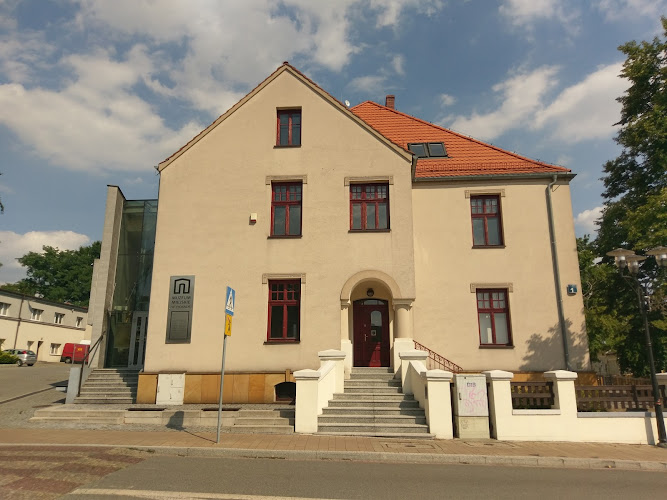
Located in central Tychy, the museum places local industry, urban planning and everyday life at the center of its narrative. Visitors find a mix of archival photographs, industrial artifacts, interactive displays, and surprising personal objects that together make the evolution of this part of southern Poland easy to follow — even for those who didn’t arrive with a background in Polish history.
What sets this museum apart is the way it links the familiar to the specific. For example, alongside displays about regional architecture and municipal life, there are focused exhibits that touch on the brewing tradition in Tychy and the surrounding Silesian region. That brewing history is not treated as a mere footnote; rather it appears as part of the social fabric — how factories shaped neighborhoods, how beer production affected local trade, and how taste and technology changed over time. So if you like a bit of industrial heritage with your cultural exploration, this place quietly rewards curiosity.
Exhibition style varies. Some rooms are deliberately intimate, lined with objects that feel like they might have belonged to real people next door: letters, kitchen tools, school uniforms, a child’s drawing or two. Other sections are more museum-y, with timeline panels and context-heavy explanations. And yes, there are modern multimedia stations — short videos, touchscreens that let you flip through old maps, and tactile elements for younger visitors. The overall impression is that the curators aim to be useful, not showy; they want visitors to leave with a clearer idea of how Tychy came to be what it is now.
Accessibility has been taken seriously here. The museum features a wheelchair accessible entrance and parking, and restroom facilities accommodate visitors with reduced mobility. That practical attention is a relief for people who travel with family members or older relatives; it signals that the experience was planned for a broad range of guests. Facilities beyond the basics are fairly simple — there is not a full-service restaurant inside, so plan accordingly — but the museum does provide restrooms and comfortable spots for reading a panel or organizing photos.
Families will notice the museum’s kid-friendly aspects. Exhibits often include simple hands-on components that keep children engaged: button-press audio clips, replicas to touch, and playful interpretive panels. It’s not a theme park, but it does make local history accessible to younger minds. Parents appreciate that a visit is neither too long nor too heavy; the layout encourages short stops and curiosity-led wandering, which, in practice, means kids can enjoy the visit without turning it into a meltdown marathon.
Visitors who care about context will like how the museum connects Tychy to the wider Silesian region and to Poland’s 20th-century transformations. There is a thoughtful emphasis on urban planning, especially the post-war period when new towns and municipal projects reshaped communities. Informational panels explain these changes in plain language, and that helps travelers understand not just what they’re looking at, but why a certain building or street looks the way it does. This is great for people who like to carry the threads of a story beyond the museum walls — to then walk the streets and see the real-world consequences of the histories they’ve just absorbed.
For travelers who also enjoy museums that double as little local research centers, there are archival collections and reference materials available on request. Casual visitors won’t be overwhelmed, but scholars and genealogy hobbyists can ask staff for guidance. The museum staff are generally helpful and patient — they tend to answer questions and point out lesser-known artifacts. In fact, the staff’s local knowledge often leads to the best discoveries; they might nudge someone toward an overlooked folder in the reading room or explain an object with a personal anecdote. Those little asides tend to stick with people: a stray detail about a neighborhood festival or a factory strike can suddenly make a display feel alive.
Atmosphere is low-key and a bit reflective. On a weekday morning, it can feel almost like stepping into a quiet library: soft footsteps, the murmur of an audio guide, a child asking an earnest question. On weekends, there’s more bustle but not chaos. The museum manages to be both approachable and informative, striking a balance that many municipal museums aim for but few nail. While it isn’t flashy, it has character — and that counts when a traveler is trying to choose between another tourist trap and a place that actually adds meaning to the trip.
Practical details matter here: the museum does not host a large café or restaurant inside, so visitors should plan a snack stop elsewhere. There are places to sit and rest between galleries, and the signage is mostly in Polish with a helpful amount of English for foreign visitors. Audio guides or English-language leaflets may be available for major exhibits, but it’s wise to confirm before arrival if language-specific resources are important to your visit.
For photographers and history-lovers, certain small delights pop up in unexpected corners: a perfectly preserved piece of 19th-century signage, a scale model of a neighborhood plan, a row of wartime ration cards that look mundane until one reads the penciled-in names. Those details often make the visit memorable. Many travelers discover that the museum is not a one-hour stop; instead, it rewards a slow pace where small discoveries accumulate into a broader understanding of place.
One practical tip worth mentioning even inside this descriptive piece: the museum’s programming sometimes includes temporary exhibitions and local-themed events. These rotating displays are where the museum shows a bit more flair — themed evenings, guest lectures, or pop-up displays that dive deep into subjects like brewing technology, school life in the 1950s, or Silesian textile trade. If a traveler has the flexibility, checking which temporary exhibitions are running can add value to the visit. But remember, there’s no guarantee of a café during those nights, so bring water and a snack if needed.
In short, the City Museum in Tychy functions as a helpful primer on the city and region. It explains how industry, planning and daily life intertwined to produce the landscape seen today. It is accessible, family-friendly, and quietly informative. Visitors leave with practical knowledge — a better sense of the city’s industrial roots, the brewing connections that influenced local culture, and the urban planning choices that made modern Tychy what it is. And, if one wants to be a little sentimental about it: it’s a place that rewards curiosity. Go in with questions, and the exhibits will usually answer them, often with a tiny anecdote or object that stays in the mind long after the sightseeing list moves on.
- Focuses on local history, industrial heritage and urban planning in the Silesian region
- Includes exhibits related to brewing history and municipal life
- Wheelchair accessible entrance, parking and restroom facilities
- Child-friendly interactive elements and hands-on displays
- No full-service restaurant on site — plan meals accordingly
- Staff available to help with archival or research inquiries
Lastly, while the City Museum isn’t trying to be everything at once, that restraint works in its favor. Travelers who want context, nuance and the kind of local detail that makes history feel lived-in will appreciate the visit. It might not be the flashiest stop on a Silesian itinerary, but for people who like their travel to include actual learning, this museum often becomes the unexpected highlight — the kind of place that prompts a second coffee and a longer walk around town just to see the history in the streets.
 Real Journey Travels