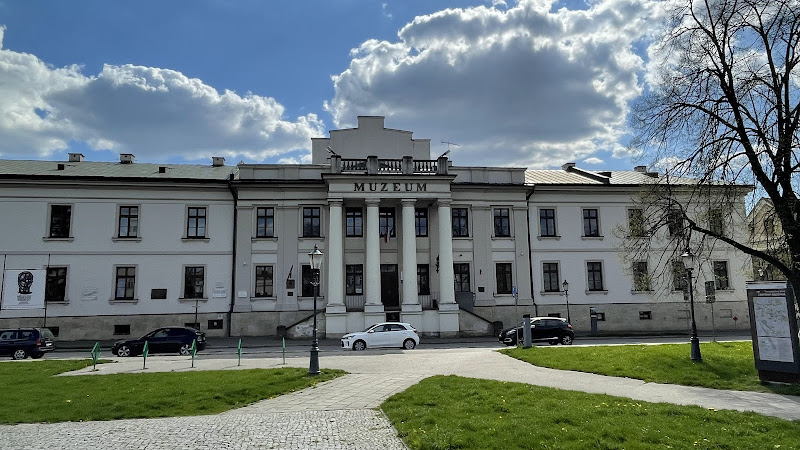
It highlights the life and work of Jacek Malczewski, a native son whose canvases helped define a turn-of-the-century Polish sensibility that blends mythology, national memory, and personal vision. The collection balances major paintings with intimate studies and self-portraits, so visitors get both the theatrical, allegorical side of Malczewski and the smaller, quieter works that reveal technique and temperament.
Visitors will notice right away that the place feels curated with a local pride rather than a blockbuster, museum-chain polish. That matters: the quieter atmosphere makes it easier to study brushwork, to follow recurring motifs of mythology and melancholy, and to trace the arc of a life shaped by Poland’s social and artistic changes around the turn of the 20th century. The exhibition layout tends to group paintings by theme and period, so the evolution from early academic training to signature symbolist compositions comes through without dense art-history jargon.
Accessibility is a genuine strength. The museum offers a wheelchair accessible entrance and restroom, and there is wheelchair friendly parking nearby. Families tend to appreciate that basic facilities are in place and that exhibitions are presented in a way that often engages children — not by dumbing down the art but by offering visual hooks and stories about characters in the paintings. On the practical side, there is no on-site restaurant, but there are public restrooms and nearby cafes and bakeries for a quick refuel between galleries.
The museum also works as a cultural anchor for Radom. It hosts temporary exhibitions and programmatic events that connect Malczewski to wider themes in Polish art, such as the Young Poland movement and Polish symbolism. These rotating shows mean that repeat visitors or locals can discover fresh perspectives, while first-timers can enjoy a solid overview of Malczewski’s most important themes: myth, national history, psychological introspection, and the recurring motif of thanatos or melancholic reflection.
Because this museum is compact, it rewards slow looking. People who breeze through large national museums might be surprised at how much more personal a small collection can feel. The staff are typically knowledgeable and eager to give context; a friendly guide or volunteer will point out smaller, easily missable works that are nevertheless important to understanding Malczewski’s development as a painter and thinker.
Best Time to Visit
The best time to visit depends on what the visitor seeks. For quieter galleries and easier access to docents or staff, weekday mornings are ideal. Arriving soon after opening gives time to move through galleries before tour groups or school visits gather. Late afternoons on weekdays tend to be calmer as well.
Seasonally, spring and early autumn are the most pleasant for pairing a museum visit with a walk around Radom. The city’s public squares and nearby streets are livelier then, with cafés open and fewer large tourist crowds that can make small museums feel rushed. Winter visits have their charm if the visitor wants an introspective, contemplative experience — Malczewski’s moodier canvases resonate strongly when the days are short and the light is soft. Summer is busiest in the city overall, but the museum itself often remains a restful escape even when Radom is busier with day-trippers.
It is worth checking whether a temporary exhibition is running. Special shows can be compelling reasons to plan a trip around particular months. Because some works rotate through loans and conservation, the rare masterpiece that a visitor most wants to see might not be on display year-round, so checking ahead is smart. Tickets for special events sometimes sell out or are timed-entry, so book if there is an exhibit that calls out to you.
How to Get There
The museum is easy to reach from within Radom and accessible from nearby cities. By public transport, local buses and trams connect the central parts of Radom to the historic area where the museum is situated. Most visitors who arrive by train or long-distance bus find it straightforward to take a short taxi or local bus ride from the station; many simply walk if staying near the city center.
From larger Polish hubs, regular regional trains and intercity coaches stop in Radom. Travelers coming from Warsaw, for example, often take the train for a short trip and then use local transit or a short taxi ride to the museum. Driving offers flexibility and is well-suited to those planning multiple stops in the region. Free street parking is available for shorter visits and errand-style stops, while paid parking lots provide longer-term options. The museum’s accessible parking facilities make arrival simpler for visitors with mobility needs.
For those who prefer two wheels, central Radom is cyclable, and bike racks near the museum area are common. Ride-hailing services operate in the city and can be a handy alternative late at night or when transit frequency dwindles. Regardless of the transport mode, the museum is not difficult to find once near the central square or historic district; local signage points the way and staff can give directions by phone if needed.
Tips for Visiting
Plan at least 60 to 90 minutes for a relaxed visit. The museum’s compact size tempts some visitors to rush, but lingering yields richer rewards: small studies, the finish of brushstrokes, and subtle iconographic details that tie Malczewski’s art to Polish cultural memory. If one is a dedicated fan of painting, two hours will allow time for a temporary exhibition as well.
Expect most interpretive materials to be in Polish with partial translations. Many labels include English summaries, but those who want deeper context should consider a guided tour, a bilingual guidebook, or a quick pre-visit read on Malczewski and Polish symbolism. The museum staff can often point to reliable sources or may offer short tours in English when requested in advance.
Photography policies vary by exhibition. Flash photography is typically banned near original paintings; non-flash photography may be allowed in some rooms but not others. Visitors with a strong interest in art photography should contact the museum ahead of time to avoid disappointment and to learn about any permits or restrictions.
Bring water and a light snack if needed. Since the museum does not have a restaurant, it helps to know nearby cafés and bakeries; many visitors combine a gallery visit with a coffee and a Polish pastry afterward. Comfortable footwear is recommended: galleries are easy to navigate, but standing and slow-walking while looking closely at art is part of the experience.
Families should ask about child-friendly materials or activity sheets. The museum often presents Malczewski’s narrative-rich canvases in ways that spark conversation — good for curious kids who like stories about mythological figures, symbolic beasts, or dramatic portraits. A scavenger list made before entering can keep little ones engaged: find a self-portrait, spot a mythological creature, identify a recurring color or motif.
Be mindful that the museum has an intimate, local feel. That is a plus for those who want a personal encounter with works, but it also means that busy periods can feel more crowded than in a larger institution. If quiet is essential, avoid typical school-trip hours in late mornings on weekdays. For visitors with accessibility needs, the wheelchair accessible entrance and restroom are real conveniences; they should still confirm availability of any mobility aids or specialized services in advance, particularly for group visits.
Finally, allow time to wander nearby. The museum rewards being part of a half-day or full-day cultural loop through Radom. Local galleries, historic streets, and small restaurants are all within comfortable walking distance, so visitors can frame the Malczewski experience within the lived texture of the city. Many leave feeling they learned not just about a painter, but about how an artist shaped and was shaped by Polish culture and history — which, frankly, is the whole point of a museum like this.
 Real Journey Travels