
Chan Chan
About Chan Chan
Description
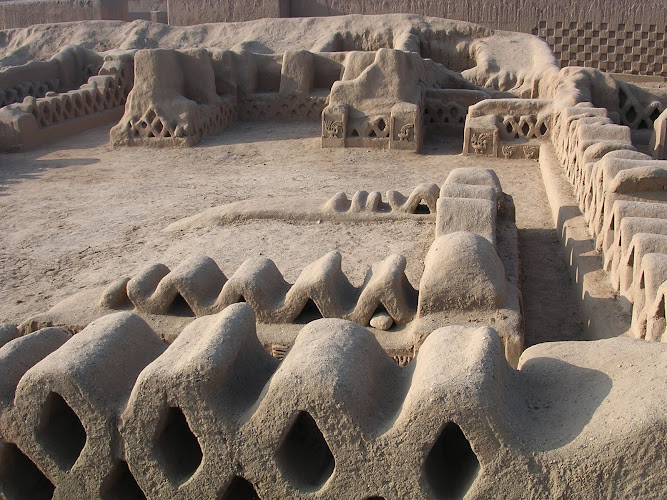
Chan Chan is one of those places that feels like stepping into another world, or maybe more accurately, into another time. It’s the largest adobe city in the Americas, and when you’re walking through its walls, you can’t help but imagine the lives of the people who once called it home. Built by the Chimú civilization around 850 AD, this sprawling archaeological site was once the beating heart of an empire that thrived long before the Incas rose to power. The sheer scale of it—massive walls, intricate carvings, vast courtyards—makes you pause. It’s not just a ruin; it’s a reminder of human creativity and resilience in the face of a harsh coastal desert environment.
Of course, like many ancient sites, some parts are weathered and worn, and you may find yourself wishing more of the original detail had survived. But that’s part of the story too. The desert winds, the salty air, and centuries of time have left their mark. What’s left is still impressive, though, and honestly, it’s humbling. Walking through the labyrinth-like passages, you’ll see walls decorated with geometric patterns and carvings of fish, birds, and waves—clear evidence of how important the ocean was to the Chimú people. The artistry is subtle but striking. It’s not flashy, but it’s powerful in its simplicity.
Some visitors come expecting a polished museum experience, and while there is a small site museum with artifacts and displays, the real magic is outside among the ruins. The museum helps you put things into context, but it’s the city itself that steals the show. You’ll probably notice that some areas are reconstructed to give you a sense of what it once looked like, while others are left in their raw, eroded state. Personally, I liked that contrast—it tells you what’s been lost, but also what’s been preserved. It’s a balance between conservation and authenticity.
Families often bring kids here, and it’s surprisingly good for them. The open spaces let children wander a bit (though carefully, of course), and the carvings give them something to point at and ask questions about. Accessibility is also thoughtfully considered. There are wheelchair-accessible entrances, restrooms, and even parking, which is not always the case at archaeological sites in Peru. So, if mobility is a concern, Chan Chan is one of the more approachable historical sites you’ll find.
Overall, Chan Chan is a place that leaves you with mixed feelings—in the best way. There’s awe at the scale and craftsmanship, a touch of melancholy at the erosion, and a sense of gratitude that it’s still there for us to explore. It’s not as polished as Machu Picchu, but that’s exactly why it feels so raw and real.
Key Features
- Largest adobe city in the Americas, covering roughly 20 square kilometers
- Intricate wall carvings featuring marine life, birds, and geometric designs
- Labyrinth-like corridors and vast ceremonial courtyards
- On-site museum with artifacts from the Chimú civilization
- Wheelchair-accessible entrances, restrooms, and parking
- Family-friendly environment with wide open spaces
- Sections of partially reconstructed walls to visualize the original grandeur
Best Time to Visit
If you’re planning a trip, the best time to visit Chan Chan is during the dry season, which runs from May to November. The skies are clearer, and you won’t have to worry about sudden rainfall interrupting your exploration. The coastal desert climate here means it’s usually mild, but mornings can be a bit chilly, so bring a light jacket. Midday, on the other hand, can get hot under the sun, and there’s not much shade once you’re inside the ruins. Personally, I’d recommend going early in the morning or later in the afternoon to avoid the peak heat and to catch the softer light—it makes the adobe walls glow in a way that’s just beautiful.
Visiting during local festivals in Trujillo can also add something extra to your trip. The Marinera Festival in January, for example, gives you a chance to experience the city’s vibrant culture before heading out to the ruins. Just keep in mind that it can get crowded during those times, so plan accordingly.
How to Get There
Getting to Chan Chan is pretty straightforward if you’re already in Trujillo, which is the nearest major city. From the city center, it’s only about a 15-minute drive. Taxis are affordable and easy to find, and if you’re up for a bit of adventure, local buses also pass by the site. I’ve taken both, and while taxis are obviously more comfortable, the bus ride gives you a glimpse of everyday life in the area. If you’re traveling with kids or carrying gear, a taxi is probably the way to go.
For those traveling from further away, Trujillo has an airport with domestic flights from Lima, which makes it accessible even if you’re short on time. From the airport, it’s about a 20–30 minute ride to the site. Renting a car is another option, though honestly, unless you’re planning to drive around the region extensively, it might not be worth the hassle.
Tips for Visiting
Here are some practical tips that can make your visit smoother and more enjoyable:
- Bring water and sunscreen: The site is exposed, and the sun can be relentless. There aren’t many shaded areas, so hydration and protection are key.
- Wear comfortable shoes: The ground is uneven in places, and you’ll be walking quite a bit. Sandals aren’t the best choice here.
- Hire a guide if you can: While you can walk around on your own, a knowledgeable guide can bring the history to life in ways that signs and plaques just can’t. I still remember a guide pointing out carvings I would have completely missed otherwise.
- Don’t rush: It’s tempting to breeze through, but take your time. Sit in one of the courtyards for a moment and try to imagine the ceremonies that once took place there. It adds a whole different layer to the experience.
- Check the museum first: Starting at the site museum helps you understand what you’re about to see. The artifacts and explanations give context, and then when you walk the ruins, everything clicks into place.
- Mind the weather: Even though it’s a desert, the coastal fog (known as garúa) can roll in, making things damp and cool. A light jacket is handy just in case.
- Respect the site: It might go without saying, but don’t climb on the walls or touch the carvings. They’re fragile, and preserving them is part of the responsibility we all share as visitors.
One last thought—don’t expect everything to be picture-perfect. Chan Chan is a bit rugged, a bit weathered, and that’s exactly what makes it special. It’s a place where you can feel history under your feet, not just read about it on a plaque. If you go in with that mindset, you’ll walk away with memories that stick with you long after you’ve left the desert coast of Peru.
Key Features
- Largest adobe city in the Americas, covering roughly 20 square kilometers
- Intricate wall carvings featuring marine life, birds, and geometric designs
- Labyrinth-like corridors and vast ceremonial courtyards
- On-site museum with artifacts from the Chimú civilization
- Wheelchair-accessible entrances, restrooms, and parking
- Family-friendly environment with wide open spaces
- Sections of partially reconstructed walls to visualize the original grandeur
More Details
Updated September 30, 2025
Table of Contents
Description
Chan Chan is one of those places that feels like stepping into another world, or maybe more accurately, into another time. It’s the largest adobe city in the Americas, and when you’re walking through its walls, you can’t help but imagine the lives of the people who once called it home. Built by the Chimú civilization around 850 AD, this sprawling archaeological site was once the beating heart of an empire that thrived long before the Incas rose to power. The sheer scale of it—massive walls, intricate carvings, vast courtyards—makes you pause. It’s not just a ruin; it’s a reminder of human creativity and resilience in the face of a harsh coastal desert environment.
Of course, like many ancient sites, some parts are weathered and worn, and you may find yourself wishing more of the original detail had survived. But that’s part of the story too. The desert winds, the salty air, and centuries of time have left their mark. What’s left is still impressive, though, and honestly, it’s humbling. Walking through the labyrinth-like passages, you’ll see walls decorated with geometric patterns and carvings of fish, birds, and waves—clear evidence of how important the ocean was to the Chimú people. The artistry is subtle but striking. It’s not flashy, but it’s powerful in its simplicity.
Some visitors come expecting a polished museum experience, and while there is a small site museum with artifacts and displays, the real magic is outside among the ruins. The museum helps you put things into context, but it’s the city itself that steals the show. You’ll probably notice that some areas are reconstructed to give you a sense of what it once looked like, while others are left in their raw, eroded state. Personally, I liked that contrast—it tells you what’s been lost, but also what’s been preserved. It’s a balance between conservation and authenticity.
Families often bring kids here, and it’s surprisingly good for them. The open spaces let children wander a bit (though carefully, of course), and the carvings give them something to point at and ask questions about. Accessibility is also thoughtfully considered. There are wheelchair-accessible entrances, restrooms, and even parking, which is not always the case at archaeological sites in Peru. So, if mobility is a concern, Chan Chan is one of the more approachable historical sites you’ll find.
Overall, Chan Chan is a place that leaves you with mixed feelings—in the best way. There’s awe at the scale and craftsmanship, a touch of melancholy at the erosion, and a sense of gratitude that it’s still there for us to explore. It’s not as polished as Machu Picchu, but that’s exactly why it feels so raw and real.
Key Features
- Largest adobe city in the Americas, covering roughly 20 square kilometers
- Intricate wall carvings featuring marine life, birds, and geometric designs
- Labyrinth-like corridors and vast ceremonial courtyards
- On-site museum with artifacts from the Chimú civilization
- Wheelchair-accessible entrances, restrooms, and parking
- Family-friendly environment with wide open spaces
- Sections of partially reconstructed walls to visualize the original grandeur
Best Time to Visit
If you’re planning a trip, the best time to visit Chan Chan is during the dry season, which runs from May to November. The skies are clearer, and you won’t have to worry about sudden rainfall interrupting your exploration. The coastal desert climate here means it’s usually mild, but mornings can be a bit chilly, so bring a light jacket. Midday, on the other hand, can get hot under the sun, and there’s not much shade once you’re inside the ruins. Personally, I’d recommend going early in the morning or later in the afternoon to avoid the peak heat and to catch the softer light—it makes the adobe walls glow in a way that’s just beautiful.
Visiting during local festivals in Trujillo can also add something extra to your trip. The Marinera Festival in January, for example, gives you a chance to experience the city’s vibrant culture before heading out to the ruins. Just keep in mind that it can get crowded during those times, so plan accordingly.
How to Get There
Getting to Chan Chan is pretty straightforward if you’re already in Trujillo, which is the nearest major city. From the city center, it’s only about a 15-minute drive. Taxis are affordable and easy to find, and if you’re up for a bit of adventure, local buses also pass by the site. I’ve taken both, and while taxis are obviously more comfortable, the bus ride gives you a glimpse of everyday life in the area. If you’re traveling with kids or carrying gear, a taxi is probably the way to go.
For those traveling from further away, Trujillo has an airport with domestic flights from Lima, which makes it accessible even if you’re short on time. From the airport, it’s about a 20–30 minute ride to the site. Renting a car is another option, though honestly, unless you’re planning to drive around the region extensively, it might not be worth the hassle.
Tips for Visiting
Here are some practical tips that can make your visit smoother and more enjoyable:
- Bring water and sunscreen: The site is exposed, and the sun can be relentless. There aren’t many shaded areas, so hydration and protection are key.
- Wear comfortable shoes: The ground is uneven in places, and you’ll be walking quite a bit. Sandals aren’t the best choice here.
- Hire a guide if you can: While you can walk around on your own, a knowledgeable guide can bring the history to life in ways that signs and plaques just can’t. I still remember a guide pointing out carvings I would have completely missed otherwise.
- Don’t rush: It’s tempting to breeze through, but take your time. Sit in one of the courtyards for a moment and try to imagine the ceremonies that once took place there. It adds a whole different layer to the experience.
- Check the museum first: Starting at the site museum helps you understand what you’re about to see. The artifacts and explanations give context, and then when you walk the ruins, everything clicks into place.
- Mind the weather: Even though it’s a desert, the coastal fog (known as garúa) can roll in, making things damp and cool. A light jacket is handy just in case.
- Respect the site: It might go without saying, but don’t climb on the walls or touch the carvings. They’re fragile, and preserving them is part of the responsibility we all share as visitors.
One last thought—don’t expect everything to be picture-perfect. Chan Chan is a bit rugged, a bit weathered, and that’s exactly what makes it special. It’s a place where you can feel history under your feet, not just read about it on a plaque. If you go in with that mindset, you’ll walk away with memories that stick with you long after you’ve left the desert coast of Peru.
Key Highlights
- Largest adobe city in the Americas, covering roughly 20 square kilometers
- Intricate wall carvings featuring marine life, birds, and geometric designs
- Labyrinth-like corridors and vast ceremonial courtyards
- On-site museum with artifacts from the Chimú civilization
- Wheelchair-accessible entrances, restrooms, and parking
- Family-friendly environment with wide open spaces
- Sections of partially reconstructed walls to visualize the original grandeur
Location
Places to Stay Near Chan Chan
Find and Book a Tour
Explore More Travel Guides
No reviews found! Be the first to review!
Traveler Reviews for Chan Chan
There are no reviews yet. Be the first one to write one.
Have you visited Chan Chan? Help other travelers by sharing your review.
You Might Also Like
Oval La Marina

La Huaca de la Luna

Carmen Monastery
Find Accommodations Nearby
Recommended Tours & Activities
Visitor Reviews
There are no reviews yet. Be the first one to write one.
Share Your Experience
Have you visited Chan Chan? Help other travelers by leaving a review.