

Chamsori Gramophone Museum and Edison Science Museum
About Chamsori Gramophone Museum and Edison Science Museum
Description
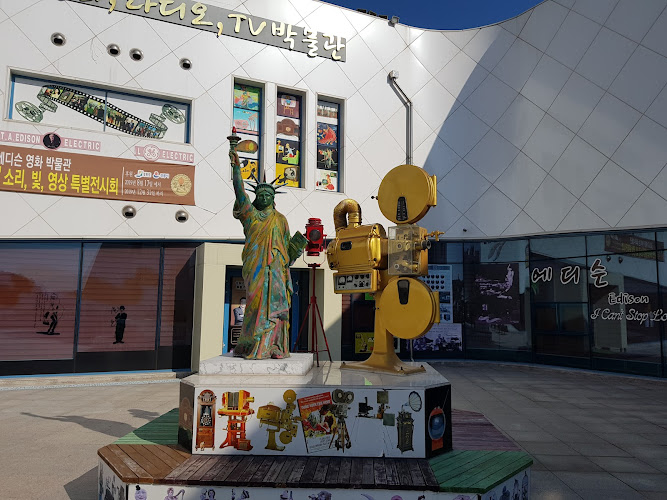
The Chamsori Gramophone Museum and Edison Science Museum is a twofold attraction that reads like a love letter to sound and invention. Visitors find themselves walking between galleries of bronze horns and polished wooden cabinets, and exhibit halls that catalogue the curious, stubborn brilliance of Thomas Edison and his contemporaries. It is not merely a display of objects; it is a layered story about how people listened to music, how sound technology evolved, and how invention shaped modern life. That combination of a vast gramophone collection with an Edison-focused science gallery gives the site a rare double identity: part music-history cabinet of curiosities, part hands-on science house.
The gramophone collection is the headline act. The museum houses thousands of vintage gramophones, from tiny novelty players to room-filling models with huge flared horns. Many pieces are arranged by era and design, which makes it easy for a curious visitor to trace the evolution of playback technology from acoustic mechanisms to early electric amplification. Expect close-up views of turntables, tone arms, reproducer needles, and original labels — those little design details that tell you where an object came from and why it sounds the way it does. Some machines are restored and playable, so people who care about sound will appreciate hearing real records played on period equipment. There is a tactile satisfaction in watching a large wooden gramophone take a song and make it bloom out of metal and wood; it feels strangely alive, like a machine that remembers how to sing.
Parallel to the gramophone narrative, the Edison Science Museum presents a different but complementary angle: inventions and artifacts related to Thomas Edison and the era of rapid technological change. The Edison exhibits move beyond light bulbs and phonographs into patents, prototypes, and stories about experimentation. It is a place where the history of invention is explained in ways that are approachable for families yet rewarding for those who like technical depth. Diagrams, replicas, and curated artifacts make the ideas behind the inventions feel less like museum glass and more like tools that once hummed and sparked in workshops. That emphasis on process — on trial and error — is a genuine strength of the science side, because it invites visitors to think like tinkerers rather than passive observers.
Accessibility and family friendliness are baked into the visitor experience. The museum has a wheelchair-accessible entrance, parking, and restrooms, which matters more than it sounds when one imagines navigating narrow historic galleries. Parents will find the site good for kids: there are interactive elements and clear, kid-friendly explanations that transform complex histories into moments of 'oh, I get it' discovery. The lack of an on-site restaurant is something to note — so plan snacks or a nearby café stop — but restrooms and basic visitor amenities are provided and maintained.
Practical details aside, the atmosphere is unexpectedly intimate. The display rooms are often organized like listening salons and workshop rooms rather than sterile rows of glass, and that curatorial choice pays off. It encourages linger-time, which is exactly what the museum wants: people to pause, to peer into the polished mechanics, to read a handwritten cataloging note, to close an eye and imagine the crackle of a 78 rpm record. And if that sounds a touch romantic, well, the objects justify it. They are old, sometimes a little imperfect, and full of character. There is a sense of stewardship here — the caretakers clearly love the collection — and that affection translates into thoughtful labels and carefully staged demonstrations.
For travelers who like to stitch museum visits into a day of local exploration, the location plays nicely with other nearby attractions. The museum rewards those who pair it with a slower pace: a walk by the coast or a visit to nearby lakefront paths afterward lets the ears and the head decompress. In other words, people do not have to rush from one attraction to the next; the museum is the sort of place where time can pleasantly dilate.
The interpretive content tends to strike a middle ground. Some sections are richly detailed, aimed at visitors with a deeper interest in mechanical design and patent history. Other parts use plain language and photographs suited to people who want a fascinating hour without diving into technicalities. That balance means the place serves casual travelers as well as audiophiles and history nerds. One common reaction is surprise: visitors who expected a small local collection often find themselves pleasantly overwhelmed by the sheer number of items and the surprising depth of the Edison exhibits.
There are a few quirks worth mentioning because they color expectations. Signage in English exists but can be uneven in depth; those who rely on English-only explanations may occasionally want more context. Audio guides are sometimes available but may not cover every nook; it is a good idea to bring a translation app or a bit of curiosity and patience. Lighting and display decisions favor conservation, so some rooms are dimmer, which adds atmosphere but can make reading small labels a challenge. None of these are dealbreakers, but they matter if a visitor expects a fully polished, high-tech museum experience. The charm here is a more analog, human-scale approach: handcrafted displays, staff who know the collection, and a tangible sense that objects were made for use, not just display.
From an educational standpoint, the museum offers a surprisingly strong narrative about sound technology and invention. School groups and families will find well-structured explanations about how gramophones produce sound mechanically and how Edison and others moved the world toward electrical solutions. The science exhibits are especially good at showing process: sketches, experimental devices, and notes that reveal how inventors tested ideas over time. This makes the museum a subtle lesson in scientific thinking and cultural history rolled into one visit.
The collection also includes lesser-known artifacts that give the place character. For example, there are regional and rare gramophones with unique local modifications, and a few unexpected ephemera: record sleeves, trade catalogs, repair manuals, and handwritten service logs. These small items are the kind of detail that keeps a historian gleeful and a casual visitor pleasantly surprised. Such artifacts illuminate the social side of technology: how music left the drawing room and entered public spaces, how street vendors and small shops adapted devices, how repair culture supported the lifespan of objects in ways that modern disposable tech does not.
For travelers who care about photography, the museum is an inviting subject. The combination of polished metal, warm wood grain, and vintage typography yields excellent close-ups. Do be mindful of low lighting in some rooms and observe any photography rules for exhibit protection. A respectful approach — no flash, no touching — helps preserve the artifacts for the next generation of visitors. Many people take home images that feel cinematic: a horn like a stranded conch, a phonograph needle poised like a tiny finger, or a display case full of labels whose fonts look like tiny histories.
Finally, the museum is quietly curated for repeat visits. A first trip gives the overview, but those who return or linger longer often discover cross-references between the gramophone collection and the Edison science narratives that deepen appreciation. The place rewards curiosity; the more a person looks, the more connections appear: how business cards and trade catalogs hint at commercial networks, how the design of a horn reflects both sound science and local taste, how an inventor s sketch can read like poetry for engineers. It is the kind of museum that grows on you, and that is not a sentence one uses lightly in a tourism guide.
In short, the Chamsori Gramophone Museum and Edison Science Museum is a nuanced attraction that combines spectacle and scholarship. It is for people who love the texture of objects, for families who want a smart and accessible science stop, for travelers who enjoy pairing a museum visit with a slower, scenic afternoon. The collection impresses by scale and depth, the Edison exhibits educate by showing invention as process, and the whole experience is carried by staff attentiveness and a clear curatorial love for the artifacts. Travelers who allocate a lazy two to three hours will get the most out of a visit; those who love audio history or invention lore could happily spend more. Either way, this museum is one of those places that makes history feel a little less distant and a lot more human.
Key Features
More Details
Updated August 30, 2025
Table of Contents
Description
The Chamsori Gramophone Museum and Edison Science Museum is a twofold attraction that reads like a love letter to sound and invention. Visitors find themselves walking between galleries of bronze horns and polished wooden cabinets, and exhibit halls that catalogue the curious, stubborn brilliance of Thomas Edison and his contemporaries. It is not merely a display of objects; it is a layered story about how people listened to music, how sound technology evolved, and how invention shaped modern life. That combination of a vast gramophone collection with an Edison-focused science gallery gives the site a rare double identity: part music-history cabinet of curiosities, part hands-on science house.
The gramophone collection is the headline act. The museum houses thousands of vintage gramophones, from tiny novelty players to room-filling models with huge flared horns. Many pieces are arranged by era and design, which makes it easy for a curious visitor to trace the evolution of playback technology from acoustic mechanisms to early electric amplification. Expect close-up views of turntables, tone arms, reproducer needles, and original labels — those little design details that tell you where an object came from and why it sounds the way it does. Some machines are restored and playable, so people who care about sound will appreciate hearing real records played on period equipment. There is a tactile satisfaction in watching a large wooden gramophone take a song and make it bloom out of metal and wood; it feels strangely alive, like a machine that remembers how to sing.
Parallel to the gramophone narrative, the Edison Science Museum presents a different but complementary angle: inventions and artifacts related to Thomas Edison and the era of rapid technological change. The Edison exhibits move beyond light bulbs and phonographs into patents, prototypes, and stories about experimentation. It is a place where the history of invention is explained in ways that are approachable for families yet rewarding for those who like technical depth. Diagrams, replicas, and curated artifacts make the ideas behind the inventions feel less like museum glass and more like tools that once hummed and sparked in workshops. That emphasis on process — on trial and error — is a genuine strength of the science side, because it invites visitors to think like tinkerers rather than passive observers.
Accessibility and family friendliness are baked into the visitor experience. The museum has a wheelchair-accessible entrance, parking, and restrooms, which matters more than it sounds when one imagines navigating narrow historic galleries. Parents will find the site good for kids: there are interactive elements and clear, kid-friendly explanations that transform complex histories into moments of ‘oh, I get it’ discovery. The lack of an on-site restaurant is something to note — so plan snacks or a nearby café stop — but restrooms and basic visitor amenities are provided and maintained.
Practical details aside, the atmosphere is unexpectedly intimate. The display rooms are often organized like listening salons and workshop rooms rather than sterile rows of glass, and that curatorial choice pays off. It encourages linger-time, which is exactly what the museum wants: people to pause, to peer into the polished mechanics, to read a handwritten cataloging note, to close an eye and imagine the crackle of a 78 rpm record. And if that sounds a touch romantic, well, the objects justify it. They are old, sometimes a little imperfect, and full of character. There is a sense of stewardship here — the caretakers clearly love the collection — and that affection translates into thoughtful labels and carefully staged demonstrations.
For travelers who like to stitch museum visits into a day of local exploration, the location plays nicely with other nearby attractions. The museum rewards those who pair it with a slower pace: a walk by the coast or a visit to nearby lakefront paths afterward lets the ears and the head decompress. In other words, people do not have to rush from one attraction to the next; the museum is the sort of place where time can pleasantly dilate.
The interpretive content tends to strike a middle ground. Some sections are richly detailed, aimed at visitors with a deeper interest in mechanical design and patent history. Other parts use plain language and photographs suited to people who want a fascinating hour without diving into technicalities. That balance means the place serves casual travelers as well as audiophiles and history nerds. One common reaction is surprise: visitors who expected a small local collection often find themselves pleasantly overwhelmed by the sheer number of items and the surprising depth of the Edison exhibits.
There are a few quirks worth mentioning because they color expectations. Signage in English exists but can be uneven in depth; those who rely on English-only explanations may occasionally want more context. Audio guides are sometimes available but may not cover every nook; it is a good idea to bring a translation app or a bit of curiosity and patience. Lighting and display decisions favor conservation, so some rooms are dimmer, which adds atmosphere but can make reading small labels a challenge. None of these are dealbreakers, but they matter if a visitor expects a fully polished, high-tech museum experience. The charm here is a more analog, human-scale approach: handcrafted displays, staff who know the collection, and a tangible sense that objects were made for use, not just display.
From an educational standpoint, the museum offers a surprisingly strong narrative about sound technology and invention. School groups and families will find well-structured explanations about how gramophones produce sound mechanically and how Edison and others moved the world toward electrical solutions. The science exhibits are especially good at showing process: sketches, experimental devices, and notes that reveal how inventors tested ideas over time. This makes the museum a subtle lesson in scientific thinking and cultural history rolled into one visit.
The collection also includes lesser-known artifacts that give the place character. For example, there are regional and rare gramophones with unique local modifications, and a few unexpected ephemera: record sleeves, trade catalogs, repair manuals, and handwritten service logs. These small items are the kind of detail that keeps a historian gleeful and a casual visitor pleasantly surprised. Such artifacts illuminate the social side of technology: how music left the drawing room and entered public spaces, how street vendors and small shops adapted devices, how repair culture supported the lifespan of objects in ways that modern disposable tech does not.
For travelers who care about photography, the museum is an inviting subject. The combination of polished metal, warm wood grain, and vintage typography yields excellent close-ups. Do be mindful of low lighting in some rooms and observe any photography rules for exhibit protection. A respectful approach — no flash, no touching — helps preserve the artifacts for the next generation of visitors. Many people take home images that feel cinematic: a horn like a stranded conch, a phonograph needle poised like a tiny finger, or a display case full of labels whose fonts look like tiny histories.
Finally, the museum is quietly curated for repeat visits. A first trip gives the overview, but those who return or linger longer often discover cross-references between the gramophone collection and the Edison science narratives that deepen appreciation. The place rewards curiosity; the more a person looks, the more connections appear: how business cards and trade catalogs hint at commercial networks, how the design of a horn reflects both sound science and local taste, how an inventor s sketch can read like poetry for engineers. It is the kind of museum that grows on you, and that is not a sentence one uses lightly in a tourism guide.
In short, the Chamsori Gramophone Museum and Edison Science Museum is a nuanced attraction that combines spectacle and scholarship. It is for people who love the texture of objects, for families who want a smart and accessible science stop, for travelers who enjoy pairing a museum visit with a slower, scenic afternoon. The collection impresses by scale and depth, the Edison exhibits educate by showing invention as process, and the whole experience is carried by staff attentiveness and a clear curatorial love for the artifacts. Travelers who allocate a lazy two to three hours will get the most out of a visit; those who love audio history or invention lore could happily spend more. Either way, this museum is one of those places that makes history feel a little less distant and a lot more human.
Key Highlights
Chamsori Gramophone Museum and Edison Science Museum
Location
Places to Stay Near Chamsori Gramophone Museum and Edison Science Museum
Find and Book a Tour
Explore More Travel Guides
No reviews found! Be the first to review!
Traveler Reviews for Chamsori Gramophone Museum and Edison Science Museum
There are no reviews yet. Be the first one to write one.
Have you visited Chamsori Gramophone Museum and Edison Science Museum? Help other travelers by sharing your review.
You Might Also Like

Daegwallyeong Museum
Son Sung Mok Film Museum

강릉통일공원
Find Accommodations Nearby
Recommended Tours & Activities
Visitor Reviews
There are no reviews yet. Be the first one to write one.
Share Your Experience
Have you visited Chamsori Gramophone Museum and Edison Science Museum? Help other travelers by leaving a review.