About Chamarel Waterfall

Description

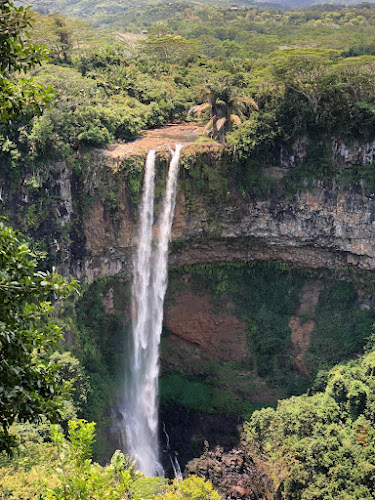
Chamarel Waterfall in Mauritius is one of those places that almost doesn’t look real until you’re standing right there, feeling the mist on your face. It’s a single-drop waterfall that plunges about 100 meters down a rugged basalt cliff, surrounded by thick, green forest that hums with life. The first time I saw it, I remember thinking, “This looks like something out of a fantasy film,” and honestly, that feeling hasn’t faded even after multiple visits. The sound of the water hitting the rocks below is oddly calming, almost hypnotic if you stand there long enough.

The waterfall is fed by three distinct streams that merge into the Saint Denis River, giving it a steady, powerful flow even during the drier months. Some days, depending on the light and the season, the water glimmers in shades of silver and jade. And if you’re lucky enough to catch it after a rainfall, it roars with such force that you can feel the vibration through the ground. It’s not just a sight—it’s an experience that hits all your senses at once.

Visitors can view the falls from a designated upper deck that offers panoramic views, or they can head down to the base where the water pools into a shallow basin. I’ve dipped my feet in that water—it’s surprisingly chilly, even under the Mauritian sun. The area is well-maintained, accessible for families, and there’s even wheelchair-friendly parking nearby, which is something not every natural site can boast. It’s one of those attractions that manages to balance accessibility with raw, untouched beauty.

Of course, not everyone walks away equally impressed. Some travelers expect a massive, Niagara-style spectacle and are surprised to find a more intimate, serene setting. But that’s part of its charm—it’s not about grandeur, it’s about atmosphere. It’s about standing there, surrounded by tropical air and birdsong, realizing how small and lucky you are to witness something so timeless.

Key Features

  • Approximately 100 meters (about 272 feet) tall, making it the tallest single-drop waterfall in Mauritius.
  • Fed by three streams that combine into the Saint Denis River, ensuring a consistent flow year-round.
  • Two main viewpoints: an upper observation deck and a lower base area with shallow water suitable for wading.
  • Located near the famous Seven Coloured Earths, allowing visitors to explore both attractions in one trip.
  • Family-friendly environment with accessible parking and pathways.
  • Accepts credit cards, debit cards, and mobile payments for convenience.
  • Onsite services available, including rest areas and small local stalls selling refreshments or souvenirs.

Best Time to Visit

If you ask me, the best time to visit Chamarel Waterfall is during or just after the rainy season—roughly between December and April. That’s when the waterfall is at its most dramatic, with a thunderous flow that makes for incredible photos and an even better in-person experience. The surrounding forest looks greener, fresher, and more alive. But keep in mind, the humidity can be intense, so bring water and maybe a light towel if you’re prone to sweating like I am.

For those who prefer a calmer atmosphere, the dry months from May to November are ideal. The water flow is gentler, and the skies are usually clearer. You’ll have better lighting for photography, and fewer crowds too. I once visited around mid-June, and the air was crisp, the sky a perfect blue—honestly, it felt like the falls were performing just for me.

Early mornings are magical here. The sunlight hits the mist just right, sometimes creating faint rainbows that seem to hover midair. Late afternoons are also beautiful, though the light tends to fade quickly behind the cliff. If you’re planning a full day, pair your visit with a trip to the nearby Seven Coloured Earths—it’s a short drive and the combination of both sights makes for a truly memorable day.

How to Get There

Getting to Chamarel Waterfall is part of the adventure itself. The drive winds through the lush hills of southwestern Mauritius, where sugarcane fields stretch endlessly and small villages pop up like colorful brushstrokes on the landscape. If you’re driving from Port Louis, expect about an hour and a half on the road, depending on traffic. The route is scenic, though a bit twisty in places—so if you’re prone to motion sickness, maybe skip the heavy breakfast.

There are clear signs leading to the Chamarel area, and the roads are in decent condition. Once you reach the Chamarel entrance gate, you’ll need to pay a small entry fee that covers both the waterfall and the Seven Coloured Earths. The site has proper parking, and from there it’s a short, easy walk to the viewing decks.

If you don’t want to drive, you can book a guided tour through most hotels or local agencies. I’ve done both—driving solo gives you freedom to explore at your own pace, but guided tours often include fascinating local insights that you’d never find in a brochure. Plus, someone else handles the winding roads, which is always a bonus.

Tips for Visiting

Here’s the thing about Chamarel Waterfall—it looks simple enough to visit, but a few small tips can make your experience so much better. For starters, wear comfortable shoes. Even though the paths are fairly easy, they can get slippery after rain. I learned this the hard way when I nearly slid trying to get that “perfect” photo. Speaking of photos, bring your camera or a phone with a good lens because the viewpoints are made for wide shots.

It’s also smart to bring a hat and sunscreen; the sun can be brutal, especially around midday. And don’t forget insect repellent—nothing ruins a peaceful view faster than a swarm of persistent mosquitoes. If you plan to linger at the base, pack a small towel and maybe some water shoes. The rocks can be a bit uneven, but dipping your toes into that cool water is worth it.

Try to visit early in the day before the tour buses arrive. Around 9 a.m., the place is still quiet, and you can actually hear the forest waking up—birds calling, leaves rustling, the waterfall’s steady rhythm in the background. It’s honestly one of those moments that sticks with you.

And here’s a little insider tip: after your visit, stop by one of the small local cafés in Chamarel village. They serve excellent Creole coffee and homemade pastries that taste like someone’s grandmother made them. It’s a beautiful way to end your trip—sitting there, sipping coffee, watching the hills roll away into the distance, knowing you’ve just seen one of Mauritius’s most iconic natural wonders.

Chamarel Waterfall isn’t just another tick on a travel list—it’s a reminder of how nature can still surprise us, even in a world where we think we’ve seen it all. Whether you’re a photographer, a nature lover, or just someone who enjoys a good view, this waterfall has a way of leaving its mark on you. And honestly, that’s what travel should do.

Key Features

  • Approximately 100 meters (about 272 feet) tall, making it the tallest single-drop waterfall in Mauritius.
  • Fed by three streams that combine into the Saint Denis River, ensuring a consistent flow year-round.
  • Two main viewpoints: an upper observation deck and a lower base area with shallow water suitable for wading.
  • Located near the famous Seven Coloured Earths, allowing visitors to explore both attractions in one trip.
  • Family-friendly environment with accessible parking and pathways.
  • Accepts credit cards, debit cards, and mobile payments for convenience.
  • Onsite services available, including rest areas and small local stalls selling refreshments or souvenirs.

More Details

Updated November 9, 2025


Description

Chamarel Waterfall in Mauritius is one of those places that almost doesn’t look real until you’re standing right there, feeling the mist on your face. It’s a single-drop waterfall that plunges about 100 meters down a rugged basalt cliff, surrounded by thick, green forest that hums with life. The first time I saw it, I remember thinking, “This looks like something out of a fantasy film,” and honestly, that feeling hasn’t faded even after multiple visits. The sound of the water hitting the rocks below is oddly calming, almost hypnotic if you stand there long enough.

The waterfall is fed by three distinct streams that merge into the Saint Denis River, giving it a steady, powerful flow even during the drier months. Some days, depending on the light and the season, the water glimmers in shades of silver and jade. And if you’re lucky enough to catch it after a rainfall, it roars with such force that you can feel the vibration through the ground. It’s not just a sight—it’s an experience that hits all your senses at once.

Visitors can view the falls from a designated upper deck that offers panoramic views, or they can head down to the base where the water pools into a shallow basin. I’ve dipped my feet in that water—it’s surprisingly chilly, even under the Mauritian sun. The area is well-maintained, accessible for families, and there’s even wheelchair-friendly parking nearby, which is something not every natural site can boast. It’s one of those attractions that manages to balance accessibility with raw, untouched beauty.

Of course, not everyone walks away equally impressed. Some travelers expect a massive, Niagara-style spectacle and are surprised to find a more intimate, serene setting. But that’s part of its charm—it’s not about grandeur, it’s about atmosphere. It’s about standing there, surrounded by tropical air and birdsong, realizing how small and lucky you are to witness something so timeless.

Key Features

  • Approximately 100 meters (about 272 feet) tall, making it the tallest single-drop waterfall in Mauritius.
  • Fed by three streams that combine into the Saint Denis River, ensuring a consistent flow year-round.
  • Two main viewpoints: an upper observation deck and a lower base area with shallow water suitable for wading.
  • Located near the famous Seven Coloured Earths, allowing visitors to explore both attractions in one trip.
  • Family-friendly environment with accessible parking and pathways.
  • Accepts credit cards, debit cards, and mobile payments for convenience.
  • Onsite services available, including rest areas and small local stalls selling refreshments or souvenirs.

Best Time to Visit

If you ask me, the best time to visit Chamarel Waterfall is during or just after the rainy season—roughly between December and April. That’s when the waterfall is at its most dramatic, with a thunderous flow that makes for incredible photos and an even better in-person experience. The surrounding forest looks greener, fresher, and more alive. But keep in mind, the humidity can be intense, so bring water and maybe a light towel if you’re prone to sweating like I am.

For those who prefer a calmer atmosphere, the dry months from May to November are ideal. The water flow is gentler, and the skies are usually clearer. You’ll have better lighting for photography, and fewer crowds too. I once visited around mid-June, and the air was crisp, the sky a perfect blue—honestly, it felt like the falls were performing just for me.

Early mornings are magical here. The sunlight hits the mist just right, sometimes creating faint rainbows that seem to hover midair. Late afternoons are also beautiful, though the light tends to fade quickly behind the cliff. If you’re planning a full day, pair your visit with a trip to the nearby Seven Coloured Earths—it’s a short drive and the combination of both sights makes for a truly memorable day.

How to Get There

Getting to Chamarel Waterfall is part of the adventure itself. The drive winds through the lush hills of southwestern Mauritius, where sugarcane fields stretch endlessly and small villages pop up like colorful brushstrokes on the landscape. If you’re driving from Port Louis, expect about an hour and a half on the road, depending on traffic. The route is scenic, though a bit twisty in places—so if you’re prone to motion sickness, maybe skip the heavy breakfast.

There are clear signs leading to the Chamarel area, and the roads are in decent condition. Once you reach the Chamarel entrance gate, you’ll need to pay a small entry fee that covers both the waterfall and the Seven Coloured Earths. The site has proper parking, and from there it’s a short, easy walk to the viewing decks.

If you don’t want to drive, you can book a guided tour through most hotels or local agencies. I’ve done both—driving solo gives you freedom to explore at your own pace, but guided tours often include fascinating local insights that you’d never find in a brochure. Plus, someone else handles the winding roads, which is always a bonus.

Tips for Visiting

Here’s the thing about Chamarel Waterfall—it looks simple enough to visit, but a few small tips can make your experience so much better. For starters, wear comfortable shoes. Even though the paths are fairly easy, they can get slippery after rain. I learned this the hard way when I nearly slid trying to get that “perfect” photo. Speaking of photos, bring your camera or a phone with a good lens because the viewpoints are made for wide shots.

It’s also smart to bring a hat and sunscreen; the sun can be brutal, especially around midday. And don’t forget insect repellent—nothing ruins a peaceful view faster than a swarm of persistent mosquitoes. If you plan to linger at the base, pack a small towel and maybe some water shoes. The rocks can be a bit uneven, but dipping your toes into that cool water is worth it.

Try to visit early in the day before the tour buses arrive. Around 9 a.m., the place is still quiet, and you can actually hear the forest waking up—birds calling, leaves rustling, the waterfall’s steady rhythm in the background. It’s honestly one of those moments that sticks with you.

And here’s a little insider tip: after your visit, stop by one of the small local cafés in Chamarel village. They serve excellent Creole coffee and homemade pastries that taste like someone’s grandmother made them. It’s a beautiful way to end your trip—sitting there, sipping coffee, watching the hills roll away into the distance, knowing you’ve just seen one of Mauritius’s most iconic natural wonders.

Chamarel Waterfall isn’t just another tick on a travel list—it’s a reminder of how nature can still surprise us, even in a world where we think we’ve seen it all. Whether you’re a photographer, a nature lover, or just someone who enjoys a good view, this waterfall has a way of leaving its mark on you. And honestly, that’s what travel should do.

Key Highlights

  • Approximately 100 meters (about 272 feet) tall, making it the tallest single-drop waterfall in Mauritius.
  • Fed by three streams that combine into the Saint Denis River, ensuring a consistent flow year-round.
  • Two main viewpoints: an upper observation deck and a lower base area with shallow water suitable for wading.
  • Located near the famous Seven Coloured Earths, allowing visitors to explore both attractions in one trip.
  • Family-friendly environment with accessible parking and pathways.
  • Accepts credit cards, debit cards, and mobile payments for convenience.
  • Onsite services available, including rest areas and small local stalls selling refreshments or souvenirs.

Location

Places to Stay Near Chamarel Waterfall

Find and Book a Tour

Explore More Travel Guides

No reviews found! Be the first to review!

Traveler Reviews for Chamarel Waterfall

There are no reviews yet. Be the first one to write one.

Share Your Experience

Have you visited Chamarel Waterfall? Help other travelers by sharing your review.

Find Accommodations Nearby

Recommended Tours & Activities

Visitor Reviews

There are no reviews yet. Be the first one to write one.

Share Your Experience

Have you visited Chamarel Waterfall? Help other travelers by leaving a review.