About Ceiba de Colón

Description

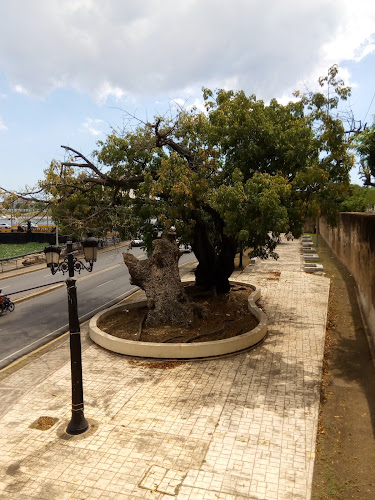
The Ceiba de Colón is one of those places where history and legend blur together, and honestly, that’s what makes it so fascinating. This massive ceiba tree, believed to be over 500 years old, stands proudly near the mouth of the Río Ozama in Santo Domingo. Local lore says Christopher Columbus himself moored his ship nearby, and whether that’s fact or embroidered storytelling, it adds a certain magic to the visit. The tree isn’t just a piece of nature—it’s a living witness to centuries of Dominican history, from the arrival of the Spanish to the bustling city life that now surrounds it.

What’s striking is how the tree feels both majestic and approachable at the same time. Its roots sprawl across the ground like something out of a fairytale, and its towering trunk has the kind of presence that makes you stop mid-step. Some people find it awe-inspiring, others might say it’s just an old tree with a story attached, but either way, it sparks curiosity. Families often stop by with kids who love climbing around the roots, while history buffs linger to soak in the atmosphere. It’s not a polished, museum-like attraction—it’s raw, authentic, and slightly imperfect, which honestly makes it more memorable.

Of course, not everyone walks away enchanted. Some visitors expect more signage, more storytelling, or a grander setup. But if you go in knowing this is about standing in front of a living relic, rather than a curated exhibit, you’ll probably appreciate it more. Personally, I think there’s something refreshing about that simplicity—it leaves space for your own imagination to fill in the gaps.

Key Features

  • A massive ceiba tree believed to be over 500 years old
  • Historical ties to Christopher Columbus and early colonial history
  • Located near the Río Ozama, adding a scenic riverside backdrop
  • Free to visit and accessible year-round
  • Wheelchair accessible entrance
  • Good spot for families with children to explore
  • A mix of natural beauty and historical storytelling

Best Time to Visit

If you’re planning a stop at the Ceiba de Colón, timing can really shape the experience. Early mornings are my personal favorite—the air is cooler, the light filters through the branches in that soft golden way, and you’ll likely have the space to yourself. Midday can get hot, and since there’s not much shade beyond the tree itself, it’s not always the most comfortable time to linger. Late afternoons are also lovely, especially if you want to catch the sunset glow over the nearby river.

As for the season, Santo Domingo has a tropical climate, so you’re looking at warm weather year-round. The rainy season (roughly May through October) might mean occasional showers, but they’re usually short-lived. If you don’t mind carrying an umbrella or ducking under the tree until the rain passes, it can actually be quite atmospheric. Dry season (November to April) is more predictable, making it the safer bet if you’re trying to plan ahead.

How to Get There

Reaching the Ceiba de Colón is fairly straightforward if you’re already exploring Santo Domingo’s Colonial Zone. It’s not far from other major landmarks, so you can easily add it to a walking tour of the area. If you’re staying downtown, a short taxi or rideshare will drop you close by, and from there it’s just a quick stroll. Public buses do pass through the area, but unless you’re comfortable navigating the local routes, a cab is usually easier.

One thing worth noting: the streets in the Colonial Zone can be narrow and busy, so driving yourself isn’t always the most stress-free option. Parking spots can be scarce, and honestly, wandering on foot lets you stumble across little cafés and hidden corners you’d miss otherwise.

Tips for Visiting

Here’s the thing about the Ceiba de Colón—it’s not the kind of attraction where you’ll spend hours, but it’s definitely worth weaving into your day. A few tips to make the most out of your visit:

  • Bring water: It gets hot quickly in Santo Domingo, and there aren’t vendors right at the tree.
  • Go with a guide: If you’re into history, hiring a guide for the Colonial Zone can give you context you won’t find on plaques or signs.
  • Take your time: Even if it looks like “just a tree,” pause and think about how many centuries it has stood there. That perspective makes the stop feel more meaningful.
  • Good for kids: The roots are fun for little ones to explore, but keep an eye out since the ground can be uneven.
  • Photography tip: Stand back to capture the full scale of the tree; up close, you’ll miss its impressive spread.
  • Pair it with nearby sights: Since it’s close to other Colonial Zone landmarks, plan a mini-route so you’re not just making the journey for one stop.

I’ll admit, the first time I visited, I wasn’t sure what to expect. Part of me thought, “Am I really walking across town to see a tree?” But standing there, with the city buzzing in the background and this ancient giant rooted in place, it kind of hit me—it’s not just about the tree itself, it’s about the story it carries. And that’s the kind of experience that sticks with you long after the trip is over.

Key Features

  • A massive ceiba tree believed to be over 500 years old
  • Historical ties to Christopher Columbus and early colonial history
  • Located near the Río Ozama, adding a scenic riverside backdrop
  • Free to visit and accessible year-round
  • Wheelchair accessible entrance
  • Good spot for families with children to explore
  • A mix of natural beauty and historical storytelling

More Details

Updated October 1, 2025


Description

The Ceiba de Colón is one of those places where history and legend blur together, and honestly, that’s what makes it so fascinating. This massive ceiba tree, believed to be over 500 years old, stands proudly near the mouth of the Río Ozama in Santo Domingo. Local lore says Christopher Columbus himself moored his ship nearby, and whether that’s fact or embroidered storytelling, it adds a certain magic to the visit. The tree isn’t just a piece of nature—it’s a living witness to centuries of Dominican history, from the arrival of the Spanish to the bustling city life that now surrounds it.

What’s striking is how the tree feels both majestic and approachable at the same time. Its roots sprawl across the ground like something out of a fairytale, and its towering trunk has the kind of presence that makes you stop mid-step. Some people find it awe-inspiring, others might say it’s just an old tree with a story attached, but either way, it sparks curiosity. Families often stop by with kids who love climbing around the roots, while history buffs linger to soak in the atmosphere. It’s not a polished, museum-like attraction—it’s raw, authentic, and slightly imperfect, which honestly makes it more memorable.

Of course, not everyone walks away enchanted. Some visitors expect more signage, more storytelling, or a grander setup. But if you go in knowing this is about standing in front of a living relic, rather than a curated exhibit, you’ll probably appreciate it more. Personally, I think there’s something refreshing about that simplicity—it leaves space for your own imagination to fill in the gaps.

Key Features

  • A massive ceiba tree believed to be over 500 years old
  • Historical ties to Christopher Columbus and early colonial history
  • Located near the Río Ozama, adding a scenic riverside backdrop
  • Free to visit and accessible year-round
  • Wheelchair accessible entrance
  • Good spot for families with children to explore
  • A mix of natural beauty and historical storytelling

Best Time to Visit

If you’re planning a stop at the Ceiba de Colón, timing can really shape the experience. Early mornings are my personal favorite—the air is cooler, the light filters through the branches in that soft golden way, and you’ll likely have the space to yourself. Midday can get hot, and since there’s not much shade beyond the tree itself, it’s not always the most comfortable time to linger. Late afternoons are also lovely, especially if you want to catch the sunset glow over the nearby river.

As for the season, Santo Domingo has a tropical climate, so you’re looking at warm weather year-round. The rainy season (roughly May through October) might mean occasional showers, but they’re usually short-lived. If you don’t mind carrying an umbrella or ducking under the tree until the rain passes, it can actually be quite atmospheric. Dry season (November to April) is more predictable, making it the safer bet if you’re trying to plan ahead.

How to Get There

Reaching the Ceiba de Colón is fairly straightforward if you’re already exploring Santo Domingo’s Colonial Zone. It’s not far from other major landmarks, so you can easily add it to a walking tour of the area. If you’re staying downtown, a short taxi or rideshare will drop you close by, and from there it’s just a quick stroll. Public buses do pass through the area, but unless you’re comfortable navigating the local routes, a cab is usually easier.

One thing worth noting: the streets in the Colonial Zone can be narrow and busy, so driving yourself isn’t always the most stress-free option. Parking spots can be scarce, and honestly, wandering on foot lets you stumble across little cafés and hidden corners you’d miss otherwise.

Tips for Visiting

Here’s the thing about the Ceiba de Colón—it’s not the kind of attraction where you’ll spend hours, but it’s definitely worth weaving into your day. A few tips to make the most out of your visit:

  • Bring water: It gets hot quickly in Santo Domingo, and there aren’t vendors right at the tree.
  • Go with a guide: If you’re into history, hiring a guide for the Colonial Zone can give you context you won’t find on plaques or signs.
  • Take your time: Even if it looks like “just a tree,” pause and think about how many centuries it has stood there. That perspective makes the stop feel more meaningful.
  • Good for kids: The roots are fun for little ones to explore, but keep an eye out since the ground can be uneven.
  • Photography tip: Stand back to capture the full scale of the tree; up close, you’ll miss its impressive spread.
  • Pair it with nearby sights: Since it’s close to other Colonial Zone landmarks, plan a mini-route so you’re not just making the journey for one stop.

I’ll admit, the first time I visited, I wasn’t sure what to expect. Part of me thought, “Am I really walking across town to see a tree?” But standing there, with the city buzzing in the background and this ancient giant rooted in place, it kind of hit me—it’s not just about the tree itself, it’s about the story it carries. And that’s the kind of experience that sticks with you long after the trip is over.

Key Highlights

  • A massive ceiba tree believed to be over 500 years old
  • Historical ties to Christopher Columbus and early colonial history
  • Located near the Río Ozama, adding a scenic riverside backdrop
  • Free to visit and accessible year-round
  • Wheelchair accessible entrance
  • Good spot for families with children to explore
  • A mix of natural beauty and historical storytelling

Location

Places to Stay Near Ceiba de Colón

Find and Book a Tour

Explore More Travel Guides

No reviews found! Be the first to review!

Traveler Reviews for Ceiba de Colón

There are no reviews yet. Be the first one to write one.

Share Your Experience

Have you visited Ceiba de Colón? Help other travelers by sharing your review.

Find Accommodations Nearby

Recommended Tours & Activities

Visitor Reviews

There are no reviews yet. Be the first one to write one.

Share Your Experience

Have you visited Ceiba de Colón? Help other travelers by leaving a review.