
Cathédrale Saint-Bénigne de Dijon
About Cathédrale Saint-Bénigne de Dijon
Key Features
More Details
Updated April 15, 2024
Cathédrale Saint-Bénigne à Dijon
## Visiting Cathédrale Saint-Bénigne de Dijon: Gothic lines, Romanesque depths
Rising above the historic center of Dijon, Cathédrale Saint-Bénigne is one of those places where Burgundy’s layers of history are visible in the stone. A Gothic cathedral on the surface, it hides one of France’s most remarkable Romanesque crypts underground – a space that still protects the sarcophagus of Saint Bénigne and traces of an ambitious three-storey rotunda from around the year 1000. Office Dijon Métropole
Because the cathedral sits inside Dijon’s UNESCO-listed historic center (part of the “Climats, terroirs of Burgundy” World Heritage site), a visit here also plugs you straight into the wider story of Burgundy’s wine and political power. World Heritage Centre
—
## Quick facts
– Location: Place Saint-Bénigne, 21000 Dijon, France
– Coordinates: 47.3214917, 5.0345168
– Architectural style: Burgundian Gothic above ground; Romanesque crypt below Office Dijon Métropole
– Consecrated: 1393; main Gothic structure built roughly 1280–1325
– Status today: Active Roman Catholic cathedral, seat of the Archdiocese of Dijon
– Typical visitor rating: Around 4.5/5 on major review platforms (for context only; always check current ratings yourself).
—
## Why this cathedral matters in Burgundy
Saint-Bénigne started life as the church of a powerful Benedictine abbey linked to the bishops of Langres and later to the Cluniac reform movement. In the late 10th century, Abbot William of Volpiano rebuilt the site with a bold design: a rotunda on three levels above the saint’s tomb, connected to upper and lower churches.
That structure partially collapsed in 1271, triggering the construction of the current Gothic church, completed in the early 14th century and consecrated in 1393.
During the French Revolution the abbey was secularised, but the church itself survived. It was turned into a parish church and then, in 1792, became Dijon’s cathedral, replacing Saint-Étienne. Much of the interior decoration was removed at that time, with the notable exception of the 18th-century organ, which you can still see today. Office Dijon Métropole
In the late 19th century a 93-metre spire was added above the crossing, crowned by statues of notable Burgundian figures – a reminder that this was not just a religious monument, but a statement of regional identity. Office Dijon Métropole
—
## Architectural highlights to look for
### 1. Severe Gothic outside, polychrome roofs above
From Place Saint-Bénigne, the façade is strikingly vertical: twin towers flanking a large rose window and a deep portal, all in a relatively austere version of Gothic typical for Burgundy. The side elevations reveal more detail, including the Burgundian polychrome tiled roofs – glazed terracotta tiles in geometric patterns that are a signature of Dijon’s skyline. Histories
The relative simplicity of the stonework, compared with more flamboyant Gothic cathedrals, is deliberate and often noted by architectural historians as a defining feature of the building.
### 2. A surprisingly sober interior
Inside, the nave feels tall and narrow, with clustered columns and pointed arches leading your eye straight to the choir. Modern visitors often comment on how sober and plain the space feels compared to ornate cathedrals elsewhere in France – an effect reinforced by the long white walls and regular rhythm of the arcades. Histories
Look for:
– The contrast in color between nave and choir – the choir has been restored to an ochre tone closer to its medieval appearance, creating a subtle visual break between the spaces.
– Funerary monuments to members of Burgundy’s parliament and elite, including memorials to Jean-Baptiste Le Goux de la Berchère and Jean de Berbisey. Corvinus –
– The 18th-century organ, one of the few major furnishings that survived Revolutionary plundering. Office Dijon Métropole
### 3. The Romanesque crypt and remains of the rotunda
The biggest reason architecture fans put Saint-Bénigne on their list is underground.
Beneath the choir lies an 11th-century Romanesque crypt, all low groin vaults and chunky columns, enclosing the tomb of Saint Bénigne. This was originally part of a three-storey rotunda built around the year 1000 under Abbot William of Volpiano. Only the lowest level survives, excavated in the 19th century and now open to visitors.
In the crypt you can still see:
– The martyrium of Saint Bénigne, with coloured marble paving.
– Carved Romanesque capitals on the columns, some with vegetal motifs and stylised figures.
– The circular layout of the former rotunda, which gives a clear sense of the original vertical design. Office Dijon Métropole
Note: several recent sources mention that on some days the crypt has been closed to the public, even during normal cathedral opening hours. Corvinus – Access conditions can change due to restoration, religious events or staffing, so it is wise to verify current information before planning a visit specifically around the crypt.
—
## Visiting information (and what may change)
### Opening hours and tickets
Recent travel and booking sites indicate:
– Cathedral entry: generally free of charge. Donations are welcomed to support maintenance and restoration.
– Crypt access: some sources mention an optional, modest fee for visiting the underground areas, and others report free access when open.
– Typical hours: several guides list opening times around 09:30–18:00 on weekdays, with variations at weekends and around services.
### Important caveats (outdated or variable data)
– Opening hours and crypt access have changed in recent years, including temporary closures mentioned in 2025 trip reports. Corvinus –
– Restoration works on the rotonda, sacristy and other parts of the building are ongoing under national and regional heritage programmes, including Plan France Relance, which can temporarily affect access or the appearance of scaffolding.
For the most accurate, up-to-date information, you should check:
– The official cathedral website or parish communications. Office Dijon Métropole
– The Destination Dijon tourism office site, which maintains current listings for major churches and UNESCO-listed sites in the city. Office Dijon Métropole
—
## How to experience Cathédrale Saint-Bénigne like a local historian
### 1. Combine it with Dijon’s UNESCO-listed old town
Saint-Bénigne stands inside Dijon’s historic center, which is officially part of the UNESCO World Heritage site “Climats, terroirs of Burgundy”. World Heritage Centre
A practical walking sequence that keeps the story coherent:
1. Start at Place de la Libération and the Ducal Palace – the political heart of the Dukes of Burgundy. Moments
2. Follow the streets south towards Saint-Bénigne, noticing the Burgundian roofs and timbered houses on the way.
3. After the cathedral, continue to Église Notre-Dame, famous for its façade and good-luck owl carving, then weave back via the medieval streets.
This route underlines how the cathedral, ducal power and the wine economy were intertwined – a theme UNESCO explicitly highlights in its description of the “Climats”. World Heritage Centre
> Internal link idea 1 (for your CMS): Point readers from this cathedral guide to your broader Dijon city guide, using anchor text like “more things to do in Dijon’s UNESCO-listed old town” and linking it internally.
### 2. Don’t skip the Archaeology Museum next door
In the former abbey buildings adjacent to the cathedral, Dijon’s Musée Archéologique preserves parts of the medieval monastic complex, including the chapter house and other 11th–13th century spaces.
Visiting both gives you:
– The liturgical space (cathedral and crypt).
– The monastic and daily life spaces (museum in the old abbey), reinforcing how large and influential Saint-Bénigne’s community once was.
> Internal link idea 2: Within your Dijon or Burgundy museum content, create an internal link back to this page using anchor text like “background on the former abbey church of Saint-Bénigne”.
—
## Practical tips for different kinds of visitors
All of the following are based on documented features and recent reports; specific schedules and access rules should always be confirmed shortly before traveling.
### For architecture and history enthusiasts
– Allocate at least 60–90 minutes if you plan to visit both nave and crypt carefully.
– Bring a small flashlight or rely on your phone torch (respectfully) in the crypt; lighting is atmospheric but low, which is great for photographs but less ideal for studying capitals.
– If you read French, some printed or posted materials from the diocese and local heritage associations explain the phases of construction in detail; recent restoration projects sometimes include on-site panels about structural work funded through national programmes. Tourisme
### For budget-conscious travelers
– Entry to the cathedral itself is currently reported as free, making it a strong choice if you’re balancing tastings, museums and paid tours elsewhere in Burgundy.
– If there is a small fee for the crypt on your visit, it goes directly into upkeep of one of France’s most significant Romanesque underground spaces.
### For visitors with mobility considerations
– The main nave is generally accessible via relatively level entrances, though exact ramp and step configurations can change with restoration work or temporary arrangements.
– Access to the crypt involves stairs and uneven floors; most sources and photos suggest that it is not fully accessible to those with limited mobility.
– Because detailed, official accessibility descriptions are not consistently published, it’s sensible to contact the tourism office in advance if this is a key concern. Office Dijon Métropole
—
## How Saint-Bénigne fits into a wider Burgundy itinerary
From Dijon, you’re within easy reach of:
Table of Contents
Key Highlights
Cathédrale Saint-Bénigne de Dijon
Location
Places to Stay Near Cathédrale Saint-Bénigne de Dijon
Find and Book a Tour
Explore More Travel Guides
No reviews found! Be the first to review!
Traveler Reviews for Cathédrale Saint-Bénigne de Dijon
There are no reviews yet. Be the first one to write one.
Have you visited Cathédrale Saint-Bénigne de Dijon? Help other travelers by sharing your review.
You Might Also Like
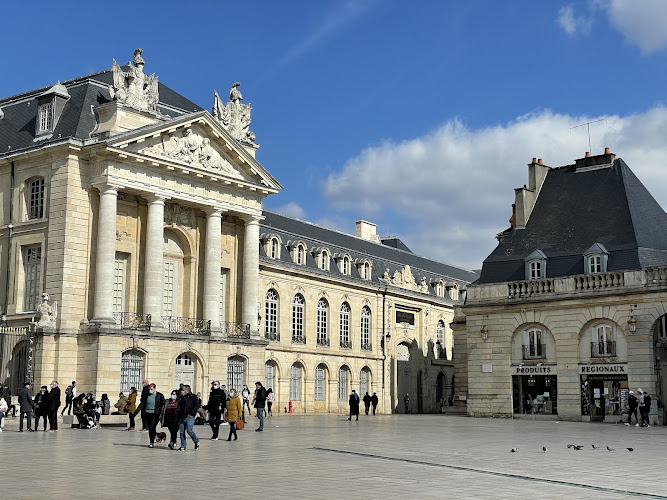
Palais des Ducs et des États de Bourgogne

Carrières Bacquin Park
Dijon Beach
Find Accommodations Nearby
Recommended Tours & Activities
Visitor Reviews
There are no reviews yet. Be the first one to write one.
Share Your Experience
Have you visited Cathédrale Saint-Bénigne de Dijon? Help other travelers by leaving a review.