
Cathedral of Christ the Saviour
About Cathedral of Christ the Saviour
Key Features
More Details
Updated April 15, 2024
## Visiting the Cathedral of Christ the Saviour in Moscow: History, Architecture & How to Experience It Respectfully
Standing on Ulitsa Volkhonka 15 on the northern bank of the Moskva River, just southwest of the Kremlin, the Cathedral of Christ the Saviour (Храм Христа Спасителя) is one of the most significant religious and architectural landmarks in Moscow and the main cathedral of the Russian Orthodox Church.
It’s not just a photogenic building with golden domes; it’s a place loaded with memory: imperial Russia, revolution, Soviet-era demolition, and post-1991 reconstruction all meet on this single plot of land.
—
## Where the Cathedral Sits in Moscow Today
– Address: Ulitsa Volkhonka, 15, Moscow, 119019, Russia
– Coordinates: Approx. 55.7446° N, 37.6055° E – matching the location you’d see marked opposite the Kremlin on most maps.
– District: Khamovniki District in central Moscow, an area that also includes the Pushkin State Museum of Fine Arts and major historic streets.
– Nearest Metro: Kropotkinskaya station (Line 1), a short walk from the cathedral.
Directly across Volkhonka Street sits the Pushkin State Museum of Fine Arts, the largest museum of European art in Moscow, specifically described as being “just opposite the Cathedral of Christ the Saviour”.
For itineraries, the cathedral is an easy pairing with:
– A Kremlin/Red Square visit (roughly a kilometre away on foot). to Russia
– A culture-heavy loop that combines the cathedral with the Pushkin Museum and a stroll over the Patriarshy Bridge, which gives some of the best classic skyline views of Moscow and the cathedral’s domes.
—
## A Compressed History: From Tsarist Monument to Soviet Demolition and Rebirth
### Built to Commemorate Victory Over Napoleon
After Napoleon’s retreat from Moscow in 1812, Tsar Alexander I issued a manifesto on 25 December 1812 announcing his intention to build a cathedral in honor of Christ the Saviour as a thanksgiving for the “saving of Russia” and as a memorial to the sacrifices of the Russian people.
Key historical milestones:
– 1812–1817: Idea and initial design phase. The first accepted project by architect Aleksandr Vitberg was a grand Neoclassical scheme, but it was eventually abandoned.
– 1830s–1883: Under Tsar Nicholas I, a new design in the Russian Revival style by architect Konstantin Thon was chosen. The cathedral took several decades to build and decorate. It was finally consecrated on 26 May 1883, shortly before the coronation of Alexander III.
– The original cathedral hosted the world premiere of Tchaikovsky’s “1812 Overture” (performed outside in a tent while the building was still unfinished).
### Destruction and the Soviet Swimming Pool
– On 5 December 1931, the original cathedral was demolished on orders of the Soviet leadership to make way for the projected Palace of the Soviets, a huge skyscraper that was never completed.
– The foundations later became the Moskva open-air swimming pool, at the time described as the largest outdoor heated pool in the world.
That pool remained a distinctive – and controversial – Soviet landmark for decades.
### Reconstruction After the USSR
– In 1990, the Russian Orthodox Church received permission to restore the cathedral.
– A large fundraising campaign drew contributions from around one million Moscow residents and donors across Russia and the diaspora.
– Construction of the new cathedral, a close replica of the 19th-century design with some modern adaptations, began in the mid-1990s.
– The lower church was consecrated in 1997, and the fully rebuilt Cathedral of Christ the Saviour was consecrated on 19 August 2000.
Today, it serves as the principal cathedral of the Russian Orthodox Church and the seat of the Patriarch of Moscow, making it one of the most important active churches in the country.
—
## Architecture & Interior: What to Look For
### Scale and Layout
Official figures put the cathedral at:
– Height: Approximately 103–103.4 metres to the top of the cross.
– Plan: Around 79 × 79 metres in length and width.
– Capacity: Roughly 9,500–10,000 worshippers.
Sources describe it as one of the tallest Orthodox church buildings in the world, with some listing it as the third tallest. Others still label it “the tallest” – that discrepancy reflects different ways of defining and comparing church buildings (e.g., including or excluding bell towers in other cities).
### Style
– The cathedral is rebuilt in a Russian Revival style, referencing traditional Orthodox ecclesiastical architecture with a massive central dome and four smaller corner domes.
– The exterior combines white stone walls with gold-plated domes, visible from the Kremlin, the embankments and the Patriarshy Bridge.
Inside, you’ll encounter:
– Extensive fresco programs and iconography depicting scenes from the Old and New Testaments and Orthodox saints, covering tens of thousands of square metres of surface area according to modern travel descriptions.
– Highly worked marble, stone and gilding, in continuity with late-Imperial Russian taste but executed with modern technologies after the reconstruction.
Because it’s an active place of worship, the interior is usually experienced standing – traditional in Orthodox churches – and services can feel very different from Western European cathedral experiences.
—
## The Cathedral as a Living Religious and Civic Space
Beyond being a museum-like monument, the Cathedral of Christ the Saviour regularly hosts:
– Major Orthodox services led by the Patriarch of Moscow on high feast days.
– State-linked ceremonies such as the lying-in-state of former President Boris Yeltsin in 2007.
– Occasional events that reflect contemporary Russian public life – including the widely reported 2012 protest performance by the group Pussy Riot, which led to criminal convictions and international debate.
For visitors, this means you may encounter:
– Ordinary parishioners praying and lighting candles.
– Large crowds and enhanced security around major Orthodox feasts or political anniversaries.
Regardless of your background or beliefs, it’s important to treat the cathedral primarily as a functioning religious site, not just a photo stop.
—
## Practical Visiting Tips (Dress, Photography, Tickets)
### Dress Code & Etiquette
Contemporary travel and Q&A sites emphasise a modest dress code:
– Shoulders and knees covered for all visitors.
– Women are often expected to cover their heads with a scarf; some sources note that scarves may be available at the entrance.
There is no fully unified official English-language dress policy posted across all sources, but the consistent pattern is: dress conservatively and respectfully. If in doubt, follow the more conservative interpretation.
General etiquette:
– Keep voices low inside.
– Avoid walking directly in front of people who are praying or venerating icons.
– During services, stand quietly at the edges if you’re not taking part.
### Photography Rules
Multiple traveller reports state that photography is not allowed inside the main worship space, although outside photography is common and uncontroversial.
Because enforcement can depend on guards and current rules, assume:
– Outside: Photos are fine.
– Inside: Do not take photos unless you clearly see signage permitting it, and never use flash.
### Opening Hours, Admission & Observation Deck
(Time-sensitive – verify before you go)
Recent travel guides and booking platforms describe the situation roughly like this:
– Main cathedral: Free entry.
– Typical opening window: Daily openings roughly in the 08:00–18:00 / 09:00–19:00 range, with Monday sometimes starting later in the day.
– Observation deck / dome access: A paid ticket, listed in recent years at around 400 RUB, with some sources giving slightly different pricing tiers and describing an observation ring about 40 metres above ground level between the domes.
> Important:
> – Prices, opening hours, and access rules have changed over time and may continue to change.
> – Some sources mention lift (elevator) access for guided groups, while traveller reviews describe climbing stairs and report no elevator usage for ordinary visitors. This is a clear inconsistency across accounts, so if accessibility is critical for you, check the official website (xxc.ru) or a current local operator before planning an ascent.
Because of these variations, treat all time and price figures as historical references, not guarantees.
—
## How to Structure Your Visit
### 1. Approach via Patriarshy Bridge
Walking across the Patriarshy Bridge gives some of the best sight-lines of the cathedral, the Moskva River and the Kremlin area. It’s a classic vantage point for sunrise/sunset skyline shots and a good way to understand how the building dominates its stretch of the embankment.
### 2. Explore the Exterior
Before going inside, take time to walk around the exterior terraces and lower levels:
– Look for reliefs and sculptural groups referencing Russian military history and saints.
– Note how the white stone and gold domes contrast with the modern cityscape around it.
### 3. Visit the Interior Respectfully
Inside, key elements to pay attention to:
– Frescoes under the central dome and the vast iconostases (icon screens).
– The sense of vertical volume – interior heights reach many tens of metres under the main dome.
Remain aware that services may be underway; if so, stand to the side and avoid disruptive movement.
### 4. Consider the Observation Deck (If Open & Accessible)
If the observation ring is operating during your visit and you are physically able to manage stairs (or have confirmed lift access in advance), the upper level can offer:
– Panoramic views of central Moscow, including the Kremlin, embankments and “Golden Mile” residential area of Khamovniki.
Again, confirm current access, prices, and accessibility on-site or via the official site.
—
## Pairing the Cathedral with Other Sights
Table of Contents
Key Highlights
Cathedral of Christ the Saviour
Location
Places to Stay Near Cathedral of Christ the Saviour
Find and Book a Tour
Explore More Travel Guides
No reviews found! Be the first to review!
Traveler Reviews for Cathedral of Christ the Saviour
There are no reviews yet. Be the first one to write one.
Have you visited Cathedral of Christ the Saviour? Help other travelers by sharing your review.
You Might Also Like

Shukhov Tower
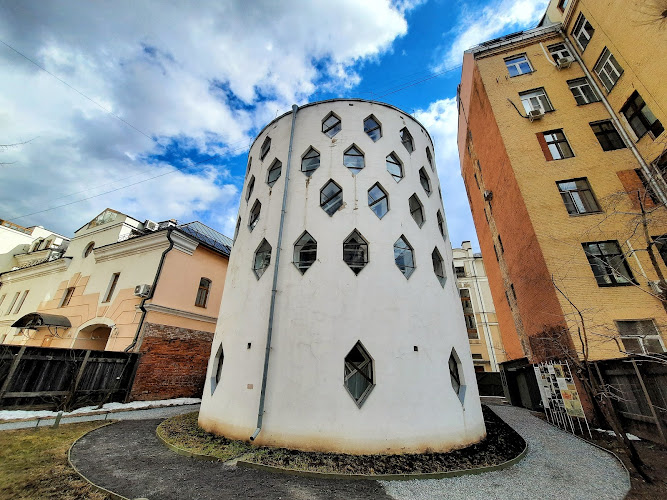
State Museum of Konstantin and Viktor Melnikov
Kolomenskoye
Find Accommodations Nearby
Recommended Tours & Activities
Visitor Reviews
There are no reviews yet. Be the first one to write one.
Share Your Experience
Have you visited Cathedral of Christ the Saviour? Help other travelers by leaving a review.