
Casa Palacio de Moreno de Mora
About Casa Palacio de Moreno de Mora
Key Features
More Details
Updated April 16, 2024
Fuente: Ayuntamiento de Cádiz
## Casa Palacio de Moreno de Mora in Cádiz: How to See One of Spain’s Best-Preserved 19th-Century Mansions
Calle Ancha is Cádiz’s grandest street, but even here the Casa Palacio de Moreno de Mora stands out. With its pink-toned façade, towering Ionic columns and intricate cast-iron balconies, this 19th-century palace is considered one of the city’s most important civil buildings of the period.
Today, it remains a private residence that opens only on a very limited basis, which is exactly why it feels like such a “hidden” experience compared with Cádiz Cathedral or Torre Tavira.
—
## Quick Facts
– Location: Calle Ancha 28–30, Cádiz Old Town (Casco Histórico). Luxury Villa Collection
– Style: 19th-century Isabelino (Isabelline) palace, with strong neoclassical influences.
– Architect: Juan de la Vega y Correa. MEMORIA HISTORICA
– Completed: 1862; inaugurated with a gala ball in honor of Queen Isabella II. MEMORIA HISTORICA
– Current use: Private family residence; visits by prior arrangement only (often cited as Wednesday-morning small-group tours).
– Protection: Listed as a Bien de Interés Cultural (heritage-listed building) since 1981.
—
## A Short History: From Merchant Fortune to Royal Gala
In the mid-19th century, Cádiz was still an Atlantic trading powerhouse. Wealthy merchant families invested fortunes in townhouses that doubled as status symbols. One of them, Manuel Moreno de Mora, bought several properties on Calle Ancha and the parallel Calle Murguía (today Cánovas del Castillo), demolished them and commissioned a single, monumental palace. MEMORIA HISTORICA
– Construction followed the typical Cádiz “casa de comerciantes” layout – but on a much grander scale: three storeys, multiple patios and a rear garden where the stables once stood.
– Manuel died before the works were finished; his widow and son José oversaw completion. MEMORIA HISTORICA
– The palace was officially inaugurated in September 1862, when the family hosted a lavish ball for Queen Isabella II and her husband Francisco de Asís during their visit to Cádiz. MEMORIA HISTORICA
Later, the building became closely associated with the city’s cultural and political life. A period account describes the salons hosting literary gatherings and academic meetings, with frequent visits from artists and intellectuals. MEMORIA HISTORICA
A striking detail for today’s visitor: unlike many Andalusian palaces that were subdivided or modernised, Casa Palacio de Moreno de Mora is often described as possibly the only surviving example of an unaltered 19th-century palace in Cádiz, still in the hands of the same extended family.
—
## Architecture: What to Look For on the Façade
Even if you never step inside, the exterior rewards a closer look. The Ayuntamiento’s cultural guide sums it up as one of Cádiz’s most outstanding 19th-century civil constructions.
Key features to notice as you walk along Calle Ancha:
– Three-part marble façade
– The front is divided vertically into three “streets” and rises in three main storeys plus an attic.
– Most of the visible stone and decorative work is in pale marble, which stands out against the softer wall colour. MEMORIA HISTORICA
– Central entrance with atlantes
– The main doorway is a large round arch; above it is a wide balcony carried on sculpted atlantes (male figures) and framed by double Ionic marble columns.
– Historic descriptions note that both the façade cladding and the grand interior stair were built with marble imported from Carrara, Italy. MEMORIA HISTORICA
– Cast-iron “cierros”
– On the lateral sections, the main-floor windows are enclosed by elaborate glazed cast-iron balconies, a typical Cádiz feature that allowed families to enjoy light and street views with privacy.
– Massive wooden doors
– Contemporary accounts emphasise the use of palo santo (a dense tropical hardwood) for the main doors onto Calle Ancha and the inner entrance – another signal of how much money went into the project. MEMORIA HISTORICA
These details make the building easy to pick out even in busy street scenes: look for the combination of pinkish walls, ivory columns and those distinctive sculpted supports under the balcony.
—
## Inside the Palace: Patios, Grand Staircases and a Private World
Because the palace is still lived in, only parts are accessible during guided visits, and photography is sometimes restricted in specific rooms. What’s consistently highlighted across local sources and visitor reports is how intact the 19th-century interior remains. MEMORIA HISTORICA
### Layout
– The building is organised around a main central patio, a secondary patio and a rear garden that occupies the former horse yard. MEMORIA HISTORICA
– From the entrance, you pass into a light-filled space with a double marble staircase and balustrades – a classic “wow” moment that many visitors mention. MEMORIA HISTORICA
### Decorative Highlights
Local architectural blogs and municipal notes stress a surprisingly rich art collection and original fittings:
– Sculpture and statuary – including a statue of Paganini at the foot of the main staircase in some descriptions. MEMORIA HISTORICA
– Painting – works referenced include canvases by Zurbarán, as well as 19th-century artists such as Bianchi, Juan de Arellano and Eugenio Lucas Velázquez. MEMORIA HISTORICA
– Furniture – late-19th-century Italian and French pieces designed specifically for the mansion, still in situ. Luxury Villa Collection
– Private chapel – one source notes a chapel presided over by a figure of the Virgen del Rocío from the Seville school, created roughly a century before the house’s inauguration.
Because so much of this is private heritage, don’t expect detailed labels or museum-style interpretation; part of the charm is feeling, for an hour or two, that you’ve stepped into someone’s (very grand) family home.
—
## Visiting Casa Palacio de Moreno de Mora Today
### Access and Opening
Here is where expectations need careful management. All recent official and travel-guide references agree on two points:
1. This is not a standard “walk-in” attraction.
2. Visits are only possible by prior arrangement.
– The province tourism site for Cádiz lists the house as visitable “only with advance booking via email” at [email protected]. Luxury Villa Collection
– Several guidebooks and TripAdvisor reviews mention Wednesday-morning visits, often limited to small groups.
Because the building is privately owned and schedules can change, treat any mention of fixed days or times as indicative, not guaranteed. Before you plan your trip around it, send an email well in advance and wait for confirmation.
> Tip for planners: some visitors note that responses can be slow or in Spanish only. If you’re short on time in Cádiz, treat a confirmed visit here as a bonus rather than the centrepiece of your itinerary.
### What a Typical Visit Involves
Descriptions from past visitors and local blogs suggest a pattern:
– Entrance through the Calle Ancha doorway and the vaulted passage.
– Time in the main patio and around the double staircase.
– A circuit through selected salons, the library, and in some cases the garden or the old bodega area.
– Commentary is usually in Spanish; occasionally someone in the party or the guide may translate key points.
Because parts of the house remain strictly private, expect some doors literally – and figuratively – to stay closed.
—
## How to Work Casa Palacio into a Cádiz Itinerary
Even if you don’t manage to secure an interior visit, the palace works well in a broader exploration of Cádiz Old Town. Calle Ancha itself is mentioned in many “best things to do in Cádiz” pieces as one of the city’s key thoroughfares, lined with historic façades and linked to nearby Plaza San Antonio. Planet
A simple route might look like this:
1. Start at Plaza San Antonio, one of Cádiz’s grandest squares.
2. Walk down Calle Ancha, stopping at number 28–30 to examine the palace façade and its atlantes.
3. Continue towards the cathedral and the seafront, or detour into side streets for traditional cafés and small shops. Planet
This is a natural place in your Cádiz content to cross-reference:
– A broader guide to Cádiz’s Old Town walking routes.
– A things to do in Cádiz article covering Torre Tavira, La Caleta beach and Mercado Central. Planet
—
## Practical Notes & Inclusivity Considerations
– Language: Booking and guiding are mostly in Spanish. Non-Spanish speakers may want to arrive with some key phrases prepared or visit with a bilingual friend or guide.
– Mobility: Heritage-listed 19th-century townhouses like this typically have uneven floors, steps between rooms and narrow lifts or none at all. There is no clear, up-to-date public information confirming full wheelchair accessibility; travellers with limited mobility should enquire explicitly when booking.
– Photography: Some accounts mention restrictions on photographing certain rooms for privacy reasons. Expect to be told where you can and cannot take pictures, and follow the family’s rules – this is their home.
– Current information: Because the palace is privately owned and visit arrangements are informal, opening patterns may change without notice. Always treat email confirmation or very recent local advice as your primary source. Older blog posts or reviews should be taken as historical context rather than a guarantee.
—
## Why Casa Palacio de Moreno de Mora Is Worth Your Time
If you’re interested in Cádiz beyond its beaches and tapas, Casa Palacio de Moreno de Mora offers something rare:
Table of Contents
Key Highlights
Casa Palacio de Moreno de Mora
Location
Places to Stay Near Casa Palacio de Moreno de Mora
Find and Book a Tour
Explore More Travel Guides
No reviews found! Be the first to review!
Traveler Reviews for Casa Palacio de Moreno de Mora
There are no reviews yet. Be the first one to write one.
Have you visited Casa Palacio de Moreno de Mora? Help other travelers by sharing your review.
You Might Also Like
Baluarte y Murallas de San Carlos
Casco Antiguo de Cádiz
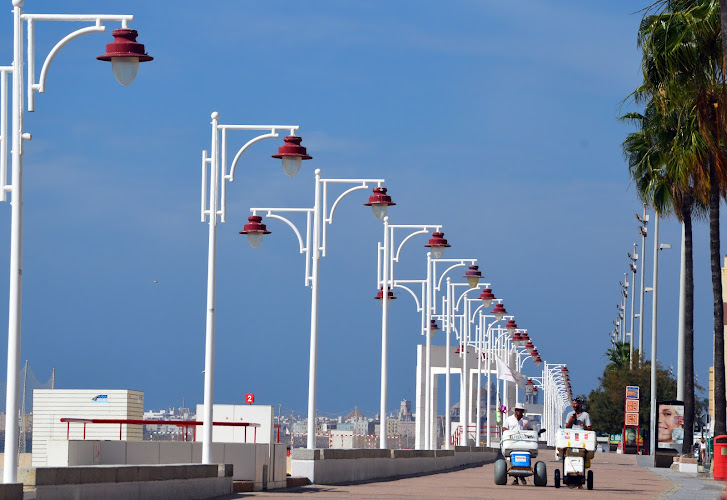
Costanera de Cadiz
Find Accommodations Nearby
Recommended Tours & Activities
Visitor Reviews
There are no reviews yet. Be the first one to write one.
Share Your Experience
Have you visited Casa Palacio de Moreno de Mora? Help other travelers by leaving a review.