
Casa de Fierro
About Casa de Fierro
Description
The Casa de Fierro is one of those places that makes travelers pause mid-step, squint a little, and say, “Wait… is that what I think it is?” Because yes, standing right there on a leafy square is a prefabricated iron building attributed to Gustave Eiffel. The same mind behind the Eiffel Tower. And no, you’re not in Paris. You’re somewhere far more unexpected, and that surprise is half the magic.
Built entirely of iron panels that were designed to be assembled like a giant kit, the Casa de Fierro feels both industrial and oddly graceful. The structure has sharp angles, exposed metal, and a sense of 19th‑century ambition baked into every bolt. Today, it functions as a restaurant, but it hasn’t lost that original spirit of experimentation and daring. Travelers often circle it once, maybe twice, before going in. It’s one of those buildings that demands inspection.
This writer still remembers the first time seeing it in person. The heat was sticky, the square buzzing with local life, and there it was—iron walls catching the light in a way stone never could. It didn’t feel precious or museum‑like. It felt lived in. That’s important. Casa de Fierro isn’t frozen in time. It’s part of daily rhythm, kids running past, couples lingering nearby, waitstaff carrying plates inside.
The building’s story, often retold and occasionally exaggerated, adds to its pull. The idea that Eiffel’s designs traveled across oceans in pieces, destined for a place so far from Europe’s grand boulevards, speaks to an era when architecture was bold and global long before budget airlines existed. And while historians debate details, visitors tend to agree on one thing: standing inside an iron house designed in the 1800s hits differently.
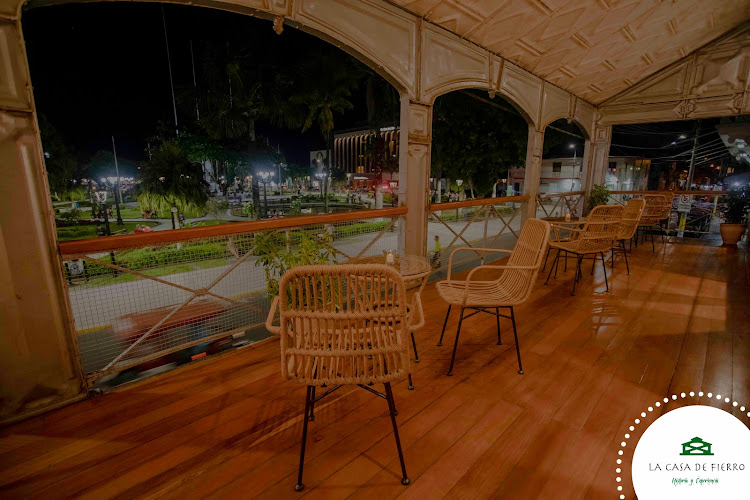
As a restaurant, the Casa de Fierro balances history with comfort. It’s not overly fancy, and that’s a relief. You can sit, eat, talk, and look up at iron beams overhead, imagining the hands that once riveted them together. The square outside softens the building’s metallic edge, with trees offering shade and a sense of calm that contrasts nicely with the structure’s industrial look.
Key Features
- Designed by Gustave Eiffel as a prefabricated iron structure, shipped and assembled far from Europe
- Fully iron exterior and interior framework, with visible beams and panels
- Currently operates as a restaurant, blending dining with architectural sightseeing
- Located on a tree‑lined square that adds shade and a relaxed atmosphere
- Gender‑neutral restroom and standard restroom facilities available
- Accepts credit cards, debit cards, and NFC mobile payments
- Welcoming to families and children, with an open, casual environment
- Photogenic from multiple angles, especially in natural daylight
Best Time to Visit
The Casa de Fierro can technically be visited year‑round, but timing matters more than people expect. Late morning to early afternoon is popular for meals, which means more energy, more noise, and occasionally a wait. That can be fun if you like bustle. But for those who prefer a slower pace, late afternoon tends to be the sweet spot.
As the sun drops a bit, the iron exterior takes on warmer tones. Shadows stretch across the square, and the building feels less like a curiosity and more like a companion to the evening. This writer is firmly in the late‑afternoon camp. There’s something about sipping a drink while watching the light change on iron walls that sticks with you longer than a rushed lunch ever could.
Evenings can be lively too, especially when locals come out to eat and chat. It’s not a party scene, but it’s social. And that matters. Visiting when residents are around gives the place context. You’re not just ticking off a landmark; you’re seeing how it fits into real life.
Weather plays a role as well. On especially hot days, the shade from surrounding trees becomes a blessing. Rainy periods bring a different mood entirely—the sound of rain against metal is oddly soothing, if you’re inside. But getting there soaked, not so much. Planning around weather can elevate the experience from “interesting” to genuinely memorable.
How to Get There
Getting to the Casa de Fierro is usually straightforward once you’re in town. It sits in a well‑known square, and most locals will recognize the name immediately. Taxis and rides are commonly used, and drivers rarely need much explanation. If you enjoy walking, approaching on foot is actually recommended.
Walking gives you context. You see the streets change, hear conversations, smell food stalls or cafés nearby. And then, suddenly, iron. That contrast is part of the charm. Approaching the Casa de Fierro slowly makes its appearance more dramatic, like a reveal instead of a jump scare.
Public transportation can get you close, but may require a short walk at the end. For many travelers, that final stretch becomes an unexpected highlight. The square opens up, trees framing the structure, and you get that “okay, this was worth the effort” feeling.
Once there, everything is compact. You don’t need a map to find your way around. The building anchors the area, and nearby spots are easy to explore before or after your visit. That makes it a convenient stop even on a packed itinerary.
Tips for Visiting
First tip, and it’s a big one: don’t rush it. The Casa de Fierro rewards lingering. Sit down. Order something. Look up at the ceiling. Touch the iron if allowed. This isn’t a drive‑by attraction. People who breeze through tend to leave underwhelmed.
Second, manage expectations. While many visitors adore the place, some find it quieter or simpler than imagined. And that’s okay. It’s not a theme park or a grand palace. It’s an iron building doing its thing, over a century later. Going in with curiosity instead of hype makes all the difference.
Photography lovers should bring patience. The best shots often come when you wait for the square to clear just a bit, or when light hits the metal just right. Midday sun can be harsh, while softer light brings out texture and detail in the iron panels.
If traveling with kids, the open space and casual restaurant setting help. Children usually respond well to the unusual look of the building, and it can spark fun conversations about how houses are built. Just keep an eye on them around the metal edges, because, well, iron is still iron.
Accessibility is something to be aware of. The entrance and surrounding area may pose challenges for travelers with mobility needs. Planning ahead, asking staff for assistance, and allowing extra time can help smooth things out.
And finally, talk to people. Staff, locals sitting nearby, even other travelers. Stories about the Casa de Fierro vary, and hearing different versions is part of the experience. This writer once heard three conflicting tales in a single afternoon, and honestly, that made the visit better, not worse.
The Casa de Fierro isn’t just about iron or architecture. It’s about improbability. A bold design, shipped far from its origin, still standing, still useful, still admired. Travelers who appreciate places with personality, flaws and all, tend to leave smiling. And maybe thinking about iron in a whole new way.
Key Features
- Designed by Gustave Eiffel as a prefabricated iron structure, shipped and assembled far from Europe
- Fully iron exterior and interior framework, with visible beams and panels
- Currently operates as a restaurant, blending dining with architectural sightseeing
- Located on a tree‑lined square that adds shade and a relaxed atmosphere
- Gender‑neutral restroom and standard restroom facilities available
- Accepts credit cards, debit cards, and NFC mobile payments
- Welcoming to families and children, with an open, casual environment
- Photogenic from multiple angles, especially in natural daylight
More Details
Updated December 31, 2025
Table of Contents
Description
The Casa de Fierro is one of those places that makes travelers pause mid-step, squint a little, and say, “Wait… is that what I think it is?” Because yes, standing right there on a leafy square is a prefabricated iron building attributed to Gustave Eiffel. The same mind behind the Eiffel Tower. And no, you’re not in Paris. You’re somewhere far more unexpected, and that surprise is half the magic.
Built entirely of iron panels that were designed to be assembled like a giant kit, the Casa de Fierro feels both industrial and oddly graceful. The structure has sharp angles, exposed metal, and a sense of 19th‑century ambition baked into every bolt. Today, it functions as a restaurant, but it hasn’t lost that original spirit of experimentation and daring. Travelers often circle it once, maybe twice, before going in. It’s one of those buildings that demands inspection.
This writer still remembers the first time seeing it in person. The heat was sticky, the square buzzing with local life, and there it was—iron walls catching the light in a way stone never could. It didn’t feel precious or museum‑like. It felt lived in. That’s important. Casa de Fierro isn’t frozen in time. It’s part of daily rhythm, kids running past, couples lingering nearby, waitstaff carrying plates inside.
The building’s story, often retold and occasionally exaggerated, adds to its pull. The idea that Eiffel’s designs traveled across oceans in pieces, destined for a place so far from Europe’s grand boulevards, speaks to an era when architecture was bold and global long before budget airlines existed. And while historians debate details, visitors tend to agree on one thing: standing inside an iron house designed in the 1800s hits differently.
As a restaurant, the Casa de Fierro balances history with comfort. It’s not overly fancy, and that’s a relief. You can sit, eat, talk, and look up at iron beams overhead, imagining the hands that once riveted them together. The square outside softens the building’s metallic edge, with trees offering shade and a sense of calm that contrasts nicely with the structure’s industrial look.
Key Features
- Designed by Gustave Eiffel as a prefabricated iron structure, shipped and assembled far from Europe
- Fully iron exterior and interior framework, with visible beams and panels
- Currently operates as a restaurant, blending dining with architectural sightseeing
- Located on a tree‑lined square that adds shade and a relaxed atmosphere
- Gender‑neutral restroom and standard restroom facilities available
- Accepts credit cards, debit cards, and NFC mobile payments
- Welcoming to families and children, with an open, casual environment
- Photogenic from multiple angles, especially in natural daylight
Best Time to Visit
The Casa de Fierro can technically be visited year‑round, but timing matters more than people expect. Late morning to early afternoon is popular for meals, which means more energy, more noise, and occasionally a wait. That can be fun if you like bustle. But for those who prefer a slower pace, late afternoon tends to be the sweet spot.
As the sun drops a bit, the iron exterior takes on warmer tones. Shadows stretch across the square, and the building feels less like a curiosity and more like a companion to the evening. This writer is firmly in the late‑afternoon camp. There’s something about sipping a drink while watching the light change on iron walls that sticks with you longer than a rushed lunch ever could.
Evenings can be lively too, especially when locals come out to eat and chat. It’s not a party scene, but it’s social. And that matters. Visiting when residents are around gives the place context. You’re not just ticking off a landmark; you’re seeing how it fits into real life.
Weather plays a role as well. On especially hot days, the shade from surrounding trees becomes a blessing. Rainy periods bring a different mood entirely—the sound of rain against metal is oddly soothing, if you’re inside. But getting there soaked, not so much. Planning around weather can elevate the experience from “interesting” to genuinely memorable.
How to Get There
Getting to the Casa de Fierro is usually straightforward once you’re in town. It sits in a well‑known square, and most locals will recognize the name immediately. Taxis and rides are commonly used, and drivers rarely need much explanation. If you enjoy walking, approaching on foot is actually recommended.
Walking gives you context. You see the streets change, hear conversations, smell food stalls or cafés nearby. And then, suddenly, iron. That contrast is part of the charm. Approaching the Casa de Fierro slowly makes its appearance more dramatic, like a reveal instead of a jump scare.
Public transportation can get you close, but may require a short walk at the end. For many travelers, that final stretch becomes an unexpected highlight. The square opens up, trees framing the structure, and you get that “okay, this was worth the effort” feeling.
Once there, everything is compact. You don’t need a map to find your way around. The building anchors the area, and nearby spots are easy to explore before or after your visit. That makes it a convenient stop even on a packed itinerary.
Tips for Visiting
First tip, and it’s a big one: don’t rush it. The Casa de Fierro rewards lingering. Sit down. Order something. Look up at the ceiling. Touch the iron if allowed. This isn’t a drive‑by attraction. People who breeze through tend to leave underwhelmed.
Second, manage expectations. While many visitors adore the place, some find it quieter or simpler than imagined. And that’s okay. It’s not a theme park or a grand palace. It’s an iron building doing its thing, over a century later. Going in with curiosity instead of hype makes all the difference.
Photography lovers should bring patience. The best shots often come when you wait for the square to clear just a bit, or when light hits the metal just right. Midday sun can be harsh, while softer light brings out texture and detail in the iron panels.
If traveling with kids, the open space and casual restaurant setting help. Children usually respond well to the unusual look of the building, and it can spark fun conversations about how houses are built. Just keep an eye on them around the metal edges, because, well, iron is still iron.
Accessibility is something to be aware of. The entrance and surrounding area may pose challenges for travelers with mobility needs. Planning ahead, asking staff for assistance, and allowing extra time can help smooth things out.
And finally, talk to people. Staff, locals sitting nearby, even other travelers. Stories about the Casa de Fierro vary, and hearing different versions is part of the experience. This writer once heard three conflicting tales in a single afternoon, and honestly, that made the visit better, not worse.
The Casa de Fierro isn’t just about iron or architecture. It’s about improbability. A bold design, shipped far from its origin, still standing, still useful, still admired. Travelers who appreciate places with personality, flaws and all, tend to leave smiling. And maybe thinking about iron in a whole new way.
Key Highlights
- Designed by Gustave Eiffel as a prefabricated iron structure, shipped and assembled far from Europe
- Fully iron exterior and interior framework, with visible beams and panels
- Currently operates as a restaurant, blending dining with architectural sightseeing
- Located on a tree‑lined square that adds shade and a relaxed atmosphere
- Gender‑neutral restroom and standard restroom facilities available
- Accepts credit cards, debit cards, and NFC mobile payments
- Welcoming to families and children, with an open, casual environment
- Photogenic from multiple angles, especially in natural daylight
Location
Places to Stay Near Casa de Fierro
Find and Book a Tour
Explore More Travel Guides
No reviews found! Be the first to review!
Traveler Reviews for Casa de Fierro
There are no reviews yet. Be the first one to write one.
Have you visited Casa de Fierro? Help other travelers by sharing your review.
You Might Also Like

Jungle Reps

Playa Artificial Santa Clara

Boat Museum
Find Accommodations Nearby
Recommended Tours & Activities
Visitor Reviews
There are no reviews yet. Be the first one to write one.
Share Your Experience
Have you visited Casa de Fierro? Help other travelers by leaving a review.