
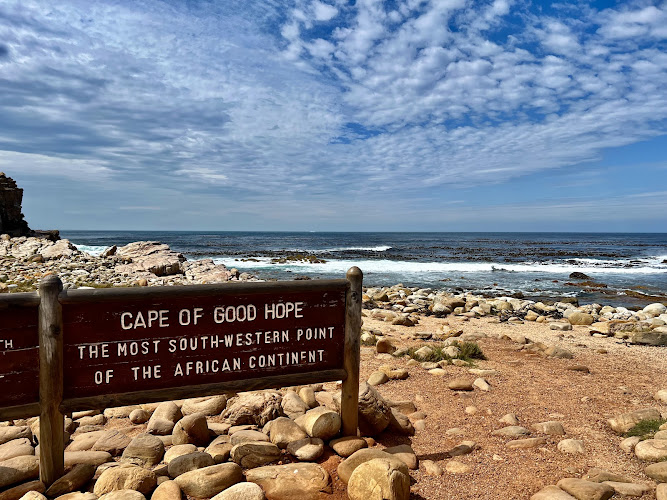
Cape of Good Hope
About Cape of Good Hope
Description
The Cape of Good Hope, perched dramatically at the southern tip of the Cape Peninsula, is one of those rare places that truly lives up to its legend. It’s not just a dot on the map or a photo op for travel brochures—it’s a living, breathing encounter with nature’s raw beauty and history’s deep echoes. Standing there, with the Atlantic winds whipping through your hair, you can almost imagine the Portuguese explorers—Bartolomeu Dias and Vasco da Gama—sighting this rugged headland centuries ago, realizing they’d found the turning point between two mighty oceans. And honestly, when you’re there, it feels like the edge of the world.
The reserve itself is part of the Table Mountain National Park, a protected area teeming with wildlife, flora, and dramatic coastal scenery. You’ll find ostriches strutting along the roadside, baboons (sometimes cheeky ones) watching from the cliffs, and antelope grazing in the fynbos-covered hills. The scent of salt, seaweed, and wildflowers mixes in the air—it’s intoxicating in the best way. The Cape isn’t just about the view (though, wow, that view). It’s about the feeling of being somewhere ancient and untamed, where nature still calls the shots.
It’s a place that’s both peaceful and thrilling at once. Families spread out picnics under the sun, hikers trace the winding trails to Cape Point, and photographers wait patiently for that perfect moment when the light hits the cliffs just right. And while it’s a popular attraction, it somehow never feels overcrowded. Maybe it’s the vastness of the landscape, or maybe it’s just that everyone who visits seems a little awestruck into silence.
Key Features
- Part of a protected nature reserve within Table Mountain National Park
- Home to diverse wildlife including ostriches, baboons, antelope, and over 250 bird species
- Scenic hiking trails leading to Cape Point and panoramic viewpoints
- Designated picnic areas with tables and ocean views
- Wheelchair-accessible entrances and parking facilities
- Public restrooms and cycling lanes available
- Kid-friendly hiking routes and open spaces for families
- Dogs allowed in certain areas (on leash)
- Payments accepted via credit and debit cards
One of my personal favorite things here is the mix of wild freedom and thoughtful accessibility. You can wander off the beaten path, yet still find a clean restroom or a shaded picnic bench when you need it. The park is well-maintained, and it shows. Even small details—like the cycling lanes and clear signage—make it easy to explore without stress.
Best Time to Visit
If you ask ten locals when the best time to visit the Cape of Good Hope is, you’ll probably get ten different answers. That’s because each season has its own charm. Personally, I love late spring (October to November). The weather is warm but not scorching, the wildflowers are still blooming, and the crowds haven’t reached their summer peak yet. Summer (December to February) brings long, sunny days and incredible ocean visibility, but it can get windy—like, hold-onto-your-hat windy.
Autumn (March to May) is another sweet spot, especially for photographers. The light gets softer, and the sunsets stretch out lazily across the horizon. Winter (June to August) can be a bit unpredictable—some days are stormy, others crystal clear—but that’s part of the magic. The waves crash harder, the air feels fresher, and there’s a moody beauty to the landscape that’s hard to describe unless you’ve stood there in a drizzle, watching the mist roll over the cliffs.
So really, the “best” time depends on what you’re after. If you want calm hikes and fewer tourists, go off-season. If you want that postcard-perfect blue sky, summer’s your friend. Just don’t forget sunscreen—trust me on that one.
How to Get There
Getting to the Cape of Good Hope is half the fun. The drive from Cape Town takes about an hour and a half, depending on traffic and how many times you pull over to take photos (and you will, trust me). The route winds through charming coastal towns like Simon’s Town and past Boulders Beach, where penguins waddle around like tiny tuxedoed locals. The road hugs the coastline, offering jaw-dropping views that make you want to roll down the windows and just breathe it all in.
If you don’t have a car, guided tours are easy to find and often include stops at nearby attractions. Some adventurous travelers even cycle part of the way—though it’s a serious workout with those hills and gusty winds. Public transport options are limited, so driving or joining a tour is your best bet. Once you arrive, there’s a well-organized entrance gate, clear signage, and parking areas close to the main viewpoints.
Inside the reserve, you can explore by car, bike, or foot. The roads are well-paved, and there are plenty of lookout points along the way. Just remember to keep a safe distance from the wildlife—especially the baboons. They’re clever, curious, and have a knack for spotting snacks.
Tips for Visiting
Before you go, here are a few things I’ve learned (sometimes the hard way) that can make your visit smoother and more enjoyable:
- Arrive early: The Cape can get busy, especially on weekends and holidays. Early mornings are quieter and the light is magical for photos.
- Bring layers: The weather changes fast. One minute it’s sunny, the next it’s foggy and cool. A light jacket goes a long way.
- Watch your snacks: Baboons are notorious for stealing food. Keep your picnic items packed away until you’re ready to eat.
- Stay hydrated: The hikes can be longer and steeper than they look. Carry water, especially in summer.
- Plan your route: There’s a lot to see—Cape Point Lighthouse, Dias Beach, and the Two Oceans viewpoint are must-stops.
- Respect the wildlife: This is their home, after all. Observe from a distance and avoid feeding any animals.
- Take your time: Don’t just rush to the signpost for a photo. Wander the trails, listen to the waves, and soak in the solitude. That’s where the real magic is.
One last thing—don’t underestimate how emotional this place can be. There’s something about standing at the meeting point of two oceans, where explorers once risked their lives to find new worlds, that just hits differently. It’s humbling, grounding, and a little bit spiritual. Whether you’re a history buff, a hiker, a photographer, or just someone who loves the sea, the Cape of Good Hope has a way of leaving its mark on you. I’ve been there more than once, and every time, it reminds me how small we are—and how beautiful that can be.
So pack your sense of adventure (and maybe a windbreaker), and go see it for yourself. The Cape of Good Hope isn’t just a destination—it’s an experience that lingers long after you’ve left.
Key Features
- Part of a protected nature reserve within Table Mountain National Park
- Home to diverse wildlife including ostriches, baboons, antelope, and over 250 bird species
- Scenic hiking trails leading to Cape Point and panoramic viewpoints
- Designated picnic areas with tables and ocean views
- Wheelchair-accessible entrances and parking facilities
- Public restrooms and cycling lanes available
- Kid-friendly hiking routes and open spaces for families
- Dogs allowed in certain areas (on leash)
More Details
Updated October 8, 2025
Table of Contents
Description
The Cape of Good Hope, perched dramatically at the southern tip of the Cape Peninsula, is one of those rare places that truly lives up to its legend. It’s not just a dot on the map or a photo op for travel brochures—it’s a living, breathing encounter with nature’s raw beauty and history’s deep echoes. Standing there, with the Atlantic winds whipping through your hair, you can almost imagine the Portuguese explorers—Bartolomeu Dias and Vasco da Gama—sighting this rugged headland centuries ago, realizing they’d found the turning point between two mighty oceans. And honestly, when you’re there, it feels like the edge of the world.
The reserve itself is part of the Table Mountain National Park, a protected area teeming with wildlife, flora, and dramatic coastal scenery. You’ll find ostriches strutting along the roadside, baboons (sometimes cheeky ones) watching from the cliffs, and antelope grazing in the fynbos-covered hills. The scent of salt, seaweed, and wildflowers mixes in the air—it’s intoxicating in the best way. The Cape isn’t just about the view (though, wow, that view). It’s about the feeling of being somewhere ancient and untamed, where nature still calls the shots.
It’s a place that’s both peaceful and thrilling at once. Families spread out picnics under the sun, hikers trace the winding trails to Cape Point, and photographers wait patiently for that perfect moment when the light hits the cliffs just right. And while it’s a popular attraction, it somehow never feels overcrowded. Maybe it’s the vastness of the landscape, or maybe it’s just that everyone who visits seems a little awestruck into silence.
Key Features
- Part of a protected nature reserve within Table Mountain National Park
- Home to diverse wildlife including ostriches, baboons, antelope, and over 250 bird species
- Scenic hiking trails leading to Cape Point and panoramic viewpoints
- Designated picnic areas with tables and ocean views
- Wheelchair-accessible entrances and parking facilities
- Public restrooms and cycling lanes available
- Kid-friendly hiking routes and open spaces for families
- Dogs allowed in certain areas (on leash)
- Payments accepted via credit and debit cards
One of my personal favorite things here is the mix of wild freedom and thoughtful accessibility. You can wander off the beaten path, yet still find a clean restroom or a shaded picnic bench when you need it. The park is well-maintained, and it shows. Even small details—like the cycling lanes and clear signage—make it easy to explore without stress.
Best Time to Visit
If you ask ten locals when the best time to visit the Cape of Good Hope is, you’ll probably get ten different answers. That’s because each season has its own charm. Personally, I love late spring (October to November). The weather is warm but not scorching, the wildflowers are still blooming, and the crowds haven’t reached their summer peak yet. Summer (December to February) brings long, sunny days and incredible ocean visibility, but it can get windy—like, hold-onto-your-hat windy.
Autumn (March to May) is another sweet spot, especially for photographers. The light gets softer, and the sunsets stretch out lazily across the horizon. Winter (June to August) can be a bit unpredictable—some days are stormy, others crystal clear—but that’s part of the magic. The waves crash harder, the air feels fresher, and there’s a moody beauty to the landscape that’s hard to describe unless you’ve stood there in a drizzle, watching the mist roll over the cliffs.
So really, the “best” time depends on what you’re after. If you want calm hikes and fewer tourists, go off-season. If you want that postcard-perfect blue sky, summer’s your friend. Just don’t forget sunscreen—trust me on that one.
How to Get There
Getting to the Cape of Good Hope is half the fun. The drive from Cape Town takes about an hour and a half, depending on traffic and how many times you pull over to take photos (and you will, trust me). The route winds through charming coastal towns like Simon’s Town and past Boulders Beach, where penguins waddle around like tiny tuxedoed locals. The road hugs the coastline, offering jaw-dropping views that make you want to roll down the windows and just breathe it all in.
If you don’t have a car, guided tours are easy to find and often include stops at nearby attractions. Some adventurous travelers even cycle part of the way—though it’s a serious workout with those hills and gusty winds. Public transport options are limited, so driving or joining a tour is your best bet. Once you arrive, there’s a well-organized entrance gate, clear signage, and parking areas close to the main viewpoints.
Inside the reserve, you can explore by car, bike, or foot. The roads are well-paved, and there are plenty of lookout points along the way. Just remember to keep a safe distance from the wildlife—especially the baboons. They’re clever, curious, and have a knack for spotting snacks.
Tips for Visiting
Before you go, here are a few things I’ve learned (sometimes the hard way) that can make your visit smoother and more enjoyable:
- Arrive early: The Cape can get busy, especially on weekends and holidays. Early mornings are quieter and the light is magical for photos.
- Bring layers: The weather changes fast. One minute it’s sunny, the next it’s foggy and cool. A light jacket goes a long way.
- Watch your snacks: Baboons are notorious for stealing food. Keep your picnic items packed away until you’re ready to eat.
- Stay hydrated: The hikes can be longer and steeper than they look. Carry water, especially in summer.
- Plan your route: There’s a lot to see—Cape Point Lighthouse, Dias Beach, and the Two Oceans viewpoint are must-stops.
- Respect the wildlife: This is their home, after all. Observe from a distance and avoid feeding any animals.
- Take your time: Don’t just rush to the signpost for a photo. Wander the trails, listen to the waves, and soak in the solitude. That’s where the real magic is.
One last thing—don’t underestimate how emotional this place can be. There’s something about standing at the meeting point of two oceans, where explorers once risked their lives to find new worlds, that just hits differently. It’s humbling, grounding, and a little bit spiritual. Whether you’re a history buff, a hiker, a photographer, or just someone who loves the sea, the Cape of Good Hope has a way of leaving its mark on you. I’ve been there more than once, and every time, it reminds me how small we are—and how beautiful that can be.
So pack your sense of adventure (and maybe a windbreaker), and go see it for yourself. The Cape of Good Hope isn’t just a destination—it’s an experience that lingers long after you’ve left.
Key Highlights
- Part of a protected nature reserve within Table Mountain National Park
- Home to diverse wildlife including ostriches, baboons, antelope, and over 250 bird species
- Scenic hiking trails leading to Cape Point and panoramic viewpoints
- Designated picnic areas with tables and ocean views
- Wheelchair-accessible entrances and parking facilities
- Public restrooms and cycling lanes available
- Kid-friendly hiking routes and open spaces for families
- Dogs allowed in certain areas (on leash)
Location
Places to Stay Near Cape of Good Hope
Find and Book a Tour
Explore More Travel Guides
No reviews found! Be the first to review!
Traveler Reviews for Cape of Good Hope
There are no reviews yet. Be the first one to write one.
Have you visited Cape of Good Hope? Help other travelers by sharing your review.
You Might Also Like

South African National Gallery

Lower Tokai Park

Giraffe House
Find Accommodations Nearby
Recommended Tours & Activities
Visitor Reviews
There are no reviews yet. Be the first one to write one.
Share Your Experience
Have you visited Cape of Good Hope? Help other travelers by leaving a review.