
Cabrillo National Monument
About Cabrillo National Monument
Key Features
- The Cabrillo statue and interpretive exhibits commemorating the 1542 landing
- Old Point Loma Lighthouse and historic military batteries
- Tide pools rich with intertidal life (accessible at low tide)
- Panoramic views of San Diego Bay, downtown skyline, and the Pacific
- Seasonal whale watching and abundant seabird/birding opportunities
More Details
Updated June 11, 2025
Cabrillo National Monument in San Diego is one of those rare spots where Pacific views, maritime history, and wild coastline all line up in a single easy day trip.
—
## Where Is Cabrillo National Monument?
Cabrillo National Monument sits at the southern tip of the Point Loma peninsula in San Diego, California, at 1800 Cabrillo Memorial Drive, San Diego, CA 92106. From this high point, you look back over San Diego Bay, the downtown skyline, Coronado, and (on clear days) Tijuana and the Coronado Islands in Mexico.
The site covers a bit more than 140 acres and is designated both a U.S. National Monument and a California Historical Landmark (#56).
—
## Why This Place Matters: Cabrillo’s 1542 Landing
The monument commemorates the 1542 landing of Juan Rodríguez Cabrillo, a navigator sailing in the service of Spain who led the first documented European expedition to explore what is now the west coast of the United States. Park Service
Key historical points:
– Cabrillo departed from Navidad, Mexico on June 27, 1542 and reached “a very good enclosed port” three months later — what we now call San Diego Bay. Historians believe he anchored near the east side of Point Loma, just below where the monument stands today. Park Service
– The national monument was officially established in 1913, initially reserving half an acre of military land for a future statue honoring Cabrillo. National Monument Foundation
### The Cabrillo Statue
The large sculpted figure you see overlooking the bay is a representation of Cabrillo created by Álvaro de Brée and donated by the Portuguese government. The original sandstone piece was installed in 1949; due to weathering, it was replaced by a limestone replica in 1988.
This statue, with San Diego Bay and the Pacific sweeping away behind it, is one of the most iconic photo spots in the city.
—
## Old Point Loma Lighthouse: Guiding Ships Since 1855
High on the point stands the Old Point Loma Lighthouse, one of the earliest lighthouses built on the U.S. West Coast.
– It was first lit on November 15, 1855, using a 3rd-order Fresnel lens—state-of-the-art at the time. Park Service
– At about 400 feet (roughly 122–129 m) above sea level, the light could be seen up to 25 miles offshore in clear weather, but fog and low clouds often obscured it. Park Service
– Because of these visibility problems, the lighthouse was decommissioned in 1891 and replaced by the New Point Loma Lighthouse at a lower elevation.
Today, Old Point Loma Lighthouse is preserved as a small museum. You can walk through the keeper’s quarters to see how lighthouse families lived in the late 19th century and step outside to take in sweeping views of the Pacific and the entrance to San Diego Bay. Park Service
—
## Things to Do at Cabrillo National Monument
### 1. Start at the Visitor Center
The Visitor Center is the main orientation point. Inside you’ll find:
– Exhibits about Cabrillo’s voyage and early European exploration of the Pacific coast
– Information on local geology, marine life, and the peninsula’s military history
– Short films such as In Search of Cabrillo, On the Edge of Land and Sea, and First Breath: Gray Whales (titles may occasionally rotate)
Rangers and volunteers can give you tidepool conditions, low-tide times, and current weather plus updates on any trail or area closures.
### 2. Walk to the Cabrillo Statue & Overlooks
From the Visitor Center, it’s a short, paved walk to the Cabrillo statue and the main bay overlook. Expect:
– Panoramic views across the harbor to downtown and out toward Coronado and the open Pacific
– Interpretive panels explaining Cabrillo’s 1542 expedition and later Spanish colonization of Alta California Park Service
This is one of the most accessible viewpoints in the park and works well for multi-generational groups, wheelchair users, and anyone who prefers short, level paths.
### 3. Explore the Old Point Loma Lighthouse & Whale Overlook
A short uphill walk brings you to the Old Point Loma Lighthouse. Inside, period furnishings recreate the keeper’s living quarters; outside, signage explains how the lighthouse functioned and why the newer coastal light was built further down. Park Service
Just south of the lighthouse is the Whale Watch Overlook. This overlook was established in 1950 and is recognized as one of the first public whale-watching sites in the world.
– From December through March, you may see gray whales migrating between Alaska and Baja California, especially on calm mornings with good visibility.
> For a quick jump to planning tips around marine life viewing, see Best Time to Visit & Tides.
### 4. Hike the Bayside Trail
The Bayside Trail drops down the eastern slope of Point Loma through coastal sage scrub, one of Southern California’s most threatened native plant communities.
Along this trail you get:
– Close-up views of native plants adapted to low rainfall and coastal winds
– Lookouts toward San Diego Bay, the downtown skyline, and naval facilities
– Interpretive signs explaining ecology, local bird species, and historical military installations
The route is generally considered an easy to moderate out-and-back. Bring sun protection; shade is limited and coastal breezes can be deceptive.
### 5. Visit the Tidepools: The Rocky Intertidal Zone
The western side of the monument drops sharply to a rocky shoreline that forms one of San Diego’s best tidepool areas.
According to the National Park Service:
– The best time to visit Cabrillo’s tidepools is during late fall and winter when extreme low tides occur during daylight hours. Park Service
– On these minus-tide days, the intertidal zone exposes a dense community of anemones, limpets, barnacles, mussels, crabs, snails, sea stars, and various algae.
To reach the tidepools, you drive down the signed road from the main parking area to the lower coastal parking. Short paths and viewpoints include self-guided exhibits explaining marine life and conservation. History
—
## Military History: Fort Rosecrans & Coastal Defenses
Cabrillo National Monument also preserves parts of former Fort Rosecrans, which played a defensive role in both World War I and World War II. Diego
Across the park, you’ll see:
– Ruins of coastal artillery batteries that once guarded the entrance to San Diego Bay
– Observation posts and bunkers tucked into the cliffs
– Exhibits explaining how radar, artillery, and harbor defenses evolved in the early 20th century
These installations add another layer to the visit, showing how Point Loma has been strategic not just for navigation but for national defense.
—
## Best Time to Visit & Tides at Cabrillo
### Weather & Visibility
San Diego’s coastal climate is generally mild year-round, but conditions at the point can be very different from downtown:
– Marine layer and fog are common, especially in late spring and early summer mornings. This can obscure both views and the old lighthouse—exactly the issue that led to the light being moved in 1891. Park Service
– Clear winter days often offer the sharpest views across the bay and out to the offshore islands.
### Tidepool Timing
If tidepools are a priority:
– Aim for late fall through winter and check the park’s tide charts for negative tides (−1.0 or lower) during daylight. Park Service
– The National Park Service specifically highlights these seasons as the most rewarding for tidepool exploration at Cabrillo. Park Service
> For hiking details, viewpoints, and tidepool logistics in one place, scroll back up to Things to Do at Cabrillo National Monument.
—
## Accessibility, Facilities & Practical Tips
Based on National Park Service and partner-organization information: Park Service
– Day-Use Only: Cabrillo National Monument operates as a day-use park. There is an entrance fee for vehicles and pedestrians; specific prices can change, so check the official NPS website or app before visiting.
– Paths & Access:
– The Visitor Center, Cabrillo statue, and main overlooks are reached by relatively short paved paths suitable for most visitors.
– The Bayside Trail and tidepool area involve steeper grades and uneven terrain; mobility-aid users and those with balance issues should assess conditions on arrival.
– Food & Water: The park does not operate a restaurant or café, but you can bring your own food and use benches and designated picnic spots. History
– Restrooms: Restroom facilities are available near primary parking and visitor areas; availability at tidepool parking can vary by season and maintenance schedule.
– Leave No Trace: Tidepool creatures and intertidal rocks are protected. Collecting shells, disturbing animals, or removing rocks is prohibited under park rules.
For up-to-the-minute details on hours, temporary closures, fire risk, or road work, the official NPS Cabrillo page is the most reliable source. Park Service
—
## Inclusivity & Historical Context
Cabrillo National Monument tells a story that starts with a 16th-century European expedition, but this coastline has a much longer human history. Indigenous communities, including the Kumeyaay people, lived along the San Diego region’s shores long before Cabrillo’s arrival. Current National Park Service interpretation increasingly acknowledges these deeper histories and the impacts of colonization alongside the European exploration narrative. Park Service
When you visit, pay attention to updated exhibits and ranger talks that highlight Indigenous perspectives, changes in language over time, and efforts to tell a more complete story of the land and sea around Point Loma.
—
## Is Cabrillo National Monument Worth Visiting?
If you’re in San Diego and enjoy scenic viewpoints, light hiking, coastal wildlife, and layered history, Cabrillo National Monument delivers a surprisingly varied experience in a compact, easily managed park:
Table of Contents
Key Highlights
- The Cabrillo statue and interpretive exhibits commemorating the 1542 landing
- Old Point Loma Lighthouse and historic military batteries
- Tide pools rich with intertidal life (accessible at low tide)
- Panoramic views of San Diego Bay, downtown skyline, and the Pacific
- Seasonal whale watching and abundant seabird/birding opportunities
Location
Places to Stay Near Cabrillo National Monument"Spectacular Views Lots of family things to do"
Find and Book a Tour
Explore More Travel Guides
No reviews found! Be the first to review!
Traveler Reviews for Cabrillo National Monument
There are no reviews yet. Be the first one to write one.
Have you visited Cabrillo National Monument? Help other travelers by sharing your review.
Nearby Attractions
You Might Also Like
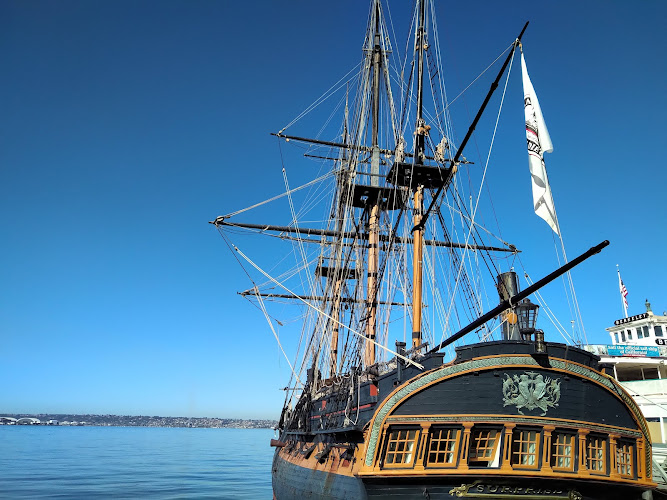
Maritime Museum of San Diego

Panda Trek

Junípero Serra Museum
Find Accommodations Nearby
Recommended Tours & Activities
Visitor Reviews
There are no reviews yet. Be the first one to write one.
Share Your Experience
Have you visited Cabrillo National Monument? Help other travelers by leaving a review.