
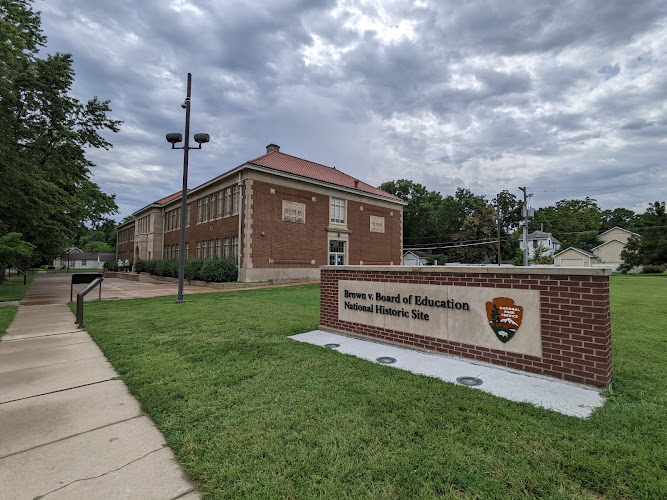
Brown v. Board of Education National Historical Park
About Brown v. Board of Education National Historical Park
Description
The Brown v. Board of Education National Historical Park in Topeka, Kansas, stands as a living reminder of one of the most pivotal moments in American history. Housed in the former Monroe Elementary School, this landmark tells the story of the 1954 Supreme Court case that struck down racial segregation in public schools. Walking through its halls, visitors can almost feel the tension and courage of those who fought for equality—parents, teachers, students, and community leaders who refused to accept “separate but equal” as good enough.
It’s not just a museum; it’s a place where history breathes. The exhibits pull you into the era—segregated classrooms, personal testimonies, photographs, and court documents that changed the nation. And while the subject matter is heavy, the park has a warmth to it. Staff and rangers are approachable, knowledgeable, and genuinely passionate about preserving and sharing this story. The atmosphere encourages reflection, but also sparks conversations about the progress made and the work still ahead.
It’s accessible, inclusive, and welcoming to all—whether you’re traveling solo, with kids, or in a group. The building is fully wheelchair accessible, and there are assisted listening devices for visitors who need them. It’s also LGBTQ+ friendly, with gender-neutral restrooms and a safe, respectful environment. You won’t find flashy entertainment here, but you will find authenticity and meaning. And that’s worth more than any tourist gimmick.
Key Features
- Located in the historic Monroe Elementary School, central to the Brown v. Board Supreme Court case
- Four engaging galleries covering themes like Race and the American Creed, Education and Justice, and The Legacy of Brown v. Board
- Powerful short film introducing the case and its impact
- Interactive exhibits and multimedia presentations
- Fully wheelchair accessible with assisted listening devices available
- Free on-site parking and gender-neutral restrooms
- Kid-friendly educational activities and resources
- Ranger-led talks and special events throughout the year
Best Time to Visit
Spring and fall are arguably the sweet spot for visiting. The weather in Topeka is mild, making it more comfortable to explore both the indoor exhibits and the surrounding grounds. Summer can be hot and humid, and while the building is air-conditioned, stepping outside between exhibits might feel like walking into a sauna. Winter visits can be peaceful—fewer crowds mean you can take your time in each gallery—but icy conditions might occasionally cause closures. Personally, I love visiting in late September when the air has that crisp, back-to-school feel, which somehow makes the story of education reform hit even harder.
If you’re planning around events, keep an eye out for anniversary programs in May, which often feature guest speakers, panel discussions, and community gatherings. These can be busier, but the energy and depth of conversation make them worth it.
How to Get There
Reaching the park is straightforward if you’re driving—it’s in Topeka, and the signage is pretty clear once you’re near the downtown area. There’s a free parking lot right on site, which is a rare treat for a historical landmark. If you’re coming from Kansas City, expect about an hour’s drive west along I-70. Public transportation options are limited, so driving or arranging a rideshare is your best bet. For those flying in, Kansas City International Airport is the closest major hub, and from there, renting a car is the easiest way to go.
Once you arrive, the entrance is wheelchair accessible, and the layout inside is easy to navigate. You’ll check in at the front desk, where friendly staff can point you toward the galleries or start you off with the introductory film.
Tips for Visiting
First off, give yourself more time than you think you’ll need. Most people assume they’ll be in and out in an hour, but the exhibits are layered with detail, and you’ll probably find yourself reading every panel or watching each video clip. Two hours is a comfortable pace. If you’re bringing kids, ask the rangers about the Junior Ranger program—it’s a fun way for them to engage with the history without feeling like they’re stuck in a classroom.
Photography is generally allowed, but remember that this is a place of reflection. Be mindful of others who may be having an emotional moment. Wear comfortable shoes; even though it’s an indoor site, you’ll be on your feet for a while. And if you’re sensitive to emotional content, know that some of the images and stories are intense—they’re meant to be, because this history wasn’t easy.
One personal tip: don’t skip the “Expressions and Reflections” gallery. It’s where visitors can share their own thoughts and responses, and reading through them is unexpectedly moving. You’ll see how people from all over the world connect with this story—some sharing their own experiences with discrimination, others expressing hope for the future. It’s a reminder that this isn’t just American history; it’s human history.
Lastly, check the weather before you go. While the main experience is indoors, you might want to walk around the grounds or take photos outside. And if you can, visit on a weekday morning. The quieter atmosphere makes it easier to absorb the weight of the story without feeling rushed.
Key Features
- Located in the historic Monroe Elementary School, central to the Brown v. Board Supreme Court case
- Four engaging galleries covering themes like Race and the American Creed, Education and Justice, and The Legacy of Brown v. Board
- Powerful short film introducing the case and its impact
- Interactive exhibits and multimedia presentations
- Fully wheelchair accessible with assisted listening devices available
- Free on-site parking and gender-neutral restrooms
- Kid-friendly educational activities and resources
- Ranger-led talks and special events throughout the year
More Details
Updated August 10, 2025
Table of Contents
- Description
- Key Features
- Best Time to Visit
- How to Get There
- Tips for Visiting
- Key Highlights
- Location
- Places to Stay Near Brown v. Board of Education National Historical Park
- Find and Book a Tour
- Explore More Travel Guides
- Nearby Places You Might Like
- Traveler Reviews for Brown v. Board of Education National Historical Park
- Share Your Experience
Description
The Brown v. Board of Education National Historical Park in Topeka, Kansas, stands as a living reminder of one of the most pivotal moments in American history. Housed in the former Monroe Elementary School, this landmark tells the story of the 1954 Supreme Court case that struck down racial segregation in public schools. Walking through its halls, visitors can almost feel the tension and courage of those who fought for equality—parents, teachers, students, and community leaders who refused to accept “separate but equal” as good enough.
It’s not just a museum; it’s a place where history breathes. The exhibits pull you into the era—segregated classrooms, personal testimonies, photographs, and court documents that changed the nation. And while the subject matter is heavy, the park has a warmth to it. Staff and rangers are approachable, knowledgeable, and genuinely passionate about preserving and sharing this story. The atmosphere encourages reflection, but also sparks conversations about the progress made and the work still ahead.
It’s accessible, inclusive, and welcoming to all—whether you’re traveling solo, with kids, or in a group. The building is fully wheelchair accessible, and there are assisted listening devices for visitors who need them. It’s also LGBTQ+ friendly, with gender-neutral restrooms and a safe, respectful environment. You won’t find flashy entertainment here, but you will find authenticity and meaning. And that’s worth more than any tourist gimmick.
Key Features
- Located in the historic Monroe Elementary School, central to the Brown v. Board Supreme Court case
- Four engaging galleries covering themes like Race and the American Creed, Education and Justice, and The Legacy of Brown v. Board
- Powerful short film introducing the case and its impact
- Interactive exhibits and multimedia presentations
- Fully wheelchair accessible with assisted listening devices available
- Free on-site parking and gender-neutral restrooms
- Kid-friendly educational activities and resources
- Ranger-led talks and special events throughout the year
Best Time to Visit
Spring and fall are arguably the sweet spot for visiting. The weather in Topeka is mild, making it more comfortable to explore both the indoor exhibits and the surrounding grounds. Summer can be hot and humid, and while the building is air-conditioned, stepping outside between exhibits might feel like walking into a sauna. Winter visits can be peaceful—fewer crowds mean you can take your time in each gallery—but icy conditions might occasionally cause closures. Personally, I love visiting in late September when the air has that crisp, back-to-school feel, which somehow makes the story of education reform hit even harder.
If you’re planning around events, keep an eye out for anniversary programs in May, which often feature guest speakers, panel discussions, and community gatherings. These can be busier, but the energy and depth of conversation make them worth it.
How to Get There
Reaching the park is straightforward if you’re driving—it’s in Topeka, and the signage is pretty clear once you’re near the downtown area. There’s a free parking lot right on site, which is a rare treat for a historical landmark. If you’re coming from Kansas City, expect about an hour’s drive west along I-70. Public transportation options are limited, so driving or arranging a rideshare is your best bet. For those flying in, Kansas City International Airport is the closest major hub, and from there, renting a car is the easiest way to go.
Once you arrive, the entrance is wheelchair accessible, and the layout inside is easy to navigate. You’ll check in at the front desk, where friendly staff can point you toward the galleries or start you off with the introductory film.
Tips for Visiting
First off, give yourself more time than you think you’ll need. Most people assume they’ll be in and out in an hour, but the exhibits are layered with detail, and you’ll probably find yourself reading every panel or watching each video clip. Two hours is a comfortable pace. If you’re bringing kids, ask the rangers about the Junior Ranger program—it’s a fun way for them to engage with the history without feeling like they’re stuck in a classroom.
Photography is generally allowed, but remember that this is a place of reflection. Be mindful of others who may be having an emotional moment. Wear comfortable shoes; even though it’s an indoor site, you’ll be on your feet for a while. And if you’re sensitive to emotional content, know that some of the images and stories are intense—they’re meant to be, because this history wasn’t easy.
One personal tip: don’t skip the “Expressions and Reflections” gallery. It’s where visitors can share their own thoughts and responses, and reading through them is unexpectedly moving. You’ll see how people from all over the world connect with this story—some sharing their own experiences with discrimination, others expressing hope for the future. It’s a reminder that this isn’t just American history; it’s human history.
Lastly, check the weather before you go. While the main experience is indoors, you might want to walk around the grounds or take photos outside. And if you can, visit on a weekday morning. The quieter atmosphere makes it easier to absorb the weight of the story without feeling rushed.
Key Highlights
- Located in the historic Monroe Elementary School, central to the Brown v. Board Supreme Court case
- Four engaging galleries covering themes like Race and the American Creed, Education and Justice, and The Legacy of Brown v. Board
- Powerful short film introducing the case and its impact
- Interactive exhibits and multimedia presentations
- Fully wheelchair accessible with assisted listening devices available
- Free on-site parking and gender-neutral restrooms
- Kid-friendly educational activities and resources
- Ranger-led talks and special events throughout the year
Location
Places to Stay Near Brown v. Board of Education National Historical Park
Find and Book a Tour
Explore More Travel Guides
No reviews found! Be the first to review!
Traveler Reviews for Brown v. Board of Education National Historical Park
There are no reviews yet. Be the first one to write one.
Have you visited Brown v. Board of Education National Historical Park? Help other travelers by sharing your review.
You Might Also Like

Museum Of Kansas National Guard
Iliff Commons
Historic Ritchie house
Find Accommodations Nearby
Recommended Tours & Activities
Visitor Reviews
There are no reviews yet. Be the first one to write one.
Share Your Experience
Have you visited Brown v. Board of Education National Historical Park? Help other travelers by leaving a review.