
BridgeClimb Sydney
About BridgeClimb Sydney
Key Features
More Details
Updated June 26, 2025
Tickets types for Sydney Harbour BridgeClimb | Book Direct
## BridgeClimb Sydney: How to Tackle One of Australia’s Big-Name Experiences
BridgeClimb Sydney is the guided ascent to the top of the Sydney Harbour Bridge, starting from 3 Cumberland Street in The Rocks and taking you 134 metres above sea level for 360° views over the harbour, Opera House and city skyline.
Operating since 1998, the company runs small-group climbs on the steel arch itself, with climbers clipped to a continuous safety line and led by a trained Climb Leader. It consistently scores around 4.7/5 on major review platforms such as Tripadvisor and the operator’s own aggregated reviews, which is extremely high for a big-ticket city attraction. (Ratings can change over time, so always check the latest figures if you need them for publication.)
This guide walks through what actually happens on a BridgeClimb, who it’s suitable for, and how to decide which climb time and route makes sense for you.
—
## Where BridgeClimb Starts & How to Get There
All climbs begin at the BridgeClimb Base, located at:
3 Cumberland Street, The Rocks, NSW 2000, Australia
From here you’ll check in, complete the health declaration, change into the climbsuit and go through a thorough safety briefing before stepping onto the bridge superstructure.
### Getting there
According to BridgeClimb’s own FAQ, the easiest way to arrive is via Circular Quay, a major transport hub with ferries, buses and trains. From Circular Quay it’s a short walk through The Rocks to Cumberland Street.
– By public transport:
– Train, bus or ferry to Circular Quay, then walk.
– By car:
– Parking is available in The Rocks area (various commercial car parks), but spaces and tariffs are not controlled by BridgeClimb, so always check current prices and restrictions independently.
Most ticketed experiences and shore excursions ask guests to arrive around 15 minutes before climb time to complete check-in.
—
## Climb Types & How Long They Take
BridgeClimb currently offers several routes and experiences. The core idea is always the same – a guided, tethered walk on the steel arch – but the duration and route change.
### Main climb routes
From the official site and recent product descriptions, the principal climbs are:
– Summit Climb (original route)
– Follows the upper arch to the very top.
– Approx. 3 hours total, with around 2 hours actually on the bridge.
– About 1,332 steps in total.
– Max group size up to 14 climbers per Climb Leader.
– Summit Insider Climb
– Uses more of the interior structure before emerging at the summit.
– Designed with fewer steps and no ladders, so it’s shorter and slightly less demanding.
– Ultimate Climb
– Traverses the entire bridge from south to north and back again, the longest option.
– Burrawa Climb (First Nations–led)
– Follows the Summit route but adds a deep dive into Aboriginal history and language with a First Nations storyteller alongside the Climb Leader.
– UnderBridge Walk
– A shorter experience under the arches to a lower vantage point, for people wanting the icon with less time and walking.
Across these and older “sampler” style climbs, total experience times typically range from around 1.5 to 3.5 hours, depending on the route you choose.
### Dawn, day, twilight or night?
The main climbs are offered across four broad times of day: dawn, daytime, twilight and night.
– Dawn – limited departures, often just once a month on a set schedule.
– Day – clearest views of the harbour, ferries and city detail.
– Twilight – particularly popular because you see the city shift from daylight to city lights in a single climb.
– Night – emphasises the skyline and illuminated bridge architecture.
If you’re planning a full Sydney itinerary, this section of your article is a natural place to internally link to a broader “best things to do in Sydney” guide and a “3-day Sydney itinerary” for context.
—
## Safety, Age & Health Requirements
BridgeClimb operates under strict safety and security rules, which are clearly published and enforced.
### Age, height and supervision
From the health and safety page and formal terms and conditions:
– Minimum age: 8 years.
– Minimum height: 1.2 metres (120 cm).
– Every three climbers aged 8–15 inclusive must be accompanied by at least one paying adult (18+).
– There is no maximum age set in policy; the oldest recorded climber has reached 100 years old.
### Pregnancy and medical clearance
– If you’re under 24 weeks pregnant, you may climb with a medical Certificate of Fitness completed by a doctor within three months of the climb date.
– If you are more than 24 weeks pregnant, you cannot take part.
Participants aged 75+ are also expected to provide a Certificate of Fitness, according to recent product information.
### Alcohol and drug policy
– Every climber is breath-tested before the climb.
– You cannot climb if your blood alcohol concentration is 0.05% or higher or if you’re under the influence of drugs.
### Cameras, phones and loose items
For security and safety, no loose personal items are allowed on the bridge:
– No phones, cameras, GoPros, wallets, keys, or loose jewellery.
– Secure lockers are provided at the base; your key is clipped to your suit.
A complimentary group photo is normally included; additional photos can be purchased via BridgeClimb’s photo packages.
### Accessibility and inclusive options
BridgeClimb actively promotes inclusive experiences:
– Accessibility support: the team can provide detailed descriptions, quieter times, written materials and case-by-case assessments for climbers with disabilities or specific access needs.
– Auslan climbs: there are dedicated climbs where an Australian Sign Language interpreter joins to interpret the commentary, and interpreters in other sign languages may be arranged on request.
– Burrawa Climb: this option is led by a First Nations storyteller and highlights Aboriginal history and language, with BridgeClimb describing it as part of Australia’s signature collection of Aboriginal travel experiences.
The operator also publicly acknowledges the Gadigal people of the Eora Nation as Traditional Owners of the land on which it operates.
—
## What Actually Happens on a BridgeClimb
While the exact flow can vary slightly by route, the core experience usually looks like this:
### 1. Check-in & preparation
– Arrive at BridgeClimb Base at your allocated time.
– Complete or confirm your health declaration.
– Undergo the alcohol breath test.
– Change into the BridgeClimb suit, which goes over your clothes.
– Staff fit you with a harness, safety lanyard and any weather gear (rain jacket, fleece, beanie, hat, etc., depending on conditions).
### 2. Training
Before stepping onto the span, you’ll practise on a ladder simulator and learn how the continuous safety line works.
Your Climb Leader explains what to expect: ladders, grated catwalks, the pace, and where the main photo stops happen.
### 3. The ascent
– You ascend via catwalks and ladders to reach the arch.
– Once on the arch, the pace is steady with regular pauses. Many recent reports note that the climb is moderate but manageable for most people who can handle stairs, thanks to the slow speed and breaks. Yum List
– Along the way, your guide weaves in stories about the bridge’s construction (opened in 1932), its 134 m steel arch and role in Sydney’s history.
On Burrawa climbs, that storytelling explicitly centres 65,000+ years of Indigenous history around the harbour and key language concepts like the word burrawa (“above” / “upwards”).
### 4. At the summit
At the top – 134 m above the harbour – you get panoramic views of the Opera House, Circular Quay, the CBD, North Sydney, and out towards the Heads.
Your guide takes group and individual photos with professional equipment (personal cameras are still not allowed).
### 5. The descent & de-gearing
The route back down often follows the opposite side of the arch, giving slightly different perspectives on the harbour and traffic below. America
Back at base, you:
– Return your gear.
– Access your complimentary group photo and, if you choose, purchase additional images or merchandise.
—
## Best Time of Day and Year to Climb
There isn’t a single “best time” that suits everyone; it depends what you want from the experience.
Recent expert and operator commentary lines up like this:
– Twilight climbs are often singled out as the most atmospheric because you see the harbour in daylight, at sunset, and lit up after dark in a single outing.
– Dawn climbs are quieter and feel more exclusive, but they run only on specific days (commonly the first Saturday of the month, with early morning start times).
– Daytime climbs provide the sharpest, clearest views for people who care about seeing every detail of the skyline and boats.
– Night climbs emphasise city lights and traffic patterns rather than distant landscapes.
For seasonality, Sydney’s spring and autumn are frequently recommended as offering the most comfortable combination of temperature and visibility, though climbs run in almost all weather, with gear supplied for rain and cooler conditions. Yum List
This is a natural point in your article to connect (internally) to a broader “best time to visit Sydney” piece for climate and event context.
—
## What to Wear and Practical Tips
All of the following are grounded in official guidelines and long-running FAQ answers:
Table of Contents
Key Highlights
BridgeClimb Sydney
Location
Places to Stay Near BridgeClimb Sydney"Definitely a bucket list thing to do!"
Find and Book a Tour
Explore More Travel Guides
No reviews found! Be the first to review!
Traveler Reviews for BridgeClimb Sydney
There are no reviews yet. Be the first one to write one.
Have you visited BridgeClimb Sydney? Help other travelers by sharing your review.
You Might Also Like

Hyde Park
Hyper Karting
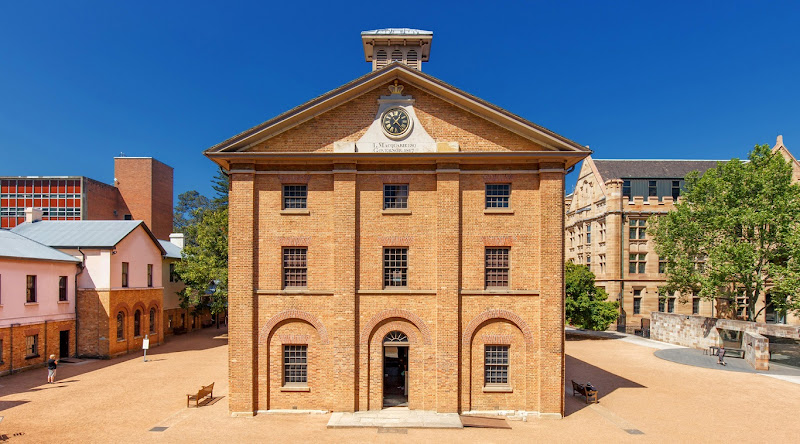
Hyde Park Barracks
Find Accommodations Nearby
Recommended Tours & Activities
Visitor Reviews
There are no reviews yet. Be the first one to write one.
Share Your Experience
Have you visited BridgeClimb Sydney? Help other travelers by leaving a review.