
Boulders beach penguin colony
About Boulders beach penguin colony
Description
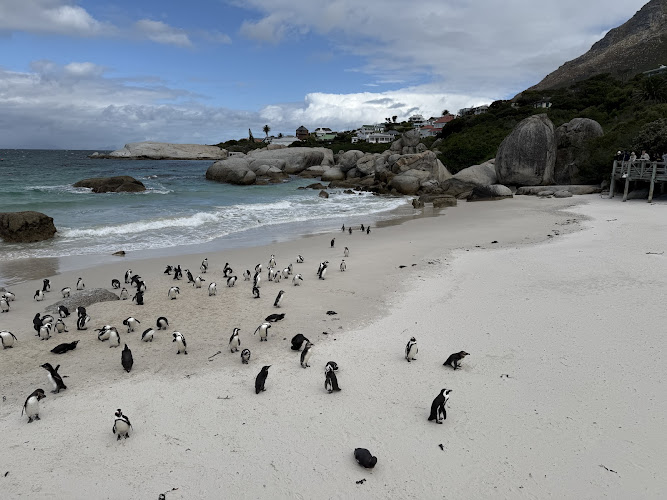
Boulders Beach is one of those rare places that feels like it belongs in a dream. Tucked along the coastline of Simon’s Town near Cape Town, it’s where clear turquoise waters meet smooth, ancient granite boulders—and where hundreds of African penguins waddle about like they own the place. And honestly, they kind of do. The beach is part of Table Mountain National Park, and it’s the only place in the world where you can get this close to a colony of wild African penguins in their natural habitat.
The penguins here are officially known as African penguins, though locals used to call them “jackass penguins” because of their donkey-like bray. They’re small, charming, and endlessly entertaining. Watching them shuffle awkwardly across the sand, dive into the waves, or preen their feathers under the sun is pure joy. It’s one of those experiences that sticks with you long after you’ve rinsed the sand off your feet.
What’s fascinating is that this colony only started in the early 1980s, when a few breeding pairs decided to settle between the boulders. Since then, their numbers have grown steadily. Conservation efforts have made a huge difference, and the area is now carefully managed to protect the penguins’ nesting sites. You can walk along raised wooden boardwalks that wind through the dunes and coastal vegetation, giving you a front-row seat to their daily antics without disturbing them.
The atmosphere here is peaceful yet alive with the sound of the ocean and the occasional squawk from a penguin. Families love it, photographers adore it, and honestly, anyone with a soft spot for wildlife will find it hard to leave. The beach itself is also great for swimming—if you don’t mind sharing the water with a few curious penguins. The water can be chilly, but that’s part of the adventure. It’s not every day you get to swim alongside one of the world’s most endearing species.
While most visitors rave about the experience, it’s worth noting that it can get busy during peak season. Some people prefer the quieter months when you can hear the waves crash against the rocks without the chatter of crowds. But whether you visit during summer or winter, the magic of Boulders Beach rarely disappoints. It’s one of those rare tourist spots that actually lives up to the hype.
Key Features
- Home to a thriving colony of endangered African penguins.
- Boardwalks and viewing platforms designed for safe, up-close observation.
- Protected area managed by South African National Parks.
- Calm, sheltered waters ideal for swimming and snorkeling.
- Unique granite boulders estimated to be over 500 million years old.
- Family-friendly environment with picnic spots and shaded areas.
- Educational displays about penguin conservation and local marine life.
Best Time to Visit
The penguins are around all year, but the best time to see them in full swing is between February and August. During these months, they’re often nesting, feeding chicks, or simply lounging on the sand in large numbers. If you visit between September and October, you might find fewer penguins on the beach since many are out at sea feeding.
Summer (December to March) brings warm weather and clear skies, perfect for swimming and sunbathing. But it also means larger crowds and higher entrance queues. Early mornings and late afternoons are quieter and offer softer light for photography. Personally, I think winter has its own charm—cooler air, fewer people, and those dramatic Cape skies that make every photo look like a painting.
How to Get There
Getting to Boulders Beach is pretty straightforward. It’s about a 45-minute drive from Cape Town’s city center, following the scenic M4 coastal route through Muizenberg and Fish Hoek. That drive alone is worth the trip—it hugs the coastline, offering sweeping views of False Bay and the mountains beyond.
If you don’t have a car, there are plenty of guided tours that include Boulders Beach as part of a Cape Peninsula itinerary, often alongside Cape Point and Chapman’s Peak Drive. Public transport is limited, but you can take a train to Simon’s Town and then grab a short taxi ride to the beach. Parking can be tight during weekends, so arriving early helps. And trust me, watching the penguins in the quiet morning light before the crowds roll in is absolutely worth the early start.
Tips for Visiting
If you’re planning your first visit, a little preparation goes a long way. Here are some things I’ve learned from my own trips (and a few rookie mistakes):
- Bring your swimsuit. The water may be chilly, but swimming among penguins is something you’ll never forget. Just remember to keep a respectful distance—these little guys are wild animals, not pets.
- Wear reef-safe sunscreen. The African sun is no joke, and protecting both your skin and the marine environment is equally important.
- Go early or late in the day. Not only will you dodge the crowds, but you’ll also get the best light for photos. Penguins look especially photogenic when the sun’s low and golden.
- Stay on the boardwalks. It’s tempting to wander off for a closer look, but the boardwalks are there for a reason—to protect both visitors and penguins.
- Pack snacks and water. There are small cafés nearby, but having your own picnic makes the experience more relaxed. Just be sure to clean up afterward—penguins don’t appreciate litter.
- Respect the rules. No feeding, no touching, and definitely no chasing penguins for selfies. They may look cute, but they bite harder than you’d think.
- Bring binoculars. You’ll spot penguins nesting in the dunes or swimming far out in the bay. It’s also a great way to see other seabirds that frequent the area.
One thing I always tell friends: slow down. It’s easy to rush through, snap a few photos, and move on to the next attraction. But if you linger a bit—watch a penguin waddle awkwardly across the sand, see another dive headfirst into the surf—you start to appreciate the rhythm of their world. It’s oddly calming, almost meditative.
If you’re traveling with kids, they’ll love it. The penguins are endlessly entertaining, and the beach’s calm waters make it safe for little swimmers. And for photographers, this place is gold. Bring extra memory cards; you’ll need them.
Beyond the penguins, the surrounding area is worth exploring too. Simon’s Town itself has a quaint maritime charm, with old naval buildings, cozy cafés, and a few antique shops that feel frozen in time. It’s easy to spend a whole day here—start with the penguins, grab lunch by the harbor, and maybe finish with a coastal walk as the sun dips behind the mountains.
In the end, Boulders Beach isn’t just about seeing penguins—it’s about feeling connected to nature in a way that’s rare these days. There’s something grounding about watching these little creatures go about their lives, oblivious to the chaos of the world beyond their sandy home. Whether you’re a wildlife lover, a photographer, or just someone who needs a dose of simple happiness, this spot delivers every single time.
Key Features
- Home to a thriving colony of endangered African penguins.
- Boardwalks and viewing platforms designed for safe, up-close observation.
- Protected area managed by South African National Parks.
- Calm, sheltered waters ideal for swimming and snorkeling.
- Unique granite boulders estimated to be over 500 million years old.
- Family-friendly environment with picnic spots and shaded areas.
- Educational displays about penguin conservation and local marine life.
More Details
Updated October 8, 2025
Table of Contents
Description
Boulders Beach is one of those rare places that feels like it belongs in a dream. Tucked along the coastline of Simon’s Town near Cape Town, it’s where clear turquoise waters meet smooth, ancient granite boulders—and where hundreds of African penguins waddle about like they own the place. And honestly, they kind of do. The beach is part of Table Mountain National Park, and it’s the only place in the world where you can get this close to a colony of wild African penguins in their natural habitat.
The penguins here are officially known as African penguins, though locals used to call them “jackass penguins” because of their donkey-like bray. They’re small, charming, and endlessly entertaining. Watching them shuffle awkwardly across the sand, dive into the waves, or preen their feathers under the sun is pure joy. It’s one of those experiences that sticks with you long after you’ve rinsed the sand off your feet.
What’s fascinating is that this colony only started in the early 1980s, when a few breeding pairs decided to settle between the boulders. Since then, their numbers have grown steadily. Conservation efforts have made a huge difference, and the area is now carefully managed to protect the penguins’ nesting sites. You can walk along raised wooden boardwalks that wind through the dunes and coastal vegetation, giving you a front-row seat to their daily antics without disturbing them.
The atmosphere here is peaceful yet alive with the sound of the ocean and the occasional squawk from a penguin. Families love it, photographers adore it, and honestly, anyone with a soft spot for wildlife will find it hard to leave. The beach itself is also great for swimming—if you don’t mind sharing the water with a few curious penguins. The water can be chilly, but that’s part of the adventure. It’s not every day you get to swim alongside one of the world’s most endearing species.
While most visitors rave about the experience, it’s worth noting that it can get busy during peak season. Some people prefer the quieter months when you can hear the waves crash against the rocks without the chatter of crowds. But whether you visit during summer or winter, the magic of Boulders Beach rarely disappoints. It’s one of those rare tourist spots that actually lives up to the hype.
Key Features
- Home to a thriving colony of endangered African penguins.
- Boardwalks and viewing platforms designed for safe, up-close observation.
- Protected area managed by South African National Parks.
- Calm, sheltered waters ideal for swimming and snorkeling.
- Unique granite boulders estimated to be over 500 million years old.
- Family-friendly environment with picnic spots and shaded areas.
- Educational displays about penguin conservation and local marine life.
Best Time to Visit
The penguins are around all year, but the best time to see them in full swing is between February and August. During these months, they’re often nesting, feeding chicks, or simply lounging on the sand in large numbers. If you visit between September and October, you might find fewer penguins on the beach since many are out at sea feeding.
Summer (December to March) brings warm weather and clear skies, perfect for swimming and sunbathing. But it also means larger crowds and higher entrance queues. Early mornings and late afternoons are quieter and offer softer light for photography. Personally, I think winter has its own charm—cooler air, fewer people, and those dramatic Cape skies that make every photo look like a painting.
How to Get There
Getting to Boulders Beach is pretty straightforward. It’s about a 45-minute drive from Cape Town’s city center, following the scenic M4 coastal route through Muizenberg and Fish Hoek. That drive alone is worth the trip—it hugs the coastline, offering sweeping views of False Bay and the mountains beyond.
If you don’t have a car, there are plenty of guided tours that include Boulders Beach as part of a Cape Peninsula itinerary, often alongside Cape Point and Chapman’s Peak Drive. Public transport is limited, but you can take a train to Simon’s Town and then grab a short taxi ride to the beach. Parking can be tight during weekends, so arriving early helps. And trust me, watching the penguins in the quiet morning light before the crowds roll in is absolutely worth the early start.
Tips for Visiting
If you’re planning your first visit, a little preparation goes a long way. Here are some things I’ve learned from my own trips (and a few rookie mistakes):
- Bring your swimsuit. The water may be chilly, but swimming among penguins is something you’ll never forget. Just remember to keep a respectful distance—these little guys are wild animals, not pets.
- Wear reef-safe sunscreen. The African sun is no joke, and protecting both your skin and the marine environment is equally important.
- Go early or late in the day. Not only will you dodge the crowds, but you’ll also get the best light for photos. Penguins look especially photogenic when the sun’s low and golden.
- Stay on the boardwalks. It’s tempting to wander off for a closer look, but the boardwalks are there for a reason—to protect both visitors and penguins.
- Pack snacks and water. There are small cafés nearby, but having your own picnic makes the experience more relaxed. Just be sure to clean up afterward—penguins don’t appreciate litter.
- Respect the rules. No feeding, no touching, and definitely no chasing penguins for selfies. They may look cute, but they bite harder than you’d think.
- Bring binoculars. You’ll spot penguins nesting in the dunes or swimming far out in the bay. It’s also a great way to see other seabirds that frequent the area.
One thing I always tell friends: slow down. It’s easy to rush through, snap a few photos, and move on to the next attraction. But if you linger a bit—watch a penguin waddle awkwardly across the sand, see another dive headfirst into the surf—you start to appreciate the rhythm of their world. It’s oddly calming, almost meditative.
If you’re traveling with kids, they’ll love it. The penguins are endlessly entertaining, and the beach’s calm waters make it safe for little swimmers. And for photographers, this place is gold. Bring extra memory cards; you’ll need them.
Beyond the penguins, the surrounding area is worth exploring too. Simon’s Town itself has a quaint maritime charm, with old naval buildings, cozy cafés, and a few antique shops that feel frozen in time. It’s easy to spend a whole day here—start with the penguins, grab lunch by the harbor, and maybe finish with a coastal walk as the sun dips behind the mountains.
In the end, Boulders Beach isn’t just about seeing penguins—it’s about feeling connected to nature in a way that’s rare these days. There’s something grounding about watching these little creatures go about their lives, oblivious to the chaos of the world beyond their sandy home. Whether you’re a wildlife lover, a photographer, or just someone who needs a dose of simple happiness, this spot delivers every single time.
Key Highlights
- Home to a thriving colony of endangered African penguins.
- Boardwalks and viewing platforms designed for safe, up-close observation.
- Protected area managed by South African National Parks.
- Calm, sheltered waters ideal for swimming and snorkeling.
- Unique granite boulders estimated to be over 500 million years old.
- Family-friendly environment with picnic spots and shaded areas.
- Educational displays about penguin conservation and local marine life.
Location
Places to Stay Near Boulders beach penguin colony
Find and Book a Tour
Explore More Travel Guides
No reviews found! Be the first to review!
Traveler Reviews for Boulders beach penguin colony
There are no reviews yet. Be the first one to write one.
Have you visited Boulders beach penguin colony? Help other travelers by sharing your review.
You Might Also Like
Silvermine Nature Reserve

Boulders Beach

Clock Tower Waterfront
Find Accommodations Nearby
Recommended Tours & Activities
Visitor Reviews
There are no reviews yet. Be the first one to write one.
Share Your Experience
Have you visited Boulders beach penguin colony? Help other travelers by leaving a review.