
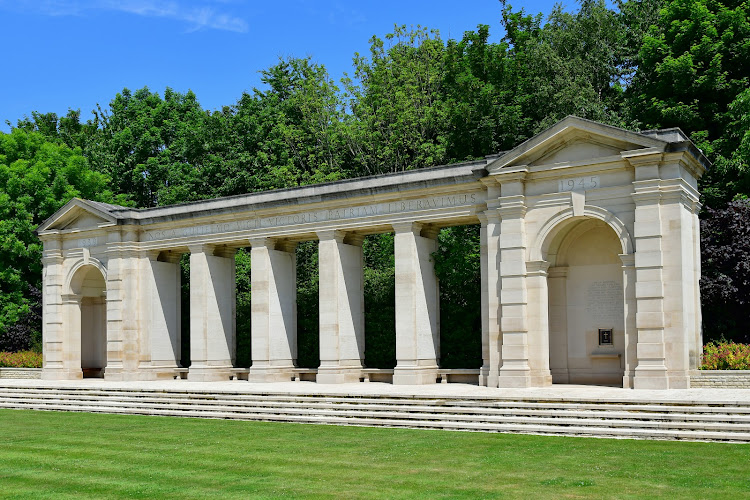
Bayeux Memorial
About Bayeux Memorial
Key Features
More Details
Updated September 18, 2025
The Bayeux Memorial in Bayeux commemorates more than 1,800 Commonwealth servicemen and women who have no known grave from operations in northwest Europe during World War II, with names carved on a curved stone wall. Located near the Norman city that was the first major French town liberated after D-Day, the site provides a solemn, well-maintained space for reflection and historical context through its proximity to nearby museums and cemeteries. Visitors often combine a visit to the memorial with the adjacent Bayeux War Cemetery to understand the scale of the campaign and the personal stories behind the names.
Table of Contents
Key Highlights
Engraved Names: Stone panels list the names of Commonwealth soldiers who died in Normandy and have no known grave, grouped by regiment and unit.
Latin Inscription: Look for the powerful motto in the central archway—an elegant reminder of the centuries-long ties between Britain and Normandy.
Calm, Reflective Design: Understated stonework, soft landscaping, and open colonnades create a contemplative atmosphere.
Opposite Bayeux War Cemetery: Combine your visit with the largest Commonwealth cemetery in France for a fuller understanding of the Normandy losses.
Accessibility: Wheelchair accessible entrance and parking; flat, even surfaces on the main paths.
Orientation Details: Modest on-site signage helps you understand the memorial’s purpose and how the names are organized.
Seasonal Planting: The CWGC’s meticulous horticulture adds color and texture, especially in spring and early summer.
Commemorative Moments: On key dates like early June and November, you may encounter veterans, families, and official ceremonies paying homage to the fallen.
Quiet Seating: Benches and shaded areas invite you to linger and reflect, away from the bustle of Bayeux’s old town.
Photographic Subtlety: The memorial rewards patient photography—morning or late-day light skims across the engravings beautifully.
Location
Places to Stay Near Bayeux Memorial
Find and Book a Tour
Explore More Travel Guides
No reviews found! Be the first to review!
Walking along Boulevard Fabian Ware and catching the first glimpse of the pale stone rising behind the trees, I felt the shift from everyday Bayeux to a quiet place of reflection. The Bayeux Memorial, set opposite the largest Commonwealth War Cemetery in France, isn’t flashy or imposing. It’s calm, deliberate, and deeply moving. This is the Normandy memorial where the names of Commonwealth soldiers with no known grave are engraved in smooth stone panels. I’ve returned a few times over the years, and each visit reveals some small detail I missed before—the way the light skims across the lettering, a regimental badge I hadn’t noticed, the soft hum of the town carried on the breeze.
Description
The Bayeux Memorial commemorates the Commonwealth land forces who died in the 1944 Normandy campaign and have no known resting place. You’ll find it at 1939 Bd Fabian Ware, 14400 Bayeux, France, a short walk from the center of town and right across from the Bayeux War Cemetery. Together, memorial and cemetery form one of the most significant lieux de mémoire in Normandy—part solemn homage, part open-air history lesson.
Architecturally, the memorial is restrained and serene. Portland stone panels carry the names of the missing, grouped by regiment and unit, creating a rhythm of carved letters that pulls you along the colonnade. In the central archway, look up for the Latin inscription that often stops visitors mid-step: “Nos a Gulielmo victi victoris patriam liberavimus”—“We, once conquered by William, have now set free the Conqueror’s native land.” It’s a succinct bridge between 1066 and 1944, between Normandy and Britain, and between past and present Bayeux.
The Commonwealth War Graves Commission’s familiar horticulture provides a living frame: trimmed lawns, seasonal flowers, and carefully tended borders that soften the stone’s severity. Despite its proximity to roads and the museum, the space stays remarkably quiet. You’re free to wander, to read names, and to linger under the shade while you take in the scale of loss that Normandy absorbed in those weeks after D-Day.
The memorial is open to the public year-round and is free to visit. There’s level access through the entrance and designated parking nearby for visitors with disabilities—both the entrance and parking are wheelchair accessible. I’ve seen people with mobility scooters moving comfortably along the main paths. If you or someone in your group uses a wheelchair, you’ll appreciate the gentle gradients and absence of steps on the primary approach.
Across the boulevard, the Bayeux War Cemetery contains thousands of graves, and, if time allows, it’s worth pairing both sites. The cemetery offers the Cross of Sacrifice and the Stone of Remembrance, while the memorial focuses on names without graves. Together they tell a complete story. A few minutes’ walk away, the Battle of Normandy Museum adds context with maps, vehicles, and timelines—useful if you want to connect individual names with the broader sweep of the campaign.
Key Features
- Engraved Names: Stone panels list the names of Commonwealth soldiers who died in Normandy and have no known grave, grouped by regiment and unit.
- Latin Inscription: Look for the powerful motto in the central archway—an elegant reminder of the centuries-long ties between Britain and Normandy.
- Calm, Reflective Design: Understated stonework, soft landscaping, and open colonnades create a contemplative atmosphere.
- Opposite Bayeux War Cemetery: Combine your visit with the largest Commonwealth cemetery in France for a fuller understanding of the Normandy losses.
- Accessibility: Wheelchair accessible entrance and parking; flat, even surfaces on the main paths.
- Orientation Details: Modest on-site signage helps you understand the memorial’s purpose and how the names are organized.
- Seasonal Planting: The CWGC’s meticulous horticulture adds color and texture, especially in spring and early summer.
- Commemorative Moments: On key dates like early June and November, you may encounter veterans, families, and official ceremonies paying homage to the fallen.
- Quiet Seating: Benches and shaded areas invite you to linger and reflect, away from the bustle of Bayeux’s old town.
- Photographic Subtlety: The memorial rewards patient photography—morning or late-day light skims across the engravings beautifully.
Best Time to Visit
Early morning and late afternoon are my favorite times. The memorial’s pale stone takes on a warm glow, shadows deepen the lettering, and the site feels almost private. Midday can be busier in high season, especially when tour groups visit the cemetery across the road.
Seasonally, spring is wonderful: fresh plantings, mild temperatures, and more consistent light for photos. Around early June, when the D-Day commemorations draw visitors from around the world, the atmosphere is powerful but expect crowds and occasional temporary restrictions during ceremonies. If you want a quieter experience, consider late September to October; the air is crisp, the landscaping still looks good, and Bayeux itself is less crowded. Winter visits have their own gravity—short days, stark trees, and very few people—though you’ll want warm layers and a weatherproof jacket.
The memorial is open year-round, and because it’s outdoors, there’s no timed ticketing or strict entry schedule. That said, daylight matters. Plan your visit during daylight hours to fully appreciate the engravings and explore the surrounding area safely.
How to Get There
Address: 1939 Bd Fabian Ware, 14400 Bayeux, France.
On foot: From the historic center of Bayeux (near the cathedral), it’s roughly a 15–20 minute walk along pleasant streets. From the train station (Gare de Bayeux), plan on about 20–25 minutes on foot depending on your pace.
By car: If you’re driving via the N13, take the Bayeux exit and follow signs for the “Cimetière militaire britannique” or “Cemetery.” Parking is straightforward, with spaces along Boulevard Fabian Ware and adjacent areas. You’ll find clearly marked accessible parking close to the memorial entrance.
By taxi: A taxi from the station or cathedral area takes around 5–10 minutes, depending on traffic.
By bike: Bayeux is compact and bicycle-friendly. It’s an easy 10-minute ride from the center, and you can secure your bike along the perimeter fences or designated racks nearby.
Public transport within Bayeux is limited but reliable. Local buses can bring you within walking distance; schedules change seasonally, so check the latest times at the station or tourist information points in town.
Tips for Visiting
- Give Yourself Time: Even if you’re not a dedicated military history buff, allow at least 30–60 minutes at the memorial. The names pull you in, and the nearby cemetery adds context.
- Pair With the Museum: The Battle of Normandy Museum is a short walk away and helps make sense of the place names and units you’ll see engraved on the memorial.
- Mindful Etiquette: This is a memorial, not a park. Speak softly, avoid phone calls, and be thoughtful with photography. If you cross to the cemetery, stay on the paths and keep a respectful distance from headstones.
- Dress for the Weather: The site is exposed. Bring a light jacket in summer (breezes can be cool) and proper layers in winter. A compact umbrella helps if showers roll in off the coast.
- Footwear: You’ll mostly be on flat surfaces, but comfortable shoes make wandering between the memorial, cemetery, and museum much easier.
- Accessibility Notes: The entrance and parking are wheelchair accessible, and the main routes within the site are level. If you use a mobility aid, you should be able to navigate comfortably.
- Read the Details: Names are grouped by regiment or unit, which can help piece together stories. I like to pick a regiment, read a few names, and later look up where they fought during the breakout from the beaches.
- Photography Tips: Low-angle light early or late enhances the carved lettering. If it’s overcast—a common Normandy mood—you’ll get soft, even light without glare.
- Facilities: There’s no café and typically no on-site restrooms at the memorial itself. Plan a stop in town or at nearby attractions before or after your visit.
- Quiet Moments: Benches and shaded spots invite reflection. Take a few minutes just to listen; the subdued setting is part of the experience.
- Dates of Interest: Early June (around D-Day) and November 11 can be especially meaningful visits, though expect busier conditions and possible ceremony preparations.
- A Lesser-Known Detail: The boulevard takes its name from Fabian Ware, founder of the organization that became the Commonwealth War Graves Commission. It’s a fitting approach to a place where the CWGC’s thoughtful design and care are on full display.
- Context Beyond Bayeux: The Bayeux Memorial honors Commonwealth land forces missing in action in Normandy. If you’re tracing family history, keep in mind that airmen and sailors are often commemorated at different memorials, so cross-reference accordingly.
No matter how many times I’ve stopped here—sometimes as a quick pause on a road trip along the Normandy coast, other times as the heart of a day in Bayeux—the effect is consistent. You arrive with the noise of travel in your head, and within seconds the memorial strips that away. You see the steady cadence of names, a town going about its day beyond the trees, and a delicate thread through time captured in that single Latin sentence overhead. If you’re exploring Normandy’s D-Day sites, the Bayeux Memorial is both a starting point and a final word: an essential stop where remembrance is tangible, and the scale of sacrifice becomes personal enough to carry with you long after you leave.
Traveler Reviews for Bayeux Memorial
There are no reviews yet. Be the first one to write one.
Have you visited Bayeux Memorial? Help other travelers by sharing your review.
You Might Also Like

Notre-Dame de Bayeux

Bayeux Tourist Office

WN50a
Find Accommodations Nearby
Recommended Tours & Activities
Visitor Reviews
There are no reviews yet. Be the first one to write one.
Share Your Experience
Have you visited Bayeux Memorial? Help other travelers by leaving a review.