
Basilica of the Holy Blood
About Basilica of the Holy Blood
Basilica of the Holy Blood (Bruges): What to See, When to Go, and How to Do It Right
On Bruges’ stately Burg Square, the Basilica of the Holy Blood blends two very different chapels—and nearly nine centuries of belief—into one compact, deeply atmospheric visit. You’ll find a stark Romanesque lower church and a richly decorated (neo-)Gothic upper chapel that guards a famed relic associated with the blood of Christ. Entry to the basilica itself is free, while a small museum/treasury fee unlocks the glittering reliquary and artifacts behind the legend.
### Fast facts (verified)
– Address: Burg 13, 8000 Brugge, Belgium. Bruges
– Opening hours (basilica): Daily, roughly 10:00–17:15 (access can be limited during services). Free entry. Museum/treasury currently €5 (under 12s free). Always reconfirm before you go.
– Veneration of the Holy Blood (public viewing): Typically daily 14:00–16:00, with extra opportunities noted on the official calendar (e.g., Fridays 10:15–11:00). Times can change with liturgical schedules.
– Annual highlight: Procession of the Holy Blood on Ascension Day (UNESCO-listed intangible heritage). Upcoming dates published by organizers include 14 May 2026 and 6 May 2027.
—
## Why this basilica matters
The site began as the count’s chapel (1130s–1150s) and was raised to a minor basilica in 1923 due to the enduring veneration of the relic. Architecturally, it’s two churches in one:
– The Lower Chapel of St. Basil is among West Flanders’ best-preserved Romanesque interiors—stone-rib vaults, heavy piers, and minimal light. Look for the 12th-century half-relief of the Baptism of Christ (School of Tournai). Bruges
– The Upper Chapel—home to the relic—displays richly revived Gothic decor from the 19th century. You’ll reach it via the Steegheere staircase, a bluestone showpiece that bridges late Gothic and early Renaissance aesthetics. Bruges
Historically, tradition holds that Thierry (Dietrich) of Alsace, Count of Flanders, brought the relic of the Holy Blood to Bruges after the Second Crusade. Scholarship stresses that its medieval fame is documented in Bruges by the 13th century, and modern accounts note the relic’s legendary (not scientifically proven) provenance—useful context when you’re explaining the story to curious companions.
—
## The relic and how to see it respectfully
During the veneration hours (typically mid-afternoon), clergy present a phial containing a cloth associated with Christ’s blood for quiet viewing. Expect a calm, orderly line; photography rules are posted and may be restricted—follow on-site guidance. If you’re scheduling tightly, confirm the day’s service and veneration times on the basilica’s official page before you set out; times can shift with feast days, concerts, or private ceremonies.
Insider note: If you’re in Bruges over Ascension, the Procession of the Holy Blood is a city-wide spectacle with biblical tableaux, choirs, and the relic borne through the center. It’s been staged since the Middle Ages and is now UNESCO-inscribed—crowds are large, so plan staging points and book stays well in advance.
—
## Museum & treasury: small room, big craftsmanship
Even if you’re not a devotee, the basilica’s treasury is a crisp, 20–30-minute add-on that rewards detail-hunters. The showstopper is the 1617 shrine by Jan (John) Crabbe, worked in gold/silver and studded with jewels, with figurines of Christ, the Virgin, St. Donatian, and St. Basil. It’s this shrine that accompanies the relic during Ascension. Expect compact displays; labels focus on Bruges’ devotional art and the relic’s public history.
—
## Planning your visit (and avoiding common mistakes)
1) Time your entry.
Go right at 10:00 for low-crowd photographs of the lower chapel’s Romanesque vaults, then return to the upper chapel around 14:00 if you want to attend veneration without rushing. Outside of those hours, you’ll still appreciate the art and architecture, but you won’t see the phial. Always recheck the day’s schedule—liturgies can close either chapel to general sightseeing.
2) Accessibility—better than you’d guess in a medieval site.
– Lower chapel: level access; the main door can be heavy and maneuvering space at the threshold is tight. Some internal areas use a steeper incline.
– Upper chapel & treasury: there is a lift—you must call and speak via the intercom to request access; doors are heavy and some passages are narrow, but feasible with help. Displays may sit too high for seated viewing. If lift access is critical, confirm on the day. Bruges
3) Dress & behavior.
This is a working Roman Catholic church. Shoulders/heads needn’t be covered by rule, but modest, quiet conduct is expected during services and veneration. (On the logistics side, expect transient closures during Mass (often 11:00, except Monday) and feasts.)
4) Photography.
Rules change with services and exhibits. When the relic is exposed, assume no flash and be prepared for no-photo periods altogether; staff signage prevails.
5) Combine with Burg Square highlights.
Within a minute’s walk you’ve got Bruges City Hall (a Gothic stunner) and the Liberty of Bruges. The square is paved with relatively even “mosaic” cobbles and includes seating—handy for regrouping with mixed-mobility parties. Bruges
—
## Architecture deep-dive: what to look for
– Romanesque gravity (Lower Chapel, St. Basil): sober stone vaults, rhythmic piers, and low light promote an almost crypt-like stillness; spot the Baptism of Christ relief over the side-aisle entrance—12th-century Tournai school carving survives here when many peers didn’t. Bruges
– Neo-Gothic glow (Upper Chapel): 19th-century decoration layers color, pattern, and stained glass over a Gothic shell rebuilt and refreshed across centuries. This contrast with the lower level is the basilica’s signature experience. Bruges
– Steegheere staircase: beyond circulation, it’s an aesthetic statement—a reconstructed bluestone façade marrying late Gothic verticals with early Renaissance details; worth a few close-ups before you climb. Bruges
—
## How the legend shaped the city
Whether or not you accept the relic’s stated origin, its public veneration powered civic ritual here for centuries. By the late 1200s, Bruges was already processing the relic around its walls; that tradition matured into the city-defining Ascension procession (today drawing tens of thousands) and helped lock Burg Square into Bruges’ spiritual and political map. The continuity is the story: medieval pageantry adapted to modern city life without losing its ceremonial core.
—
## Practical route & nearby pairings
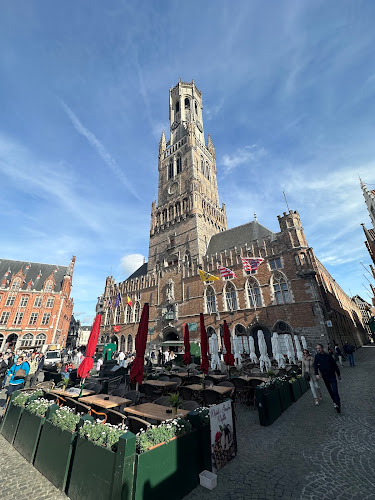
– Belfry & Markt → Burg Square loop: most travelers approach from the Belfry on Markt; it’s a flat, 3–5-minute walk east into Burg. The basilica tucks into the right-hand corner of the square; it’s easy to walk past if you’re looking only for tall towers—watch for the ornate façade and the stairway entry.
– Add a treasury-art slot: If you’re an art/history person, reserve 20–30 extra minutes for the museum and its 1617 shrine before or after veneration.
—
## Tickets, schedules, and what might change
Public information from the basilica is updated through the year (e.g., temporary closures, confession/adoration slots, special liturgies). Hours, veneration times, and fees do change, particularly around major feasts, concerts, or building works. Always verify the latest on the basilica’s official site before you finalize your timing. As of 9 November 2025, the basilica lists free entry 10:00–17:15, museum €5, daily veneration typically 14:00–16:00, and published Ascension Procession dates for 2026 and 2027.
—
### Inclusivity & access notes
– Mobility: Lower chapel is step-free; upper chapel and treasury are reachable by lift on request (intercom), though door weights and tight turns may require assistance. Exhibit sight lines are not fully optimized for wheelchair height. Bruges
– Sensory & crowding: Veneration periods concentrate visitors into a quiet queue. If you prefer more space, aim for morning (non-service windows). Staff are accustomed to guiding both devotional visitors and casual sightseers—ask for help if you need a calmer route through. (Access and service windows can vary; check the day’s program.)
—
## Final call: is it worth it?
Absolutely—even if you’re “temples-out”. Few European churches give you such a crisp A/B of Romanesque restraint vs. neo-Gothic flourish in one stop, and the living ritual of the Holy Blood offers a window into Bruges beyond lace and canals. Go for the architecture; stay for the moment of quiet when the line pauses at the altar and the city’s Middle Ages feel only a heartbeat away. Then step back into Burg Square to connect the site with the civic stage it helped animate for seven hundred years. Bruges
—
Sources & verification: Official basilica pages for hours, liturgies, and museum details; city/DMO pages for architecture and accessibility; UNESCO and procession organizers for the Ascension event and dates. Always re-confirm on the day you visit.
Note on provenance: The relic’s arrival story is part of long-standing tradition; scholarly summaries underline limited evidence before the 13th century—helpful context if you want to present the site’s history accurately.
Key Features
Basilica of the Holy Blood
You Might Also Like
Adornes Domain
Ambassadors Tours Bruges – Free Walking Tours | Premium Tours & Activities | Private Tours
Belfry of Bruges
Tours & Activities
GetYourGuide provides this tour inventory. We may earn a commission if you book through it; verify current availability, prices, and terms with the provider.
Visitor Reviews
There are no reviews yet. Be the first one to write one.
Share Your Experience
Have you visited Basilica of the Holy Blood? Help other travelers by leaving a review.