
Banská Bystrica
About Banská Bystrica
Description
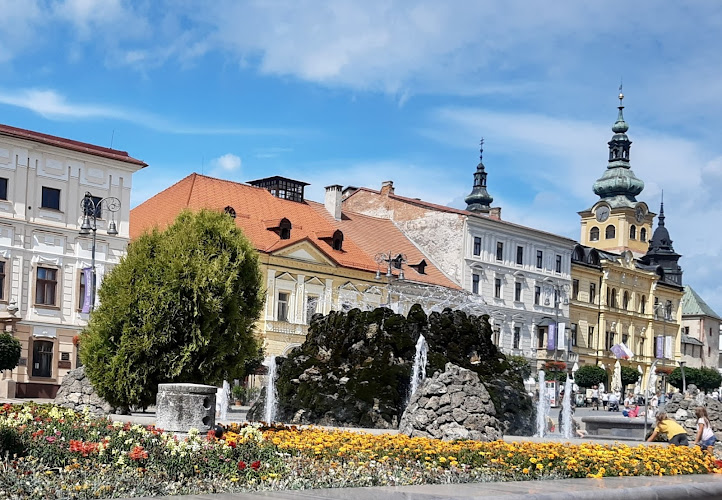
Banská Bystrica sits right in the juicy middle of Slovakia—both geographically and, in many ways, culturally. I’ll just say it: this place is a little gem most travelers overlook. Perched along the calm Hron River and surrounded by rolling mountains as far as you can see, the city has that perfect mix of historic charm and unhurried, everyday buzz.
You know how a town can feel “lived-in” instead of just “pretty for tourists”? That’s Banská Bystrica. Sure, there’s the eye-popping medieval square and Renaissance towers rising up like chess pieces, but you’ll find Slovaks popping in for coffee, university students laughing on benches, and locals just strolling about as if grandeur is normal. For a traveler seeking more than filter-perfect photos, that casual authenticity is gold.
Walking through the main square, Námestie SNP, feels like flipping pages in a European history book, minus the dusty bits. The city was a mining boomtown in the Middle Ages—mainly silver and copper—so its streets and palaces have that faded glamor you only get in old money towns. But there’s grit, too, especially when you remember this town’s role as a center of the Slovak National Uprising against the Nazis. The Museum of the Slovak National Uprising is a must, even if you’re just a casual history buff.
Not everything is pretty facades and grand history, mind. Some areas are working-class, and a few blocky communist-era buildings do dot the skyline, but that’s what gives the place its realness. Think of it as tasting the full depth of Slovakia, not just the sugar on top.
If you love getting beyond capital cities and want a place deep with stories, hearty food, honest people, and nearby nature that’ll knock your wool socks off, Banská Bystrica hits the spot. And hey, it’s small enough that you can do it all at a relaxed pace…or even just read in a riverside park, if you’re that way inclined.
Key Features
- Historic Old Town: Cobbled squares lined with candy-colored merchant houses, the Church of St. Francis Xavier, and a leaning clock tower that’s perfect for photos (and a little vertigo!).
- Slovak National Uprising Museum: For history lovers, this ultra-modern concrete monument isn’t just a socialist relic—it's the city’s proudest site and deeply moving.
- Mining Heritage: Signs of medieval riches are everywhere: castle walls, secret tunnels (some open to visitors in summer), and old mining symbols on civic buildings.
- CFK (Central Slovak Gallery): See contemporary Slovak art in historic palace settings. Even as a non-art buff, I found myself strangely drawn in.
- Riverfront Parks and Trails: The Hron River provides a peaceful escape; runners, cyclists, and families love the flat path stretching toward neighboring villages.
- Local Food Scene: Enjoy traditional Slovak meals with a twist—Bryndzové halušky (potato dumplings with sheep cheese) here are ridiculously good after a mountain hike.
- Nearby Mountains: Gateway to Low Tatras National Park, Veľká Fatra, and Kremnica Mountains. Hiking, biking, and winter sports are right at your doorstep.
- Warm Community Spirit: Attend annual festivals like Radvaň Fair in autumn or lively Christmas markets—locals are generous with both mulled wine and smiles.
- Student Life: Thanks to Matej Bel University, cafés and bars have a youthful energy (and great prices).
- Authentic Markets: Farmers’ markets and flea markets pop up around the center, selling everything from local honey and cheese to vintage books and folk crafts.
Best Time to Visit
Let me level with you here: there’s no truly bad time to visit Banská Bystrica, but your travel style might tip the scales. Spring (April – June) is pretty special with mild temps, apple blossoms in nearby valleys, and just the right amount of bustle as locals shake off winter. If you’re a hiker, this is the jackpot season—the Low Tatras trails are open, but crowds are rare.
Summer (July – August) is peak festival season. The city holds outdoor concerts, the Radvaň Fair, and many cultural events. It does get a bit busier, and some days can get hot (for Slovakia, anyway), but if you’re up for lively squares and evening chatter at sidewalk cafés, you’ll love it.
Autumn (September – October) is honestly my personal favorite. The mountains around the city explode with color—those oranges, reds, and yellows are next level—and harvest foods pop up on every menu. Fewer tourists, but just as many things to do. Bring a light jacket; mornings get crisp.
Winter (November – March) is quiet, magical, and sometimes a bit gray in the city, but a short drive will land you at top-notch ski slopes in the Low Tatras (like Donovaly). Holiday lights, Christmas markets, mulled wine—there’s an easy coziness you just can’t fake. If you don’t mind packing your scarf and gloves, you’ll get a very local perspective.
How to Get There
Banská Bystrica is right in Slovakia’s heart, making it surprisingly hassle-free to reach—a fact that saved my skin once when a train strike left me scrambling! By train, you’ll find direct connections from both Bratislava and Košice; the journey takes 2-3 hours from either, and the views en route (especially across mountain passes) are truly stunning.
Buses connect Banská Bystrica to countless other Slovak towns and even some Czech cities. They’re efficient, generally punctual, and the bus station is conveniently a walk from the center. If you’re renting a car, the drive from Bratislava is a breeze—just under 2 hours if the traffic gods smile on you. The highway (R1) is mostly smooth, and you’ll pass scenic valleys and the occasional roadside sheep.
Flying in? The closest airports are in Bratislava (about 200 km), Poprad, or even Vienna if you don’t mind a longer train hop across the border. Public transport in Banská Bystrica itself is clean, cheap, and pretty easy to figure out—even for folks who’ve never heard a word of Slovak! Walking is my go-to once in town; you’re never far from anything you’d want to see.
Tips for Visiting
First off—pack comfortable shoes. Those charming cobblestone streets will eat flimsy sandals for breakfast. I once tried it in dress boots for fashion’s sake, and regretted it by lunch. If you’re planning mountain walks, don’t forget a decent windbreaker; weather flips here faster than you can say “halušky.”
Don’t be shy about trying some Slovak phrases with locals. Even just a “dobrý deň” (good day) gets a smile. Most young people speak English, but it’s helpful to download an offline translation app, just in case.
If you love markets, aim for Saturday mornings. The open-air stalls in the center are brimming with local cheeses, sausages, and irresistible pastries. For a proper meal, hunt out restaurants that offer the daily “denné menu”—you’ll eat what locals eat, usually for under €8, and you’ll leave happily stuffed.
Museum hours can be quirky. Many attractions close on Mondays or shut early off-season, so double-check timings. Most galleries and the Museum of the Slovak National Uprising are closed on Monday.
Bring cash as well as a card. While cafes and shops in the center generally accept cards, some market stalls, buses, and rural spots nearby are still cash-only (Euros, to save you Googling). ATMs are everywhere, so you’ll never be far from one.
If you’re venturing into the hills, drop by the tourist info center for up-to-date trail maps and advice—the weather isn’t always predictable, and it’s easy to misjudge the time needed for a “short” trek.
Cultural festivals, big concerts, and ski weekends can fill up hotels fast. If you know your dates, it’s worth booking your stay a few weeks early to snag the best options.
Lastly, don’t just “check off” attractions. Give yourself time to slow down, take a coffee in a side-street bistro, watch daily life around the square, or even just people-watch in the park by the river. Banská Bystrica rewards this kind of traveler best—the one who’s as curious about stories as sights.
Key Features
- Key Features
- Best Time to Visit
- How to Get There
- Tips for Visiting
More Details
Updated July 1, 2025
Table of Contents
Description
Banská Bystrica sits right in the juicy middle of Slovakia—both geographically and, in many ways, culturally. I’ll just say it: this place is a little gem most travelers overlook. Perched along the calm Hron River and surrounded by rolling mountains as far as you can see, the city has that perfect mix of historic charm and unhurried, everyday buzz.
You know how a town can feel “lived-in” instead of just “pretty for tourists”? That’s Banská Bystrica. Sure, there’s the eye-popping medieval square and Renaissance towers rising up like chess pieces, but you’ll find Slovaks popping in for coffee, university students laughing on benches, and locals just strolling about as if grandeur is normal. For a traveler seeking more than filter-perfect photos, that casual authenticity is gold.
Walking through the main square, Námestie SNP, feels like flipping pages in a European history book, minus the dusty bits. The city was a mining boomtown in the Middle Ages—mainly silver and copper—so its streets and palaces have that faded glamor you only get in old money towns. But there’s grit, too, especially when you remember this town’s role as a center of the Slovak National Uprising against the Nazis. The Museum of the Slovak National Uprising is a must, even if you’re just a casual history buff.
Not everything is pretty facades and grand history, mind. Some areas are working-class, and a few blocky communist-era buildings do dot the skyline, but that’s what gives the place its realness. Think of it as tasting the full depth of Slovakia, not just the sugar on top.
If you love getting beyond capital cities and want a place deep with stories, hearty food, honest people, and nearby nature that’ll knock your wool socks off, Banská Bystrica hits the spot. And hey, it’s small enough that you can do it all at a relaxed pace…or even just read in a riverside park, if you’re that way inclined.
Key Features
- Historic Old Town: Cobbled squares lined with candy-colored merchant houses, the Church of St. Francis Xavier, and a leaning clock tower that’s perfect for photos (and a little vertigo!).
- Slovak National Uprising Museum: For history lovers, this ultra-modern concrete monument isn’t just a socialist relic—it’s the city’s proudest site and deeply moving.
- Mining Heritage: Signs of medieval riches are everywhere: castle walls, secret tunnels (some open to visitors in summer), and old mining symbols on civic buildings.
- CFK (Central Slovak Gallery): See contemporary Slovak art in historic palace settings. Even as a non-art buff, I found myself strangely drawn in.
- Riverfront Parks and Trails: The Hron River provides a peaceful escape; runners, cyclists, and families love the flat path stretching toward neighboring villages.
- Local Food Scene: Enjoy traditional Slovak meals with a twist—Bryndzové halušky (potato dumplings with sheep cheese) here are ridiculously good after a mountain hike.
- Nearby Mountains: Gateway to Low Tatras National Park, Veľká Fatra, and Kremnica Mountains. Hiking, biking, and winter sports are right at your doorstep.
- Warm Community Spirit: Attend annual festivals like Radvaň Fair in autumn or lively Christmas markets—locals are generous with both mulled wine and smiles.
- Student Life: Thanks to Matej Bel University, cafés and bars have a youthful energy (and great prices).
- Authentic Markets: Farmers’ markets and flea markets pop up around the center, selling everything from local honey and cheese to vintage books and folk crafts.
Best Time to Visit
Let me level with you here: there’s no truly bad time to visit Banská Bystrica, but your travel style might tip the scales. Spring (April – June) is pretty special with mild temps, apple blossoms in nearby valleys, and just the right amount of bustle as locals shake off winter. If you’re a hiker, this is the jackpot season—the Low Tatras trails are open, but crowds are rare.
Summer (July – August) is peak festival season. The city holds outdoor concerts, the Radvaň Fair, and many cultural events. It does get a bit busier, and some days can get hot (for Slovakia, anyway), but if you’re up for lively squares and evening chatter at sidewalk cafés, you’ll love it.
Autumn (September – October) is honestly my personal favorite. The mountains around the city explode with color—those oranges, reds, and yellows are next level—and harvest foods pop up on every menu. Fewer tourists, but just as many things to do. Bring a light jacket; mornings get crisp.
Winter (November – March) is quiet, magical, and sometimes a bit gray in the city, but a short drive will land you at top-notch ski slopes in the Low Tatras (like Donovaly). Holiday lights, Christmas markets, mulled wine—there’s an easy coziness you just can’t fake. If you don’t mind packing your scarf and gloves, you’ll get a very local perspective.
How to Get There
Banská Bystrica is right in Slovakia’s heart, making it surprisingly hassle-free to reach—a fact that saved my skin once when a train strike left me scrambling! By train, you’ll find direct connections from both Bratislava and Košice; the journey takes 2-3 hours from either, and the views en route (especially across mountain passes) are truly stunning.
Buses connect Banská Bystrica to countless other Slovak towns and even some Czech cities. They’re efficient, generally punctual, and the bus station is conveniently a walk from the center. If you’re renting a car, the drive from Bratislava is a breeze—just under 2 hours if the traffic gods smile on you. The highway (R1) is mostly smooth, and you’ll pass scenic valleys and the occasional roadside sheep.
Flying in? The closest airports are in Bratislava (about 200 km), Poprad, or even Vienna if you don’t mind a longer train hop across the border. Public transport in Banská Bystrica itself is clean, cheap, and pretty easy to figure out—even for folks who’ve never heard a word of Slovak! Walking is my go-to once in town; you’re never far from anything you’d want to see.
Tips for Visiting
First off—pack comfortable shoes. Those charming cobblestone streets will eat flimsy sandals for breakfast. I once tried it in dress boots for fashion’s sake, and regretted it by lunch. If you’re planning mountain walks, don’t forget a decent windbreaker; weather flips here faster than you can say “halušky.”
Don’t be shy about trying some Slovak phrases with locals. Even just a “dobrý deň” (good day) gets a smile. Most young people speak English, but it’s helpful to download an offline translation app, just in case.
If you love markets, aim for Saturday mornings. The open-air stalls in the center are brimming with local cheeses, sausages, and irresistible pastries. For a proper meal, hunt out restaurants that offer the daily “denné menu”—you’ll eat what locals eat, usually for under €8, and you’ll leave happily stuffed.
Museum hours can be quirky. Many attractions close on Mondays or shut early off-season, so double-check timings. Most galleries and the Museum of the Slovak National Uprising are closed on Monday.
Bring cash as well as a card. While cafes and shops in the center generally accept cards, some market stalls, buses, and rural spots nearby are still cash-only (Euros, to save you Googling). ATMs are everywhere, so you’ll never be far from one.
If you’re venturing into the hills, drop by the tourist info center for up-to-date trail maps and advice—the weather isn’t always predictable, and it’s easy to misjudge the time needed for a “short” trek.
Cultural festivals, big concerts, and ski weekends can fill up hotels fast. If you know your dates, it’s worth booking your stay a few weeks early to snag the best options.
Lastly, don’t just “check off” attractions. Give yourself time to slow down, take a coffee in a side-street bistro, watch daily life around the square, or even just people-watch in the park by the river. Banská Bystrica rewards this kind of traveler best—the one who’s as curious about stories as sights.
Key Highlights
- Key Features
- Best Time to Visit
- How to Get There
- Tips for Visiting
Location
Places to Stay Near Banská Bystrica
Find and Book a Tour
Explore More Travel Guides
No reviews found! Be the first to review!
Traveler Reviews for Banská Bystrica
There are no reviews yet. Be the first one to write one.
Have you visited Banská Bystrica? Help other travelers by sharing your review.
You Might Also Like

PARK KULTÚRY A ODDYCHU
Matej's house

Lipy Ústavy Slovenskej Republiky
Find Accommodations Nearby
Recommended Tours & Activities
Visitor Reviews
There are no reviews yet. Be the first one to write one.
Share Your Experience
Have you visited Banská Bystrica? Help other travelers by leaving a review.