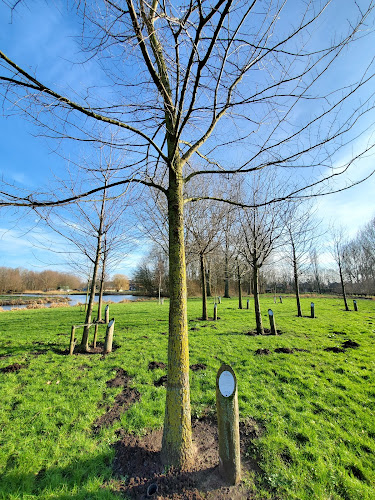
Babybos is a young commemorative forest in Capelle aan den IJssel, created around a moving local idea: the trees represent children born in the area. Instead of being defined by grand monuments or a centuries-old woodland canopy, its appeal lies in that personal connection. Thousands of growing trees mark successive generations, making a walk here feel both quietly civic and deeply human. It is a place for noticing small details: a name marker, fresh leaves on a sapling, birds moving through the branches, or the contrast between newly planted areas and maturing woodland.
The forest suits the Netherlands’ tradition of making nature part of everyday community life. Its paths, natural play opportunities and educational elements make it especially relevant for families, while the calm setting also rewards slower solo walks and reflective visits. Babybos changes noticeably with the seasons: spring brings fresh growth and flowers, summer offers a greener canopy, autumn adds warm leaf colour, and winter reveals the structure of trunks and branches. The experience is less about ticking off attractions and more about taking time to understand the story embedded in the landscape.
Standout Highlights & Experience
Approach Babybos as both a woodland walk and a living record of local families. The most meaningful moments often come from reading the individual markers, observing how trees of different ages share the site, and letting children explore nature at their own pace.
- Tree markers with personal meaning: Look for markers identifying the child associated with each tree, including a name and birth date.
- A forest that grows with its community: The young planting gives the woodland a distinctive, evolving character rather than the uniform feel of an older forest.
- Natural play possibilities: Children can scramble over logs and engage with informal climbing and balance challenges shaped by the landscape.
- Family-friendly walking routes: The maintained paths are suited to an unhurried stroll and are described as practical for visitors with strollers.
- Native ecology in close view: Educational signage introduces local tree species and ecology, adding context to what might otherwise seem like a simple walk.
- Everyday wildlife watching: Keep an eye and ear out for local birds, small mammals and insects using the woodland habitat.
Practical Visitor Strategy
| Factor | What to Know |
|---|
| Best Time to Go | Visit from spring through autumn for leaf growth, flowers, shade and seasonal colour; winter is quieter and more open visually. |
| Suggested Duration | Allow roughly 30 to 90 minutes for a relaxed walk, marker-reading and time for children to explore. |
| Crowd & Entry Tips | Its reflective, family-oriented character is best appreciated at an unhurried pace. Give other visitors space around markers and natural play areas. |
| Getting Oriented | Start by treating the paths as a gentle loop or wander rather than a checklist. Read the ecology information as you go. |
Bring footwear appropriate to the season, particularly after wet weather, and plan around the pace of your group rather than trying to cover every section quickly. Families may want to leave extra time for log scrambling and wildlife spotting; visitors drawn by the memorial concept may prefer a quieter, more contemplative circuit. Because this is a living woodland, surfaces and conditions can vary, so stroller users and anyone needing consistently smooth terrain should assess the paths on arrival and choose the most comfortable route.
Honest Fit: Who Will Love It (and Trade-Offs)
Babybos is a strong fit for local families, nature-minded visitors, gentle walkers, and anyone interested in places with a meaningful community story. It is particularly rewarding if you enjoy small-scale discoveries rather than major visitor infrastructure: reading a marker, identifying a tree, or watching children turn fallen logs into play. The trade-off is that it is not a destination for dramatic viewpoints, extensive formal facilities or a packed itinerary of attractions. Natural play features can be uneven, and the woodland setting means comfort and accessibility may depend on weather and the route chosen. Pair a visit with a wider walk or cycle through Capelle aan den IJssel, or use it as a calm green pause within a broader day exploring the Rotterdam-area region.
 Real Journey Travels