
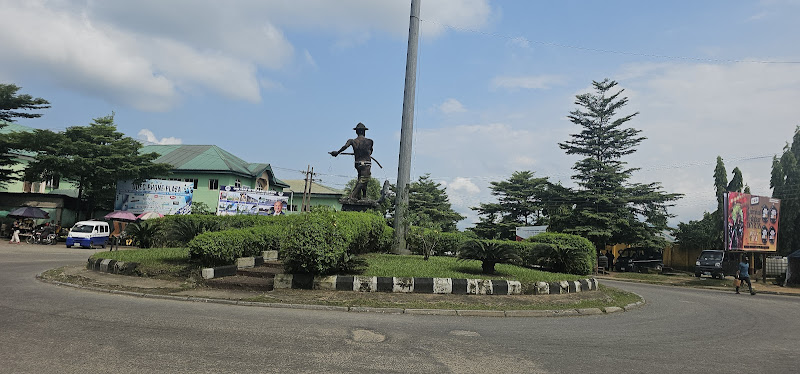
ATIMBO ROUNDABOUT
About ATIMBO ROUNDABOUT
Description
The Atimbo Roundabout stands as one of those unexpected discoveries that makes traveling through a region genuinely memorable. When most people think about cultural landmarks, they picture towering monuments or ancient ruins, but this roundabout challenges that narrow view in the most interesting way. It's essentially a traffic circle that's been transformed into something far more meaningful for the local community and increasingly for travelers who take the time to understand what they're looking at. I've always found that the best cultural landmarks are the ones that serve a dual purpose in daily life, and that's exactly what you get here. This isn't some roped-off attraction that you observe from a distance – it's a living, breathing part of the transportation infrastructure that also happens to carry significant cultural weight. The roundabout functions as a gathering point and reference marker for locals, one of those spots that everyone mentions when giving directions or arranging to meet. What makes the Atimbo Roundabout particularly fascinating is how it represents the intersection of modern development and cultural identity. And honestly, that's something you don't see executed well in many places. The design incorporates elements that speak to the area's heritage while maintaining its practical function as a traffic management solution. It's this blend that elevates it from mere road furniture to something worth seeking out during your travels. The surrounding area has developed organically around this landmark, with businesses and residential spaces treating it as a natural center point. You'll notice how locals reference it constantly, how it appears in addresses and directions, how it's become woven into the fabric of everyday conversation. That kind of organic integration into community life is what transforms infrastructure into culture.Key Features
- Serves as a major navigational landmark recognized throughout the entire region, making it invaluable for travelers trying to orient themselves
- Functions as an active traffic circle that handles significant daily vehicle flow while maintaining its cultural significance
- Features architectural or decorative elements that reflect local cultural themes and historical narratives specific to the area
- Acts as a community gathering reference point where locals commonly arrange meetings or use as directional markers
- Positioned at a strategic junction that connects multiple important routes, making it almost impossible to avoid if you're exploring the region properly
- Offers photo opportunities that capture both the landmark itself and the dynamic movement of local life around it
- Represents a successful example of how modern infrastructure can be designed with cultural sensitivity and community identity in mind
- Accessible 24/7 since it's an active part of the road system, giving you flexibility in your visit timing
- Surrounded by local businesses and establishments that provide authentic glimpses into daily life beyond typical tourist zones
Best Time to Visit
Timing your visit to the Atimbo Roundabout requires a different approach than you'd use for traditional landmarks. Since it's fundamentally a functioning traffic circle, the experience changes dramatically depending on when you show up. Early mornings between 6 and 8 AM offer something special if you're the type who doesn't mind setting an alarm on vacation. You'll catch the roundabout during rush hour when it's performing its primary function at full capacity. The energy is palpable as commuters navigate their daily routes, and you get to see how the landmark fits into actual community rhythms rather than just standing there looking pretty for tourists. Grab a coffee from a nearby spot and watch the choreography of morning traffic – it's surprisingly meditative. But if you want better lighting for photographs and a more relaxed observation experience, aim for mid-morning around 10 AM to noon. Traffic thins out considerably after the morning rush, and the sun position works better for capturing details. You can actually walk around the perimeter (where safe and legal, of course) without feeling rushed or overwhelmed by vehicle movement. Late afternoon between 4 and 6 PM presents another rush hour option, though the evening commute often feels more frantic than the morning one in my experience. However, depending on the season and your location, you might catch golden hour lighting that transforms the entire scene into something quite photogenic. Evening visits after 7 PM offer yet another perspective. The roundabout takes on a different character when lit up, and you'll see how locals use the surrounding spaces for evening activities. The pace slows down, and you might discover nearby eateries or gathering spots that only come alive after dark. Weekends change the equation entirely. Traffic patterns shift, and you'll see more leisure travel mixed with local errands. Saturday mornings can be particularly good for capturing the landmark while also exploring the surrounding businesses when they're open but not overwhelmingly busy. Weather matters too, though probably not how you'd think. Clear days are obviously ideal for photography, but I've found that the roundabout reveals different aspects of its character during various weather conditions. Light rain creates reflections and changes the color palette in interesting ways, though obviously prioritize safety if conditions get rough.How to Get There
Getting to the Atimbo Roundabout is refreshingly straightforward, largely because it's designed to be found – that's literally its job as a roundabout. If you're driving in the region, you'll almost certainly encounter it whether you're trying to or not, since it serves as a major junction point. For those relying on local transportation, ask any taxi or ride-share driver to take you to "Atimbo Roundabout" and they'll know exactly where you mean. In fact, they've probably driven through it dozens of times already this week. The name recognition is universal among locals, which makes navigation far easier than trying to explain some obscure tourist attraction. Public transportation users will find that multiple bus routes pass through or near the roundabout. Check with your accommodation about which specific routes serve the area, but don't be surprised if the roundabout itself appears on route maps and schedules as a key stop or transfer point. That's another indication of how embedded it is in local infrastructure. If you're staying within walking distance – and depending on your hotel location, you might be – the roundabout makes an excellent navigational anchor for exploring the broader area on foot. Local shopkeepers and residents can easily direct you since everyone uses it as a reference point. Just ask "which direction to Atimbo Roundabout?" and you'll get confident answers. The surrounding streets vary in pedestrian-friendliness, so pay attention to crosswalks and traffic signals. Remember that you're dealing with an active traffic circle, not a pedestrian plaza, so exercise appropriate caution when approaching or circling it for different viewpoints. Parking near the roundabout depends entirely on the surrounding development, but as a general rule, don't expect dedicated tourist parking. You're in a functional part of town, so look for street parking or nearby lots that serve local businesses. And honestly? Consider leaving your car elsewhere and using alternative transport – navigating an unfamiliar roundabout adds unnecessary stress to your visit.Tips for Visiting
Approaching the Atimbo Roundabout requires adjusting your typical tourist mindset because you're not visiting a conventional attraction. First thing – safety has to be your priority since you're essentially visiting a traffic feature. Stay on sidewalks and designated pedestrian areas, respect traffic signals, and be aware that drivers are focused on navigation, not looking out for sightseers. Photography presents unique challenges and opportunities here. You'll want to capture the landmark without putting yourself in danger or disrupting traffic flow. Zoom lenses work better than trying to get up close, and shooting from elevated positions (if any nearby buildings offer public access) can provide excellent perspectives. The roundabout's circular nature means you can walk the perimeter to find different angles, but again, prioritize safety over getting that perfect shot. Timing your visit around your other activities makes practical sense. Since the roundabout sits at a junction point, use it as a waypoint in your broader exploration rather than a standalone destination. Plan to visit while you're already in the area for other reasons – grab a meal at a nearby restaurant, then walk over to the roundabout for a quick visit. This approach feels more natural than making a special trip just for a traffic circle, no matter how culturally significant it might be. Engage with the local context rather than treating it as just another checkbox on your itinerary. Notice the businesses around the roundabout, observe how people interact with the space, watch the traffic patterns. The cultural significance comes from understanding its role in community life, not just from taking a photo and leaving. Dress practically since you'll likely be walking on regular streets and sidewalks rather than manicured tourist paths. Comfortable shoes are essential, and consider sun protection if you're visiting during daylight hours – there might not be much shade in the immediate vicinity. Keep your visit relatively brief unless you're conducting serious photography or research. Ten to twenty minutes is usually sufficient to observe the landmark, understand its context, and capture a few photos. This isn't a place where spending hours makes sense, and local residents might find it odd if you're hanging around a roundabout for extended periods. Use the Atimbo Roundabout as a learning opportunity about how communities integrate culture into everyday infrastructure. Ask yourself what design elements reflect local identity, how the landmark functions both practically and symbolically, why this particular location warranted special attention. These questions deepen your understanding beyond surface-level tourism. Finally, consider visiting during different times if your schedule allows. The roundabout reveals different aspects of its character depending on time of day, day of week, and even season. Morning rush hour shows one face, quiet midday another, evening yet another. If you're spending several days in the area, multiple quick visits at different times might prove more rewarding than one longer session.Key Features
- Central landscaped island with public art and municipal signage
- Busy transport node connecting Airport Area and central Calabar
- Vibrant street life—local vendors and minibuses (danfo) frequent the area
- Good vantage point for photography and people-watching
- Proximity to civic amenities and entry point to nearby attractions
More Details
Updated January 18, 2026
Table of Contents
Description
The Atimbo Roundabout stands as one of those unexpected discoveries that makes traveling through a region genuinely memorable. When most people think about cultural landmarks, they picture towering monuments or ancient ruins, but this roundabout challenges that narrow view in the most interesting way. It’s essentially a traffic circle that’s been transformed into something far more meaningful for the local community and increasingly for travelers who take the time to understand what they’re looking at.
I’ve always found that the best cultural landmarks are the ones that serve a dual purpose in daily life, and that’s exactly what you get here. This isn’t some roped-off attraction that you observe from a distance – it’s a living, breathing part of the transportation infrastructure that also happens to carry significant cultural weight. The roundabout functions as a gathering point and reference marker for locals, one of those spots that everyone mentions when giving directions or arranging to meet.
What makes the Atimbo Roundabout particularly fascinating is how it represents the intersection of modern development and cultural identity. And honestly, that’s something you don’t see executed well in many places. The design incorporates elements that speak to the area’s heritage while maintaining its practical function as a traffic management solution. It’s this blend that elevates it from mere road furniture to something worth seeking out during your travels.
The surrounding area has developed organically around this landmark, with businesses and residential spaces treating it as a natural center point. You’ll notice how locals reference it constantly, how it appears in addresses and directions, how it’s become woven into the fabric of everyday conversation. That kind of organic integration into community life is what transforms infrastructure into culture.
Key Features
- Serves as a major navigational landmark recognized throughout the entire region, making it invaluable for travelers trying to orient themselves
- Functions as an active traffic circle that handles significant daily vehicle flow while maintaining its cultural significance
- Features architectural or decorative elements that reflect local cultural themes and historical narratives specific to the area
- Acts as a community gathering reference point where locals commonly arrange meetings or use as directional markers
- Positioned at a strategic junction that connects multiple important routes, making it almost impossible to avoid if you’re exploring the region properly
- Offers photo opportunities that capture both the landmark itself and the dynamic movement of local life around it
- Represents a successful example of how modern infrastructure can be designed with cultural sensitivity and community identity in mind
- Accessible 24/7 since it’s an active part of the road system, giving you flexibility in your visit timing
- Surrounded by local businesses and establishments that provide authentic glimpses into daily life beyond typical tourist zones
Best Time to Visit
Timing your visit to the Atimbo Roundabout requires a different approach than you’d use for traditional landmarks. Since it’s fundamentally a functioning traffic circle, the experience changes dramatically depending on when you show up.
Early mornings between 6 and 8 AM offer something special if you’re the type who doesn’t mind setting an alarm on vacation. You’ll catch the roundabout during rush hour when it’s performing its primary function at full capacity. The energy is palpable as commuters navigate their daily routes, and you get to see how the landmark fits into actual community rhythms rather than just standing there looking pretty for tourists. Grab a coffee from a nearby spot and watch the choreography of morning traffic – it’s surprisingly meditative.
But if you want better lighting for photographs and a more relaxed observation experience, aim for mid-morning around 10 AM to noon. Traffic thins out considerably after the morning rush, and the sun position works better for capturing details. You can actually walk around the perimeter (where safe and legal, of course) without feeling rushed or overwhelmed by vehicle movement.
Late afternoon between 4 and 6 PM presents another rush hour option, though the evening commute often feels more frantic than the morning one in my experience. However, depending on the season and your location, you might catch golden hour lighting that transforms the entire scene into something quite photogenic.
Evening visits after 7 PM offer yet another perspective. The roundabout takes on a different character when lit up, and you’ll see how locals use the surrounding spaces for evening activities. The pace slows down, and you might discover nearby eateries or gathering spots that only come alive after dark.
Weekends change the equation entirely. Traffic patterns shift, and you’ll see more leisure travel mixed with local errands. Saturday mornings can be particularly good for capturing the landmark while also exploring the surrounding businesses when they’re open but not overwhelmingly busy.
Weather matters too, though probably not how you’d think. Clear days are obviously ideal for photography, but I’ve found that the roundabout reveals different aspects of its character during various weather conditions. Light rain creates reflections and changes the color palette in interesting ways, though obviously prioritize safety if conditions get rough.
How to Get There
Getting to the Atimbo Roundabout is refreshingly straightforward, largely because it’s designed to be found – that’s literally its job as a roundabout. If you’re driving in the region, you’ll almost certainly encounter it whether you’re trying to or not, since it serves as a major junction point.
For those relying on local transportation, ask any taxi or ride-share driver to take you to “Atimbo Roundabout” and they’ll know exactly where you mean. In fact, they’ve probably driven through it dozens of times already this week. The name recognition is universal among locals, which makes navigation far easier than trying to explain some obscure tourist attraction.
Public transportation users will find that multiple bus routes pass through or near the roundabout. Check with your accommodation about which specific routes serve the area, but don’t be surprised if the roundabout itself appears on route maps and schedules as a key stop or transfer point. That’s another indication of how embedded it is in local infrastructure.
If you’re staying within walking distance – and depending on your hotel location, you might be – the roundabout makes an excellent navigational anchor for exploring the broader area on foot. Local shopkeepers and residents can easily direct you since everyone uses it as a reference point. Just ask “which direction to Atimbo Roundabout?” and you’ll get confident answers.
The surrounding streets vary in pedestrian-friendliness, so pay attention to crosswalks and traffic signals. Remember that you’re dealing with an active traffic circle, not a pedestrian plaza, so exercise appropriate caution when approaching or circling it for different viewpoints.
Parking near the roundabout depends entirely on the surrounding development, but as a general rule, don’t expect dedicated tourist parking. You’re in a functional part of town, so look for street parking or nearby lots that serve local businesses. And honestly? Consider leaving your car elsewhere and using alternative transport – navigating an unfamiliar roundabout adds unnecessary stress to your visit.
Tips for Visiting
Approaching the Atimbo Roundabout requires adjusting your typical tourist mindset because you’re not visiting a conventional attraction. First thing – safety has to be your priority since you’re essentially visiting a traffic feature. Stay on sidewalks and designated pedestrian areas, respect traffic signals, and be aware that drivers are focused on navigation, not looking out for sightseers.
Photography presents unique challenges and opportunities here. You’ll want to capture the landmark without putting yourself in danger or disrupting traffic flow. Zoom lenses work better than trying to get up close, and shooting from elevated positions (if any nearby buildings offer public access) can provide excellent perspectives. The roundabout’s circular nature means you can walk the perimeter to find different angles, but again, prioritize safety over getting that perfect shot.
Timing your visit around your other activities makes practical sense. Since the roundabout sits at a junction point, use it as a waypoint in your broader exploration rather than a standalone destination. Plan to visit while you’re already in the area for other reasons – grab a meal at a nearby restaurant, then walk over to the roundabout for a quick visit. This approach feels more natural than making a special trip just for a traffic circle, no matter how culturally significant it might be.
Engage with the local context rather than treating it as just another checkbox on your itinerary. Notice the businesses around the roundabout, observe how people interact with the space, watch the traffic patterns. The cultural significance comes from understanding its role in community life, not just from taking a photo and leaving.
Dress practically since you’ll likely be walking on regular streets and sidewalks rather than manicured tourist paths. Comfortable shoes are essential, and consider sun protection if you’re visiting during daylight hours – there might not be much shade in the immediate vicinity.
Keep your visit relatively brief unless you’re conducting serious photography or research. Ten to twenty minutes is usually sufficient to observe the landmark, understand its context, and capture a few photos. This isn’t a place where spending hours makes sense, and local residents might find it odd if you’re hanging around a roundabout for extended periods.
Use the Atimbo Roundabout as a learning opportunity about how communities integrate culture into everyday infrastructure. Ask yourself what design elements reflect local identity, how the landmark functions both practically and symbolically, why this particular location warranted special attention. These questions deepen your understanding beyond surface-level tourism.
Finally, consider visiting during different times if your schedule allows. The roundabout reveals different aspects of its character depending on time of day, day of week, and even season. Morning rush hour shows one face, quiet midday another, evening yet another. If you’re spending several days in the area, multiple quick visits at different times might prove more rewarding than one longer session.
Key Highlights
- Central landscaped island with public art and municipal signage
- Busy transport node connecting Airport Area and central Calabar
- Vibrant street life—local vendors and minibuses (danfo) frequent the area
- Good vantage point for photography and people-watching
- Proximity to civic amenities and entry point to nearby attractions
Location
Places to Stay Near ATIMBO ROUNDABOUT
Find and Book a Tour
Explore More Travel Guides
No reviews found! Be the first to review!
Traveler Reviews for ATIMBO ROUNDABOUT
There are no reviews yet. Be the first one to write one.
Have you visited ATIMBO ROUNDABOUT? Help other travelers by sharing your review.
Nearby Attractions
You Might Also Like

LEMNA JUNCTION

Acroj

Statue Of Mary Slessor
Find Accommodations Nearby
Recommended Tours & Activities
Visitor Reviews
There are no reviews yet. Be the first one to write one.
Share Your Experience
Have you visited ATIMBO ROUNDABOUT? Help other travelers by leaving a review.