
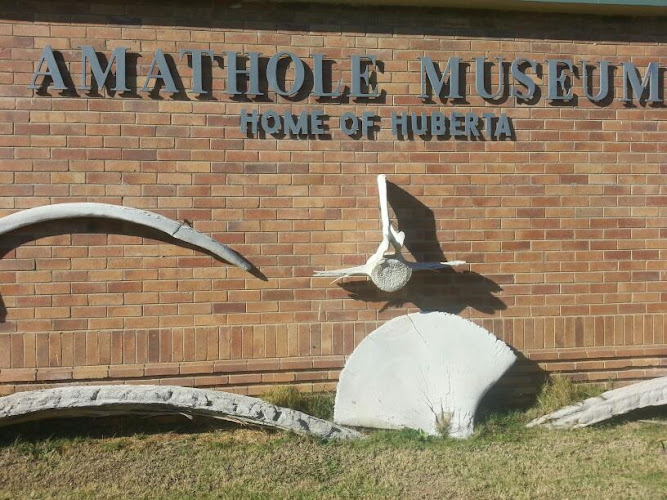
Amathole Museum
About Amathole Museum
Description
Amathole Museum stands as one of South Africa’s quietly brilliant institutions, a natural and cultural history museum that has been teaching, surprising, and occasionally disarming visitors for well over a century. Established in 1884 by the King William’s Town Naturalist Society and opened to the public in 1898, it later took on the name Amathole Museum in 1999, a nod to the nearby mountain range. Today, the museum in Qonce (formerly King William’s Town) is a rewarding stop for anyone curious about the Eastern Cape’s wildlife, frontier history, and the layered stories of the Xhosa nation. Travelers on a day trip from East London will find it an easy and worthwhile detour, and families will appreciate that it’s affordable, kid-friendly, and thoughtfully accessible.
Those who go expecting a sterile, all-new attraction might be surprised. Parts of the museum feel charmingly old-school—with glass cases, careful taxidermy, and labels that show their age—while recent sections are more immersive, clearly based on deep research and community collaboration. But that’s part of the appeal. The building complex itself is a history lesson: exhibits spread across heritage spaces, including an old post office building and a former public library structure, bring Qonce’s 19th-century rhythms into focus without trying too hard. And yes, there’s a famous resident: Huberta, the “wandering” hippopotamus, whose long trek through South Africa in the late 1920s made headlines and still draws wide-eyed kids (and frankly, a fair few grown-ups). The mammal collection she’s part of is extensive—often cited as one of the largest in the country—and it’s precisely the sort of display that turns animal-loving children into future biologists.
Beyond the animals, Amathole Museum’s cultural history galleries anchor visitors in the region’s lived past. The Xhosa Gallery, housed in the old post office building, is a standout. It presents the cultural history of the Xhosa nation with nuance: beadwork that isn’t just decorative but communicative, everyday tools with meaning layered into form, and narratives of identity and language (isiXhosa) that span generations. Across the complex, the Missionary Museum provides a different but connected perspective, with exhibits on missionary activities in the Eastern Cape and the Albion press—linked to the printing of the first complete Xhosa Bible in the late 1850s at Mount Coke. It is a quietly powerful display: technology, language, and belief intersecting in stone and metal.
Local history gets a thoughtful treatment through exhibitions on the frontier era, German settlers, and the mechanics of daily life (wagon making, carriage building, and the trades that kept the Buffalo River economy moving). One can move from anthropology to Midlands wildlife, from archival photographs of 19th-century Qonce to a room full of mammals that once roamed the region. The museum does a lot, and somehow manages to keep it coherent. If anything, the scale is part of the surprise—visitors often underestimate how much there is to see here and end up lingering far longer than planned.
What sets Amathole Museum apart, though, is the way staff care for the institution’s story. Even when certain labels could do with updating or lighting feels a touch dim in older sections, there’s always someone friendly who’s eager to explain an odd artifact or point out a detail you missed. Travelers tend to leave with the same impression: a museum that’s authentic, deeply local, and quietly prestigious—one that earned its reputation not by slick marketing but by getting the fundamentals right over 100-plus years.
Key Features
- Huberta the Hippopotamus: The famous taxidermied hippopotamus who wandered more than 1,000 km across South Africa in the 1920s. It’s a dramatic, oddly moving centerpiece and a surefire hit with kids.
- Extensive Mammal Collection: A hallmark of the museum, frequently noted as one of the largest mammal collections in South Africa, offering a rare breadth of regional wildlife displays.
- Xhosa Gallery (Old Post Office Building): A rich cultural history exhibition focusing on the Xhosa nation—clothing, beadwork, ritual objects, and everyday artifacts told with context rather than cliché.
- Missionary Museum and the Albion Press: Exhibits exploring missionary work in the Eastern Cape and the technology behind the first complete Xhosa Bible of the late 1850s.
- Frontier and Local History Exhibitions: Thoughtful displays on the complex frontier era, German settlers, and the region’s shifting political and social landscape.
- Wagon Making: The Lost Craft: A niche but fascinating look at the craft traditions that sustained transport and trade, complete with wagon and carriage details.
- Archives and Research Library: A serious academic resource with documents, photographs, and local records; invaluable for researchers or genealogy-minded travelers.
- Multi-Building Complex: Exhibitions spread across historically significant buildings, including a former public library space, which adds architectural texture and a sense of place.
- Good for Kids and Schools: Engaging animal displays, approachable storytelling, and enough open space for curious minds to wander (with supervision).
- Wheelchair Accessibility: Step-free access points, wheelchair-accessible restrooms, and parking facilities designed to welcome all visitors.
Best Time to Visit
The museum is an all-weather attraction, which makes it a handy anchor for any Eastern Cape itinerary. If you’re day-tripping from East London, consider the timing around coastal weather: summers (November to March) are warm—often 26–28°C in the day—with afternoon showers here and there, while winters are mild, often around 20–22°C with crisp mornings and cooler evenings. If the wind picks up on the coast (as it sometimes does), escaping inland to Qonce for a museum day is a smart call.
Weekday mornings tend to be the most relaxed. Midday and early afternoon can be busier with school groups during term time—great energy, but if you prefer a quieter experience, aim for opening time or later in the afternoon. Saturdays usually run limited hours, so arrive early. If you’re chasing photos, soft morning light filtering through certain galleries creates that pleasing, museum-ish glow. And because a visit can run longer than expected, plan for 1.5 to 2.5 hours. Two hours feels about right for most travelers; research enthusiasts might easily double that.
Insider note: during public holidays or school holidays, look out for pop-up programming or guided walk-throughs. Even informal staff chats can add a heap of color—context about the frontier displays, stories from the archives, or a deeper dive into how Huberta became a national obsession.
How to Get There
Qonce sits inland from East London and is straightforward to reach by car—think roughly a 45- to 60-minute drive depending on traffic and road works. The route from East London is a simple run on major roads, and because the museum is located in the town center, it’s easy to combine a visit with a coffee stop or a wander past heritage buildings. Parking is usually available close to the museum complex, and signage around central Qonce makes navigation manageable even for first-time visitors.
Those relying on public transport have a couple of options. Intercity coach services and regional buses connect East London with Qonce; from the bus stop, local taxis or rideshare options can cover the short hop to the museum. Minibus taxis run frequent routes around town, though if you’re not used to the system, it’s worth asking a local for the right pickup point and fare. If you’re arriving from further afield (like Makhanda, Gqeberha, or Mthatha), consider renting a car in East London for more flexibility—the museum pairs nicely with other Eastern Cape attractions on a looping itinerary.
Good to know: the museum has a wheelchair-accessible entrance and a wheelchair-accessible parking area. If accessibility is a priority, mentioning it at the door or over the phone before you arrive can help staff point you to the smoothest entry route.
Tips for Visiting
Plan your time. People underestimate this place. That mammal hall alone can keep a wildlife buff occupied for an hour, and the cultural history galleries deserve more than a glance. Budget at least 90 minutes—two hours is ideal. If you plan to use the archives or library, inquire ahead so staff can advise on access and any paperwork required.
Bring water and a small snack. There isn’t a restaurant on site. You’ll find restrooms inside the museum, but for food, the plan is typically to browse the exhibits first and then head out into town for lunch or coffee. It’s a good way to make a day of it and check out Qonce’s heritage streets while you’re at it.
Photography is generally fine without flash—especially important near sensitive historical documents or older taxidermy. When in doubt, ask a staff member; they’re approachable and refreshingly happy to help. Families might also bring a small notebook for kids to sketch animals or jot down fun facts from the Xhosa Gallery—it turns the visit into a mini scavenger hunt, which frankly beats another hour on a screen.
Accessibility matters here, and it shows. The museum offers a wheelchair-accessible entrance, restrooms, and designated parking. Some areas in older buildings may have tighter corners or slightly uneven floors, but staff are quick to point out the easiest routes. If anyone in your group uses a stroller or mobility device, you’re in good hands.
Be prepared for a museum that still wears parts of its 20th-century wardrobe. Some exhibits are older in style, and a few labels could use an update. What travelers consistently notice, though, is that the experience stays compelling because the curators have structured the story well. That mix—stalwart displays and newer, research-driven galleries—reads like a living institution rather than a static one.
Keep an eye on hours and pricing. Historically, admission has been very reasonable—one of the most affordable cultural attractions in the Eastern Cape—and school-aged children often receive free or discounted entry. Hours can vary by day of the week, and weekends typically run shorter. Checking on the day of your visit takes thirty seconds and saves disappointment.
Make it a day trip with purpose. From East London, pair the museum with a stop at the Steve Biko Centre in Ginsberg, or explore other local heritage markers around Qonce and nearby Bhisho. If nature calls, consider adding a coastal walk back in East London or a sunset lookout on the way home. It’s South Africa, after all; logistics are easier when you stack two or three short, meaningful experiences in the same day.
If you’re the detail-oriented traveler, here are a few extras:
- Ask about the “Across the Frontier” displays to understand regional conflicts and alliances. It gives context to many of the town’s sandstone buildings you’ll walk past later.
- Don’t skip the wagon and carriage exhibits. A small niche, yes, but they tell you how the Eastern Cape actually moved—goods, people, ideas—before modern highways arrived.
- Give the Xhosa Gallery unhurried time. The interplay between artifact and meaning is where the museum’s cultural history shines. It goes far beyond picturesque objects.
- If you’re traveling with children, anchor your visit around three highlights: Huberta, the mammal hall, and one cultural gallery. Anything extra is a bonus; avoiding information overload makes the day more fun.
As for where Amathole Museum sits in the country’s museum landscape, consider this: founded in 1884, it is among South Africa’s older museums, and its collections—especially its mammals and the Xhosa cultural holdings—carry serious historic weight. What it doesn’t do is overwhelm you with spectacle for spectacle’s sake. Instead, it wins you over by being honest and local and surprisingly deep. And that’s exactly why seasoned travelers call it an essential Eastern Cape stop. It’s not just a gallery of objects; it’s a living record of a region that changed South Africa in countless ways, big and small.
In brief, this is the kind of place where history is held in rooms and also in the walls. The natural history displays connect to the rivers and grasslands you’ll drive past on the way in. The cultural history galleries echo the languages you’ll hear in town. And the local history exhibits make those sandstone facades you’ll pass afterward feel less like quaint buildings and more like chapters in an ongoing story. Visit with curiosity, give it decent time, and let the staff help you peel back the layers. You’ll walk out having learned more than you expected, and that’s the quiet magic of Amathole Museum.
Key Features
- Extensive Mammal Collection: A hallmark of the museum, frequently noted as one of the largest mammal collections in South Africa, offering a rare breadth of regional wildlife displays.
- Missionary Museum and the Albion Press: Exhibits exploring missionary work in the Eastern Cape and the technology behind the first complete Xhosa Bible of the late 1850s.
- Frontier and Local History Exhibitions: Thoughtful displays on the complex frontier era, German settlers, and the region’s shifting political and social landscape.
- Wagon Making: The Lost Craft: A niche but fascinating look at the craft traditions that sustained transport and trade, complete with wagon and carriage details.
- Archives and Research Library: A serious academic resource with documents, photographs, and local records; invaluable for researchers or genealogy-minded travelers.
- Multi-Building Complex: Exhibitions spread across historically significant buildings, including a former public library space, which adds architectural texture and a sense of place.
More Details
Updated September 4, 2025
Table of Contents
Description
Amathole Museum stands as one of South Africa’s quietly brilliant institutions, a natural and cultural history museum that has been teaching, surprising, and occasionally disarming visitors for well over a century. Established in 1884 by the King William’s Town Naturalist Society and opened to the public in 1898, it later took on the name Amathole Museum in 1999, a nod to the nearby mountain range. Today, the museum in Qonce (formerly King William’s Town) is a rewarding stop for anyone curious about the Eastern Cape’s wildlife, frontier history, and the layered stories of the Xhosa nation. Travelers on a day trip from East London will find it an easy and worthwhile detour, and families will appreciate that it’s affordable, kid-friendly, and thoughtfully accessible.
Those who go expecting a sterile, all-new attraction might be surprised. Parts of the museum feel charmingly old-school—with glass cases, careful taxidermy, and labels that show their age—while recent sections are more immersive, clearly based on deep research and community collaboration. But that’s part of the appeal. The building complex itself is a history lesson: exhibits spread across heritage spaces, including an old post office building and a former public library structure, bring Qonce’s 19th-century rhythms into focus without trying too hard. And yes, there’s a famous resident: Huberta, the “wandering” hippopotamus, whose long trek through South Africa in the late 1920s made headlines and still draws wide-eyed kids (and frankly, a fair few grown-ups). The mammal collection she’s part of is extensive—often cited as one of the largest in the country—and it’s precisely the sort of display that turns animal-loving children into future biologists.
Beyond the animals, Amathole Museum’s cultural history galleries anchor visitors in the region’s lived past. The Xhosa Gallery, housed in the old post office building, is a standout. It presents the cultural history of the Xhosa nation with nuance: beadwork that isn’t just decorative but communicative, everyday tools with meaning layered into form, and narratives of identity and language (isiXhosa) that span generations. Across the complex, the Missionary Museum provides a different but connected perspective, with exhibits on missionary activities in the Eastern Cape and the Albion press—linked to the printing of the first complete Xhosa Bible in the late 1850s at Mount Coke. It is a quietly powerful display: technology, language, and belief intersecting in stone and metal.
Local history gets a thoughtful treatment through exhibitions on the frontier era, German settlers, and the mechanics of daily life (wagon making, carriage building, and the trades that kept the Buffalo River economy moving). One can move from anthropology to Midlands wildlife, from archival photographs of 19th-century Qonce to a room full of mammals that once roamed the region. The museum does a lot, and somehow manages to keep it coherent. If anything, the scale is part of the surprise—visitors often underestimate how much there is to see here and end up lingering far longer than planned.
What sets Amathole Museum apart, though, is the way staff care for the institution’s story. Even when certain labels could do with updating or lighting feels a touch dim in older sections, there’s always someone friendly who’s eager to explain an odd artifact or point out a detail you missed. Travelers tend to leave with the same impression: a museum that’s authentic, deeply local, and quietly prestigious—one that earned its reputation not by slick marketing but by getting the fundamentals right over 100-plus years.
Key Features
- Huberta the Hippopotamus: The famous taxidermied hippopotamus who wandered more than 1,000 km across South Africa in the 1920s. It’s a dramatic, oddly moving centerpiece and a surefire hit with kids.
- Extensive Mammal Collection: A hallmark of the museum, frequently noted as one of the largest mammal collections in South Africa, offering a rare breadth of regional wildlife displays.
- Xhosa Gallery (Old Post Office Building): A rich cultural history exhibition focusing on the Xhosa nation—clothing, beadwork, ritual objects, and everyday artifacts told with context rather than cliché.
- Missionary Museum and the Albion Press: Exhibits exploring missionary work in the Eastern Cape and the technology behind the first complete Xhosa Bible of the late 1850s.
- Frontier and Local History Exhibitions: Thoughtful displays on the complex frontier era, German settlers, and the region’s shifting political and social landscape.
- Wagon Making: The Lost Craft: A niche but fascinating look at the craft traditions that sustained transport and trade, complete with wagon and carriage details.
- Archives and Research Library: A serious academic resource with documents, photographs, and local records; invaluable for researchers or genealogy-minded travelers.
- Multi-Building Complex: Exhibitions spread across historically significant buildings, including a former public library space, which adds architectural texture and a sense of place.
- Good for Kids and Schools: Engaging animal displays, approachable storytelling, and enough open space for curious minds to wander (with supervision).
- Wheelchair Accessibility: Step-free access points, wheelchair-accessible restrooms, and parking facilities designed to welcome all visitors.
Best Time to Visit
The museum is an all-weather attraction, which makes it a handy anchor for any Eastern Cape itinerary. If you’re day-tripping from East London, consider the timing around coastal weather: summers (November to March) are warm—often 26–28°C in the day—with afternoon showers here and there, while winters are mild, often around 20–22°C with crisp mornings and cooler evenings. If the wind picks up on the coast (as it sometimes does), escaping inland to Qonce for a museum day is a smart call.
Weekday mornings tend to be the most relaxed. Midday and early afternoon can be busier with school groups during term time—great energy, but if you prefer a quieter experience, aim for opening time or later in the afternoon. Saturdays usually run limited hours, so arrive early. If you’re chasing photos, soft morning light filtering through certain galleries creates that pleasing, museum-ish glow. And because a visit can run longer than expected, plan for 1.5 to 2.5 hours. Two hours feels about right for most travelers; research enthusiasts might easily double that.
Insider note: during public holidays or school holidays, look out for pop-up programming or guided walk-throughs. Even informal staff chats can add a heap of color—context about the frontier displays, stories from the archives, or a deeper dive into how Huberta became a national obsession.
How to Get There
Qonce sits inland from East London and is straightforward to reach by car—think roughly a 45- to 60-minute drive depending on traffic and road works. The route from East London is a simple run on major roads, and because the museum is located in the town center, it’s easy to combine a visit with a coffee stop or a wander past heritage buildings. Parking is usually available close to the museum complex, and signage around central Qonce makes navigation manageable even for first-time visitors.
Those relying on public transport have a couple of options. Intercity coach services and regional buses connect East London with Qonce; from the bus stop, local taxis or rideshare options can cover the short hop to the museum. Minibus taxis run frequent routes around town, though if you’re not used to the system, it’s worth asking a local for the right pickup point and fare. If you’re arriving from further afield (like Makhanda, Gqeberha, or Mthatha), consider renting a car in East London for more flexibility—the museum pairs nicely with other Eastern Cape attractions on a looping itinerary.
Good to know: the museum has a wheelchair-accessible entrance and a wheelchair-accessible parking area. If accessibility is a priority, mentioning it at the door or over the phone before you arrive can help staff point you to the smoothest entry route.
Tips for Visiting
Plan your time. People underestimate this place. That mammal hall alone can keep a wildlife buff occupied for an hour, and the cultural history galleries deserve more than a glance. Budget at least 90 minutes—two hours is ideal. If you plan to use the archives or library, inquire ahead so staff can advise on access and any paperwork required.
Bring water and a small snack. There isn’t a restaurant on site. You’ll find restrooms inside the museum, but for food, the plan is typically to browse the exhibits first and then head out into town for lunch or coffee. It’s a good way to make a day of it and check out Qonce’s heritage streets while you’re at it.
Photography is generally fine without flash—especially important near sensitive historical documents or older taxidermy. When in doubt, ask a staff member; they’re approachable and refreshingly happy to help. Families might also bring a small notebook for kids to sketch animals or jot down fun facts from the Xhosa Gallery—it turns the visit into a mini scavenger hunt, which frankly beats another hour on a screen.
Accessibility matters here, and it shows. The museum offers a wheelchair-accessible entrance, restrooms, and designated parking. Some areas in older buildings may have tighter corners or slightly uneven floors, but staff are quick to point out the easiest routes. If anyone in your group uses a stroller or mobility device, you’re in good hands.
Be prepared for a museum that still wears parts of its 20th-century wardrobe. Some exhibits are older in style, and a few labels could use an update. What travelers consistently notice, though, is that the experience stays compelling because the curators have structured the story well. That mix—stalwart displays and newer, research-driven galleries—reads like a living institution rather than a static one.
Keep an eye on hours and pricing. Historically, admission has been very reasonable—one of the most affordable cultural attractions in the Eastern Cape—and school-aged children often receive free or discounted entry. Hours can vary by day of the week, and weekends typically run shorter. Checking on the day of your visit takes thirty seconds and saves disappointment.
Make it a day trip with purpose. From East London, pair the museum with a stop at the Steve Biko Centre in Ginsberg, or explore other local heritage markers around Qonce and nearby Bhisho. If nature calls, consider adding a coastal walk back in East London or a sunset lookout on the way home. It’s South Africa, after all; logistics are easier when you stack two or three short, meaningful experiences in the same day.
If you’re the detail-oriented traveler, here are a few extras:
- Ask about the “Across the Frontier” displays to understand regional conflicts and alliances. It gives context to many of the town’s sandstone buildings you’ll walk past later.
- Don’t skip the wagon and carriage exhibits. A small niche, yes, but they tell you how the Eastern Cape actually moved—goods, people, ideas—before modern highways arrived.
- Give the Xhosa Gallery unhurried time. The interplay between artifact and meaning is where the museum’s cultural history shines. It goes far beyond picturesque objects.
- If you’re traveling with children, anchor your visit around three highlights: Huberta, the mammal hall, and one cultural gallery. Anything extra is a bonus; avoiding information overload makes the day more fun.
As for where Amathole Museum sits in the country’s museum landscape, consider this: founded in 1884, it is among South Africa’s older museums, and its collections—especially its mammals and the Xhosa cultural holdings—carry serious historic weight. What it doesn’t do is overwhelm you with spectacle for spectacle’s sake. Instead, it wins you over by being honest and local and surprisingly deep. And that’s exactly why seasoned travelers call it an essential Eastern Cape stop. It’s not just a gallery of objects; it’s a living record of a region that changed South Africa in countless ways, big and small.
In brief, this is the kind of place where history is held in rooms and also in the walls. The natural history displays connect to the rivers and grasslands you’ll drive past on the way in. The cultural history galleries echo the languages you’ll hear in town. And the local history exhibits make those sandstone facades you’ll pass afterward feel less like quaint buildings and more like chapters in an ongoing story. Visit with curiosity, give it decent time, and let the staff help you peel back the layers. You’ll walk out having learned more than you expected, and that’s the quiet magic of Amathole Museum.
Key Highlights
- Extensive Mammal Collection: A hallmark of the museum, frequently noted as one of the largest mammal collections in South Africa, offering a rare breadth of regional wildlife displays.
- Missionary Museum and the Albion Press: Exhibits exploring missionary work in the Eastern Cape and the technology behind the first complete Xhosa Bible of the late 1850s.
- Frontier and Local History Exhibitions: Thoughtful displays on the complex frontier era, German settlers, and the region’s shifting political and social landscape.
- Wagon Making: The Lost Craft: A niche but fascinating look at the craft traditions that sustained transport and trade, complete with wagon and carriage details.
- Archives and Research Library: A serious academic resource with documents, photographs, and local records; invaluable for researchers or genealogy-minded travelers.
- Multi-Building Complex: Exhibitions spread across historically significant buildings, including a former public library space, which adds architectural texture and a sense of place.
Location
Places to Stay Near Amathole Museum
Find and Book a Tour
Explore More Travel Guides
No reviews found! Be the first to review!
Traveler Reviews for Amathole Museum
There are no reviews yet. Be the first one to write one.
Have you visited Amathole Museum? Help other travelers by sharing your review.
You Might Also Like
SAFARI GUESTHOUSE/GASTEHUIS

Vryheid Park Butcheries
Jack botes park
Find Accommodations Nearby
Recommended Tours & Activities
Visitor Reviews
There are no reviews yet. Be the first one to write one.
Share Your Experience
Have you visited Amathole Museum? Help other travelers by leaving a review.