
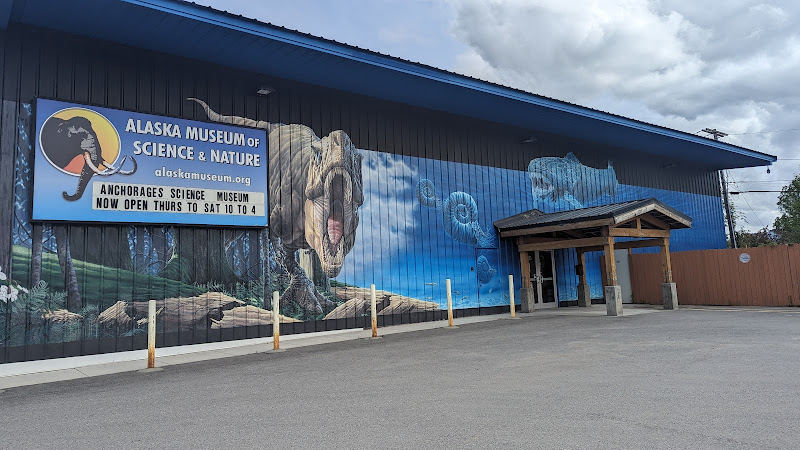
Alaska Museum of Science and Nature
About Alaska Museum of Science and Nature
Description
The Alaska Museum of Science and Nature in Anchorage is a compact, hands-on natural history museum that gives visitors a tidy but surprisingly deep dive into Alaska's natural world. It focuses on paleontology, geology, ice age fossils and interpretive displays that invite touch and curiosity — which works especially well for families with kids. The museum feels like a neighborhood gem rather than a grand, distant institution; there’s an intimate scale to it that lets people lean in, ask questions, and actually remember what they saw. That matters, because learning sticks when it’s tactile and a little bit messy.
Inside, the exhibits emphasize Alaska’s ancient past and present-day natural features. Fossilized bones and dinosaur displays anchor the paleontology section, but it’s not all glass-and-signage. There are interactive stations where children (and the young at heart) can handle replica bones, sort fossils, and try simple digs. Those exhibits are intentionally designed to be accessible and educational, delivering science in a way that feels immediate — the kind of learning that sparks bedtime conversations later on. The museum also covers glacial geology and wildlife ecology, giving a concise overview of how Alaska’s dramatic landscapes shaped life across millennia.
People who go expecting a sprawling national museum might be surprised by the modest footprint here. The Alaska Museum of Science and Nature is small compared to big-city rivals, but that actually becomes an advantage: the experience is focused and practical. Staff and docents are generally approachable; they tend to explain things without the pomp sometimes found in larger institutions. The museum runs tours and educational programs, which are ideal for school groups or families who want a guided, structured experience. Those programs often introduce local geology and natural history in ways teachers value — hands-on lessons, quick demos, and stories about Alaska’s ice ages and wildlife adaptations.
Accessibility has been thoughtfully addressed. There is a wheelchair-accessible entrance and parking, as well as accessible restrooms. Families with strollers and travelers carrying winter gear will find the on-site parking convenient, and the layout keeps walking distances short. Admission is fee-based, but the price point is usually reasonable, especially for families looking to fill a rainy afternoon or add a child-friendly stop to an Anchorage itinerary.
One of the quieter charms of this museum is the gift shop. It’s not oversized, but it boasts a curated selection of science-themed items and Alaska-centric souvenirs that feel more thoughtful than touristy. The shop often carries educational toys, fossil replicas, and books that extend the museum experience at home. For travelers who like to bring back a meaningful memento — something that will prompt a conversation long after the trip — this shop delivers.
Visitors often comment on the value of a focused collection. The dinosaur and fossil displays are a highlight — not because they show every species under the sun, but because they provide context. Plates of text, maps, and comparative specimens help people understand where Alaska fits into the broader story of natural history. For example, the museum makes a point of explaining ice age dynamics and how glacial movement shaped Alaska’s landscapes, which is especially useful for travelers who plan to explore glaciers and parks in the surrounding region.
Practical note: the museum does not have an on-site restaurant, so plan snack breaks accordingly. There are restrooms, tours are offered, and staff can often point newcomers to nearby dining options when asked. For families traveling with limited time, a typical visit might run anywhere from 45 minutes to two hours depending on children’s attention spans and participation in workshops or guided tours.
As the writer of these words remembers, the first visit here was during a wet, grey week in Anchorage — the kind of Alaskan weather that makes outdoor plans fragile. The museum rescued that afternoon. The writer’s nephew, who had been resisting everything educational that week, spent a full hour carefully reassembling a mock fossil skeleton at a hands-on station. That kind of engagement happens here more than once; the place has a knack for turning restlessness into wonder. No pretense, just the real thing: kids learning by doing, and adults surprised at how much they enjoyed it too.
There are a few trade-offs worth mentioning. The museum’s focused scope means it won’t replace the experience of a larger science center or a full-scale natural history collection. Some visitors looking for expansive galleries or rotating blockbuster exhibits may come away wishing for more. But for many travelers — especially those with little ones, or anyone curious about Alaska’s natural story — the Alaska Museum of Science and Nature scores high for accessibility, education and engagement.
The museum feels particularly well-suited for multi-stop days in Anchorage. It pairs nicely with visits to outdoor attractions when the weather cooperates, and it’s a smart rainy-day choice when it doesn’t. It also works well as a starter stop for families who plan longer exploration: after a visit here, kids often have a better grasp of what glaciers and fossils are, making subsequent hikes, boat tours, or park visits more meaningful.
Beyond the exhibits themselves, the museum emphasizes outreach and programming. Public programs and educational workshops are common during school months and summer; these sessions bring specialists and educators into conversations with the public. For people who want to dig deeper (metaphorically and sometimes literally), these programs are where a short museum visit turns into an ongoing hobby or interest.
One practical tip: check the schedule before showing up. Special programs and school groups can fill the space during mornings on weekdays, and timing a visit for mid-afternoon on a weekday or a less busy weekend morning can lead to a more relaxed experience. The staff are flexible and friendly, and they make an effort to answer questions. Don’t be shy — ask for a quick orientation when you arrive if you want to make the most of a tight visit window.
In terms of atmosphere, the museum is intentionally unflashy. Lighting is functional, displays are labeled clearly, and the overall mood is one of quiet curiosity rather than theatrical spectacle. That makes it an appealing choice for travelers who prefer substance over spectacle, and for those who appreciate museums that prioritize learning over entertainment value. Still, the interactive components inject enough fun to keep kids engaged without transforming the space into a play zone.
For photographers and social-media-minded travelers, the museum offers a few iconic photo ops — a life-sized fossil display, interpretive panels with Alaska-themed graphics, and hands-on stations that show kids in action. It’s not a place to expect Instagram-ready installations at every turn, but it is a place where authentic moments happen: hands exploring, faces lit with curiosity, and the small triumphs of a child identifying a fossil or learning how glaciers move.
Finally, the museum is a reminder that not every great travel memory needs to be a long list of famous landmarks. Sometimes the best memories are the quiet ones — the nephew who finally liked science, the couple who discovered a shared interest in geology, the solo traveler who learned a weird fact about Alaska’s ice ages and told a new friend over coffee. The Alaska Museum of Science and Nature offers those moments, in a package that’s accessible, educational, and surprisingly warm. It’s worth a stop on an Anchorage itinerary, especially for families and curious travelers who want a clear, friendly primer on Alaska’s natural history.
Key Features
More Details
Updated August 29, 2025
Table of Contents
Description
The Alaska Museum of Science and Nature in Anchorage is a compact, hands-on natural history museum that gives visitors a tidy but surprisingly deep dive into Alaska’s natural world. It focuses on paleontology, geology, ice age fossils and interpretive displays that invite touch and curiosity — which works especially well for families with kids. The museum feels like a neighborhood gem rather than a grand, distant institution; there’s an intimate scale to it that lets people lean in, ask questions, and actually remember what they saw. That matters, because learning sticks when it’s tactile and a little bit messy.
Inside, the exhibits emphasize Alaska’s ancient past and present-day natural features. Fossilized bones and dinosaur displays anchor the paleontology section, but it’s not all glass-and-signage. There are interactive stations where children (and the young at heart) can handle replica bones, sort fossils, and try simple digs. Those exhibits are intentionally designed to be accessible and educational, delivering science in a way that feels immediate — the kind of learning that sparks bedtime conversations later on. The museum also covers glacial geology and wildlife ecology, giving a concise overview of how Alaska’s dramatic landscapes shaped life across millennia.
People who go expecting a sprawling national museum might be surprised by the modest footprint here. The Alaska Museum of Science and Nature is small compared to big-city rivals, but that actually becomes an advantage: the experience is focused and practical. Staff and docents are generally approachable; they tend to explain things without the pomp sometimes found in larger institutions. The museum runs tours and educational programs, which are ideal for school groups or families who want a guided, structured experience. Those programs often introduce local geology and natural history in ways teachers value — hands-on lessons, quick demos, and stories about Alaska’s ice ages and wildlife adaptations.
Accessibility has been thoughtfully addressed. There is a wheelchair-accessible entrance and parking, as well as accessible restrooms. Families with strollers and travelers carrying winter gear will find the on-site parking convenient, and the layout keeps walking distances short. Admission is fee-based, but the price point is usually reasonable, especially for families looking to fill a rainy afternoon or add a child-friendly stop to an Anchorage itinerary.
One of the quieter charms of this museum is the gift shop. It’s not oversized, but it boasts a curated selection of science-themed items and Alaska-centric souvenirs that feel more thoughtful than touristy. The shop often carries educational toys, fossil replicas, and books that extend the museum experience at home. For travelers who like to bring back a meaningful memento — something that will prompt a conversation long after the trip — this shop delivers.
Visitors often comment on the value of a focused collection. The dinosaur and fossil displays are a highlight — not because they show every species under the sun, but because they provide context. Plates of text, maps, and comparative specimens help people understand where Alaska fits into the broader story of natural history. For example, the museum makes a point of explaining ice age dynamics and how glacial movement shaped Alaska’s landscapes, which is especially useful for travelers who plan to explore glaciers and parks in the surrounding region.
Practical note: the museum does not have an on-site restaurant, so plan snack breaks accordingly. There are restrooms, tours are offered, and staff can often point newcomers to nearby dining options when asked. For families traveling with limited time, a typical visit might run anywhere from 45 minutes to two hours depending on children’s attention spans and participation in workshops or guided tours.
As the writer of these words remembers, the first visit here was during a wet, grey week in Anchorage — the kind of Alaskan weather that makes outdoor plans fragile. The museum rescued that afternoon. The writer’s nephew, who had been resisting everything educational that week, spent a full hour carefully reassembling a mock fossil skeleton at a hands-on station. That kind of engagement happens here more than once; the place has a knack for turning restlessness into wonder. No pretense, just the real thing: kids learning by doing, and adults surprised at how much they enjoyed it too.
There are a few trade-offs worth mentioning. The museum’s focused scope means it won’t replace the experience of a larger science center or a full-scale natural history collection. Some visitors looking for expansive galleries or rotating blockbuster exhibits may come away wishing for more. But for many travelers — especially those with little ones, or anyone curious about Alaska’s natural story — the Alaska Museum of Science and Nature scores high for accessibility, education and engagement.
The museum feels particularly well-suited for multi-stop days in Anchorage. It pairs nicely with visits to outdoor attractions when the weather cooperates, and it’s a smart rainy-day choice when it doesn’t. It also works well as a starter stop for families who plan longer exploration: after a visit here, kids often have a better grasp of what glaciers and fossils are, making subsequent hikes, boat tours, or park visits more meaningful.
Beyond the exhibits themselves, the museum emphasizes outreach and programming. Public programs and educational workshops are common during school months and summer; these sessions bring specialists and educators into conversations with the public. For people who want to dig deeper (metaphorically and sometimes literally), these programs are where a short museum visit turns into an ongoing hobby or interest.
One practical tip: check the schedule before showing up. Special programs and school groups can fill the space during mornings on weekdays, and timing a visit for mid-afternoon on a weekday or a less busy weekend morning can lead to a more relaxed experience. The staff are flexible and friendly, and they make an effort to answer questions. Don’t be shy — ask for a quick orientation when you arrive if you want to make the most of a tight visit window.
In terms of atmosphere, the museum is intentionally unflashy. Lighting is functional, displays are labeled clearly, and the overall mood is one of quiet curiosity rather than theatrical spectacle. That makes it an appealing choice for travelers who prefer substance over spectacle, and for those who appreciate museums that prioritize learning over entertainment value. Still, the interactive components inject enough fun to keep kids engaged without transforming the space into a play zone.
For photographers and social-media-minded travelers, the museum offers a few iconic photo ops — a life-sized fossil display, interpretive panels with Alaska-themed graphics, and hands-on stations that show kids in action. It’s not a place to expect Instagram-ready installations at every turn, but it is a place where authentic moments happen: hands exploring, faces lit with curiosity, and the small triumphs of a child identifying a fossil or learning how glaciers move.
Finally, the museum is a reminder that not every great travel memory needs to be a long list of famous landmarks. Sometimes the best memories are the quiet ones — the nephew who finally liked science, the couple who discovered a shared interest in geology, the solo traveler who learned a weird fact about Alaska’s ice ages and told a new friend over coffee. The Alaska Museum of Science and Nature offers those moments, in a package that’s accessible, educational, and surprisingly warm. It’s worth a stop on an Anchorage itinerary, especially for families and curious travelers who want a clear, friendly primer on Alaska’s natural history.
Key Highlights
Alaska Museum of Science and Nature
Location
Places to Stay Near Alaska Museum of Science and Nature
Find and Book a Tour
Explore More Travel Guides
No reviews found! Be the first to review!
Traveler Reviews for Alaska Museum of Science and Nature
There are no reviews yet. Be the first one to write one.
Have you visited Alaska Museum of Science and Nature? Help other travelers by sharing your review.
You Might Also Like
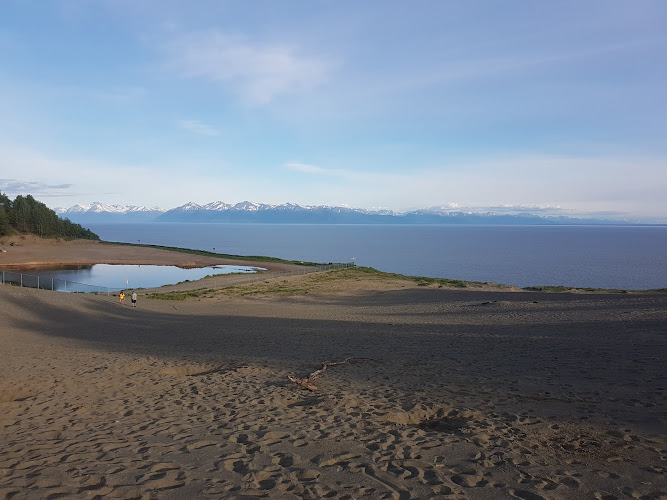
Kincaid Sand Dunes Park

Alaska Aviation Museum
Alyeska Resort
Find Accommodations Nearby
Recommended Tours & Activities
Visitor Reviews
There are no reviews yet. Be the first one to write one.
Share Your Experience
Have you visited Alaska Museum of Science and Nature? Help other travelers by leaving a review.