
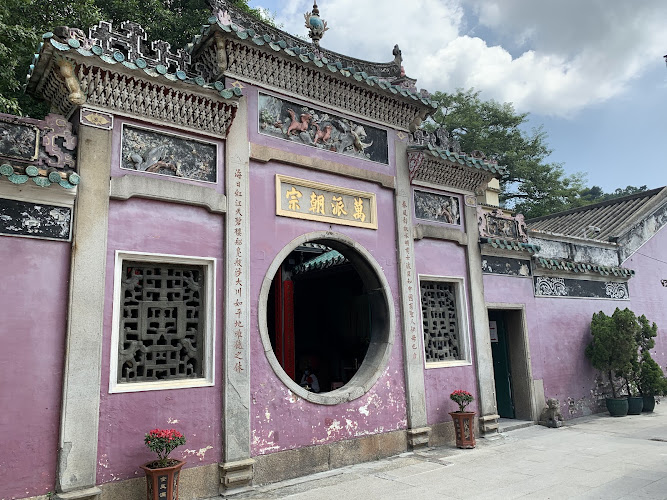
A-Ma Temple
About A-Ma Temple
Description
The A-Ma Temple in Macao is one of those places that quietly hums with centuries of stories. Built way back in 1488 during the Ming Dynasty, it’s said to predate the city itself. Imagine that — a temple standing proud before Macao even became Macao. Dedicated to Mazu, the sea goddess who protects fishermen and sailors, this temple isn’t just a religious site; it’s the soul of the city’s maritime past. In fact, many believe Macao’s name came from “A-Ma-Gau,” meaning “Bay of A-Ma.” That’s how deep its roots go.
Walking through the temple feels like stepping into a living museum. The air smells faintly of incense, and the smoke curls lazily toward the sky, as if carrying prayers from centuries ago. The complex is made up of several pavilions — each distinct, each with its own deity and purpose. There’s the Hall of Benevolence, the Gate Pavilion, the Memorial Arch, the Hall of Guanyin, and a quiet Buddhist pavilion called Zhengjiao Chanlin. The mix of Taoist, Confucian, and Buddhist influences in one place is fascinating — it’s like seeing harmony between faiths carved into stone and wood.
Now, I’ve been to a lot of temples across Asia, but A-Ma Temple has this grounded charm that’s hard to explain. It’s not overly polished or commercialized. You’ll see locals lighting incense next to curious travelers, and both seem to find their own kind of peace there. Sure, it can get crowded, especially on weekends, but there’s always a corner where you can pause, listen to the wind, and feel that quiet reverence that only ancient places seem to hold.
Some visitors mention that the temple isn’t huge or flashy — and that’s true. But its beauty is in the details: the stone lions guarding the entrance, the weathered prayer tablets, the red lanterns swaying gently above. It’s a place that whispers history rather than shouts it. And maybe that’s why it leaves such a lasting impression.
Key Features
- Historic significance: Built in 1488, it’s the oldest temple in Macao and a UNESCO World Heritage Site.
- Architectural diversity: The complex blends Taoist, Buddhist, and Confucian elements across multiple halls and pavilions.
- Cultural symbolism: Dedicated to Mazu, the sea goddess, the temple reflects Macao’s deep maritime roots.
- Atmosphere: A tranquil escape from the city’s bustle, filled with incense, prayer chants, and the soft clatter of fortune sticks.
- Scenic views: The temple sits on a hillside overlooking the harbor, offering peaceful vantage points for reflection and photos.
- Local devotion: Still an active place of worship, where residents come to pray for safety, prosperity, and calm seas.
Best Time to Visit
If you want to experience the temple at its most serene, go early in the morning — around 8 or 9 a.m. The air is cooler, the incense smoke hangs low, and you can actually hear the birds over the city noise. Late afternoons are also lovely, especially when the golden light hits the ancient stone steps.
For something more lively, visit during the A-Ma Festival, which usually falls in April or May depending on the lunar calendar. That’s when the temple really comes alive — locals bring offerings, traditional performances fill the courtyard, and the air feels electric with devotion. Just be prepared for crowds; it’s one of the most important cultural events in Macao.
Avoid midday if you can. The temple gets busy with tour groups, and the sun can be relentless, especially in the summer months. Personally, I think the temple feels most magical when it’s quiet — when you can hear your own footsteps echo off the old stones.
How to Get There
Reaching the A-Ma Temple is pretty straightforward. It’s located on the southwestern tip of the Macao Peninsula, not far from the historic center. You can take a local bus or taxi — both are easy options. If you’re staying near Senado Square or the Ruins of St. Paul’s, it’s just a short ride away. Some travelers even prefer walking, as the route passes through charming old streets and coastal views.
For those coming from the Cotai Strip, expect about a 20–25 minute drive depending on traffic. There’s no dedicated parking lot right next to the temple, so it’s better to use public transport or get dropped off nearby. The entrance sits at the base of a small hill, and while the path is paved, it’s a bit uneven in places — so comfortable shoes are a must.
One thing to note: the temple isn’t wheelchair accessible. The steps and stone pathways, though beautiful, can be tricky for those with mobility issues. But even from the lower courtyard, you can still soak in the atmosphere and take in the view of the sea beyond.
Tips for Visiting
Here’s the thing — visiting A-Ma Temple isn’t just about snapping photos (though you’ll definitely want to take a few). It’s about slowing down, observing, and maybe even reflecting a little. Here are a few tips to make the most of your visit:
- Bring cash: If you want to light incense or make a small donation, keep a few coins or notes handy. It’s a simple gesture of respect.
- Go early: The temple opens early, and that’s when it’s at its most peaceful. You’ll also get better lighting for photos.
- Respect local customs: Dress modestly, avoid loud conversations, and don’t touch the statues or offerings. This is a sacred space first, tourist spot second.
- Take your time: There’s no rush. Wander through each pavilion, read the inscriptions, and notice how the architecture changes subtly from one hall to another.
- Stay hydrated: The temple’s location on a slope means a bit of climbing, and Macao’s humidity can sneak up on you.
- Photography: You can take photos in most areas, but always check for signs. Some inner halls may have restrictions.
Now, if you’re like me, you might find yourself lingering longer than planned. There’s something about watching locals bow three times before the altar that humbles you. It reminds you that travel isn’t just about seeing new places — it’s about feeling them. And A-Ma Temple has that rare ability to make you pause and think about the passage of time, about faith, and about how cultures evolve yet hold onto their roots.
Before you leave, take a moment by the stone steps at the entrance. Look out toward the sea — the same sea that inspired sailors centuries ago to build this temple in gratitude. It’s a quiet, grounding moment that somehow connects you to all the travelers who came before. And honestly, that’s what makes A-Ma Temple unforgettable.
Whether you’re a history buff, a spiritual seeker, or just curious about Macao’s origins, A-Ma Temple offers a glimpse into the city’s heart. It’s not flashy or grand, but it’s real — layered with meaning, shaped by time, and still alive with the prayers of those who believe. And that’s something worth experiencing.
Key Features
- Key Features
- Best Time to Visit
- How to Get There
- Tips for Visiting
More Details
Updated November 7, 2025
Table of Contents
- Description
- Key Features
- Best Time to Visit
- How to Get There
- Tips for Visiting
- Key Highlights
- Location
- Places to Stay Near A-Ma Temple
- Find and Book a Tour
- Explore More Travel Guides
- A-Ma Temple, Macau: History, Architecture, and How to Visit (2025)
- Why A-Ma Temple matters
- What you’ll see: the six-part complex
- Living tradition: the A-Ma / Tin Hau Festival
- Practical visiting info (updated for 2025)
- Reading the site: small details worth noticing
- Context in Macau’s UNESCO landscape
- Responsible visit tips
- What’s new or recently confirmed
- Essential summary for planners
- Nearby Places You Might Like
- Traveler Reviews for A-Ma Temple
- Share Your Experience
Description
The A-Ma Temple in Macao is one of those places that quietly hums with centuries of stories. Built way back in 1488 during the Ming Dynasty, it’s said to predate the city itself. Imagine that — a temple standing proud before Macao even became Macao. Dedicated to Mazu, the sea goddess who protects fishermen and sailors, this temple isn’t just a religious site; it’s the soul of the city’s maritime past. In fact, many believe Macao’s name came from “A-Ma-Gau,” meaning “Bay of A-Ma.” That’s how deep its roots go.
Walking through the temple feels like stepping into a living museum. The air smells faintly of incense, and the smoke curls lazily toward the sky, as if carrying prayers from centuries ago. The complex is made up of several pavilions — each distinct, each with its own deity and purpose. There’s the Hall of Benevolence, the Gate Pavilion, the Memorial Arch, the Hall of Guanyin, and a quiet Buddhist pavilion called Zhengjiao Chanlin. The mix of Taoist, Confucian, and Buddhist influences in one place is fascinating — it’s like seeing harmony between faiths carved into stone and wood.
Now, I’ve been to a lot of temples across Asia, but A-Ma Temple has this grounded charm that’s hard to explain. It’s not overly polished or commercialized. You’ll see locals lighting incense next to curious travelers, and both seem to find their own kind of peace there. Sure, it can get crowded, especially on weekends, but there’s always a corner where you can pause, listen to the wind, and feel that quiet reverence that only ancient places seem to hold.
Some visitors mention that the temple isn’t huge or flashy — and that’s true. But its beauty is in the details: the stone lions guarding the entrance, the weathered prayer tablets, the red lanterns swaying gently above. It’s a place that whispers history rather than shouts it. And maybe that’s why it leaves such a lasting impression.
Key Features
- Historic significance: Built in 1488, it’s the oldest temple in Macao and a UNESCO World Heritage Site.
- Architectural diversity: The complex blends Taoist, Buddhist, and Confucian elements across multiple halls and pavilions.
- Cultural symbolism: Dedicated to Mazu, the sea goddess, the temple reflects Macao’s deep maritime roots.
- Atmosphere: A tranquil escape from the city’s bustle, filled with incense, prayer chants, and the soft clatter of fortune sticks.
- Scenic views: The temple sits on a hillside overlooking the harbor, offering peaceful vantage points for reflection and photos.
- Local devotion: Still an active place of worship, where residents come to pray for safety, prosperity, and calm seas.
Best Time to Visit
If you want to experience the temple at its most serene, go early in the morning — around 8 or 9 a.m. The air is cooler, the incense smoke hangs low, and you can actually hear the birds over the city noise. Late afternoons are also lovely, especially when the golden light hits the ancient stone steps.
For something more lively, visit during the A-Ma Festival, which usually falls in April or May depending on the lunar calendar. That’s when the temple really comes alive — locals bring offerings, traditional performances fill the courtyard, and the air feels electric with devotion. Just be prepared for crowds; it’s one of the most important cultural events in Macao.
Avoid midday if you can. The temple gets busy with tour groups, and the sun can be relentless, especially in the summer months. Personally, I think the temple feels most magical when it’s quiet — when you can hear your own footsteps echo off the old stones.
How to Get There
Reaching the A-Ma Temple is pretty straightforward. It’s located on the southwestern tip of the Macao Peninsula, not far from the historic center. You can take a local bus or taxi — both are easy options. If you’re staying near Senado Square or the Ruins of St. Paul’s, it’s just a short ride away. Some travelers even prefer walking, as the route passes through charming old streets and coastal views.
For those coming from the Cotai Strip, expect about a 20–25 minute drive depending on traffic. There’s no dedicated parking lot right next to the temple, so it’s better to use public transport or get dropped off nearby. The entrance sits at the base of a small hill, and while the path is paved, it’s a bit uneven in places — so comfortable shoes are a must.
One thing to note: the temple isn’t wheelchair accessible. The steps and stone pathways, though beautiful, can be tricky for those with mobility issues. But even from the lower courtyard, you can still soak in the atmosphere and take in the view of the sea beyond.
Tips for Visiting
Here’s the thing — visiting A-Ma Temple isn’t just about snapping photos (though you’ll definitely want to take a few). It’s about slowing down, observing, and maybe even reflecting a little. Here are a few tips to make the most of your visit:
- Bring cash: If you want to light incense or make a small donation, keep a few coins or notes handy. It’s a simple gesture of respect.
- Go early: The temple opens early, and that’s when it’s at its most peaceful. You’ll also get better lighting for photos.
- Respect local customs: Dress modestly, avoid loud conversations, and don’t touch the statues or offerings. This is a sacred space first, tourist spot second.
- Take your time: There’s no rush. Wander through each pavilion, read the inscriptions, and notice how the architecture changes subtly from one hall to another.
- Stay hydrated: The temple’s location on a slope means a bit of climbing, and Macao’s humidity can sneak up on you.
- Photography: You can take photos in most areas, but always check for signs. Some inner halls may have restrictions.
Now, if you’re like me, you might find yourself lingering longer than planned. There’s something about watching locals bow three times before the altar that humbles you. It reminds you that travel isn’t just about seeing new places — it’s about feeling them. And A-Ma Temple has that rare ability to make you pause and think about the passage of time, about faith, and about how cultures evolve yet hold onto their roots.
Before you leave, take a moment by the stone steps at the entrance. Look out toward the sea — the same sea that inspired sailors centuries ago to build this temple in gratitude. It’s a quiet, grounding moment that somehow connects you to all the travelers who came before. And honestly, that’s what makes A-Ma Temple unforgettable.
Whether you’re a history buff, a spiritual seeker, or just curious about Macao’s origins, A-Ma Temple offers a glimpse into the city’s heart. It’s not flashy or grand, but it’s real — layered with meaning, shaped by time, and still alive with the prayers of those who believe. And that’s something worth experiencing.
Key Highlights
- Key Features
- Best Time to Visit
- How to Get There
- Tips for Visiting
Location
Places to Stay Near A-Ma Temple
Find and Book a Tour
Explore More Travel Guides
No reviews found! Be the first to review!
A-Ma Temple, Macau: History, Architecture, and How to Visit (2025)
A-Ma Temple (媽閣廟) is Macau’s oldest and most storied shrine—a sea-temple dedicated to Mazu (also called Tin Hau), protector of sailors and coastal communities. First completed in 1488 on the western slope of Barra Hill, it later grew into a multi-pavilion complex and, in 2005, became part of the UNESCO-inscribed Historic Centre of Macao. oai_citation:0‡Wikipedia
Quick facts (verified 2025):
– Location: Barra (São Lourenço), Macau SAR
– Coordinates: 22.1861677, 113.5312759
– Deity: Mazu / Tin Hau (Goddess of Seafarers)
– UNESCO: Included within the Historic Centre of Macao (inscribed 2005)
– Typical hours: 07:00–18:00, admission free (donations welcome)
– Transit: LRT Barra Station (opened 8 Dec 2023) + multiple city bus routes
Sources confirm date, UNESCO status, hours, and transport below. oai_citation:1‡Wikipedia
Why A-Ma Temple matters
- Origin story of “Macau.” Early Portuguese sailors landed near this temple. When they asked the place name, locals referenced “A-Ma-Gok” (A-Ma Pavilion). The Portuguese adapted this as “Macau.” This etymology is widely cited in historical accounts. oai_citation:2‡Wikipedia
- Syncretic Chinese faiths in one site. The complex blends Confucian, Taoist, Buddhist, and folk practices—an arrangement you can see across its pavilions dedicated to different deities. oai_citation:3‡wh.mo
- Oldest surviving sections. While the temple began in 1488, its present scale was achieved through expansions over centuries; the Hall of Benevolence is considered the earliest surviving hall. oai_citation:4‡edocs.icm.gov.mo
What you’ll see: the six-part complex
A-Ma Temple is not a single hall but a hillside procession of courtyards, steps, and shrines built into granite outcrops. Official heritage records list six main components:
1) Gate Pavilion → 2) Memorial Arch → 3) Prayer Hall → 4) Hall of Benevolence (earliest part) → 5) Hall of Guanyin → 6) Zhengjiao Chanlin (Buddhist pavilion). oai_citation:5‡wh.mo
These structures reflect layered construction phases and different ritual uses. The setting is deliberate: architecture “in harmony with the natural environment,” using rock faces and terraces as integral design elements rather than obstacles. oai_citation:6‡wh.mo
Living tradition: the A-Ma / Tin Hau Festival
If you visit on the 23rd day of the third lunar month (typically April–May), you’ll encounter the temple’s biggest festival—a community-run celebration with prayers, offerings, and fundraising to honor Mazu’s birthday. This date is consistent across official Macau cultural sources and broader Mazuism references. oai_citation:7‡culturalheritage.mo
Inclusivity note: Festivals can be crowded and smoky (incense). If you’re sensitive to smoke or mobility-limited, aim for early morning or off-peak days; the site includes stepped paths with uneven stone—plan footwear and pacing accordingly. (Practical observation consistent with the temple’s hillside layout.) oai_citation:8‡wh.mo
Practical visiting info (updated for 2025)
Hours & price: Multiple independent guides and guidebooks list 07:00–18:00 daily, free admission; donations are customary but optional. Always verify day-of if you’re on a tight schedule, but there have been no official changes reported in 2025 sources. oai_citation:9‡Travel China Guide
Getting there (public transport):
- LRT (Light Rapid Transit): Ride the Taipa Line to Barra Station (媽閣). This extension opened 8 December 2023, creating a convenient rail connection from Taipa/Cotai and the airport to the peninsula end near A-Ma. From Barra Station it’s a short walk to the temple. oai_citation:10‡澳門特別行政區政府入口網站
- Buses: Long-standing routes stop by the A-Ma Temple stops, including 2, 5, 9, 10, 10A, 11, 18, 21A, 28B (and others). Expect frequent service; allow buffer time on weekends/holidays. oai_citation:11‡Frommer’s
Nearby pairing: The Maritime Museum is steps away and complements the temple’s maritime focus—ideal to visit in the same hour. oai_citation:12‡Travel China Guide
Reading the site: small details worth noticing
- Stone inscriptions and couplets on the arches show dedications from different eras—signs of community patronage across centuries. (Documented in heritage descriptions.) oai_citation:13‡wh.mo
- Guanyin presence within a Mazu complex illustrates local syncretism: maritime protection (Mazu) alongside compassion (Guanyin). This multi-deity configuration is explicitly noted in the official site description. oai_citation:14‡wh.mo
- Topography as ritual journey: The uphill sequence from gate to upper pavilions mirrors an ascent from the secular to the sacred—common across South China coastal temples and visible here in the six-part layout. oai_citation:15‡wh.mo
Context in Macau’s UNESCO landscape
A-Ma Temple is one element within the Historic Centre of Macao listing—a cityscape that documents the centuries-long interchange between Chinese and Portuguese worlds. The temple’s presence at the Barra waterfront is a geographic reminder of Macau’s maritime gateway role. oai_citation:16‡UNESCO World Heritage Centre
Responsible visit tips
- Respect active worship. Photography is generally allowed outdoors; be cautious around incense, altars, and people in prayer. (Standard etiquette in active temples.)
- Incense & air quality: If you have respiratory sensitivities, time your visit for early morning when incense levels are typically lower; the complex is open-air but can be smoky during peak times and festivals. (Aligned with festival/incense practices.) oai_citation:17‡culturalheritage.mo
- Accessibility realities: The temple is terraced with stone stairs and uneven surfaces; there is no continuous step-free path between all pavilions based on site layout. Plan accordingly. oai_citation:18‡wh.mo
What’s new or recently confirmed
- Rail access: Since Dec 2023, Barra Station on the LRT Taipa Line shortens the transfer time from Taipa/Cotai resorts and Macau International Airport to A-Ma Temple. This is particularly useful for day-trippers plotting a loop: Taipa → Barra (A-Ma) → central peninsula sights. oai_citation:19‡澳門特別行政區政府入口網站
- Hours & fee remain consistent across 2024–2025 travel references (07:00–18:00; free). If any temporary changes occur (e.g., weather alerts), they are typically posted by local authorities or noted by visitor bureaus. oai_citation:20‡Travel China Guide
Essential summary for planners
- If you have 30–45 minutes: Enter via the Gate Pavilion, move through the Memorial Arch and Prayer Hall, and pause at the Hall of Benevolence—then continue to the Maritime Museum next door. oai_citation:21‡wh.mo
- Best time: Early morning for lower crowds and softer light; festival day (lunar 3/23) for maximum cultural activity—prepare for heavy incense and crowds. oai_citation:22‡culturalheritage.mo
- Transit simplicity: Use LRT Barra Station and walk; or take any of the listed buses that stop at the temple. oai_citation:23‡Wikipedia
Sources & accuracy notes
- Founding date (1488) and name origin: standard references concur. oai_citation:24‡Wikipedia
- UNESCO inclusion: Official UNESCO listing for the Historic Centre of Macao. oai_citation:25‡UNESCO World Heritage Centre
- Six-part layout & syncretism: Government heritage pages. oai_citation:26‡wh.mo
- Festival timing: Macau cultural bureau and temple-culture resources; aligns with broader Mazuism references. oai_citation:27‡culturalheritage.mo
- Hours/admission: Frommer’s and long-running travel guides list 07:00–18:00, free; no credible changes noted in 2025. oai_citation:28‡Frommer’s
- LRT access: Barra Station opened 8 Dec 2023; official operator announcement and government release. oai_citation:29‡mlm.com.mo
If you need this adapted into a structured POI block (schema.org TouristAttraction) with JSON-LD, say the word and I’ll deliver a drop-in snippet.
Traveler Reviews for A-Ma Temple
There are no reviews yet. Be the first one to write one.
Have you visited A-Ma Temple? Help other travelers by sharing your review.
You Might Also Like

The Cotai Strip

Taipa Houses

Macao Museum
Find Accommodations Nearby
Recommended Tours & Activities
Visitor Reviews
There are no reviews yet. Be the first one to write one.
Share Your Experience
Have you visited A-Ma Temple? Help other travelers by leaving a review.