

شەقامی سەرەکی زەرگەتە
About شەقامی سەرەکی زەرگەتە
Description
Shəqami Saraqi Zargata—often rendered in English as the Main Street of Zargata—sits at the practical, everyday heart of Sulaymaniyah (Slemani) in the Kurdistan Region of Iraq. Travelers who care as much about how a city moves as how it looks tend to gravitate here, because this corridor is more than asphalt and shopfronts; it’s a living “road safety town,” a real-world classroom where traffic design, signage, and daily routines come together in a way that’s surprisingly instructive. It’s not a theme park with pretend traffic lights. It’s the real thing: a controlled, observed, and iteratively improved street where pedestrians, cyclists, and drivers learn—with their feet and their wheels—how to share space.
What makes it stand out is how plainly it shows the mechanics of a modern Middle Eastern city negotiating safety with speed. The street feels like a demonstration project scaled up to full life: zebra crossings that actually get used, curb ramps that tell you where pedestrian priority begins, and small roundabouts doing heavy lifting to calm the rush without choking the flow. Bilingual signage—Kurdish and Arabic first, and sometimes English—nudges behavior rather than scolding it, and it works most days. People respond to cues they can read. And they read the street.
Sulaymaniyah, founded in 1784 by the Kurdish prince Ibrahim Pasha Baban, is a city of poets, universities, tea houses, and mountains. Azmar ridge lifts its shoulder to the northeast and Baranan rises to the south; the city’s valley light has a way of making lines and colors pop—shop awnings, taxis, crosswalk paint. Zargata’s main corridor benefits from this natural stage set. You catch yourself watching the interplay of sunlight, shade, and the reflective beads in road markings, which is a fancy way of saying: simple safety tech really does matter. For visitors who’ve studied urbanism or just love good streets, this place has that pleasing “a-ha” quality: oh, so that’s how they’re solving it here.
Calling it a road safety town is fair in both spirit and function. It’s a civic zone where schools bring students for practical lessons, NGOs set up awareness days about seatbelts and motorcycle helmets, and local engineers tweak signal timing after a wet week reveals a blind spot. None of this is staged for tourists; it’s day-to-day city stewardship in a governorate that has grown quickly. Slemani’s wider metro sphere is home to hundreds of thousands of people, and the city’s role as a cultural and academic center only adds pressure to move people safely and predictably. Zargata’s corridor shows the tradeoffs openly—sometimes a little frayed at the edges, sometimes newly painted and proud.
Even the small stuff speaks volumes. Tactile paving at crossings gives a nod to universal accessibility. Protected corners keep turning vehicles honest. A few planters, not always brand-new, still do their job: guard that precious pedestrian edge. Those bus pull-outs that let vehicles pass without muscling the curb? They’re a tell that planners are thinking beyond the next intersection. Less horn-blare, more flow. Not perfect, but better than you might guess if you only knew Iraq through the news.
Local life animates the whole experiment. In the morning rush, parents guide kids toward the safer crossings, and shopkeepers roll up their shutters at a pace that echoes the city’s coffee rhythm—quick but not frantic. Late afternoons can feel like a civic seminar on right-of-way: students, delivery scooters, and compact sedans negotiating without drama (okay, without too much drama). At dusk, the glow from shop lights and the last orange of daylight on Azmar form a mise-en-scène that turns a prosaic street into a photogenic one. Street photography here can be quietly beautiful, especially when the crosswalk stripes catch the light.
Travelers curious about the Kurdish approach to contemporary citymaking will find this corridor a tidy microcosm. Sulaymaniyah has long been known for its writers and musicians, but it’s also a city of practical minds and tinkering hands—mechanics, surveyors, small-scale fabricators—and that ingenuity shows up in how the street evolves. A sign shifts position after a near miss. A fresh coat of paint appears after a community request. A corner bollard gets replaced with a better one because the first design didn’t play well with delivery trolleys. It’s iterative, local, and grounded in how the place actually works.
There’s also the cultural layer, subtle but present. Kurdish hospitality doesn’t recede just because you’re near a busy corridor. If someone looks lost, someone else likely asks if they can help, in Kurdish or Arabic and often with an English word or two. Tea finds its way into hands. Directions get sketched in air. And yes, occasionally advice about how to cross “the right way” arrives with a smile that’s also a tiny lecture. Urban etiquette is a shared project here.
A balanced note: Zargata’s main street is not a fantasy of European bike boulevards nor a sterile diagram of textbook traffic engineering. It’s Slemani: energetic, resilient, sometimes patched, sometimes polished. Expect midday noise—horns, construction drills, a burst of delivery traffic, then calm. Expect bursts of dust in summer and slow, careful puddles in winter rains. Expect a traffic light to blink an imperfect beat now and then, followed by someone from the municipality sorting it out with a screwdriver and a practical shrug. The charm is in the earnestness: the system bends toward safer behavior not just because of rules, but because people want it to.
For visitors coming from Erbil or beyond, the corridor offers a chance to see how the Kurdistan Region of Iraq is experimenting with safety in plain sight. It’s easy to overlook how much signage gives non-native speakers cues that transcend language—arrows, pictograms, pavement color. When a city invests in these basics, the payoff is immediate and inclusive. A traveler who doesn’t read Kurdish still knows where it’s okay to cross. A local elder with limited mobility can find the smoother path. And a tourist with a camera can step off the curb knowing a driver will likely be alert to pedestrians because the street tells them to be.
In the evenings, a stream of families and students threads through, and one notices how the traffic calms not just by design but by habit. People yield more readily at the same time each day because routine sets expectations. Safety, after all, is partly choreography. This is where the idea of a road safety town earns its name—design plus behavior plus repetition. If you linger long enough, you’ll witness small rehearsals—scouts learning signals, a school group practicing a left-right-left look, even a pair of municipal workers discussing how to angle a mirror so a hard corner is less blind. It’s oddly satisfying to watch a city teach itself.
Context matters too. Sulaymaniyah, bordered by the Iranian highlands to the east, grew up between mountains, and that shapes winds, temperatures, and even how people move. Summers run warm and dry; shade and hydration are part of any walk. Winters are cool and sometimes damp, and that’s when the value of non-slip paving and drainage reveals itself. The safety features here—textured tiles at ramps, raised tables at crossings—aren’t imported fads; they’re responses to seasons, slopes, and the very Kurdish impulse to fix things with a local tool, not an abstract plan.
Shopping and cafés add texture but don’t overwhelm the purpose. Many storefronts face the corridor with goods displayed just inside the door, not spilling into walkways. The tacit agreement seems to be: keep the pedestrian line clean. When a delivery motorbike nudges close, most riders cut their engines and walk the last few meters. It’s not every time, but it’s frequent enough to notice. In a city that’s rightly proud of its literary salons and museums, there’s something quietly civic about that tiny everyday courtesy.
For the traveler who cares about authenticity, this isn’t a polished attraction with brochures and mascots. It’s where schools, civil society groups, and the municipality meet the public space and argue—productively—about how to share it. The arguments are often unspoken and solved through paint, cones, lights, and a day’s observation. And still, it remains personable. A fruit vendor eyes the crosswalk and keeps his crates pulled back. A taxi driver slows at a raised table because his suspension thanks him later. A child reaches the curb, pauses, and looks both ways because the curb itself reminds them to. That’s the quiet win.
There’s honest imperfection, too. Paint fades faster on sun-baked sections, and re-striping can lag behind the ideal schedule. Utility work sometimes eats a neat curb and returns it a little rough around the edges. A sign might carry a sticker or two longer than it should. These are the kinds of wrinkles one expects in a city that’s growing, and they don’t erase the larger achievement—if anything, they make the ongoing upkeep visible, which is useful for understanding how a place sustains itself.
Travel planners will appreciate that Shəqami Saraqi Zargata connects cleanly into the wider grid, loaning its calmer logic to nearby arteries like Kanari Road. That continuity matters: the safer the centerline, the less chaotic the feeder streets feel. Visitors who like to map-walk their way through cities—counting crossings, noting sightlines—will find a willing case study. And for those who simply want to stretch their legs after a museum visit, it’s a walkable strip where the odds of a comfortable amble are high.
If one were to zoom out, Sulaymaniyah Governorate has a reputation for prioritizing education and civic services. The corridor reflects that ethos at street level. City staffers do rounds. School leaders coordinate with traffic officers for “safety days.” Parents talk to kids at the curb, not in the abstract. It’s less about posters and more about practice. This kind of incrementalism rarely makes headlines, yet it shapes whether a traveler remembers a place as interesting and easy or confusing and tiring. Zargata’s main street does the quiet work of making Slemani easy to like.
In short, Shəqami Saraqi Zargata doesn’t pretend to be a spectacle. It’s a smart working street in a city that values brains as much as beauty, with Azmar and Baranan watching from either side like steady elders. It teaches without fanfare and holds its ground when the day gets busy. For travelers, that’s the sweet spot: a chance to learn how Iraqi Kurdistan is writing its urban present, one crosswalk, one corner radius, one shared glance at a time. And if a cup of tea appears during that lesson—as it often does—that, too, is part of the safety culture here. People looking out for people, which is the point of a good street in any language.
Key Features
- Active local marketplace atmosphere with produce and small vendors
- Concentration of cafés and family-run restaurants
- Pedestrian-friendly improvements as part of road safety town measures
- Close access to municipal services and neighborhood shops
- Good spot for street photography and people-watching
More Details
Updated November 4, 2025
Table of Contents
Description
Shəqami Saraqi Zargata—often rendered in English as the Main Street of Zargata—sits at the practical, everyday heart of Sulaymaniyah (Slemani) in the Kurdistan Region of Iraq. Travelers who care as much about how a city moves as how it looks tend to gravitate here, because this corridor is more than asphalt and shopfronts; it’s a living “road safety town,” a real-world classroom where traffic design, signage, and daily routines come together in a way that’s surprisingly instructive. It’s not a theme park with pretend traffic lights. It’s the real thing: a controlled, observed, and iteratively improved street where pedestrians, cyclists, and drivers learn—with their feet and their wheels—how to share space.
What makes it stand out is how plainly it shows the mechanics of a modern Middle Eastern city negotiating safety with speed. The street feels like a demonstration project scaled up to full life: zebra crossings that actually get used, curb ramps that tell you where pedestrian priority begins, and small roundabouts doing heavy lifting to calm the rush without choking the flow. Bilingual signage—Kurdish and Arabic first, and sometimes English—nudges behavior rather than scolding it, and it works most days. People respond to cues they can read. And they read the street.
Sulaymaniyah, founded in 1784 by the Kurdish prince Ibrahim Pasha Baban, is a city of poets, universities, tea houses, and mountains. Azmar ridge lifts its shoulder to the northeast and Baranan rises to the south; the city’s valley light has a way of making lines and colors pop—shop awnings, taxis, crosswalk paint. Zargata’s main corridor benefits from this natural stage set. You catch yourself watching the interplay of sunlight, shade, and the reflective beads in road markings, which is a fancy way of saying: simple safety tech really does matter. For visitors who’ve studied urbanism or just love good streets, this place has that pleasing “a-ha” quality: oh, so that’s how they’re solving it here.
Calling it a road safety town is fair in both spirit and function. It’s a civic zone where schools bring students for practical lessons, NGOs set up awareness days about seatbelts and motorcycle helmets, and local engineers tweak signal timing after a wet week reveals a blind spot. None of this is staged for tourists; it’s day-to-day city stewardship in a governorate that has grown quickly. Slemani’s wider metro sphere is home to hundreds of thousands of people, and the city’s role as a cultural and academic center only adds pressure to move people safely and predictably. Zargata’s corridor shows the tradeoffs openly—sometimes a little frayed at the edges, sometimes newly painted and proud.
Even the small stuff speaks volumes. Tactile paving at crossings gives a nod to universal accessibility. Protected corners keep turning vehicles honest. A few planters, not always brand-new, still do their job: guard that precious pedestrian edge. Those bus pull-outs that let vehicles pass without muscling the curb? They’re a tell that planners are thinking beyond the next intersection. Less horn-blare, more flow. Not perfect, but better than you might guess if you only knew Iraq through the news.
Local life animates the whole experiment. In the morning rush, parents guide kids toward the safer crossings, and shopkeepers roll up their shutters at a pace that echoes the city’s coffee rhythm—quick but not frantic. Late afternoons can feel like a civic seminar on right-of-way: students, delivery scooters, and compact sedans negotiating without drama (okay, without too much drama). At dusk, the glow from shop lights and the last orange of daylight on Azmar form a mise-en-scène that turns a prosaic street into a photogenic one. Street photography here can be quietly beautiful, especially when the crosswalk stripes catch the light.
Travelers curious about the Kurdish approach to contemporary citymaking will find this corridor a tidy microcosm. Sulaymaniyah has long been known for its writers and musicians, but it’s also a city of practical minds and tinkering hands—mechanics, surveyors, small-scale fabricators—and that ingenuity shows up in how the street evolves. A sign shifts position after a near miss. A fresh coat of paint appears after a community request. A corner bollard gets replaced with a better one because the first design didn’t play well with delivery trolleys. It’s iterative, local, and grounded in how the place actually works.
There’s also the cultural layer, subtle but present. Kurdish hospitality doesn’t recede just because you’re near a busy corridor. If someone looks lost, someone else likely asks if they can help, in Kurdish or Arabic and often with an English word or two. Tea finds its way into hands. Directions get sketched in air. And yes, occasionally advice about how to cross “the right way” arrives with a smile that’s also a tiny lecture. Urban etiquette is a shared project here.
A balanced note: Zargata’s main street is not a fantasy of European bike boulevards nor a sterile diagram of textbook traffic engineering. It’s Slemani: energetic, resilient, sometimes patched, sometimes polished. Expect midday noise—horns, construction drills, a burst of delivery traffic, then calm. Expect bursts of dust in summer and slow, careful puddles in winter rains. Expect a traffic light to blink an imperfect beat now and then, followed by someone from the municipality sorting it out with a screwdriver and a practical shrug. The charm is in the earnestness: the system bends toward safer behavior not just because of rules, but because people want it to.
For visitors coming from Erbil or beyond, the corridor offers a chance to see how the Kurdistan Region of Iraq is experimenting with safety in plain sight. It’s easy to overlook how much signage gives non-native speakers cues that transcend language—arrows, pictograms, pavement color. When a city invests in these basics, the payoff is immediate and inclusive. A traveler who doesn’t read Kurdish still knows where it’s okay to cross. A local elder with limited mobility can find the smoother path. And a tourist with a camera can step off the curb knowing a driver will likely be alert to pedestrians because the street tells them to be.
In the evenings, a stream of families and students threads through, and one notices how the traffic calms not just by design but by habit. People yield more readily at the same time each day because routine sets expectations. Safety, after all, is partly choreography. This is where the idea of a road safety town earns its name—design plus behavior plus repetition. If you linger long enough, you’ll witness small rehearsals—scouts learning signals, a school group practicing a left-right-left look, even a pair of municipal workers discussing how to angle a mirror so a hard corner is less blind. It’s oddly satisfying to watch a city teach itself.
Context matters too. Sulaymaniyah, bordered by the Iranian highlands to the east, grew up between mountains, and that shapes winds, temperatures, and even how people move. Summers run warm and dry; shade and hydration are part of any walk. Winters are cool and sometimes damp, and that’s when the value of non-slip paving and drainage reveals itself. The safety features here—textured tiles at ramps, raised tables at crossings—aren’t imported fads; they’re responses to seasons, slopes, and the very Kurdish impulse to fix things with a local tool, not an abstract plan.
Shopping and cafés add texture but don’t overwhelm the purpose. Many storefronts face the corridor with goods displayed just inside the door, not spilling into walkways. The tacit agreement seems to be: keep the pedestrian line clean. When a delivery motorbike nudges close, most riders cut their engines and walk the last few meters. It’s not every time, but it’s frequent enough to notice. In a city that’s rightly proud of its literary salons and museums, there’s something quietly civic about that tiny everyday courtesy.
For the traveler who cares about authenticity, this isn’t a polished attraction with brochures and mascots. It’s where schools, civil society groups, and the municipality meet the public space and argue—productively—about how to share it. The arguments are often unspoken and solved through paint, cones, lights, and a day’s observation. And still, it remains personable. A fruit vendor eyes the crosswalk and keeps his crates pulled back. A taxi driver slows at a raised table because his suspension thanks him later. A child reaches the curb, pauses, and looks both ways because the curb itself reminds them to. That’s the quiet win.
There’s honest imperfection, too. Paint fades faster on sun-baked sections, and re-striping can lag behind the ideal schedule. Utility work sometimes eats a neat curb and returns it a little rough around the edges. A sign might carry a sticker or two longer than it should. These are the kinds of wrinkles one expects in a city that’s growing, and they don’t erase the larger achievement—if anything, they make the ongoing upkeep visible, which is useful for understanding how a place sustains itself.
Travel planners will appreciate that Shəqami Saraqi Zargata connects cleanly into the wider grid, loaning its calmer logic to nearby arteries like Kanari Road. That continuity matters: the safer the centerline, the less chaotic the feeder streets feel. Visitors who like to map-walk their way through cities—counting crossings, noting sightlines—will find a willing case study. And for those who simply want to stretch their legs after a museum visit, it’s a walkable strip where the odds of a comfortable amble are high.
If one were to zoom out, Sulaymaniyah Governorate has a reputation for prioritizing education and civic services. The corridor reflects that ethos at street level. City staffers do rounds. School leaders coordinate with traffic officers for “safety days.” Parents talk to kids at the curb, not in the abstract. It’s less about posters and more about practice. This kind of incrementalism rarely makes headlines, yet it shapes whether a traveler remembers a place as interesting and easy or confusing and tiring. Zargata’s main street does the quiet work of making Slemani easy to like.
In short, Shəqami Saraqi Zargata doesn’t pretend to be a spectacle. It’s a smart working street in a city that values brains as much as beauty, with Azmar and Baranan watching from either side like steady elders. It teaches without fanfare and holds its ground when the day gets busy. For travelers, that’s the sweet spot: a chance to learn how Iraqi Kurdistan is writing its urban present, one crosswalk, one corner radius, one shared glance at a time. And if a cup of tea appears during that lesson—as it often does—that, too, is part of the safety culture here. People looking out for people, which is the point of a good street in any language.
Key Highlights
- Active local marketplace atmosphere with produce and small vendors
- Concentration of cafés and family-run restaurants
- Pedestrian-friendly improvements as part of road safety town measures
- Close access to municipal services and neighborhood shops
- Good spot for street photography and people-watching
Location
Places to Stay Near شەقامی سەرەکی زەرگەتە
Find and Book a Tour
Explore More Travel Guides
No reviews found! Be the first to review!
Traveler Reviews for شەقامی سەرەکی زەرگەتە
There are no reviews yet. Be the first one to write one.
Have you visited شەقامی سەرەکی زەرگەتە? Help other travelers by sharing your review.
Nearby Attractions
You Might Also Like

Nalî Park
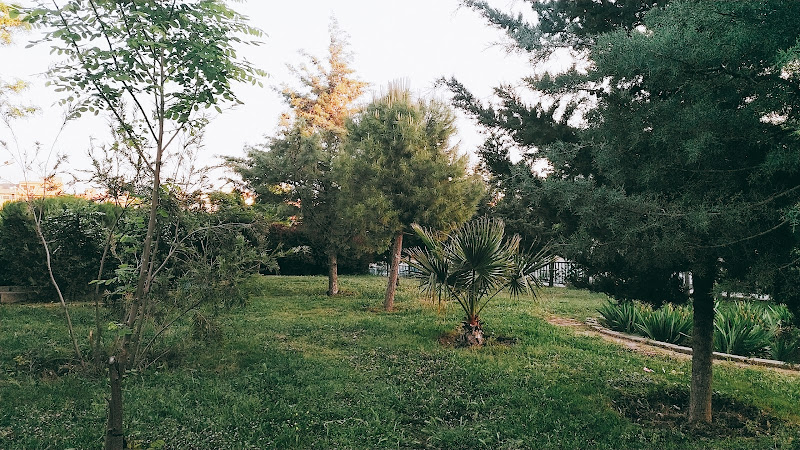
پارکی ڕۆژهەڵات
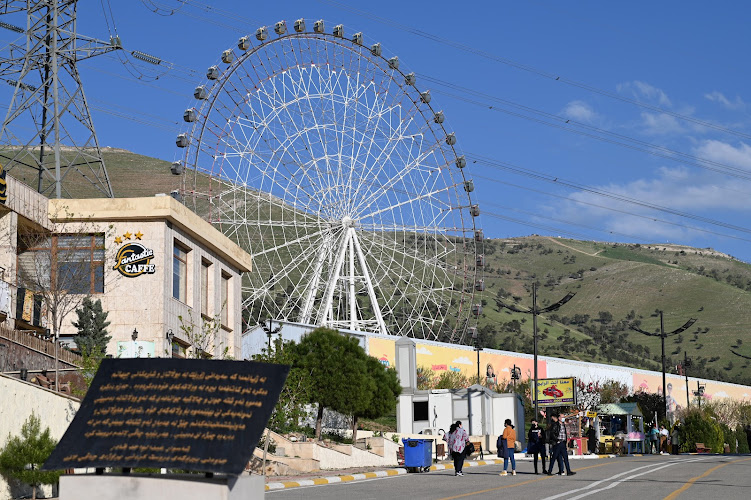
متنزه جافي لاند
Find Accommodations Nearby
Recommended Tours & Activities
Visitor Reviews
There are no reviews yet. Be the first one to write one.
Share Your Experience
Have you visited شەقامی سەرەکی زەرگەتە? Help other travelers by leaving a review.