 Real Journey Travels
Last modified September 14, 2026
A jitney is a privately operated, 32-passenger public minibus in Nassau and New Providence, Bahamas, that provides the island’s primary low-cost transit network for locals and visitors alike.
Nassau’s jitney buses are the cheapest way to get around New Providence: a one-way ride costs about $1.50 in cash (exact change, no cards), and the tourist-friendly Route #10 links downtown and the cruise port to Cable Beach. Buses run roughly 6:00 AM to 6:30 PM daily, come every 10 to 15 minutes on the main routes, and you pay as you get off. Here is how to ride one like a local in 2026.
Affiliate disclosure: this guide contains affiliate links. If you book or buy through them, we may earn a small commission at no extra cost to you. Fares below are set by private operators and can change – confirm with the driver.
How much does the Nassau jitney bus cost?
A standard one-way jitney ride in the downtown and Cable Beach zone costs about $1.50 per person, and fares run roughly $1.25 to $3.50 depending on how far you go. It is cash only, exact change, in Bahamian or US dollars (the two currencies trade one to one). Drivers do not carry change and do not take cards or payment apps, so keep small bills and coins handy.
You usually pay as you exit – the official Nassau tourism board notes riders “pay as you exit the bus,” though some drivers collect when you board. Either way, drop the fare in the box by the driver. There are no day passes or weekly passes; you pay each time you ride.
| Jitney fact | What to know (2026) |
|---|---|
| One-way fare | About $1.50 (downtown / Cable Beach zone) |
| Full fare range | $1.25 to $3.50 by distance and zone |
| Payment | Cash only, exact change; no cards or apps |
| When you pay | As you exit (some drivers collect on boarding) |
| Hours | About 6:00 AM to 6:30 PM daily; fewer on Sundays |
| Frequency | Every 10 to 15 minutes on main routes at peak |
| Airport service | None – jitneys do not serve the airport |

Which jitney route should tourists take?
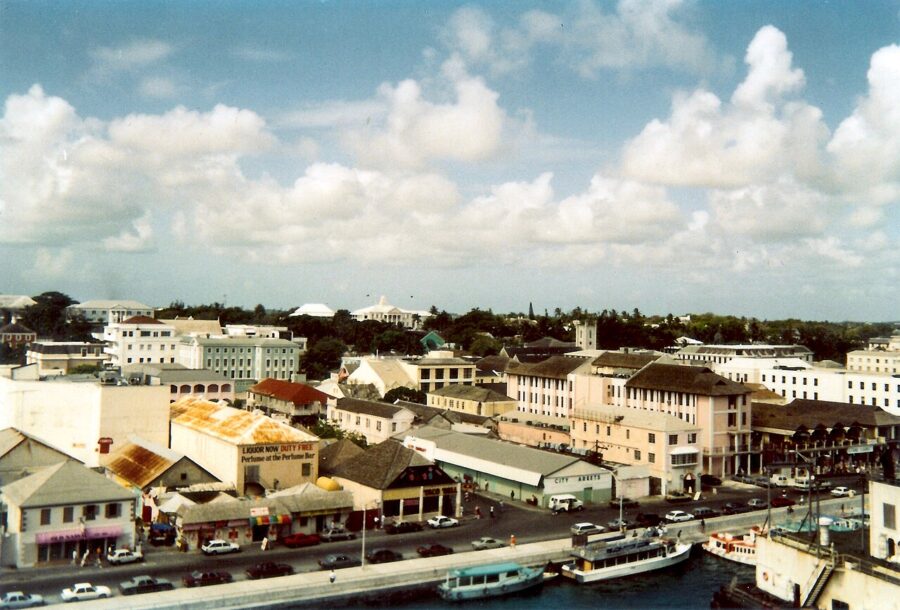
Route #10 is the one route most visitors need: it runs between downtown Nassau and Cable Beach, passing the cruise port, Fort Charlotte, Ardastra Gardens, and the Arawak Cay Fish Fry. Catch it near Frederick Street and Bay Street, a short walk from the cruise ships. Routes #10A and #10B follow slightly different paths to Cable Beach through the neighborhoods, so check the number in the front window before you board.
Downtown is the hub: most routes pass along Bay Street and George Street, which makes transferring easy. New Providence has more than a dozen numbered routes covering the island from the eastern end to the west, but for beaches, shopping, and the port, the #10 family does almost everything a traveler needs.
| Route | Where it goes | Best for |
|---|---|---|
| #10 / 10A / 10B | Downtown (Bay St) west to Cable Beach via the port, Fort Charlotte, Arawak Cay | Beach day, cruise visitors |
| #10 (return) | Cable Beach back east to downtown Nassau | Getting back to the cruise port |
| Downtown routes | Bay St and George St hubs, eastern and southern suburbs | Local neighborhoods, transfers |
Where do you catch a jitney from the cruise port or downtown?
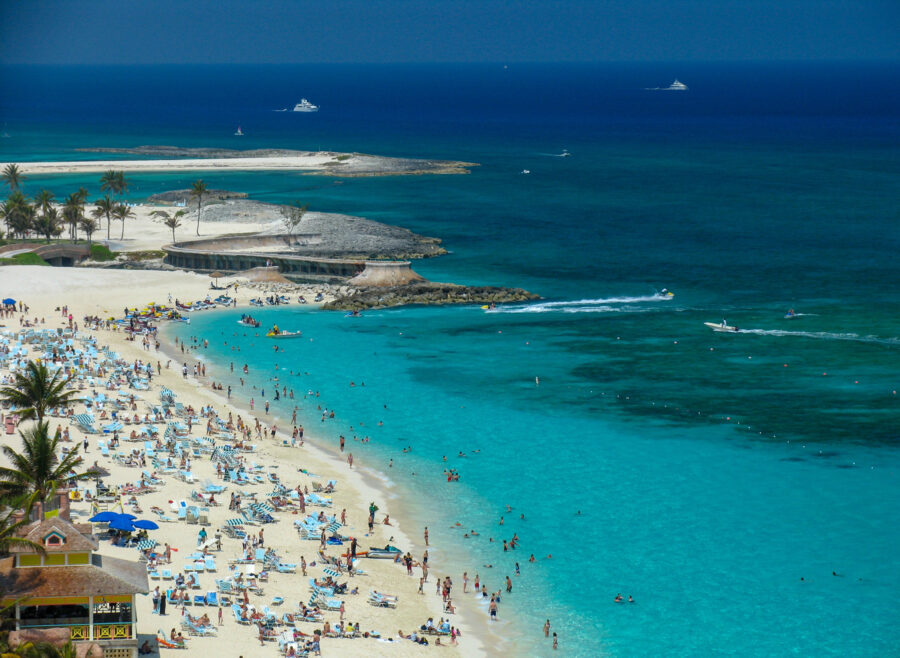
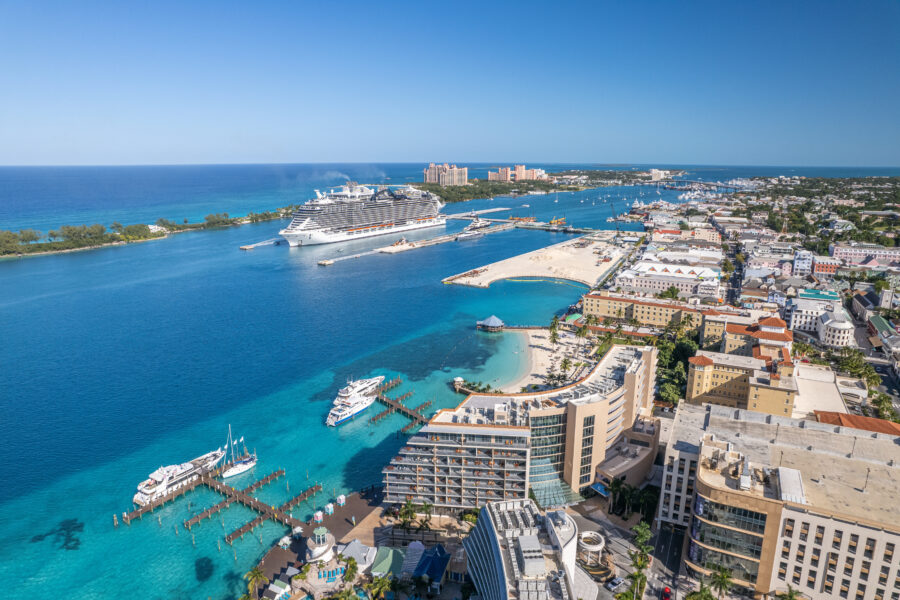
From the cruise port, walk to Frederick Street or Bay Street – about five minutes from Prince George Wharf – and flag down a #10. Jitneys work more like shared taxis than scheduled buses: there are few marked stops outside the tourist core, so stand at the curb and wave when one heading your way comes by. If it has room, the driver will pull over.
Bay Street and George Street are the easiest places to catch or transfer between routes downtown, since most buses pass through. The main depot sits on East Hill Street, where many routes start – if you are unsure about waving one down, go there, where drivers line up with route numbers displayed and tend to be patient with first-timers.
What are the jitney hours and how often do they run?
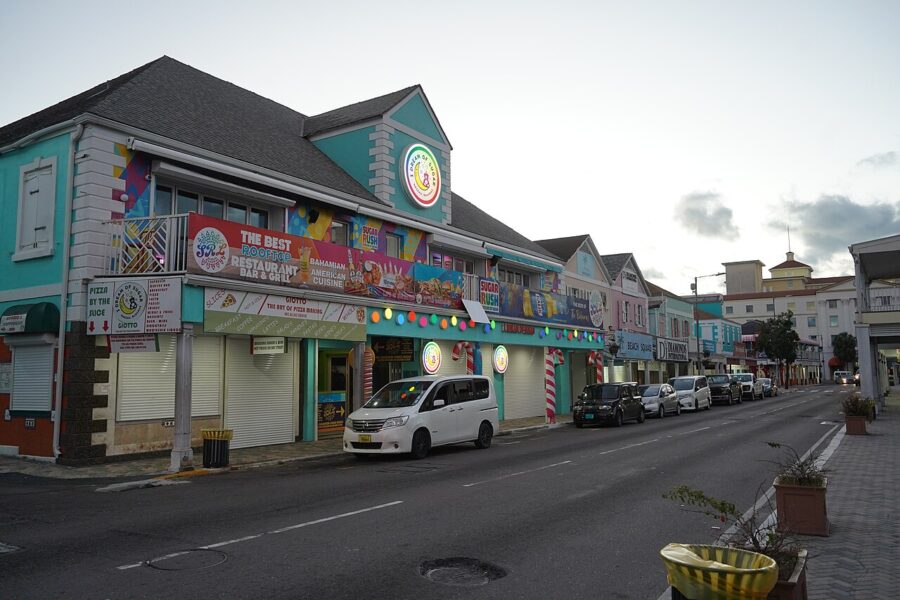
Jitneys run from about 6:00 AM to 6:30 PM daily, with the last buses on some routes finishing closer to 7:00 PM. Because private owners operate them, there is no fixed timetable – service is frequent by day and thins out in the evening. On busy routes like the #10, a bus comes by roughly every 10 to 15 minutes at peak.
The most buses run during the morning (7:00 to 9:00 AM) and late afternoon (4:00 to 6:00 PM) commutes. Midday and weekends are quieter, so expect longer waits on Saturdays and Sundays, when some routes end earlier. If you are staying out past about 6:30 PM – a dinner in Cable Beach, say – plan a taxi back, because jitneys stop for the night.
Can you take a jitney from Nassau airport?
No. Jitney buses do not serve Lynden Pindling International Airport, so you cannot ride one into town. From the airport your options are a licensed taxi, a pre-booked transfer, or a rental car. Official taxi rates from the airport run about $30 to Cable Beach, $36 to downtown Nassau, and $45 to Paradise Island, based on two passengers, plus extra for more people, luggage, and the Paradise Island bridge toll.
Once you reach downtown Nassau, Cable Beach, or your hotel, switch to jitneys for cheap local hops. Most visitors take a taxi from the airport, then ride jitneys for everything else.
The jitney is by far the cheapest ride at about $1.50, but it only runs set routes by day – for the airport, night trips, or door-to-door service you will want a taxi. There is no Uber or Lyft in Nassau; the closest app-based option is HOP, a local ride app with fixed fares you book before you land. Here is how the main options compare.
| Option | Typical 2026 cost | Best for |
|---|---|---|
| Jitney bus | About $1.50 per ride | Cheapest travel; downtown and Cable Beach by day |
| Licensed taxi | $30 to $45 airport zones; $25 to $35 from the cruise port | Airport transfers, groups, night, luggage |
| HOP app (no Uber/Lyft) | From about $26 (cruise port) to $35 (airport) | Fixed-fare, pre-booked rides |
| Water taxi | About $7 per person each way | Nassau to Paradise Island across the harbour |
| Rental car | Varies (drive on the left) | Stays of four or more days, exploring the island |
For a full run-down of car-free options, see our guides to smarter ways to travel and trip planning, or compare islands in Bahamas vs Jamaica.
How do you pay and ride a jitney like a local?
Have exact change ready before you board, tell the driver where you are going, and call out “next stop, please” when you want off. There are no stop buttons and no formal announcements, so the driver relies on you to speak up. Sit near the front if you can – it is easier to see your stop and ask for help.
- Bring small cash. One or two dollar bills and quarters per ride; no cards, no big bills.
- Flag it down. Wave from the curb anywhere along the route; buses stop where it is safe, not at fixed stops.
- Keep bags on your lap. Jitneys are small and fill up; do not block the aisle with beach gear.
- Tipping is not expected. Rounding up to the next dollar is a friendly gesture, nothing more.
- Hold the rail if standing. Roads can be bumpy and stops are frequent at rush hour.
A crossbody or anti-theft bag keeps your hands free and your valuables close on a crowded bus – see our packing picks in these travel hacks or browse travel crossbody bags on Amazon.

Is the Nassau jitney safe and worth it?
Yes – jitneys are safe and reliable during daylight hours, and at about $1.50 they are the best travel value in Nassau. Stick to downtown and the main business routes, keep an eye on your belongings in crowds, and you get a genuine slice of Bahamian daily life for less than the cost of a bottle of water. After dark, when service stops, switch to a taxi or the HOP app.
See also: Where to Stay in the Bahamas and Virgin Islands vs Bahamas.
Frequently Asked Questions
How much is the Nassau jitney bus?
A one-way jitney ride costs about $1.50 in the downtown and Cable Beach zone, and fares range roughly $1.25 to $3.50 depending on distance. It is cash only with exact change; drivers do not make change. There are no day or weekly passes, so you pay each time you ride.
What are the operating hours for Nassau jitney buses?
Jitneys run from about 6:00 AM to 6:30 PM daily, with a few routes finishing closer to 7:00 PM. There is no fixed timetable because private owners run the buses. Service is most frequent during the morning and late-afternoon commutes and thinner on weekends. After about 6:30 PM, plan a taxi instead.
Do Nassau jitneys accept credit cards?
No. Jitneys take cash only, and you need exact change in Bahamian or US dollars. There are no card readers or payment apps. Break large bills at a shop before you board, because drivers cannot make change.
Where can I find a map of the jitney routes in Nassau?
There is no single official route map because the buses are privately owned. The route number shows in the front window, and Route #10 to Cable Beach is the one most visitors use. The easiest approach is to catch buses along Bay Street downtown and ask the driver, who will tell you if they pass your destination.
Can you take a jitney from the Nassau airport to downtown?
No. Jitney buses do not serve Lynden Pindling International Airport. From the airport, take a licensed taxi (about $36 to downtown or $30 to Cable Beach), a pre-booked transfer, or a rental car. Once you are in town or at your hotel, switch to jitneys for cheap local trips.
How is a jitney different from the hop-on hop-off tourist bus?
Jitneys are the local public buses that Bahamians ride every day – about $1.50, set routes, no narration. The hop-on hop-off tourist bus costs much more but adds guided commentary, stops at the main attractions, and an all-day ticket. For cheap point-to-point travel the jitney wins; for a sightseeing loop, the tourist bus is built for that.
Last updated July 2026. Fares, hours, and routes verified against the Nassau & Paradise Island Promotion Board (Getting Around) and 2026 Nassau transport guides. Jitneys are privately operated, so prices and schedules can change without notice – confirm the fare with your driver before you ride.


