

Faraglioni Di Scopello Sunset Boat Tour with Aperitif vs Walking Tour of the Salt Pans near Trapani: Which Tour Is Better?
Updated May 14, 2026
You’re planning a trip to western Sicily and you’ve narrowed your options down to two distinct experiences: a sunset boat tour around the Faraglioni di Scopello with an aperitif or a walking tour of the historic salt pans near Trapani. Both are iconic activities in the region, but they offer completely different perspectives on Sicily’s natural beauty and cultural heritage.
This isn’t about finding the single best tour; it’s about matching the right experience to your travel style, physical ability, and what you want to get out of your day. One takes you onto the water for golden hour views and a swim, while the other keeps you on land, exploring a centuries-old industry set against a dramatic coastal backdrop.
Table of Contents
Experience and Atmosphere

The core experience of each tour defines your entire afternoon. The Faraglioni di Scopello boat tour is a maritime adventure. You board a small vessel, typically in the late afternoon, and set out from the tiny fishing village of Scopello.
The focus is on the sea, the rock formations, and the changing light. The atmosphere is relaxed and social, centered on enjoying a drink and the sensory pleasure of being on the water as the sun dips toward the horizon. It’s an active yet leisurely pursuit that engages you with the coastal environment directly.
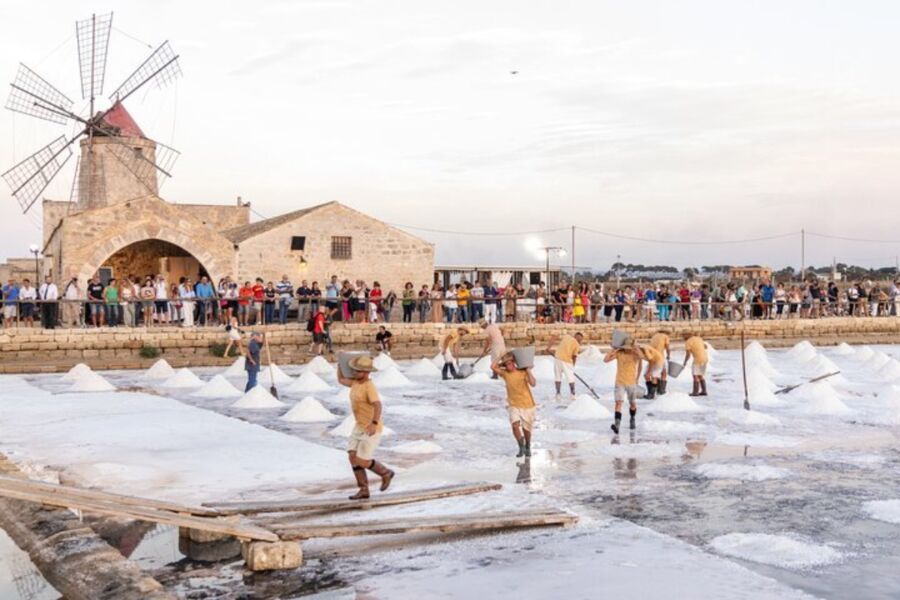
In contrast, the walking tour of the Trapani Salt Pans is a terrestrial and educational journey. You explore on foot across flat, often dusty paths that weave between the windmills and evaporation pools.
The atmosphere is one of quiet contemplation and learning. You absorb the history of salt production, observe the wildlife that thrives in this unique habitat, and witness a working landscape.
The pace is slower and more methodical, focused on observation and understanding rather than recreation. The vibe is less about socializing and more about connecting with a place of historical significance.
Physical Demand and Accessibility

Your physical comfort and mobility are major factors in choosing between these tours. The boat tour requires a basic level of mobility to get on and off the vessel, which may involve stepping down a ladder or dock. Once aboard, you are seated for the majority of the trip.
The main physical activity is optional: swimming and snorkeling in the coves around the Faraglioni. The sea conditions in the Zingaro Nature Reserve are generally calm in the evening, but if you are prone to seasickness, this is a consideration. This tour is generally suitable for most people who can manage a few steps and are comfortable in a boat.
The salt pans walking tour is entirely on land but requires the ability to walk steadily for approximately 1.5 to 2 hours over flat, unpaved terrain. There is no significant elevation gain, but the paths can be uneven.
The Sicilian sun can be intense, even in the late afternoon, so sun protection and water are essential. This tour is accessible to anyone with a moderate walking ability, but it is not recommended for those with significant mobility issues due to the uneven ground and lack of shade across the vast open spaces of the Saline di Trapani.
See Related: Where to Stay in Sicily: Top Picks for Every Traveller’s Budget and Style
What You’ll See and Learn

The visual and educational takeaways from each tour are distinct. On the Scopello boat tour, the curriculum is written in geology and light. You will see the massive limestone sea stacks known as the Faraglioni up close, understanding their formation through erosion.
You glide past hidden sea caves and into secluded coves within the Zingaro Nature Reserve that are inaccessible by land. Your guide will point out native flora and fauna, and the entire trip culminates in the visual spectacle of the sunset over the Tyrrhenian Sea, with the sky and water transforming through shades of orange and pink.
The walking tour of the salt pans offers a deep dive into human industry and ecology. You learn the entire process of sea salt harvesting, a tradition dating back to the Phoenicians.
You see the different evaporation pools, understand how the windmills were used to pump water, and observe the pink hue of the water caused by algae and shrimp, which also attract flocks of flamingos and other migratory birds. The lesson is about the intersection of culture, history, and the environment, set against the backdrop of the Egadi Islands on the horizon.
Timing and Ideal Conditions

When you schedule your tour dramatically impacts its quality. The Scopello boat tour is exclusively an evening activity. You depart a few hours before sunset to ensure you are in the best position for the golden hour and the main event.
The success of this tour is highly dependent on weather; clear skies are essential for a vivid sunset, and calm seas are necessary for a comfortable ride and safe swimming. It typically runs from late spring through early autumn when the weather is most reliable and the water is warm enough for a swim.
The Trapani salt pans tour can be done in the morning or afternoon, but the late afternoon light is also highly recommended for photography, casting long shadows and enriching the colors of the pools and windmills. While good weather is always preferable, this land-based tour is less likely to be canceled outright due to wind or slightly overcast skies. The best time to visit the Saline di Trapani is between May and July, when the salt harvesting is active and the likelihood of seeing flamingos is highest, before they migrate.
Cost and Practical Logistics
The financial and logistical commitments for these tours differ. The Scopello boat tour with aperitif is an all-inclusive package.
The cost, which typically ranges from 40 to 60 euros per person, covers the boat ride, the services of a skipper/guide, snorkeling equipment, and the aperitif itself, which usually includes a glass of Sicilian wine or prosecco and some local snacks like olives, cheese, or bruschetta. You need to bring a towel, swimwear, and possibly a light jacket for the boat ride back after sunset.
The walking tour of the salt pans is generally a lower-cost option, often between 15 and 25 euros for a guided tour. This fee covers the guided walk and access to the facility.
It does not typically include any food or drink, though there is usually a shop on site where you can purchase salt and other products. Logistically, you need to arrange your own transportation to the salt pans, which are located a short drive from Trapani city center. Sturdy walking shoes, a hat, sunscreen, and a bottle of water are non-negotiable items to bring with you.
See Related: Malta vs Sicily: Essential Differences for Your Mediterranean Escape
Making Your Final Decision

Your choice ultimately depends on what you value most in a travel experience. Choose the Faraglioni di Scopello sunset boat tour if your priority is a relaxing, sensual experience on the water.
It’s ideal for couples, groups of friends, or anyone looking to combine sightseeing with a swim and a pleasant social hour. The element of cooling off in the sea is a significant advantage during the warm Sicilian summer. This tour provides beautiful photographs and a memorable evening centered on natural beauty.
Opt for the walking tour of the Trapani salt pans if you are a curious traveler interested in history, traditional industries, and birdwatching. It’s a better fit for solo travelers, photographers, and those who prefer to keep their feet on solid ground.
The tour offers a unique story to take home, along with the opportunity to buy authentic Sicilian sea salt directly from the source. It satisfies an intellectual curiosity and provides a different, more austere kind of beauty compared to the dramatic coastline.
