 Real Journey Travels

Last modified November 25, 2026
Europe’s extensive rail network offers an efficient and scenic way to explore the continent. From high-speed routes connecting major cities to scenic journeys through picturesque landscapes, train travel provides a comfortable and environmentally-friendly alternative to flying or driving. You can easily book tickets online through platforms like Eurail, Interrail, and Trainline, with prices varying based on route, class, and booking time.
Popular routes include Paris to Amsterdam in just 3 hours 20 minutes, and Madrid to Barcelona in 2 hours 30 minutes. These high-speed connections often require reservations, which you can make alongside your ticket purchase. For longer journeys, consider overnight trains to maximize your travel time and save on accommodation costs.
Quick Planning Comparison & Takeaways
| Planning factor | What the guide highlights | Traveler takeaway |
|---|---|---|
| Journey times | Barcelona–Madrid takes about 2.5–3 hours; the introduction cites Paris–Amsterdam at 3 hours 20 minutes. | Use these as examples, then check your specific departure. |
| Ticket costs | Prices vary by route, class and booking time. | Compare those variables rather than assuming one standard fare. |
| Reservations | Popular high-speed connections often require reservations. | Check the reservation requirement alongside your ticket purchase. |
| Arrival convenience | City-center arrivals are a highlighted benefit of rail travel. | Include the onward journey when comparing trains with flights. |
| Overnight journeys | Night trains can make use of travel time and save on accommodation. | Consider this option for longer journeys, not automatically for every route. |
| Environmental impact | The guide highlights lower emissions than flying and renewable energy use by many operators. | Consider rail when reducing your travel footprint is a priority. |
- Start with the city pair that fits your itinerary. The route sections cover Barcelona–Madrid, Berlin–Munich, Paris–Lyon, Lisbon–Porto and Amsterdam–Brussels; they are not presented as a verified ranking by speed or price.
- Compare ticket options for your chosen route, class and travel date, then confirm whether a reservation is required before completing your booking.
- For longer trips, weigh an overnight train against daytime travel plus accommodation. Confirm that a suitable service exists for your itinerary.
By choosing train travel, you’ll reduce your carbon footprint significantly compared to flying. Many European rail operators use renewable energy sources, making your journey even greener. Plus, you’ll enjoy the added benefits of city-center arrivals, generous luggage allowances, and the opportunity to take in stunning views along the way.
Barcelona to Madrid (Spain)
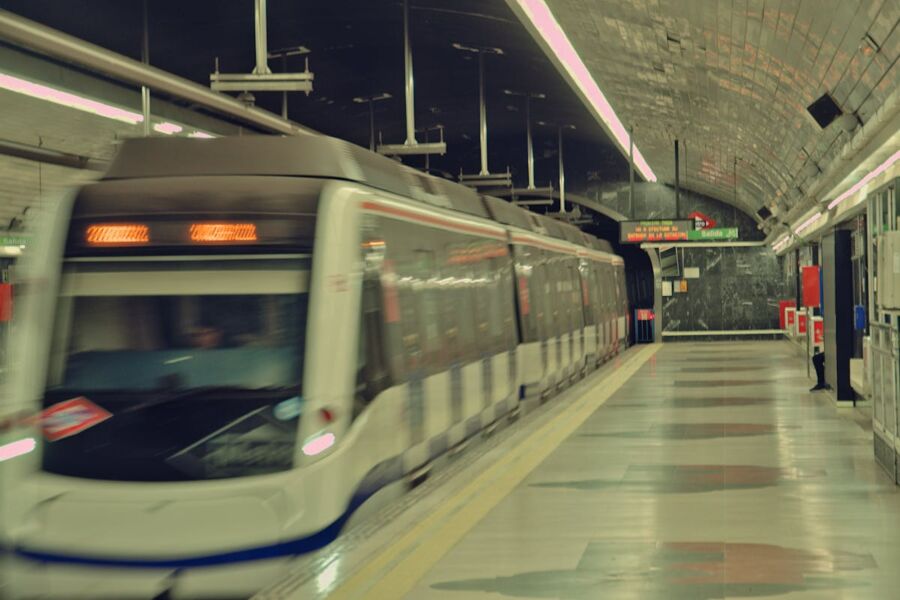
The Barcelona to Madrid train route is one of Spain’s most popular connections. You can travel between these major cities quickly and comfortably by rail.
High-speed AVE trains cover the 506 km journey in just 2.5 to 3 hours. This is significantly faster than driving and more environmentally friendly than flying.
Trains depart frequently throughout the day, with up to 41 daily services. You’ll find a range of departure times to suit your schedule.
Ticket prices start from as low as €8 when booked in advance. Standard fares typically range from €50 to €90 for a one-way trip.
To get the best deals:
- Book at least 30 days ahead
- Be flexible with travel dates
- Look for promotional fares
You can easily book tickets online through Renfe’s website or Rail Europe. Both platforms offer English language options for convenience.
Train travel produces significantly lower carbon emissions compared to flying or driving. By choosing rail, you’re making a more sustainable choice for your journey.
On board, you’ll enjoy comfortable seating, ample legroom, and scenic views of the Spanish countryside. Many trains offer amenities like Wi-Fi and dining cars.
Remember to arrive at the station at least 30 minutes before departure for security checks. Barcelona Sants and Madrid Atocha are the main stations serving this route.
Berlin to Munich (Germany)
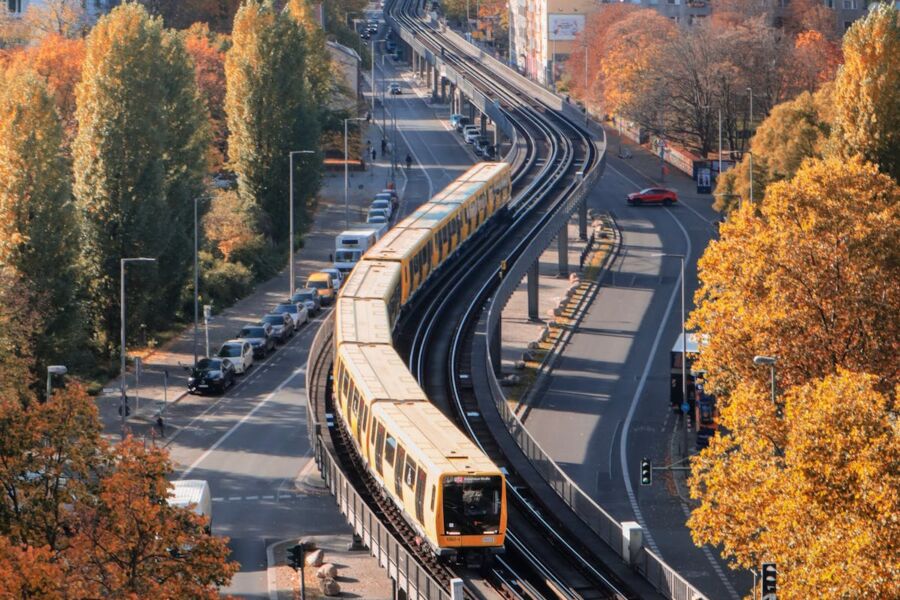
The Berlin to Munich train route offers a comfortable and efficient way to travel between two of Germany’s major cities. You can easily book tickets online through Deutsche Bahn or third-party rail booking sites.
Trains depart frequently throughout the day, with the earliest leaving around 4:30 AM and the last departure around midnight. The journey typically takes between 3 hours 49 minutes and 4 hours 52 minutes, covering approximately 504 kilometers.
Ticket prices start from as low as €18.89 when booked in advance. Standard fares range from €50 to €120, depending on the type of train and how far in advance you book.
Opting for train travel significantly reduces your carbon footprint compared to flying or driving. A train journey from Berlin to Munich produces about 75% less CO2 emissions than a flight on the same route.
High-speed ICE trains offer amenities like:
- Free WiFi
- Power outlets at seats
- Dining car or onboard bistro
- Quiet zones for working or relaxing
For budget-conscious travelers, FlixBus operates bus services between the two cities. While the journey takes longer (around 7 hours 20 minutes), tickets can be cheaper, starting from €50.
Paris to Lyon (France)
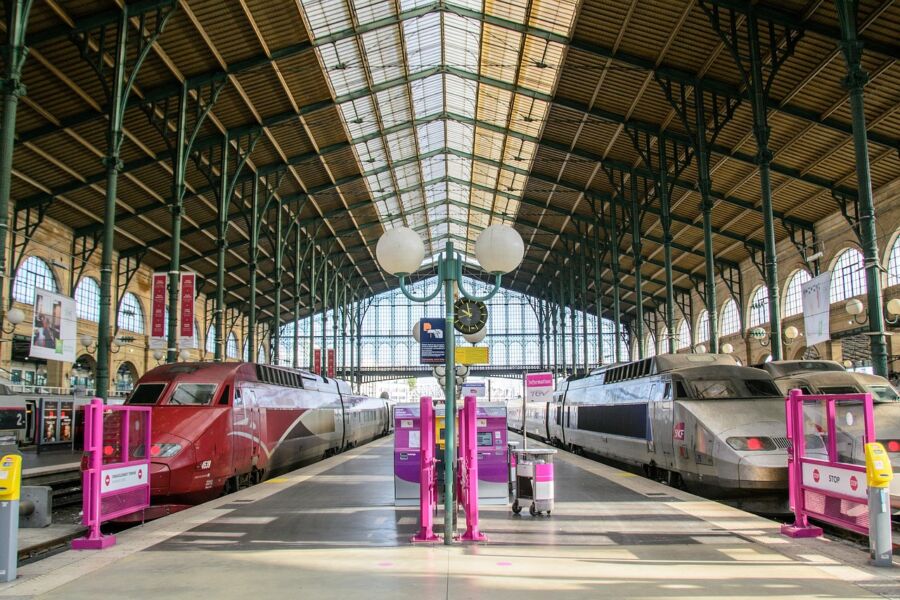
The Paris to Lyon train route offers a fast and comfortable way to travel between two of France’s major cities. You can easily book tickets online through Rail Europe, SNCF Connect, or Trainline.
Ticket prices vary based on how far in advance you book. Fares start as low as €12 when booked early, but can increase to around €50 if purchased closer to the travel date.
TGV high-speed trains cover the 391 km journey in just 1 hour 58 minutes on average. There are approximately 27-31 departures per day, giving you plenty of options to fit your schedule.
First class provides extra amenities like adjustable seats and personal reading lights. However, both classes offer Wi-Fi and power outlets at every seat.
By choosing the train over flying or driving, you’ll significantly reduce your carbon footprint. Rail travel emits far less CO2 per passenger compared to other modes of transport.
To get the best deals:
• Book 30 days in advance when possible
• Be flexible with travel times
• Look for special offers and promotions
• Consider a rail pass for multiple journeys
With its speed, frequency, and eco-friendly nature, the Paris to Lyon train is an excellent choice for your French travel plans.
Lisbon to Porto (Portugal)
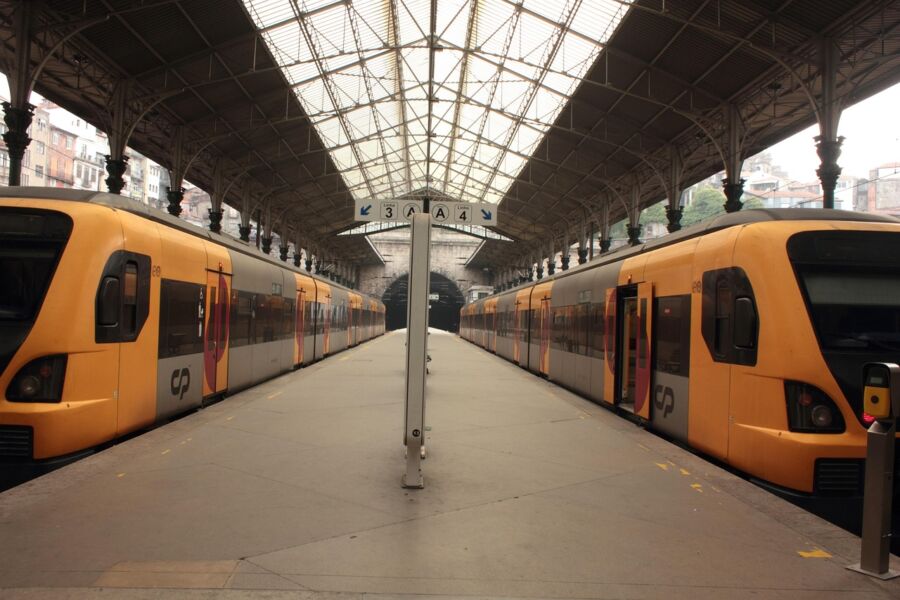
Train travel between Lisbon and Porto offers a convenient and scenic journey through Portugal. The route spans 337 km (209 miles) and takes around 3 hours on the fastest services.
You have two main train options:
- Alfa Pendular: High-speed tilting train
- Intercity: Slightly slower but still efficient
Trains depart regularly from Lisbon’s Santa Apolonia station to Porto’s Campanhã station. The journey showcases Portugal’s diverse landscapes, from rolling hills to coastal views.
Booking tickets is easy through the official CP (Comboios de Portugal) website or app. Prices start from €9.50 for advance bookings, with higher fares for last-minute purchases or first-class seats.
To secure the best deals:
- Book early (up to 60 days in advance)
- Be flexible with travel times
- Consider off-peak services
Traveling by train reduces your carbon footprint compared to driving or flying. The Portuguese rail network primarily uses electric trains, further minimizing environmental impact.
On board, you’ll find comfortable seating, Wi-Fi, and power outlets. Some trains offer a café car for refreshments during your journey.
Remember to validate your ticket before boarding and arrive at the station with time to spare. Enjoy the ride and the opportunity to relax while watching the Portuguese countryside roll by.
Amsterdam to Brussels (Netherlands/Belgium)
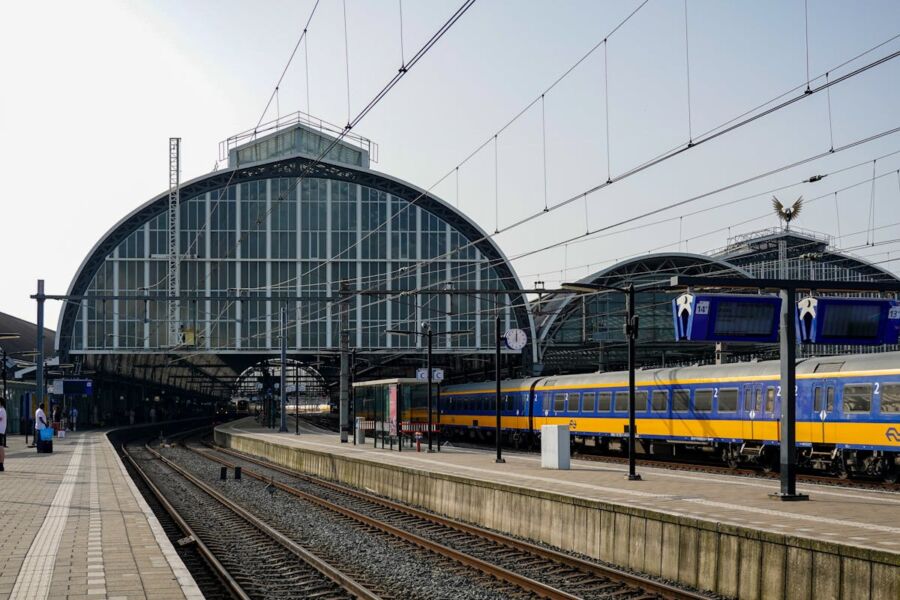
You can travel from Amsterdam to Brussels by train quickly and easily. The journey takes around 1 hour 52 minutes on the high-speed Eurostar service.
Trains depart from Amsterdam Centraal and arrive at Brussels-Midi/Zuid station. Services run frequently throughout the day, giving you plenty of flexibility.
Ticket prices start from €29 one-way when booked in advance. You can purchase tickets on the Eurostar website or at the station.
For budget-conscious travelers, InterCity trains offer a slower but cheaper alternative. These take about 2 hours 50 minutes and cost from €25.
Environmental benefits:
• Train travel produces significantly lower CO2 emissions than flying
• One train can replace hundreds of cars on the road
Booking tips:
• Book early for the best fares
• Check for off-peak or midweek discounts
• Consider a rail pass if you’re planning multiple journeys
On board, you’ll find comfortable seating, power outlets, and Wi-Fi. Some trains offer a café-bar for refreshments during your journey.
Remember to arrive at the station at least 30 minutes before departure for check-in and security procedures. Have your ticket and passport ready.
Frequently Asked Questions
How long do the example train journeys take?
The Barcelona–Madrid section gives approximately 2.5–3 hours for high-speed AVE trains. The introduction also cites Paris–Amsterdam at 3 hours 20 minutes. Treat these as planning examples rather than guaranteed timings for every departure, and check the schedule for your travel date before booking.
Do high-speed trains require reservations, and what affects ticket costs?
The guide notes that popular high-speed connections often require reservations, which can be arranged alongside the ticket purchase. Prices vary by route, class and booking time, so there is no single fare to budget for every journey. Compare ticket options and confirm the reservation requirement for the service you choose.
Which routes does the guide cover?
The dedicated route sections cover Barcelona–Madrid in Spain, Berlin–Munich in Germany, Paris–Lyon in France, Lisbon–Porto in Portugal and Amsterdam–Brussels across the Netherlands and Belgium. Use these city pairs to narrow your itinerary, then check current schedules and ticket options. The introduction also discusses overnight trains as an option for longer journeys, without identifying a specific overnight service.


