 Real Journey Travels
Last modified August 13, 2026
Short answer: yes, with limits. TSA lets you bring one disposable or Zippo-style lighter through security, in your carry-on or on your person. Torch lighters are banned outright – not in the cabin, not in checked baggage. Fueled lighters are not allowed in checked bags unless they are in a DOT-approved case, which permits up to two. A lighter with no fuel at all is unrestricted.
That is the whole rule in four lines. The rest of this guide covers each lighter type, what happens if your carry-on gets gate-checked, and how to pack so security does not slow you down.
Airport rules feel arbitrary until you see the logic behind them. With lighters the logic is simple: regulators care about how much fuel is present and whether it can ignite unattended in a cargo hold where nobody would notice. Everything below follows from that. If you are still packing, our vacation packing tips cover the rest of the carry-on rules that catch people out.
Can you bring a lighter on a plane?
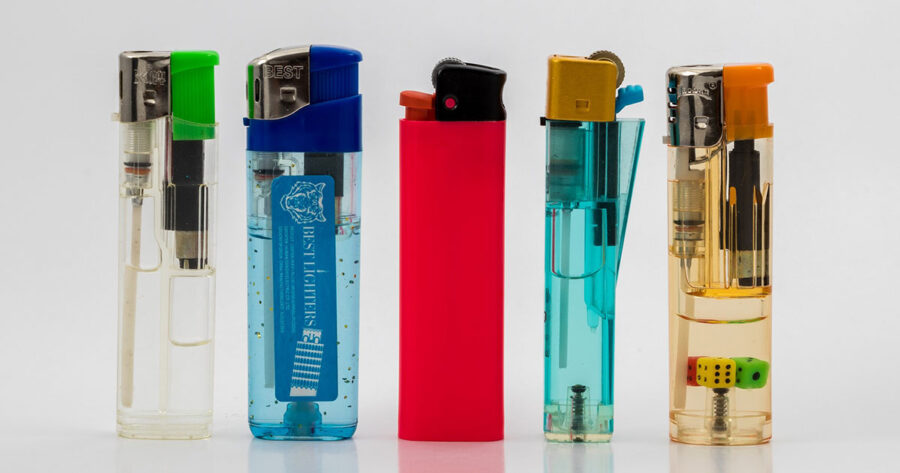
Yes for most ordinary lighters, no for torch lighters. The table below is the complete picture, drawn from the TSA “What Can I Bring” item pages and the FAA PackSafe guidance for lighters.
| Lighter type | Carry-on | Checked bag | Limit or condition |
| Disposable butane lighter (BIC style) | Yes | No, unless empty | 1 per passenger in the cabin |
| Zippo or absorbed-liquid lighter | Yes | No, unless empty | 1 per passenger in the cabin |
| Fueled lighter in a DOT-approved case | Yes | Yes | Up to 2 in the approved case |
| Torch lighter (jet flame, blue flame) | No | No | Banned in both |
| Arc, plasma, electronic or e-lighter | Yes | Check with the airline | Battery rules apply; keep it from switching on |
| Empty lighter, no fuel or vapour | Yes | Yes | Not regulated as hazardous material |
| Lighter fuel, refills, butane canisters | No | No | Banned in both |
One detail catches people out more than any other: the limit is one lighter per passenger, not one per bag. Two lighters in two different pockets is still two lighters.
Are lighters allowed in carry-on bags?
Yes. A single disposable or Zippo-style lighter is permitted in your carry-on bag or on your person. You do not need to declare it, and unlike liquids it does not belong in a quart-sized bag – the 3-1-1 liquids rule does not apply to lighters.
There is one situation worth knowing about. If your carry-on is checked at the gate or planeside because the overhead bins are full, you must take the lighter out and keep it with you in the cabin. A fueled lighter that was legal in your hand becomes illegal the moment that bag goes into the hold.
Are lighters allowed in checked luggage?
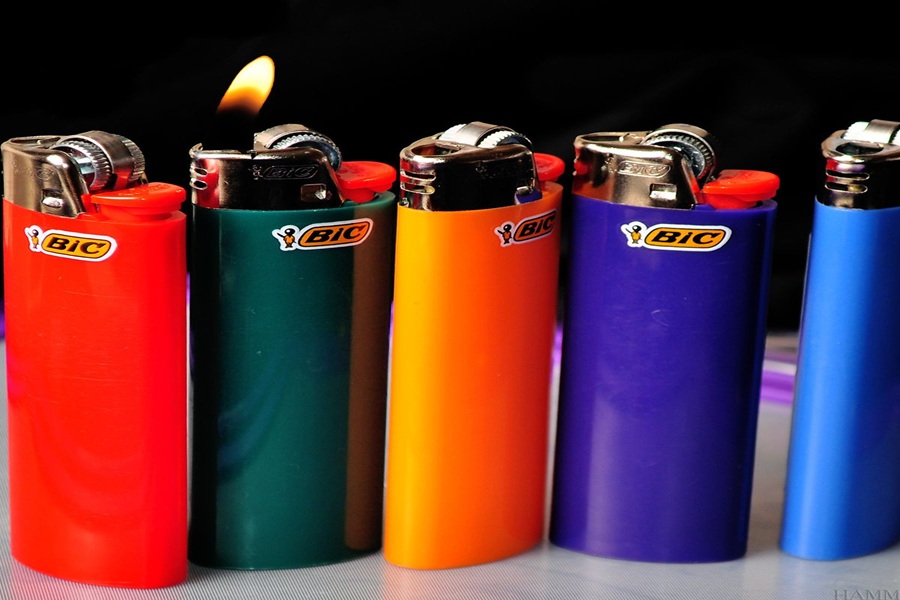
Only in two cases. A lighter with no fuel in it at all can go in a checked bag, because an empty lighter is not treated as a hazardous material. And up to two fueled lighters may travel in checked baggage if they are enclosed in a case that meets the Department of Transportation exemption.
Any other fueled lighter loose in a checked bag is prohibited. The reason is the hold itself: a cargo compartment is unattended for the whole flight, so an accidental ignition has time to develop before anyone knows about it.
Are torch lighters allowed on planes?
No. Torch lighters – also sold as jet flame, blue flame or turbo lighters, and common as cigar lighters – are prohibited in the cabin and in checked baggage, under both the hazardous materials regulations and TSA security rules.
This is the single most expensive mistake in this guide, because a torch lighter looks like an ordinary lighter to anyone who has not been told the difference. If the flame is a narrow, roaring blue jet rather than a soft yellow flame, leave it at home.
Are arc, plasma and electric lighters allowed on planes?
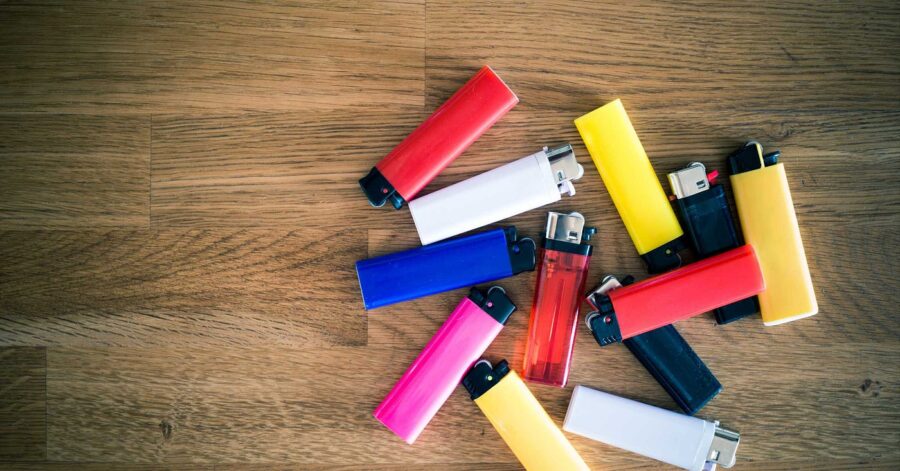
Arc, plasma, electronic and e-lighters have no fuel and no open flame – they strike a spark between two electrodes – so they are treated differently from butane lighters. TSA lists them as a separate category and they are permitted in carry-on bags.
Because they are battery powered, the usual lithium-battery expectations apply: keep the device where it cannot switch itself on, and check with your airline before putting one in a checked bag, since battery-containing devices in the hold are handled restrictively. Covering the activation button or using a hard case is enough to satisfy the “cannot accidentally activate” requirement.
Are empty lighters allowed on planes?
Yes, in both bags. A lighter that is genuinely empty – no fuel, no residue, no vapour – is not regulated by the Department of Transportation as a hazardous material at all, so it travels like any other small metal or plastic object.
The word doing the work there is “genuinely”. A Zippo that has not been filled in a month still holds vapour in the wadding. If you want a fueled Zippo to reach your destination in checked baggage, empty it properly first or put it in a DOT-approved case.
Do individual airlines have their own lighter rules?
Sometimes, and they can only be stricter than the federal rules, never looser. Carriers publish their own dangerous-goods pages and those pages change, so any list of per-airline limits reproduced on a travel site goes stale quickly.
The reliable move is to check your own airline’s dangerous-goods or restricted-items page before you fly, and to treat the TSA and FAA positions above as the floor. This matters most on international itineraries, where the rules of the departure country apply on the way out and may differ substantially from the US position.
See Related: Can You Bring Cigarettes On A Plane?
How should you pack a lighter for a flight?
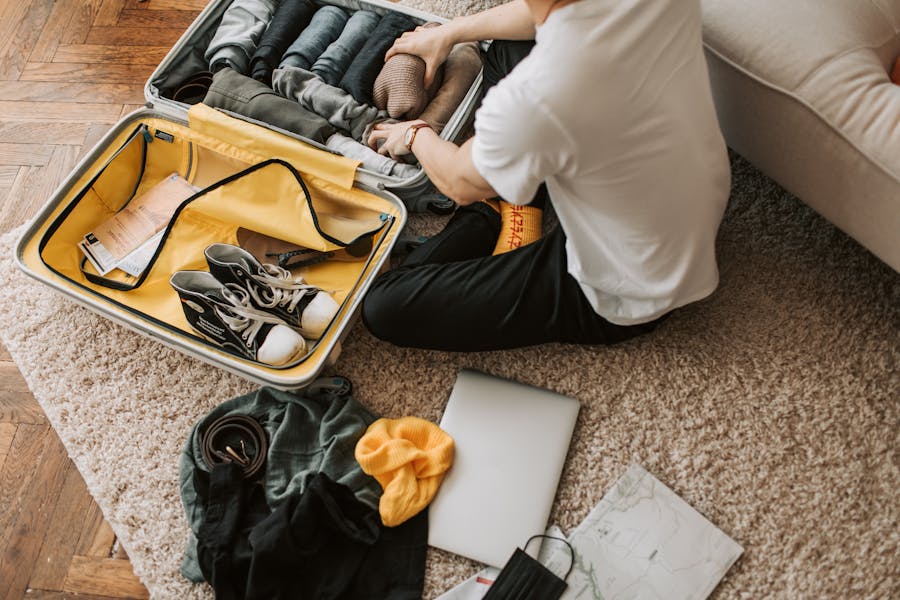
- Carry it on you, not in the bag. A lighter in a jacket pocket cannot be gate-checked by accident, which removes the one scenario that turns a legal lighter into an illegal one.
- Count to one. The cabin limit is one fueled lighter per passenger. Refill canisters and lighter fluid are banned from both bags with no exemption.
- Stop it switching on. For arc and electric lighters, cover the button or use a a sealed pouch so nothing presses it in transit.
- Empty it if it has to fly in the hold. Emptying a Zippo before it goes in checked baggage is the cheapest way to keep it. The alternative is a DOT-approved case.
- Check the item page, not a forum. TSA publishes a per-item page for disposable and Zippo lighters, torch lighters and arc lighters. They are short, and they are the version security actually enforces.
If you are flying with other restricted odds and ends, our packing list guide works through the same carry-on-versus-checked question for the rest of them.
See Related: Can You Bring Candles On A Plane?
Why are lighters restricted on planes at all?
Because of where the fire would start, not because a lighter is unusually dangerous in itself. In the cabin, a lighter is surrounded by several hundred people and a trained crew – an ignition is noticed immediately. In a cargo hold it is not.
That asymmetry explains the whole rulebook. It is why one fueled lighter is fine in your pocket but the same lighter is prohibited loose in a checked bag; why a DOT-approved case, which prevents accidental activation, restores the checked-bag option; and why an empty lighter is exempt everywhere, since there is nothing left to ignite.
Torch lighters sit outside that logic. Their flame is hotter, burns under pressure and is much harder to extinguish, which is why they are the one category banned in both places rather than merely restricted.
Sources
- TSA, Lighters (Disposable and Zippo)
- TSA, Lighters (Torch)
- TSA, Lighters (Arc Lighters, Electronic Lighters, E-Lighters)
- FAA, PackSafe – Lighters
- FAA, Airline Passengers and Lighters FAQ
Rules verified against TSA and FAA guidance on 13 August 2026. Regulations change – check the TSA item pages above before you fly.


