
Count Farrobo’s Palace
About Count Farrobo’s Palace
Key Features
More Details
Updated June 11, 2025
## Count Farrobo’s Palace (Palácio do Farrobo), Vila Franca de Xira: what to know before you go
If you search “Count Farrobo’s Palace,” you’ll quickly run into a naming trap: there are references online to a Farrobo palace in Lisbon (Laranjeiras), but the place tied to your coordinates and address in Vila Franca de Xira is Palácio do Farrobo (restos)—literally, the remains of the palace. It’s a heritage site with a compelling story, but it’s also in a highly deteriorated, ruinous state, which changes how you should plan a visit. VFXIRA
## Quick facts (grounded)
– Name: Palácio do Farrobo (restos) / Palácio do Conde de Farrobo (other designation used in official records) Cultural
– Location: Northwest / west of Vila Franca de Xira, by the road toward Loja Nova and Cachoeiras; described as along a municipal route (Estrada da Carapinha) VFXIRA
– Coordinates: ~38.96996, -9.00872 (official inventory) Cultural
– Status: Classified (heritage protection), with classification history tied to the 1984 decree; noted as “Interesse Municipal” in the official record Cultural
– Current condition: Advanced state of ruin (municipality wording) VFXIRA
## What makes it interesting (even as a ruin)
This isn’t “just” a decaying façade. The official heritage inventory frames the palace as part of a larger quinta (estate) assembled from rural properties—used as a leisure retreat where wine was produced and where there were hunts and large social gatherings. Cultural
Architecturally, what’s documented is surprisingly specific for a site many people only see from the roadside:
– A rectangular plan with lateral and central volumes projecting forward
– A main elevation with two towers flanking a lower central body
– A formal approach once emphasized by converging stair flights up to the noble floor’s loggia
– At the rear, the remains of an attached theatre structure, described as intended to echo Lisbon’s São Carlos theatre in concept (in the inventory narrative) Cultural
That theatre detail matters. The municipality also notes that the palace included a small theatre where Italian opera companies performed—a rare cultural footprint for a rural palace outside Lisbon. VFXIRA
## A short, factual history of the Farrobo connection
The story is anchored to Joaquim Pedro Quintela, the 1st Count of Farrobo, a prominent 19th-century figure with wealth, political ties, and major cultural influence.
Key points that are explicitly stated in the official heritage record:
– The estate’s component properties were organized in a legal structure in 1801, then acquired by Joaquim Pedro Quintela (1748–1817), 1st Baron of Quintela. Cultural
– The palace in Vila Franca de Xira was built in 1835 by his son (also Joaquim Pedro Quintela), who became Count of Farrobo (title in 1833) after the Liberal victory (supported D. Pedro IV, per the inventory narrative). Cultural
– After his death in 1869, the property was sold at public auction; deterioration becomes especially visible in the second half of the 20th century, with losses of azulejos, paintings, and other interior elements noted as occurring during the 1970s. Cultural
## Visiting today: set expectations and stay safe
Because the palace is explicitly described as being in an advanced state of ruin, treat this as a look-from-outside heritage stop unless you have clear, current permission and guidance from the relevant authorities or landowners (I did not find an official public-entry/visiting-hours listing in the municipal or national inventory pages). VFXIRA
### Practical on-the-ground advice (ruins-specific)
– Do not enter unstable structures. Even if openings look tempting, abandoned masonry, voids, and loose stair remnants are real hazards.
– Assume uneven ground and limited accessibility. If you’re traveling with someone who uses a wheelchair, has limited mobility, or is pushing a stroller, plan for a viewpoint-style stop, not a walk-through.
– Respect barriers and private land. Heritage classification doesn’t automatically mean open access.
## How to get there (without overcomplicating it)
### From Lisbon by train (simple day-trip logic)
Vila Franca de Xira is well connected to Lisbon by rail; common routing guidance shows Comboios de Portugal services linking Lisboa Oriente → Vila Franca de Xira frequently, with short travel times. (Exact times and fares vary by service/day—always verify for your travel date.)
From the town, the palace remains are described as being northwest/west of the city, near the road toward Loja Nova and Cachoeiras. VFXIRA
### By car
The address format commonly used online is CM1241 113, Vila Franca de Xira, and navigation apps route to “Palácio Farrobo” from there.
(As with any rural roadside stop: park safely, don’t block access, and be mindful of narrow shoulders.)
## What to look for when you’re there (to make the stop worthwhile)
Even from outside, you can “read” the building:
– Twin tower volume on the principal façade (a signature feature in the official architectural description) Cultural
– The symmetry of openings—ground-floor windows vs. upper-floor balcony windows—hinting at the noble-floor layout Cultural
– At the rear, the theatre massing (if your viewpoint allows), which is part of what makes Farrobo’s rural palace culturally distinct Cultural
If you’re photographing, a longer lens helps: you’ll often get better results staying back, compressing the façade lines, and avoiding any temptation to step closer to unstable edges.
## Pair it with a broader Vila Franca de Xira day (optional context)
Vila Franca de Xira sits on the Tagus (Tejo) and is surrounded by lezírias (alluvial plains) that are central to Ribatejo identity—useful context if you’re building a fuller day trip around landscape and regional culture. Portugal
## Internal linking (only if your site already has these pages)
I can’t truthfully claim what RealJourneyTravels.com already covers, but two internal links that usually fit naturally in this kind of article are:
– A guide to Vila Franca de Xira day trips from Lisbon (public transport, timing, what to combine)
– A broader explainer on Portugal’s abandoned palaces / heritage ruins etiquette (safety, legality, respectful photography)
## Outdated-data flags (what to double-check before publishing)
– Access / entry conditions: The official sources emphasize ruin status but don’t provide visitor hours or authorized entry guidance. Confirm locally if you intend to describe access beyond roadside viewing. VFXIRA
– On-site condition: Ruins change fast (collapse, fencing, vegetation). Treat any “you can walk up to…” claims as time-sensitive unless you’ve verified recently.
If you want, paste the two RealJourneyTravels URLs you’d prefer to internally link to (even rough-topic pages), and I’ll weave them in cleanly without sounding bolted-on.
Table of Contents
Key Highlights
Count Farrobo’s Palace
Location
Places to Stay Near Count Farrobo's Palace"Um monumento à imagem do país, ..."
Find and Book a Tour
Explore More Travel Guides
No reviews found! Be the first to review!
Traveler Reviews for Count Farrobo’s Palace
There are no reviews yet. Be the first one to write one.
Have you visited Count Farrobo’s Palace? Help other travelers by sharing your review.
You Might Also Like
Jardim Municipal Constantino Palha
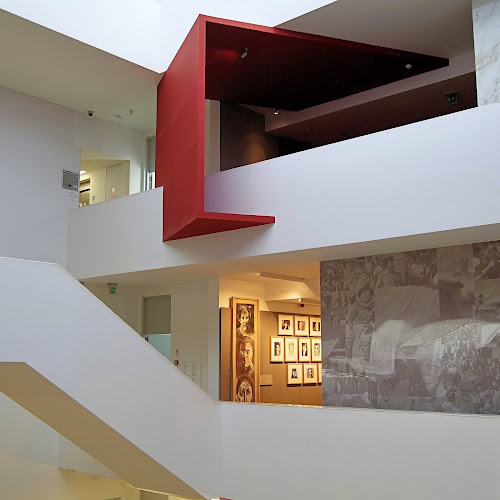
Neo-realism Museum
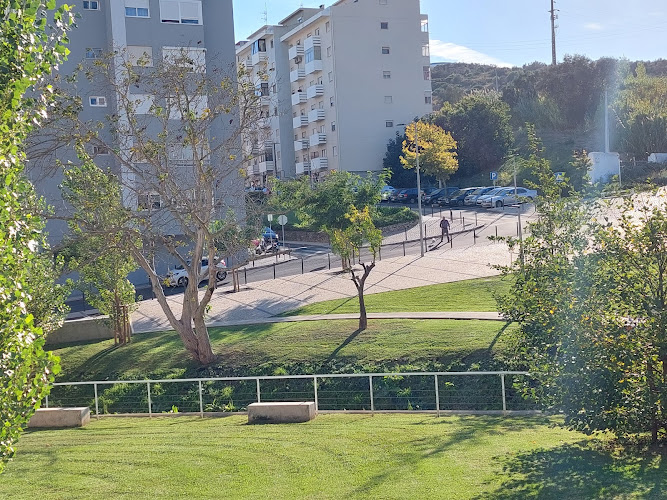
Park Luís César Pereira
Find Accommodations Nearby
Recommended Tours & Activities
Visitor Reviews
There are no reviews yet. Be the first one to write one.
Share Your Experience
Have you visited Count Farrobo’s Palace? Help other travelers by leaving a review.