
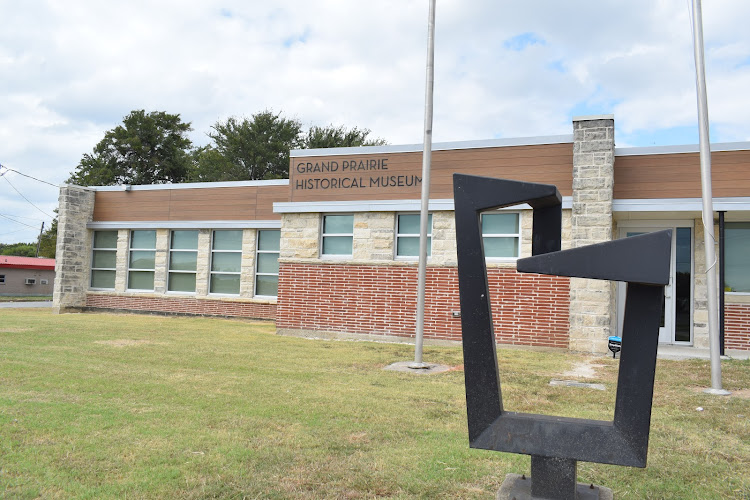
Grand Prairie Historical Museum
About Grand Prairie Historical Museum
Description
The Grand Prairie Historical Museum serves as a small-but-meaningful window into the past of Grand Prairie and the surrounding North Texas region. Operated by a local historical organization, the museum focuses on community stories: everyday life, early businesses, agriculture, schools, and the folks whose names rarely make it into the history books. It doesn’t try to be the biggest museum in the state — instead it leans into being authentic, approachable, and full of personality. Visitors consistently remark on the warmth of the volunteers and the way the exhibits feel like a neighbor telling a story over lemonade.
Exhibits are curated to highlight local artifacts, archival photographs, oral histories, and rotating displays that bring neighborhood memories to light. There’s a pleasing, unpolished quality to the place: cases filled with household objects, military memorabilia, schoolroom relics, and tools that once powered farms and shops. The focus is on context and connection — not just objects behind glass, but the lives those objects represent. For travelers interested in regional history, social history, or the evolution of small-town life in Texas, the museum offers concentrated insight without the pretension.
Accessibility is taken seriously here. The building has a wheelchair accessible entrance and parking, accessible restrooms, and seating options for those who need to rest. Tours are offered by knowledgeable volunteers who are happy to slow down, answer questions, and point out less obvious gems. Families with kids will find the environment welcoming — exhibits are sized for curious hands and children are encouraged to ask questions. The museum is small enough that a single visit rarely overwhelms, but rich enough that two returns could reveal new discoveries.
One of the understated strengths of the museum is its role as a community hub. Beyond static displays, the organization hosts talks, small events, and occasional school programs that link current residents with the town’s past. Visitors often walk away with a sense that they’ve peeked into a living archive, not a lifeless repository. That texture — the hum of stories, the personal touch of volunteers pulling a photo from a drawer to illustrate a tale — is what makes the museum memorable for travelers passing through the region.
Key Features
- Local historical organization-run museum with strong community ties
- Curated exhibits focusing on local life, agriculture, education, industry, and veterans
- Wheelchair accessible entrance, parking, restrooms, and seating
- Free on-site parking available for visitors
- Guided tours offered by volunteer docents; small-group and individual visits welcome
- Kid-friendly exhibits and programming that invite questions and interaction
- Restroom facilities on-site (no restaurant on premises)
- Rotating displays with seasonal subjects, sometimes featuring donated family collections
- Research-friendly resources: archival photos, local records, and volunteer historians who love to help
Best Time to Visit
The best time to visit largely depends on what kind of experience the traveler wants. For quieter exploration, weekday mornings are ideal — there’s more time to chat with docents and take in details without the bustle. Weekends often bring families and local visitors, plus occasional special events or presentations, which can be delightful if one enjoys a livelier atmosphere.
Seasonally, spring and fall are the friendliest. North Texas heat in the dog days of summer can make outdoor stops before or after the museum less pleasant, so if a traveler plans a multi-stop day that includes outdoor attractions, aiming for moderate-weather months is smarter. Winter visits are usually fine; the museum is a cozy indoor place to escape colder days and still get a feel for local history.
Plan ahead if one hopes to join a guided tour or see a special exhibit — these are sometimes scheduled on particular days and can sell out (or at least fill up quickly, because the museum is modest in size). And trust this: holiday weekends can bring unexpected crowds, especially when local schools or community groups stage events nearby.
How to Get There
Most visitors arrive by car, which is the simplest and most flexible way to reach the museum. It sits within town limits and is easily accessible from major regional routes. For those driving in from Dallas, Fort Worth, or Arlington, a straightforward GPS search will do the trick, and free on-site parking makes arrival stress-free. Rideshare and taxis are also practical options for travelers who prefer not to drive.
Public transit options exist in the broader region but may be limited for door-to-door access, so travelers relying on buses or trains should check schedules and plan for a short ride or walk from the nearest stop. If mobility is a concern, arranging a rideshare or driving is usually the most convenient choice — the parking lot is accessible and close to the entrance.
For visitors who like to combine stops, the museum works well as part of a half-day itinerary: pair it with nearby parks, local restaurants, or a stroll through downtown streets and historic buildings. Because the museum is compact, it’s easy to fit into a broader travel plan without sacrificing time for other attractions.
Tips for Visiting
Plan for about 60–90 minutes. That’s usually enough time to read exhibit panels, chat with volunteers, and spot the little details that make the place special. But if the docent is in a storytelling mood (and they often are), leave room for extra time — those conversations can be the highlight.
Guided tours add depth. The volunteers know names, dates, and the backstories of many donated items. If a traveler is curious about a particular topic — say, local schools, wartime service, or early businesses — mentioning that at the front desk often prompts the docent to tailor the tour or pull out supplemental materials.
Accessibility is very good for a small museum. Wheelchair accessible parking and entrances, plus accessible restrooms and seating, make visits easier for guests with mobility needs. Still, if a visitor has very specific accessibility requirements (large-group wheelchair rentals, specialized assistance), calling ahead is a smart move. The volunteers are accommodating and will try to help.
Bring a camera if photos help memory, but be mindful of exhibit labels and any signage about photography. Most visitors are allowed to take pictures for personal use, but some artifacts or temporary loans may have restrictions. If unsure, ask — staff and volunteers appreciate the courtesy.
Kids usually love it here. Exhibits include tactile and relatable items that spark questions. Parents should prepare for curiosity: kids will want to touch, ask, and explore. There are no playgrounds on-site, so mixing indoor exploration with a nearby park stop afterward is a nice strategy.
Check for special events. The museum occasionally hosts lectures, school programs, and community events. These can turn a simple visit into a richer cultural experience. If a traveler finds a calendar of events (on the museum’s communication channels), it’s worth timing a visit to coincide with a talk or an exhibit opening.
Support the museum if possible. Small historical organizations rely on donations and memberships for preservation work. Even a modest contribution or a purchase from a small gift table goes a long way and is appreciated. If the volunteer staffing seems sparse during a visit, remember that this is often a labor of love by local historians and community members.
Ask about research materials. Genealogy enthusiasts or travelers tracking family ties to the area should inquire about archives and photographic collections. Staff are often willing to point researchers toward useful inventories or set aside items for deeper looks on a return visit. It won’t be a full-service research library like a major city institution, but for local records and ancestral leads, it’s sometimes surprisingly productive.
Eat before or after the visit. There isn’t a restaurant on-site, so plan meal stops accordingly. The surrounding area offers a mix of casual eateries and classic diners where one can decompress and reflect on the visit. Pro tip: ask a volunteer for a local food recommendation — they usually have strong opinions and good suggestions.
Finally, treat the museum like a conversation rather than a checklist. It’s the kind of place where a small story — a photograph with a handwritten note, a tool used on a family farm, a veteran’s uniform — can unexpectedly shift perspective. Travelers who linger, listen, and ask questions often leave with something memorable: a new anecdote for the road, or maybe an idea for a deeper dive into regional history.
In short, the Grand Prairie Historical Museum is rewarding for curious travelers who appreciate local stories presented with honesty and care. It’s not flashy, but it is earnest, informative, and full of the kind of detail that history lovers and casual visitors both enjoy discovering. If the traveler wants to come away with a real sense of community history — and perhaps a good story to tell friends — this small local museum is worth a stop.
Key Features
- Local historical organization-run museum with strong community ties
- Curated exhibits focusing on local life, agriculture, education, industry, and veterans
- Wheelchair accessible entrance, parking, restrooms, and seating
- Free on-site parking available for visitors
- Guided tours offered by volunteer docents; small-group and individual visits welcome
- Kid-friendly exhibits and programming that invite questions and interaction
- Restroom facilities on-site (no restaurant on premises)
- Rotating displays with seasonal subjects, sometimes featuring donated family collections
More Details
Updated August 30, 2025
Table of Contents
Description
The Grand Prairie Historical Museum serves as a small-but-meaningful window into the past of Grand Prairie and the surrounding North Texas region. Operated by a local historical organization, the museum focuses on community stories: everyday life, early businesses, agriculture, schools, and the folks whose names rarely make it into the history books. It doesn’t try to be the biggest museum in the state — instead it leans into being authentic, approachable, and full of personality. Visitors consistently remark on the warmth of the volunteers and the way the exhibits feel like a neighbor telling a story over lemonade.
Exhibits are curated to highlight local artifacts, archival photographs, oral histories, and rotating displays that bring neighborhood memories to light. There’s a pleasing, unpolished quality to the place: cases filled with household objects, military memorabilia, schoolroom relics, and tools that once powered farms and shops. The focus is on context and connection — not just objects behind glass, but the lives those objects represent. For travelers interested in regional history, social history, or the evolution of small-town life in Texas, the museum offers concentrated insight without the pretension.
Accessibility is taken seriously here. The building has a wheelchair accessible entrance and parking, accessible restrooms, and seating options for those who need to rest. Tours are offered by knowledgeable volunteers who are happy to slow down, answer questions, and point out less obvious gems. Families with kids will find the environment welcoming — exhibits are sized for curious hands and children are encouraged to ask questions. The museum is small enough that a single visit rarely overwhelms, but rich enough that two returns could reveal new discoveries.
One of the understated strengths of the museum is its role as a community hub. Beyond static displays, the organization hosts talks, small events, and occasional school programs that link current residents with the town’s past. Visitors often walk away with a sense that they’ve peeked into a living archive, not a lifeless repository. That texture — the hum of stories, the personal touch of volunteers pulling a photo from a drawer to illustrate a tale — is what makes the museum memorable for travelers passing through the region.
Key Features
- Local historical organization-run museum with strong community ties
- Curated exhibits focusing on local life, agriculture, education, industry, and veterans
- Wheelchair accessible entrance, parking, restrooms, and seating
- Free on-site parking available for visitors
- Guided tours offered by volunteer docents; small-group and individual visits welcome
- Kid-friendly exhibits and programming that invite questions and interaction
- Restroom facilities on-site (no restaurant on premises)
- Rotating displays with seasonal subjects, sometimes featuring donated family collections
- Research-friendly resources: archival photos, local records, and volunteer historians who love to help
Best Time to Visit
The best time to visit largely depends on what kind of experience the traveler wants. For quieter exploration, weekday mornings are ideal — there’s more time to chat with docents and take in details without the bustle. Weekends often bring families and local visitors, plus occasional special events or presentations, which can be delightful if one enjoys a livelier atmosphere.
Seasonally, spring and fall are the friendliest. North Texas heat in the dog days of summer can make outdoor stops before or after the museum less pleasant, so if a traveler plans a multi-stop day that includes outdoor attractions, aiming for moderate-weather months is smarter. Winter visits are usually fine; the museum is a cozy indoor place to escape colder days and still get a feel for local history.
Plan ahead if one hopes to join a guided tour or see a special exhibit — these are sometimes scheduled on particular days and can sell out (or at least fill up quickly, because the museum is modest in size). And trust this: holiday weekends can bring unexpected crowds, especially when local schools or community groups stage events nearby.
How to Get There
Most visitors arrive by car, which is the simplest and most flexible way to reach the museum. It sits within town limits and is easily accessible from major regional routes. For those driving in from Dallas, Fort Worth, or Arlington, a straightforward GPS search will do the trick, and free on-site parking makes arrival stress-free. Rideshare and taxis are also practical options for travelers who prefer not to drive.
Public transit options exist in the broader region but may be limited for door-to-door access, so travelers relying on buses or trains should check schedules and plan for a short ride or walk from the nearest stop. If mobility is a concern, arranging a rideshare or driving is usually the most convenient choice — the parking lot is accessible and close to the entrance.
For visitors who like to combine stops, the museum works well as part of a half-day itinerary: pair it with nearby parks, local restaurants, or a stroll through downtown streets and historic buildings. Because the museum is compact, it’s easy to fit into a broader travel plan without sacrificing time for other attractions.
Tips for Visiting
Plan for about 60–90 minutes. That’s usually enough time to read exhibit panels, chat with volunteers, and spot the little details that make the place special. But if the docent is in a storytelling mood (and they often are), leave room for extra time — those conversations can be the highlight.
Guided tours add depth. The volunteers know names, dates, and the backstories of many donated items. If a traveler is curious about a particular topic — say, local schools, wartime service, or early businesses — mentioning that at the front desk often prompts the docent to tailor the tour or pull out supplemental materials.
Accessibility is very good for a small museum. Wheelchair accessible parking and entrances, plus accessible restrooms and seating, make visits easier for guests with mobility needs. Still, if a visitor has very specific accessibility requirements (large-group wheelchair rentals, specialized assistance), calling ahead is a smart move. The volunteers are accommodating and will try to help.
Bring a camera if photos help memory, but be mindful of exhibit labels and any signage about photography. Most visitors are allowed to take pictures for personal use, but some artifacts or temporary loans may have restrictions. If unsure, ask — staff and volunteers appreciate the courtesy.
Kids usually love it here. Exhibits include tactile and relatable items that spark questions. Parents should prepare for curiosity: kids will want to touch, ask, and explore. There are no playgrounds on-site, so mixing indoor exploration with a nearby park stop afterward is a nice strategy.
Check for special events. The museum occasionally hosts lectures, school programs, and community events. These can turn a simple visit into a richer cultural experience. If a traveler finds a calendar of events (on the museum’s communication channels), it’s worth timing a visit to coincide with a talk or an exhibit opening.
Support the museum if possible. Small historical organizations rely on donations and memberships for preservation work. Even a modest contribution or a purchase from a small gift table goes a long way and is appreciated. If the volunteer staffing seems sparse during a visit, remember that this is often a labor of love by local historians and community members.
Ask about research materials. Genealogy enthusiasts or travelers tracking family ties to the area should inquire about archives and photographic collections. Staff are often willing to point researchers toward useful inventories or set aside items for deeper looks on a return visit. It won’t be a full-service research library like a major city institution, but for local records and ancestral leads, it’s sometimes surprisingly productive.
Eat before or after the visit. There isn’t a restaurant on-site, so plan meal stops accordingly. The surrounding area offers a mix of casual eateries and classic diners where one can decompress and reflect on the visit. Pro tip: ask a volunteer for a local food recommendation — they usually have strong opinions and good suggestions.
Finally, treat the museum like a conversation rather than a checklist. It’s the kind of place where a small story — a photograph with a handwritten note, a tool used on a family farm, a veteran’s uniform — can unexpectedly shift perspective. Travelers who linger, listen, and ask questions often leave with something memorable: a new anecdote for the road, or maybe an idea for a deeper dive into regional history.
In short, the Grand Prairie Historical Museum is rewarding for curious travelers who appreciate local stories presented with honesty and care. It’s not flashy, but it is earnest, informative, and full of the kind of detail that history lovers and casual visitors both enjoy discovering. If the traveler wants to come away with a real sense of community history — and perhaps a good story to tell friends — this small local museum is worth a stop.
Key Highlights
- Local historical organization-run museum with strong community ties
- Curated exhibits focusing on local life, agriculture, education, industry, and veterans
- Wheelchair accessible entrance, parking, restrooms, and seating
- Free on-site parking available for visitors
- Guided tours offered by volunteer docents; small-group and individual visits welcome
- Kid-friendly exhibits and programming that invite questions and interaction
- Restroom facilities on-site (no restaurant on premises)
- Rotating displays with seasonal subjects, sometimes featuring donated family collections
Location
Places to Stay Near Grand Prairie Historical Museum
Find and Book a Tour
Explore More Travel Guides
No reviews found! Be the first to review!
Traveler Reviews for Grand Prairie Historical Museum
There are no reviews yet. Be the first one to write one.
Have you visited Grand Prairie Historical Museum? Help other travelers by sharing your review.
You Might Also Like

Epic Central Park

Loyd Park

Lynn Creek Park at Joe Pool Lake
Find Accommodations Nearby
Recommended Tours & Activities
Visitor Reviews
There are no reviews yet. Be the first one to write one.
Share Your Experience
Have you visited Grand Prairie Historical Museum? Help other travelers by leaving a review.