
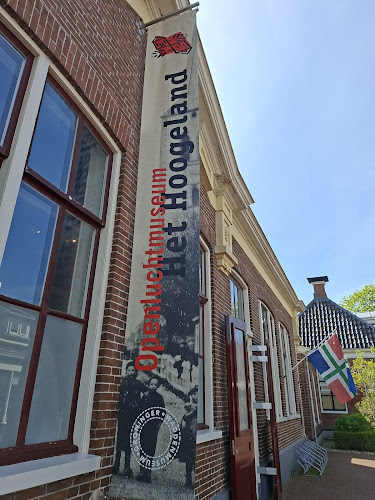
Openluchtmuseum Het Hoogeland
About Openluchtmuseum Het Hoogeland
Description
Openluchtmuseum Het Hoogeland in Warffum, Netherlands presents a vivid, lived-in portrait of rural life from a century ago. The open-air museum gathers about twenty historical buildings — a schoolroom with wooden desks, a tiny village grocer with tins and glass jars on the shelves, a day-labourer’s cottage, a TBC isolation house, and a small sawmill among them — each furnished and staged so carefully that the scene appears paused rather than reconstructed. The effect is quietly powerful: it feels as though the people who used these rooms have stepped out for a moment and might return at any minute.
The museum sits in the historic heart of the Noord-Groningen region and focuses squarely on the daily rhythms of a Groningen village. Kitchen gardens and ornamental beds surround many of the buildings — the moes- and siertuinen — offering an immediate sensory link to the past. Herbs and vegetables grow where they always did, and that continuity helps visitors imagine what life looked and smelled like. For people who like museums that are tactile and immediate, this place delivers.
Openluchtmuseum Het Hoogeland is not a blockbuster, megamuseum. Instead, it is intimate, meticulous, and, at times, wonderfully odd. A child may run a finger along a brass school bell and find a century of stories in the scrape of metal. An adult might stand in the sawmill and be surprised by the sheer manual effort that turned timber into beams. Those smaller-scale encounters are the museum’s strength: they reward slow observation.
Accessibility was considered in the layout — there are wheelchair-friendly entrances, a parking lot suitable for accessible vehicles, and restrooms designed for wheelchair users — which makes the site genuinely welcoming for many types of visitors. Amenities on site include a small restaurant where visitors can sit and mull over the day, restrooms, and a gift shop for picking up a book or a locally made souvenir. Families find the setting easy to manage: pathways are mostly walkable, and children tend to be absorbed by the real objects and authentic settings rather than by flashy displays.
As a history museum and local heritage site, Het Hoogeland emphasizes everyday experience rather than grand narratives. That approach often leaves visitors feeling more emotionally connected than they might in a conventional museum. People who enjoy local history, social history, or agrarian heritage will likely appreciate the attention to detail. And those who simply want a calm, contemplative outdoor museum visit — one that pairs nicely with nearby walks through Warffum — will find it satisfying.
Key Features
- Approximately twenty original and reconstructed buildings illustrating rural life from the early 20th century
- Detailed interiors: an old schoolroom, a traditional grocer, a day-labourer’s home, the TBC hut, a working sawmill and more
- Moes- and siertuinen (kitchen and ornamental gardens) providing authentic horticultural context
- Wheelchair accessible entrance, parking, and restroom facilities for improved accessibility
- On-site restaurant offering simple, regional fare — a good place to rest and plan the next stop
- Gift shop stocked with local crafts, books about the region’s history, and small keepsakes
- Family-friendly layout and exhibits designed to engage children with real, touchable objects
- Free street parking nearby for those arriving by car; easy to combine with cycling routes through Groningen countryside
- Tactile, sensory approach to history: the museum succeeds at showing daily life rather than telling it
- Seasonal events and occasional workshops (check local schedules for living-history days and children’s activities)
Best Time to Visit
The best time for a visit depends on what the visitor wants out of the day. Spring through early autumn tends to be the most pleasant: the gardens are alive, paths are dry, and outdoor demonstrations (when scheduled) are most likely to run. June and September often offer a sweet spot — pleasant weather and slightly fewer families than the peak of July and August.
Winters can be stark and atmospheric. If someone is intrigued by sealed-up rooms, frost on the garden hedges, and quieter pathways, a winter visit can feel like stepping back even further in time. But note: some outdoor demonstrations and guided activities may be scaled back outside the main season. Always check opening hours for the exact day, because smaller museums sometimes change schedules in the off-season.
Weekdays outside school holidays are the least crowded. Weekends and Dutch school vacations bring families and local visitors, which is lovely but does change the pace; there’s chatter, children exploring, and the restaurant might be busier. For photography or reflective visiting, a weekday morning offers more breathing room. For livelier atmosphere and the chance to see volunteer demonstrators in period clothing, a busy weekend or an event day is ideal.
How to Get There
Openluchtmuseum Het Hoogeland is located in Warffum, a small town in the province of Groningen. It is accessible by car, public transport, and bicycle — as most things in the Netherlands are. Driving gives the most flexibility: the museum area offers free street parking close by, and local roads are easy to navigate. Cyclists will find the region extremely friendly; the flat landscape and dedicated bike paths make for a relaxed ride through farmland and village scenes.
Public transport is a practical option for those who prefer not to drive. Regional trains and buses serve Warffum from larger hubs in Groningen and other nearby towns. From the town center, the museum is a short walk away for many visitors, making it simple to combine a visit with a stroll through the village. Taxis or local buses can bridge any distance if someone prefers less walking, but many find the walk part of the charm.
Travelers coming from further afield often base themselves in the city of Groningen and plan a day trip. The journey from Groningen to Warffum is straightforward by regional transport. And for people who enjoy scenic travel, a combined train-and-bike approach — train to the station, bike the last few kilometers — can be especially enjoyable.
Tips for Visiting
Plan for at least two hours, ideally three. A slow walk through the buildings, a visit to the gardens, a sit-down at the restaurant, and time in the gift shop add up. Visitors who rush tend to miss small details: a handwritten ledger behind the shop counter, a child’s drawing pinned to a classroom wall, or the way a kitchen hearth was used to dry tools and clothes.
Wear comfortable shoes. Paths are mostly flat, but they can be cobbled or grassy in places. Weather-appropriate clothing matters, too; a light rain jacket is a nice idea in spring or autumn. And bring a camera — but don’t overdo it. Some of the best observations come when a person simply watches a scene: the light on a windowsill, the creak of an old door, the way a volunteer handles a historical object.
Take advantage of the accessibility features if they are needed. The museum’s wheelchair-friendly entrances and restrooms are real conveniences for visitors who require them. Families traveling with strollers should find the paths manageable but may encounter narrower doorways in older buildings — which is part of the historical charm but worth noting if someone needs a completely barrier-free route.
Children will likely love the tangible aspects of the site. Encourage them to play historian: ask them to spot tools, compare toys, or draw the schoolroom. Many parents report that kids who are skeptical of museums light up here because the place feels like real life rather than a display case. And yes, adults often rediscover small pleasures too — trying to read a ledger in old handwriting, or guessing the function of a long-forgotten kitchen implement.
Consider timing meals around the museum cafe’s busiest hours. The restaurant is a pleasant pit stop but it can fill up during peak visitor times. If someone is on a tight schedule, packing a small snack is fine, as there are benches and quiet corners for a picnic. The gift shop is worth a pause for local books and unexpected finds — many visitors enjoy taking a small memento home.
For those who like to dig deeper, ask about guided tours or volunteer demonstrators. The museum relies on local expertise, and a volunteer’s story about a building’s provenance or a family who once lived there can transform a room into a life. These human stories stick with people longer than facts alone.
Lastly, leave a little time to walk through Warffum itself. The village has its own character: quiet streets, traditional houses, and the kind of small-town rhythm that helps put the museum’s exhibits into context. A short stroll before or after the museum rounds out the experience and is a gentle way to end the visit.
Openluchtmuseum Het Hoogeland rewards curiosity and patience. It is a small, honest museum that excels in detail and atmosphere, and for travelers who enjoy slow, thoughtful exploration of place and past, it often becomes a favorite memory of the region.
Key Features
- Approximately twenty original and reconstructed buildings illustrating rural life from the early 20th century
- Detailed interiors: an old schoolroom, a traditional grocer, a day-labourer’s home, the TBC hut, a working sawmill and more
- Moes- and siertuinen (kitchen and ornamental gardens) providing authentic horticultural context
- Wheelchair accessible entrance, parking, and restroom facilities for improved accessibility
- On-site restaurant offering simple, regional fare — a good place to rest and plan the next stop
- Gift shop stocked with local crafts, books about the region’s history, and small keepsakes
- Family-friendly layout and exhibits designed to engage children with real, touchable objects
- Free street parking nearby for those arriving by car; easy to combine with cycling routes through Groningen countryside
More Details
Updated August 30, 2025
Table of Contents
Description
Openluchtmuseum Het Hoogeland in Warffum, Netherlands presents a vivid, lived-in portrait of rural life from a century ago. The open-air museum gathers about twenty historical buildings — a schoolroom with wooden desks, a tiny village grocer with tins and glass jars on the shelves, a day-labourer’s cottage, a TBC isolation house, and a small sawmill among them — each furnished and staged so carefully that the scene appears paused rather than reconstructed. The effect is quietly powerful: it feels as though the people who used these rooms have stepped out for a moment and might return at any minute.
The museum sits in the historic heart of the Noord-Groningen region and focuses squarely on the daily rhythms of a Groningen village. Kitchen gardens and ornamental beds surround many of the buildings — the moes- and siertuinen — offering an immediate sensory link to the past. Herbs and vegetables grow where they always did, and that continuity helps visitors imagine what life looked and smelled like. For people who like museums that are tactile and immediate, this place delivers.
Openluchtmuseum Het Hoogeland is not a blockbuster, megamuseum. Instead, it is intimate, meticulous, and, at times, wonderfully odd. A child may run a finger along a brass school bell and find a century of stories in the scrape of metal. An adult might stand in the sawmill and be surprised by the sheer manual effort that turned timber into beams. Those smaller-scale encounters are the museum’s strength: they reward slow observation.
Accessibility was considered in the layout — there are wheelchair-friendly entrances, a parking lot suitable for accessible vehicles, and restrooms designed for wheelchair users — which makes the site genuinely welcoming for many types of visitors. Amenities on site include a small restaurant where visitors can sit and mull over the day, restrooms, and a gift shop for picking up a book or a locally made souvenir. Families find the setting easy to manage: pathways are mostly walkable, and children tend to be absorbed by the real objects and authentic settings rather than by flashy displays.
As a history museum and local heritage site, Het Hoogeland emphasizes everyday experience rather than grand narratives. That approach often leaves visitors feeling more emotionally connected than they might in a conventional museum. People who enjoy local history, social history, or agrarian heritage will likely appreciate the attention to detail. And those who simply want a calm, contemplative outdoor museum visit — one that pairs nicely with nearby walks through Warffum — will find it satisfying.
Key Features
- Approximately twenty original and reconstructed buildings illustrating rural life from the early 20th century
- Detailed interiors: an old schoolroom, a traditional grocer, a day-labourer’s home, the TBC hut, a working sawmill and more
- Moes- and siertuinen (kitchen and ornamental gardens) providing authentic horticultural context
- Wheelchair accessible entrance, parking, and restroom facilities for improved accessibility
- On-site restaurant offering simple, regional fare — a good place to rest and plan the next stop
- Gift shop stocked with local crafts, books about the region’s history, and small keepsakes
- Family-friendly layout and exhibits designed to engage children with real, touchable objects
- Free street parking nearby for those arriving by car; easy to combine with cycling routes through Groningen countryside
- Tactile, sensory approach to history: the museum succeeds at showing daily life rather than telling it
- Seasonal events and occasional workshops (check local schedules for living-history days and children’s activities)
Best Time to Visit
The best time for a visit depends on what the visitor wants out of the day. Spring through early autumn tends to be the most pleasant: the gardens are alive, paths are dry, and outdoor demonstrations (when scheduled) are most likely to run. June and September often offer a sweet spot — pleasant weather and slightly fewer families than the peak of July and August.
Winters can be stark and atmospheric. If someone is intrigued by sealed-up rooms, frost on the garden hedges, and quieter pathways, a winter visit can feel like stepping back even further in time. But note: some outdoor demonstrations and guided activities may be scaled back outside the main season. Always check opening hours for the exact day, because smaller museums sometimes change schedules in the off-season.
Weekdays outside school holidays are the least crowded. Weekends and Dutch school vacations bring families and local visitors, which is lovely but does change the pace; there’s chatter, children exploring, and the restaurant might be busier. For photography or reflective visiting, a weekday morning offers more breathing room. For livelier atmosphere and the chance to see volunteer demonstrators in period clothing, a busy weekend or an event day is ideal.
How to Get There
Openluchtmuseum Het Hoogeland is located in Warffum, a small town in the province of Groningen. It is accessible by car, public transport, and bicycle — as most things in the Netherlands are. Driving gives the most flexibility: the museum area offers free street parking close by, and local roads are easy to navigate. Cyclists will find the region extremely friendly; the flat landscape and dedicated bike paths make for a relaxed ride through farmland and village scenes.
Public transport is a practical option for those who prefer not to drive. Regional trains and buses serve Warffum from larger hubs in Groningen and other nearby towns. From the town center, the museum is a short walk away for many visitors, making it simple to combine a visit with a stroll through the village. Taxis or local buses can bridge any distance if someone prefers less walking, but many find the walk part of the charm.
Travelers coming from further afield often base themselves in the city of Groningen and plan a day trip. The journey from Groningen to Warffum is straightforward by regional transport. And for people who enjoy scenic travel, a combined train-and-bike approach — train to the station, bike the last few kilometers — can be especially enjoyable.
Tips for Visiting
Plan for at least two hours, ideally three. A slow walk through the buildings, a visit to the gardens, a sit-down at the restaurant, and time in the gift shop add up. Visitors who rush tend to miss small details: a handwritten ledger behind the shop counter, a child’s drawing pinned to a classroom wall, or the way a kitchen hearth was used to dry tools and clothes.
Wear comfortable shoes. Paths are mostly flat, but they can be cobbled or grassy in places. Weather-appropriate clothing matters, too; a light rain jacket is a nice idea in spring or autumn. And bring a camera — but don’t overdo it. Some of the best observations come when a person simply watches a scene: the light on a windowsill, the creak of an old door, the way a volunteer handles a historical object.
Take advantage of the accessibility features if they are needed. The museum’s wheelchair-friendly entrances and restrooms are real conveniences for visitors who require them. Families traveling with strollers should find the paths manageable but may encounter narrower doorways in older buildings — which is part of the historical charm but worth noting if someone needs a completely barrier-free route.
Children will likely love the tangible aspects of the site. Encourage them to play historian: ask them to spot tools, compare toys, or draw the schoolroom. Many parents report that kids who are skeptical of museums light up here because the place feels like real life rather than a display case. And yes, adults often rediscover small pleasures too — trying to read a ledger in old handwriting, or guessing the function of a long-forgotten kitchen implement.
Consider timing meals around the museum cafe’s busiest hours. The restaurant is a pleasant pit stop but it can fill up during peak visitor times. If someone is on a tight schedule, packing a small snack is fine, as there are benches and quiet corners for a picnic. The gift shop is worth a pause for local books and unexpected finds — many visitors enjoy taking a small memento home.
For those who like to dig deeper, ask about guided tours or volunteer demonstrators. The museum relies on local expertise, and a volunteer’s story about a building’s provenance or a family who once lived there can transform a room into a life. These human stories stick with people longer than facts alone.
Lastly, leave a little time to walk through Warffum itself. The village has its own character: quiet streets, traditional houses, and the kind of small-town rhythm that helps put the museum’s exhibits into context. A short stroll before or after the museum rounds out the experience and is a gentle way to end the visit.
Openluchtmuseum Het Hoogeland rewards curiosity and patience. It is a small, honest museum that excels in detail and atmosphere, and for travelers who enjoy slow, thoughtful exploration of place and past, it often becomes a favorite memory of the region.
Key Highlights
- Approximately twenty original and reconstructed buildings illustrating rural life from the early 20th century
- Detailed interiors: an old schoolroom, a traditional grocer, a day-labourer’s home, the TBC hut, a working sawmill and more
- Moes- and siertuinen (kitchen and ornamental gardens) providing authentic horticultural context
- Wheelchair accessible entrance, parking, and restroom facilities for improved accessibility
- On-site restaurant offering simple, regional fare — a good place to rest and plan the next stop
- Gift shop stocked with local crafts, books about the region’s history, and small keepsakes
- Family-friendly layout and exhibits designed to engage children with real, touchable objects
- Free street parking nearby for those arriving by car; easy to combine with cycling routes through Groningen countryside
Location
Places to Stay Near Openluchtmuseum Het Hoogeland
Find and Book a Tour
Explore More Travel Guides
No reviews found! Be the first to review!
Traveler Reviews for Openluchtmuseum Het Hoogeland
There are no reviews yet. Be the first one to write one.
Have you visited Openluchtmuseum Het Hoogeland? Help other travelers by sharing your review.
You Might Also Like
Fluwelensingel 312
Middelburg Country Club

Bezhoek Private Nature Reserve & Wild Ride Horse Safaris
Find Accommodations Nearby
Recommended Tours & Activities
Visitor Reviews
There are no reviews yet. Be the first one to write one.
Share Your Experience
Have you visited Openluchtmuseum Het Hoogeland? Help other travelers by leaving a review.