About Basílica de San Juan de Dios

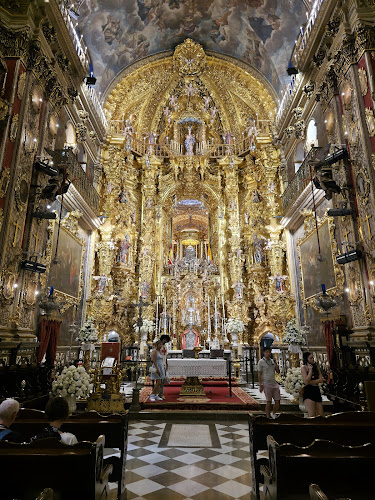
The Basílica de San Juan de Dios in Granada is an 18th-century Baroque masterpiece that continues to dazzle visitors with its ornate details, dramatic interiors, and deeply spiritual atmosphere. Built to honor Saint John of God, the patron saint of the sick and poor, this church reveals as much about Granada’s religious devotion as it does about Spanish artistry during the Baroque period. While its exterior may appear somewhat restrained compared to other religious buildings in the city, stepping inside is a completely transformative experience. Gold, silver, frescoes, and intricate carvings line nearly every surface, leaving little space untouched. It’s a sensory overload in the best possible way.

The church is also significant because it safeguards the relics of Saint John of God himself. Set within a silver urn behind the main altar, the remains of the saint add a very human and emotional layer to the site, making it not just an artistic pilgrimage but also a spiritual one. For many, that balance between opulent design and quiet reverence is what makes the basilica so memorable. Even those who might not consider themselves religious often find themselves pausing in awe, caught by the sheer intensity of the space.

Inside, the soaring dome ceiling is richly decorated with frescoes, lending a sense of movement and divine grandeur. The central nave is lined with side chapels, each uniquely adorned with sculptures, altarpieces, and paintings that showcase the skills of Spanish Baroque masters. The main altar, however, is the undeniable centerpiece. Covered in gold and surrounded by intricate carvings, it feels like both a work of art and a declaration of faith. Behind it, the reliquary of the saint rests in an equally dazzling shrine, combining precious metals and religious symbolism.

What sets the Basílica de San Juan de Dios apart from other churches in Spain is the way every detail seems exaggerated, more lavish, more dramatic. This was deliberate, of course, reflecting the Baroque style’s mission to overwhelm the senses and inspire devotion. From its gilded altarpieces to the elaborate chandeliers hanging above the pews, there’s hardly a corner that doesn’t demand attention. But amid all that grandeur, the serene aura remains—an atmosphere of reflection and care, perfectly in tune with the life of the saint it honors, a man who dedicated everything to hospital work and the care of the marginalized.

The basilica is also surprisingly accessible, with thoughtful entrances that accommodate visitors with mobility challenges. That makes it easier for all travelers, whether arriving to soak in the art or to pray in front of the relics. Of course, like any great historical treasure, not every visitor is left completely speechless. Some find the sheer amount of gilding overwhelming, and others may prefer simpler religious spaces. But overall, the church has a way of drawing visitors in, holding their attention, and leaving them with at least one unforgettable image: perhaps the dome painted with heavenly scenes, or perhaps the shimmering sight of the urn that holds the saint’s remains.

Ultimately, the Basílica de San Juan de Dios is more than just a baroque church in Granada, Spain. It is history, devotion, and art weaved into one—an experience designed to impress deeply on those who walk through its central nave. For travelers, it’s both an aesthetic marvel and a window into the city’s religious heritage, offering a chance to see how faith and creativity collided in one of Spain’s most beautiful sacred spaces.

Key Features

Basílica de San Juan de Dios

More Details

Updated October 1, 2025

The Basílica de San Juan de Dios in Granada is an 18th-century Baroque masterpiece that continues to dazzle visitors with its ornate details, dramatic interiors, and deeply spiritual atmosphere. Built to honor Saint John of God, the patron saint of the sick and poor, this church reveals as much about Granada’s religious devotion as it does about Spanish artistry during the Baroque period. While its exterior may appear somewhat restrained compared to other religious buildings in the city, stepping inside is a completely transformative experience. Gold, silver, frescoes, and intricate carvings line nearly every surface, leaving little space untouched. It’s a sensory overload in the best possible way.

The church is also significant because it safeguards the relics of Saint John of God himself. Set within a silver urn behind the main altar, the remains of the saint add a very human and emotional layer to the site, making it not just an artistic pilgrimage but also a spiritual one. For many, that balance between opulent design and quiet reverence is what makes the basilica so memorable. Even those who might not consider themselves religious often find themselves pausing in awe, caught by the sheer intensity of the space.

Inside, the soaring dome ceiling is richly decorated with frescoes, lending a sense of movement and divine grandeur. The central nave is lined with side chapels, each uniquely adorned with sculptures, altarpieces, and paintings that showcase the skills of Spanish Baroque masters. The main altar, however, is the undeniable centerpiece. Covered in gold and surrounded by intricate carvings, it feels like both a work of art and a declaration of faith. Behind it, the reliquary of the saint rests in an equally dazzling shrine, combining precious metals and religious symbolism.

What sets the Basílica de San Juan de Dios apart from other churches in Spain is the way every detail seems exaggerated, more lavish, more dramatic. This was deliberate, of course, reflecting the Baroque style’s mission to overwhelm the senses and inspire devotion. From its gilded altarpieces to the elaborate chandeliers hanging above the pews, there’s hardly a corner that doesn’t demand attention. But amid all that grandeur, the serene aura remains—an atmosphere of reflection and care, perfectly in tune with the life of the saint it honors, a man who dedicated everything to hospital work and the care of the marginalized.

The basilica is also surprisingly accessible, with thoughtful entrances that accommodate visitors with mobility challenges. That makes it easier for all travelers, whether arriving to soak in the art or to pray in front of the relics. Of course, like any great historical treasure, not every visitor is left completely speechless. Some find the sheer amount of gilding overwhelming, and others may prefer simpler religious spaces. But overall, the church has a way of drawing visitors in, holding their attention, and leaving them with at least one unforgettable image: perhaps the dome painted with heavenly scenes, or perhaps the shimmering sight of the urn that holds the saint’s remains.

Ultimately, the Basílica de San Juan de Dios is more than just a baroque church in Granada, Spain. It is history, devotion, and art weaved into one—an experience designed to impress deeply on those who walk through its central nave. For travelers, it’s both an aesthetic marvel and a window into the city’s religious heritage, offering a chance to see how faith and creativity collided in one of Spain’s most beautiful sacred spaces.

Key Highlights

Basílica de San Juan de Dios

Location

Places to Stay Near Basílica de San Juan de Dios

Find and Book a Tour

Explore More Travel Guides

No reviews found! Be the first to review!

Traveler Reviews for Basílica de San Juan de Dios

There are no reviews yet. Be the first one to write one.

Share Your Experience

Have you visited Basílica de San Juan de Dios? Help other travelers by sharing your review.

Find Accommodations Nearby

Recommended Tours & Activities

Visitor Reviews

There are no reviews yet. Be the first one to write one.

Share Your Experience

Have you visited Basílica de San Juan de Dios? Help other travelers by leaving a review.