
Museo Chileno de Arte Precolombino
About Museo Chileno de Arte Precolombino
History and Significance
If you find yourself in Santiago, Chile, craving to plunge deep into the vibrant and diverse indigenous cultures of the Americas, the Museo Chileno de Arte Precolombino, or the Chilean Museum of Pre-Columbian Art, is an absolute must-visit. Founded in 1981, this extraordinary museum exists because of the passion and vision of Sergio Larraín García-Moreno, an architect and dedicated collector who spent decades acquiring thousands of artifacts from ancient Central and South American civilizations.
The museum is housed in the historic Palacio de la Real Aduana, a neoclassical building dating back to the early 19th century, located centrally, a few steps away from Santiago’s Plaza de Armas. This melding of a colonial architectural gem with indigenous art creates an immediate contrast and dialogue between Chile’s deep historical currents—from native roots to colonial imprints.
The significance of the museum goes far beyond housing artifacts. It’s a cultural sanctuary dedicated solely to pre-Hispanic American art, highlighting civilizations like the Inca, Maya, Aztec, and numerous native groups across the continent. The museum challenges visitors to rethink history by showcasing indigenous sophistication, spirituality, and artistic mastery rather than the Eurocentric narratives that often overshadow these cultures.
Its establishment marked a pioneering movement in South America towards valuing and preserving indigenous heritage through quality museology, setting a benchmark for similar institutions worldwide. This museum doesn’t just display artifacts but celebrates the living, breathing cultures that inspired them.
Main Attractions and Activities
Upon entering the Museo Chileno de Arte Precolombino, you embark on a journey through time and across continents with marvels to explore:
-
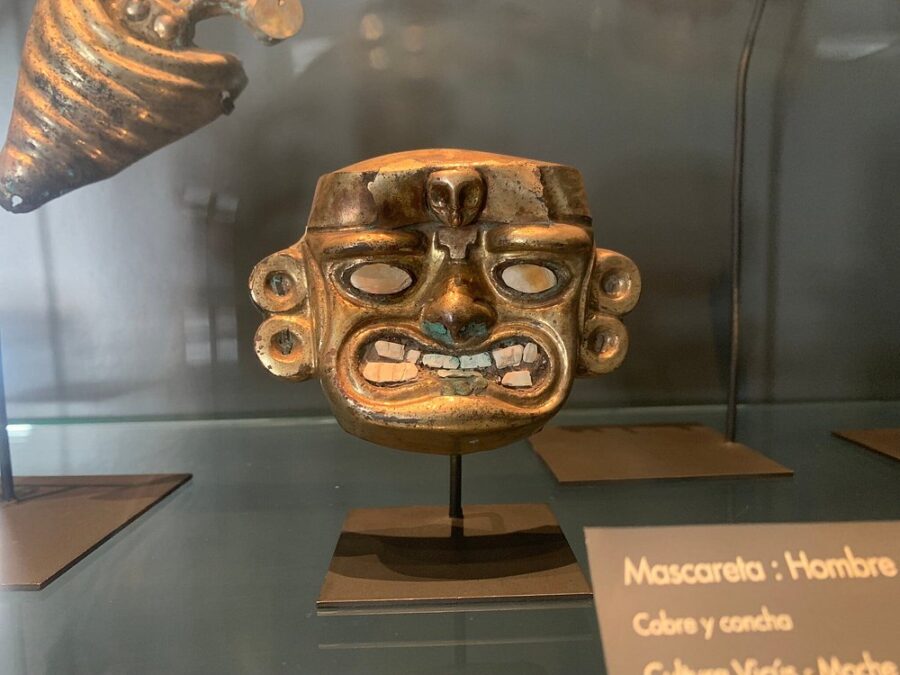
Permanent Collection of Over 3,000 Artifacts: The museum’s extensive collection spans over 10,000 years and includes ceramics, textiles, metalwork, bone carvings, leather goods, and stone sculptures. The sheer diversity offers a rich tapestry of ancient life, beliefs, and aesthetics—highlighting intricate craftsmanship and symbolic depth.
-
The Americas Gallery: This section is beautifully curated to show different cultural zones from North, Central, and South America, offering a glimpse into distinct societies like the Nazca with their famed geoglyphs, the Aztec with ritual masks, and the Mapuche with vibrant textiles.
-
Textiles and Weavings Exhibition: One of the museum’s standout highlights, showcasing intricate weaving techniques and vibrant patterns that reveal indigenous knowledge, social structures, and artistic expression.
-
Ceramics and Pottery: Carefully displayed are serving vessels, burial urns, and decorative ceramics featuring mythological motifs and natural forms, allowing you to appreciate each piece’s dual utility and artistry.
-
Metalwork and Jewelry Hall: Sparkling gold and silver adornments from pre-Columbian societies tell stories of power, worship, and craftsmanship unparalleled in their finesse.
-
Temporary and Special Exhibitions: The museum frequently hosts themed exhibitions spotlighting contemporary indigenous art or specific cultural groups, enriching the permanent display.
-
Cultural Workshops and Educational Programs: Engage in hands-on experiences learning traditional crafts, language basics, or mythology stories, perfect for both adults and children.
-
Museum Shop and Café: Souvenirs featuring indigenous designs and local culinary treats complete the cultural immersion.
Visitor Experience
Stepping into Museo Chileno de Arte Precolombino feels like crossing a vibrant bridge between ancient worlds and modern appreciation. The skilled layout, lighting, and thoughtful presentation invite you to pause, absorb, and wonder.
I recall losing myself for hours, marveling at the delicate texture of a weaving that seemed woven with stories, the metallic glint of a ceremonial mask, and the humbling size of ancient stone sculptures. The atmosphere was quietly reverent—a sanctuary filled with silent testimonies from cultures that flourish even today in spirit.
The interpretive panels avoid dry academic jargon, instead telling engaging stories that bring the objects alive and contextualize their significance socially, spiritually, and artistically.
Families, students, and solo tourists repeatedly praised the museum’s inviting ambiance and immersive exhibits. Many found themselves awed by the recognition of American indigenous civilizations as world-class creators and visionaries.
Tips for Visitors
To make the most of your visit:
-
Spend at least two to three hours or more exploring the permanent and any temporary exhibitions.
-
Take an audio guide or join a guided tour for deeper insight into the cultural nuances behind the artifacts.
-
Wear comfortable shoes and allocate time for breaks at the museum café.
-
Use bilingual signage and museum literature, aiding non-Spanish speakers.
-
Visit during weekdays or off-peak hours to avoid crowds and allow a contemplative pace.
-
Try to catch a temporary exhibition or workshop to broaden your understanding.
-
Combine your visit with nearby cultural sites like Plaza de Armas and the National History Museum for a full day of discovery.
-
Photography is allowed but without flash; bring a camera or smartphone.
Accessibility and Facilities
The museum offers visitor-friendly features:
-
Wheelchair accessible with ramps and elevators covering all floors.
-
Clean modern restrooms and seating areas throughout.
-
Multilingual signage (English and Spanish) helps guide visitors.
-
Friendly staff and volunteer docents available for questions and assistance.
-
Museum shop with thoughtful souvenirs reflecting indigenous designs.
-
Quiet, appropriately lit galleries maintain artifact preservation.
-
Convenient location near Santiago’s city center with easy access by public transport, taxi, and parking facilities nearby.
Unique Features
Several facets make Museo Chileno de Arte Precolombino stand out globally:
-
It is the only museum dedicated exclusively to Pre-Columbian art in Chile and one of the finest in Latin America.
-
The founding collection by Sergio Larraín García-Moreno is unique in that it was assembled with an artist’s eye for aesthetics combined with archaeological rigor.
-
The museum exhibits art as living culture, emphasizing indigenous traditions continuing into the present.
-
It masterfully divides the vast Americas into distinct cultural zones, providing a panoramic view of pre-Hispanic civilization.
-
Its scenario in the historic neoclassical Royal Customs Palace adds a grandeur and historic layer, contrasting yet harmonizing with the indigenous collections.
-
It actively engages communities and schools through education and promotes indigenous pride and awareness.
Overall Impressions
Honestly, the Museo Chileno de Arte Precolombino feels like a treasure trove that opens doors to ancient worlds through art. It’s a lived experience and a sensory delight, expanding horizons far beyond what you might expect from a conventional museum.
Whether you come with scholarly curiosity, artistic fascination, or simply a wish to connect with the rich cultural roots of the Americas, the museum wraps each visitor in stories of resilience, creativity, and profound spirituality.
The blend of breathtaking artifacts, elegant setting, and contemporary cultural dialogue invites you not just to look back but to appreciate the ongoing influence of indigenous American cultures today.
Pros and Cons
| Pros | Cons |
|---|---|
| One of the finest collections of Pre-Columbian art in Latin America | Limited English language resources in some exhibit areas |
| Housed in a historic neoclassical palace with elegant architecture | Temporary exhibitions vary, sometimes requiring extra tickets |
| Beautifully curated galleries focusing on multiple cultures | Peak times can be crowded, especially on weekends and holidays |
| Educational workshops and engaging public programs | The museum café is limited in variety |
| Central location near other major Santiago attractions | Some areas can feel dense for visitors seeking quiet reflection |
| Emphasis on indigenous art as living cultural heritage | Photography restrictions may need careful observation |
Key Features
- History and Significance
- Main Attractions and Activities
- Visitor Experience
- Tips for Visitors
- Accessibility and Facilities
- Unique Features
More Details
Updated August 26, 2025
Table of Contents
- History and Significance
- Main Attractions and Activities
- Visitor Experience
- Tips for Visitors
- Accessibility and Facilities
- Unique Features
- Overall Impressions
- Pros and Cons
- Key Highlights
- Location
- Places to Stay Near Museo Chileno de Arte Precolombino
- Find and Book a Tour
- Explore More Travel Guides
- Nearby Places You Might Like
- Traveler Reviews for Museo Chileno de Arte Precolombino
- Share Your Experience
History and Significance
If you find yourself in Santiago, Chile, craving to plunge deep into the vibrant and diverse indigenous cultures of the Americas, the Museo Chileno de Arte Precolombino, or the Chilean Museum of Pre-Columbian Art, is an absolute must-visit. Founded in 1981, this extraordinary museum exists because of the passion and vision of Sergio Larraín García-Moreno, an architect and dedicated collector who spent decades acquiring thousands of artifacts from ancient Central and South American civilizations.
The museum is housed in the historic Palacio de la Real Aduana, a neoclassical building dating back to the early 19th century, located centrally, a few steps away from Santiago’s Plaza de Armas. This melding of a colonial architectural gem with indigenous art creates an immediate contrast and dialogue between Chile’s deep historical currents—from native roots to colonial imprints.
The significance of the museum goes far beyond housing artifacts. It’s a cultural sanctuary dedicated solely to pre-Hispanic American art, highlighting civilizations like the Inca, Maya, Aztec, and numerous native groups across the continent. The museum challenges visitors to rethink history by showcasing indigenous sophistication, spirituality, and artistic mastery rather than the Eurocentric narratives that often overshadow these cultures.
Its establishment marked a pioneering movement in South America towards valuing and preserving indigenous heritage through quality museology, setting a benchmark for similar institutions worldwide. This museum doesn’t just display artifacts but celebrates the living, breathing cultures that inspired them.
Main Attractions and Activities
Upon entering the Museo Chileno de Arte Precolombino, you embark on a journey through time and across continents with marvels to explore:
-
Permanent Collection of Over 3,000 Artifacts: The museum’s extensive collection spans over 10,000 years and includes ceramics, textiles, metalwork, bone carvings, leather goods, and stone sculptures. The sheer diversity offers a rich tapestry of ancient life, beliefs, and aesthetics—highlighting intricate craftsmanship and symbolic depth.
-
The Americas Gallery: This section is beautifully curated to show different cultural zones from North, Central, and South America, offering a glimpse into distinct societies like the Nazca with their famed geoglyphs, the Aztec with ritual masks, and the Mapuche with vibrant textiles.
-
Textiles and Weavings Exhibition: One of the museum’s standout highlights, showcasing intricate weaving techniques and vibrant patterns that reveal indigenous knowledge, social structures, and artistic expression.
-
Ceramics and Pottery: Carefully displayed are serving vessels, burial urns, and decorative ceramics featuring mythological motifs and natural forms, allowing you to appreciate each piece’s dual utility and artistry.
-
Metalwork and Jewelry Hall: Sparkling gold and silver adornments from pre-Columbian societies tell stories of power, worship, and craftsmanship unparalleled in their finesse.
-
Temporary and Special Exhibitions: The museum frequently hosts themed exhibitions spotlighting contemporary indigenous art or specific cultural groups, enriching the permanent display.
-
Cultural Workshops and Educational Programs: Engage in hands-on experiences learning traditional crafts, language basics, or mythology stories, perfect for both adults and children.
-
Museum Shop and Café: Souvenirs featuring indigenous designs and local culinary treats complete the cultural immersion.
Visitor Experience
Stepping into Museo Chileno de Arte Precolombino feels like crossing a vibrant bridge between ancient worlds and modern appreciation. The skilled layout, lighting, and thoughtful presentation invite you to pause, absorb, and wonder.
I recall losing myself for hours, marveling at the delicate texture of a weaving that seemed woven with stories, the metallic glint of a ceremonial mask, and the humbling size of ancient stone sculptures. The atmosphere was quietly reverent—a sanctuary filled with silent testimonies from cultures that flourish even today in spirit.
The interpretive panels avoid dry academic jargon, instead telling engaging stories that bring the objects alive and contextualize their significance socially, spiritually, and artistically.
Families, students, and solo tourists repeatedly praised the museum’s inviting ambiance and immersive exhibits. Many found themselves awed by the recognition of American indigenous civilizations as world-class creators and visionaries.
Tips for Visitors
To make the most of your visit:
-
Spend at least two to three hours or more exploring the permanent and any temporary exhibitions.
-
Take an audio guide or join a guided tour for deeper insight into the cultural nuances behind the artifacts.
-
Wear comfortable shoes and allocate time for breaks at the museum café.
-
Use bilingual signage and museum literature, aiding non-Spanish speakers.
-
Visit during weekdays or off-peak hours to avoid crowds and allow a contemplative pace.
-
Try to catch a temporary exhibition or workshop to broaden your understanding.
-
Combine your visit with nearby cultural sites like Plaza de Armas and the National History Museum for a full day of discovery.
-
Photography is allowed but without flash; bring a camera or smartphone.
Accessibility and Facilities
The museum offers visitor-friendly features:
-
Wheelchair accessible with ramps and elevators covering all floors.
-
Clean modern restrooms and seating areas throughout.
-
Multilingual signage (English and Spanish) helps guide visitors.
-
Friendly staff and volunteer docents available for questions and assistance.
-
Museum shop with thoughtful souvenirs reflecting indigenous designs.
-
Quiet, appropriately lit galleries maintain artifact preservation.
-
Convenient location near Santiago’s city center with easy access by public transport, taxi, and parking facilities nearby.
Unique Features
Several facets make Museo Chileno de Arte Precolombino stand out globally:
-
It is the only museum dedicated exclusively to Pre-Columbian art in Chile and one of the finest in Latin America.
-
The founding collection by Sergio Larraín García-Moreno is unique in that it was assembled with an artist’s eye for aesthetics combined with archaeological rigor.
-
The museum exhibits art as living culture, emphasizing indigenous traditions continuing into the present.
-
It masterfully divides the vast Americas into distinct cultural zones, providing a panoramic view of pre-Hispanic civilization.
-
Its scenario in the historic neoclassical Royal Customs Palace adds a grandeur and historic layer, contrasting yet harmonizing with the indigenous collections.
-
It actively engages communities and schools through education and promotes indigenous pride and awareness.
Overall Impressions
Honestly, the Museo Chileno de Arte Precolombino feels like a treasure trove that opens doors to ancient worlds through art. It’s a lived experience and a sensory delight, expanding horizons far beyond what you might expect from a conventional museum.
Whether you come with scholarly curiosity, artistic fascination, or simply a wish to connect with the rich cultural roots of the Americas, the museum wraps each visitor in stories of resilience, creativity, and profound spirituality.
The blend of breathtaking artifacts, elegant setting, and contemporary cultural dialogue invites you not just to look back but to appreciate the ongoing influence of indigenous American cultures today.
Pros and Cons
| Pros | Cons |
|---|---|
| One of the finest collections of Pre-Columbian art in Latin America | Limited English language resources in some exhibit areas |
| Housed in a historic neoclassical palace with elegant architecture | Temporary exhibitions vary, sometimes requiring extra tickets |
| Beautifully curated galleries focusing on multiple cultures | Peak times can be crowded, especially on weekends and holidays |
| Educational workshops and engaging public programs | The museum café is limited in variety |
| Central location near other major Santiago attractions | Some areas can feel dense for visitors seeking quiet reflection |
| Emphasis on indigenous art as living cultural heritage | Photography restrictions may need careful observation |
Key Highlights
- History and Significance
- Main Attractions and Activities
- Visitor Experience
- Tips for Visitors
- Accessibility and Facilities
- Unique Features
Location
Places to Stay Near Museo Chileno de Arte Precolombino
Find and Book a Tour
Explore More Travel Guides
No reviews found! Be the first to review!
Traveler Reviews for Museo Chileno de Arte Precolombino
There are no reviews yet. Be the first one to write one.
Have you visited Museo Chileno de Arte Precolombino? Help other travelers by sharing your review.
You Might Also Like
Museum of Memory and Human Rights
Museum of Memory & Human Rights
Citizenship Park
Find Accommodations Nearby
Recommended Tours & Activities
Visitor Reviews
There are no reviews yet. Be the first one to write one.
Share Your Experience
Have you visited Museo Chileno de Arte Precolombino? Help other travelers by leaving a review.