
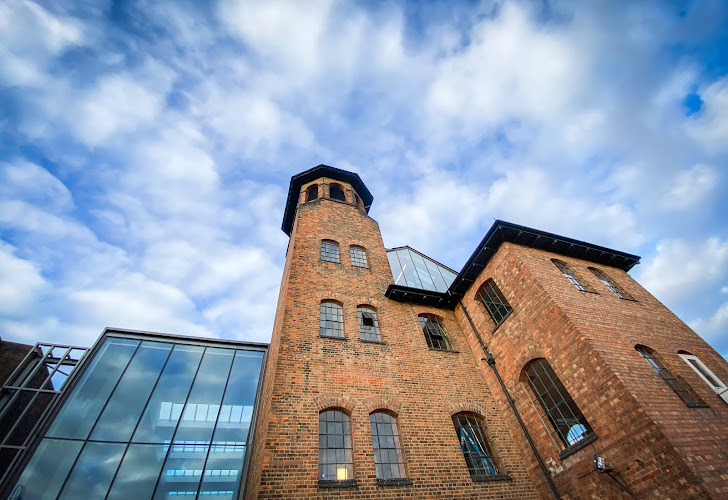
The Museum of Making
About The Museum of Making
Description
The Museum of Making at the former Derby Silk Mill reimagines three centuries of making in Derby as a live, breathing story rather than a static display. It sits where manufacturing actually happened, and that fact — that these are the walls where cloth was spun and machines clattered — gives the place a weight that modern galleries often try and fail to copy. The building is both heritage site and contemporary creative space: an old mill shell that holds new exhibits, interactive workspaces, a cafe and restaurant area, and rooms for events and workshops. Visitors who come expecting polished pedestals will find something more human: messy plans, prototypes, voices of makers, and a welcome to join in.
From an industrial-history point of view the site is quietly extraordinary. It is linked to the story of the Derwent Valley mills and early factory innovations, and the narrative here is one of invention — of water power, of silk production, of the early rise of manufacturing. The museum frames that history with accessible design: large-scale objects arranged with clear signage, touch-friendly displays, and thought-through sightlines so people can see the layered relationships between raw material, machine, and finished product. There are galleries dedicated to the old silk trade, to local engineering achievements, to design and textiles, and to the often overlooked small workshops where real making happens.
But the Museum of Making does more than look back. It sets out to inspire contemporary creativity. Exhibits are curated not only to inform but to start conversations about how things are made today and what will be made tomorrow. One gallery features live demonstrations where technicians and artists show processes in real time: watch looms in motion one moment, and a designer using digital fabrication tools the next. The juxtaposition prompts a simple question: what does making mean now? And that question propels the museum into unexpected territory — pop-up residencies, community-led projects, and interactive displays that invite visitors to try things out. Many visitors have said they left feeling quietly charged to begin a project, which is exactly the point.
For families and curious travelers, the layout is forgiving and playful. Children are encouraged to touch certain exhibits, follow story trails, and participate in hands-on mini-projects. There is a clear family zone with child-friendly activities, and the cafe/restaurateur spaces are designed to feel welcoming to noisy, hungry groups. Accessibility has been thought through without being shouted about: wheelchair-accessible entrances, parking, and restrooms are in place, and the circulation around most galleries is generous. A visitor with mobility needs will find there are ramps and lifts where necessary, and staff are reported to be helpful and patient — small things, but they change the day.
Practical amenities inside the building lean toward comfort: an on-site restaurant and cafe where local suppliers frequently appear on the menu, clean restrooms, and places to sit and digest both food and ideas. The museum doubles as an event venue, hosting talks, live music evenings, maker markets, and celebrations of local craft. That makes it a useful stop both for those planning a half-day of sightseeing in Derby and for locals looking for a new place to meet. It also means that atmospheres vary: a quiet Tuesday morning will feel very different from a weekend workshop or an evening event with a DJ and a crowd. One short anecdote: during a winter festival the main hall was turned into a giant tinkerers’ workshop; there were improvised lamps, paper cranes, and laughter spilling down the staircases — exactly the kind of scene that makes the museum feel like a living organism rather than a museum in the old sense.
The curatorial approach favours storytelling over mere object display. Instead of rows of labels, visitors encounter short narratives, first-person testimonies from makers, and layered timelines that make it easy to connect the local history with broader industrial developments in England. And because the silk mill story is tied into global textile trade and early mechanisation, there is enough context to make the history resonate beyond its immediate locality. Visitors with a keen interest in industrial heritage or textiles will be pleased by the depth of the content, while casual visitors can skim and still leave with memorable highlights: a restored loom, a model of an early waterwheel, a portfolio of contemporary designers who draw inspiration from the mill’s legacy.
Design lovers will appreciate the quality of the exhibitions. The museum uses a mix of traditional archival materials — old photographs, ledger books, pattern samples — alongside immersive multimedia installations and contemporary design pieces. There are excellent opportunities to see how design intersects with manufacturing: prototypes, CAD-to-fabric examples, and experiments blending old techniques with digital tools. For photographers, the light-drenched atrium spaces and the raw textures of brick and iron offer great compositions, though visitors should be mindful of other people in hands-on zones.
There is also an educational backbone. Workshops and public programmes are scheduled regularly, and they range from short drop-in activities to longer, ticketed courses with professional makers. The educational team works with schools and community groups, and there have been a number of residency projects that place local makers in the museum for months at a time. Those programmes mean the Museum of Making behaves as a cultural hub, not simply as a place to observe. Community projects sometimes produce surprising outcomes: a collaboration between local textile artists and engineering students resulted in a weatherproof public bench made from reclaimed materials — an object that now sits near the mill and quietly tells its own new story.
One should note that public response is mostly enthusiastic. Many visitors praise the freshness of the concept and the friendliness of the staff. At the same time, a few visitors mention that certain galleries get busy during peak times, and some expected more depth in very specialised topics like the technicalities of early silk machinery. That is fair — the museum aims for broad appeal, and in balancing education, interactivity, and public programming it may not satisfy every specialist’s appetite in one visit. But the museum encourages repeat visits, and many people deliberately come back for rotating exhibitions and special events, which helps spread that depth over time rather than trying to cram everything into a single static show.
For travelers planning a visit, the Museum of Making fits neatly into a day exploring Derby and the Derwent Valley. It pairs nicely with walking the riverside, popping into nearby galleries, or visiting independent shops. It is also a good weatherproof option on rainy days when outdoor strolling is less attractive. The onsite restaurant and cafe make it easy to plan a flexible itinerary: stay for an hour with coffee and a quick circuit, or block out several hours for exhibitions, a long lunch, and a hands-on workshop.
In short, the museum stands out because it refuses to be merely preservative. It celebrates Derby’s silk-mill past and industrial heritage while actively cultivating a culture of making today. The space invites conversation, encourages experimentation, and, perhaps most importantly, treats visitors as potential participants. If a traveler is looking for a place that combines history, craft, accessible learning, and a few surprises along the way, this museum delivers. Expect thoughtful exhibitions, approachable staff, a lively calendar of events, and an atmosphere that nudges curiosity rather than lectures it. For those who like museums that keep changing, that nudge toward action — whether to design, build, or simply think differently — the Museum of Making is well worth the stop.
Key Features
More Details
Updated August 29, 2025
Table of Contents
Description
The Museum of Making at the former Derby Silk Mill reimagines three centuries of making in Derby as a live, breathing story rather than a static display. It sits where manufacturing actually happened, and that fact — that these are the walls where cloth was spun and machines clattered — gives the place a weight that modern galleries often try and fail to copy. The building is both heritage site and contemporary creative space: an old mill shell that holds new exhibits, interactive workspaces, a cafe and restaurant area, and rooms for events and workshops. Visitors who come expecting polished pedestals will find something more human: messy plans, prototypes, voices of makers, and a welcome to join in.
From an industrial-history point of view the site is quietly extraordinary. It is linked to the story of the Derwent Valley mills and early factory innovations, and the narrative here is one of invention — of water power, of silk production, of the early rise of manufacturing. The museum frames that history with accessible design: large-scale objects arranged with clear signage, touch-friendly displays, and thought-through sightlines so people can see the layered relationships between raw material, machine, and finished product. There are galleries dedicated to the old silk trade, to local engineering achievements, to design and textiles, and to the often overlooked small workshops where real making happens.
But the Museum of Making does more than look back. It sets out to inspire contemporary creativity. Exhibits are curated not only to inform but to start conversations about how things are made today and what will be made tomorrow. One gallery features live demonstrations where technicians and artists show processes in real time: watch looms in motion one moment, and a designer using digital fabrication tools the next. The juxtaposition prompts a simple question: what does making mean now? And that question propels the museum into unexpected territory — pop-up residencies, community-led projects, and interactive displays that invite visitors to try things out. Many visitors have said they left feeling quietly charged to begin a project, which is exactly the point.
For families and curious travelers, the layout is forgiving and playful. Children are encouraged to touch certain exhibits, follow story trails, and participate in hands-on mini-projects. There is a clear family zone with child-friendly activities, and the cafe/restaurateur spaces are designed to feel welcoming to noisy, hungry groups. Accessibility has been thought through without being shouted about: wheelchair-accessible entrances, parking, and restrooms are in place, and the circulation around most galleries is generous. A visitor with mobility needs will find there are ramps and lifts where necessary, and staff are reported to be helpful and patient — small things, but they change the day.
Practical amenities inside the building lean toward comfort: an on-site restaurant and cafe where local suppliers frequently appear on the menu, clean restrooms, and places to sit and digest both food and ideas. The museum doubles as an event venue, hosting talks, live music evenings, maker markets, and celebrations of local craft. That makes it a useful stop both for those planning a half-day of sightseeing in Derby and for locals looking for a new place to meet. It also means that atmospheres vary: a quiet Tuesday morning will feel very different from a weekend workshop or an evening event with a DJ and a crowd. One short anecdote: during a winter festival the main hall was turned into a giant tinkerers’ workshop; there were improvised lamps, paper cranes, and laughter spilling down the staircases — exactly the kind of scene that makes the museum feel like a living organism rather than a museum in the old sense.
The curatorial approach favours storytelling over mere object display. Instead of rows of labels, visitors encounter short narratives, first-person testimonies from makers, and layered timelines that make it easy to connect the local history with broader industrial developments in England. And because the silk mill story is tied into global textile trade and early mechanisation, there is enough context to make the history resonate beyond its immediate locality. Visitors with a keen interest in industrial heritage or textiles will be pleased by the depth of the content, while casual visitors can skim and still leave with memorable highlights: a restored loom, a model of an early waterwheel, a portfolio of contemporary designers who draw inspiration from the mill’s legacy.
Design lovers will appreciate the quality of the exhibitions. The museum uses a mix of traditional archival materials — old photographs, ledger books, pattern samples — alongside immersive multimedia installations and contemporary design pieces. There are excellent opportunities to see how design intersects with manufacturing: prototypes, CAD-to-fabric examples, and experiments blending old techniques with digital tools. For photographers, the light-drenched atrium spaces and the raw textures of brick and iron offer great compositions, though visitors should be mindful of other people in hands-on zones.
There is also an educational backbone. Workshops and public programmes are scheduled regularly, and they range from short drop-in activities to longer, ticketed courses with professional makers. The educational team works with schools and community groups, and there have been a number of residency projects that place local makers in the museum for months at a time. Those programmes mean the Museum of Making behaves as a cultural hub, not simply as a place to observe. Community projects sometimes produce surprising outcomes: a collaboration between local textile artists and engineering students resulted in a weatherproof public bench made from reclaimed materials — an object that now sits near the mill and quietly tells its own new story.
One should note that public response is mostly enthusiastic. Many visitors praise the freshness of the concept and the friendliness of the staff. At the same time, a few visitors mention that certain galleries get busy during peak times, and some expected more depth in very specialised topics like the technicalities of early silk machinery. That is fair — the museum aims for broad appeal, and in balancing education, interactivity, and public programming it may not satisfy every specialist’s appetite in one visit. But the museum encourages repeat visits, and many people deliberately come back for rotating exhibitions and special events, which helps spread that depth over time rather than trying to cram everything into a single static show.
For travelers planning a visit, the Museum of Making fits neatly into a day exploring Derby and the Derwent Valley. It pairs nicely with walking the riverside, popping into nearby galleries, or visiting independent shops. It is also a good weatherproof option on rainy days when outdoor strolling is less attractive. The onsite restaurant and cafe make it easy to plan a flexible itinerary: stay for an hour with coffee and a quick circuit, or block out several hours for exhibitions, a long lunch, and a hands-on workshop.
In short, the museum stands out because it refuses to be merely preservative. It celebrates Derby’s silk-mill past and industrial heritage while actively cultivating a culture of making today. The space invites conversation, encourages experimentation, and, perhaps most importantly, treats visitors as potential participants. If a traveler is looking for a place that combines history, craft, accessible learning, and a few surprises along the way, this museum delivers. Expect thoughtful exhibitions, approachable staff, a lively calendar of events, and an atmosphere that nudges curiosity rather than lectures it. For those who like museums that keep changing, that nudge toward action — whether to design, build, or simply think differently — the Museum of Making is well worth the stop.
Key Highlights
The Museum of Making
Location
Places to Stay Near The Museum of Making
Find and Book a Tour
Explore More Travel Guides
No reviews found! Be the first to review!
Traveler Reviews for The Museum of Making
There are no reviews yet. Be the first one to write one.
Have you visited The Museum of Making? Help other travelers by sharing your review.
You Might Also Like
Osmaston Park Rd
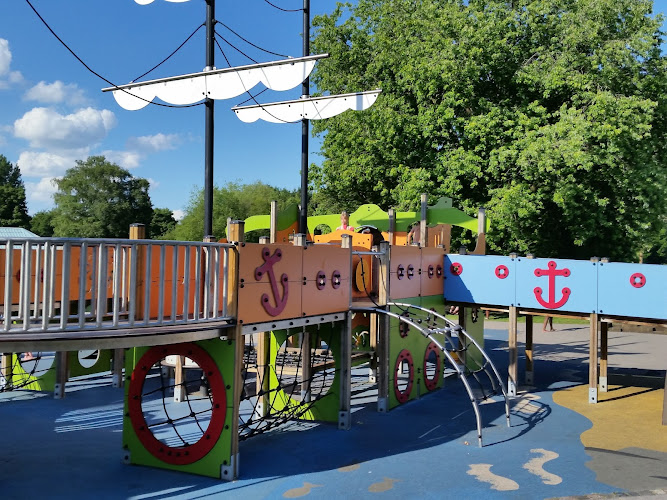
Markeaton Park
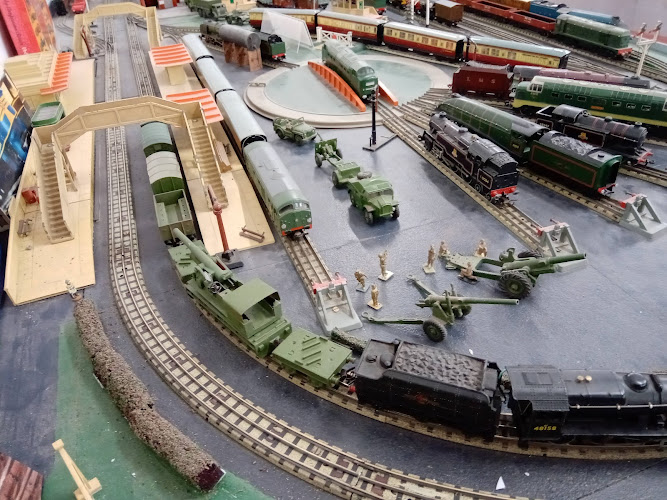
Famous Trains
Find Accommodations Nearby
Recommended Tours & Activities
Visitor Reviews
There are no reviews yet. Be the first one to write one.
Share Your Experience
Have you visited The Museum of Making? Help other travelers by leaving a review.