
Chula Vista Heritage Museum
About Chula Vista Heritage Museum
Description
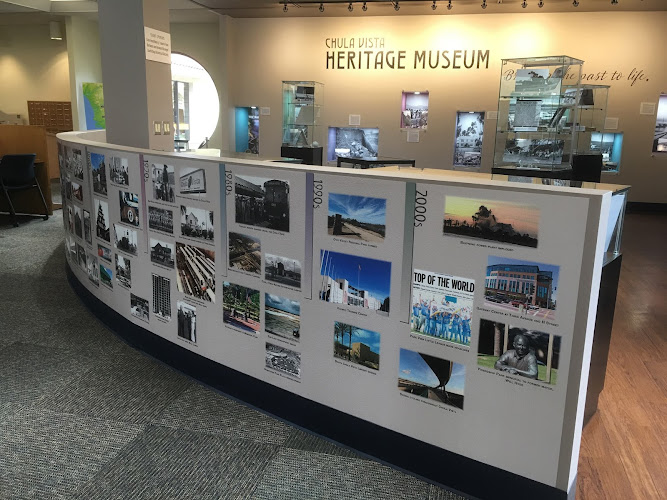
The Chula Vista Heritage Museum sits inside the Chula Vista Public Library and operates as a quietly proud steward of local memory. Run by a non-profit team that includes the South Bay Historical Society, the museum collects, conserves and shares artifacts, photographs, printed materials and oral histories that chart the growth of Chula Vista and the surrounding South Bay area of San Diego County. Its mission is straightforward: preserve the heritage of the local community and make that history accessible to anyone who walks through the library doors.
Visitors to the exhibit will find lovingly arranged displays rather than blockbuster installations. That matters. This is the kind of place where a weathered ledger, a sepia family portrait or tape-recorded reminiscences can feel unexpectedly powerful — because they tell real neighborhood stories. The tone is intimate and local, more oral-history room than glossy gallery. People who care about how cities form their identities will appreciate that the museum focuses on lived experience: schools and churches, early industries, cross-border connections with Baja California, and everyday life in the South Bay region.
Admission is free during library hours, which makes the museum an easy stop for travelers who want a grounded glimpse of Chula Vista history without the fuss of ticket lines. The exhibit complements the library setting; research materials and staff support are on hand for anyone who wants to dive deeper. That combination of public library resources and historical society stewardship is relatively rare — it turns a short visit into something more useful if one wants to research family roots, local schools, or neighborhood development over the decades.
Accessibility is a practical strength here. The entrance, parking, and restrooms accommodate wheelchairs, and the layout keeps the flow simple and navigable for older visitors or families with strollers. There are no self-guided audio tours with bells and whistles — but the friendly volunteers and staff are generous with context, pointing out items that often surprise first-time viewers. For travelers who usually race through tourist sights, the museum tempts a more leisurely pace: linger over an exhibit label and a small world opens up.
While the Chula Vista Heritage Museum does not present rotating blockbuster shows, it offers a steady, authentic archive of the city and the wider South Bay region. It highlights the interwoven cultural threads of the area, reflecting how Chula Vista has been shaped by migration, agriculture, military influence, and trade across the border. The South Bay Historical Society brings oral histories into the mix, preserving voices that might otherwise be lost — a feature that gives the museum a human pulse. Hearing someone recount childhood summers in the Otay Valley or the changes to Third Avenue can be unexpectedly moving. One volunteer recalls a visitor who found a photograph of an ancestor and spent a half hour talking to staff, suddenly connecting a story that had been only family legend until then. That sort of moment is why the place exists.
Travelers who appreciate small museums will find this one rewarding. It offers insights into San Diego County beyond the main coastal attractions, revealing how suburbs, industry and community institutions shaped modern life here. The exhibits are organized to be approachable: thematic panels on early settlement and development, artifacts from local schools and businesses, photographic timelines, and special sections dedicated to cross-border relations with Baja California. That regional perspective is a plus for curious visitors who want more context than the typical postcard-perfect view of Southern California.
The museum’s focus on local preservation also means it is a resource for genealogists and students. Research materials and archived prints are available by request, and the staff often assists with pointers for tracing records. But it’s not all dusty boxes: the exhibit is curated with care, using clear labels and a small number of interpretive displays to help someone unfamiliar with Chula Vista quickly understand major historical themes.
One practical note for travelers: because the museum sits inside a working public library, the atmosphere is calm and studious. Expect quiet conversation rather than guided group tours. That suits many visitors; it’s pleasant to wander and make discoveries at one’s own pace. If a traveler wants a bit more of a guided experience, contacting the historical society in advance can sometimes arrange a talk or special viewing — volunteers sometimes lead small group chats about particular artifacts or local stories, especially for school groups or history clubs.
Finally, the Chula Vista Heritage Museum quietly emphasizes preservation as civic practice. Exhibits are framed not just as relics but as materials that connect to ongoing community identity and memory. For a traveler who likes to come away from a visit with stories to tell, this museum provides those stories — and often, the names and faces behind them. It’s modest in scale but rich in local character, and it rewards curiosity with real, tangible pieces of Chula Vista and South Bay history.
Key Features
More Details
Updated August 29, 2025
Table of Contents
Description
The Chula Vista Heritage Museum sits inside the Chula Vista Public Library and operates as a quietly proud steward of local memory. Run by a non-profit team that includes the South Bay Historical Society, the museum collects, conserves and shares artifacts, photographs, printed materials and oral histories that chart the growth of Chula Vista and the surrounding South Bay area of San Diego County. Its mission is straightforward: preserve the heritage of the local community and make that history accessible to anyone who walks through the library doors.
Visitors to the exhibit will find lovingly arranged displays rather than blockbuster installations. That matters. This is the kind of place where a weathered ledger, a sepia family portrait or tape-recorded reminiscences can feel unexpectedly powerful — because they tell real neighborhood stories. The tone is intimate and local, more oral-history room than glossy gallery. People who care about how cities form their identities will appreciate that the museum focuses on lived experience: schools and churches, early industries, cross-border connections with Baja California, and everyday life in the South Bay region.
Admission is free during library hours, which makes the museum an easy stop for travelers who want a grounded glimpse of Chula Vista history without the fuss of ticket lines. The exhibit complements the library setting; research materials and staff support are on hand for anyone who wants to dive deeper. That combination of public library resources and historical society stewardship is relatively rare — it turns a short visit into something more useful if one wants to research family roots, local schools, or neighborhood development over the decades.
Accessibility is a practical strength here. The entrance, parking, and restrooms accommodate wheelchairs, and the layout keeps the flow simple and navigable for older visitors or families with strollers. There are no self-guided audio tours with bells and whistles — but the friendly volunteers and staff are generous with context, pointing out items that often surprise first-time viewers. For travelers who usually race through tourist sights, the museum tempts a more leisurely pace: linger over an exhibit label and a small world opens up.
While the Chula Vista Heritage Museum does not present rotating blockbuster shows, it offers a steady, authentic archive of the city and the wider South Bay region. It highlights the interwoven cultural threads of the area, reflecting how Chula Vista has been shaped by migration, agriculture, military influence, and trade across the border. The South Bay Historical Society brings oral histories into the mix, preserving voices that might otherwise be lost — a feature that gives the museum a human pulse. Hearing someone recount childhood summers in the Otay Valley or the changes to Third Avenue can be unexpectedly moving. One volunteer recalls a visitor who found a photograph of an ancestor and spent a half hour talking to staff, suddenly connecting a story that had been only family legend until then. That sort of moment is why the place exists.
Travelers who appreciate small museums will find this one rewarding. It offers insights into San Diego County beyond the main coastal attractions, revealing how suburbs, industry and community institutions shaped modern life here. The exhibits are organized to be approachable: thematic panels on early settlement and development, artifacts from local schools and businesses, photographic timelines, and special sections dedicated to cross-border relations with Baja California. That regional perspective is a plus for curious visitors who want more context than the typical postcard-perfect view of Southern California.
The museum’s focus on local preservation also means it is a resource for genealogists and students. Research materials and archived prints are available by request, and the staff often assists with pointers for tracing records. But it’s not all dusty boxes: the exhibit is curated with care, using clear labels and a small number of interpretive displays to help someone unfamiliar with Chula Vista quickly understand major historical themes.
One practical note for travelers: because the museum sits inside a working public library, the atmosphere is calm and studious. Expect quiet conversation rather than guided group tours. That suits many visitors; it’s pleasant to wander and make discoveries at one’s own pace. If a traveler wants a bit more of a guided experience, contacting the historical society in advance can sometimes arrange a talk or special viewing — volunteers sometimes lead small group chats about particular artifacts or local stories, especially for school groups or history clubs.
Finally, the Chula Vista Heritage Museum quietly emphasizes preservation as civic practice. Exhibits are framed not just as relics but as materials that connect to ongoing community identity and memory. For a traveler who likes to come away from a visit with stories to tell, this museum provides those stories — and often, the names and faces behind them. It’s modest in scale but rich in local character, and it rewards curiosity with real, tangible pieces of Chula Vista and South Bay history.
Key Highlights
Chula Vista Heritage Museum
Location
Places to Stay Near Chula Vista Heritage Museum
Find and Book a Tour
Explore More Travel Guides
No reviews found! Be the first to review!
Traveler Reviews for Chula Vista Heritage Museum
There are no reviews yet. Be the first one to write one.
Have you visited Chula Vista Heritage Museum? Help other travelers by sharing your review.
You Might Also Like

Friendship Park
Los Ninos Park

Chula Vista Bayside Park
Find Accommodations Nearby
Recommended Tours & Activities
Visitor Reviews
There are no reviews yet. Be the first one to write one.
Share Your Experience
Have you visited Chula Vista Heritage Museum? Help other travelers by leaving a review.