
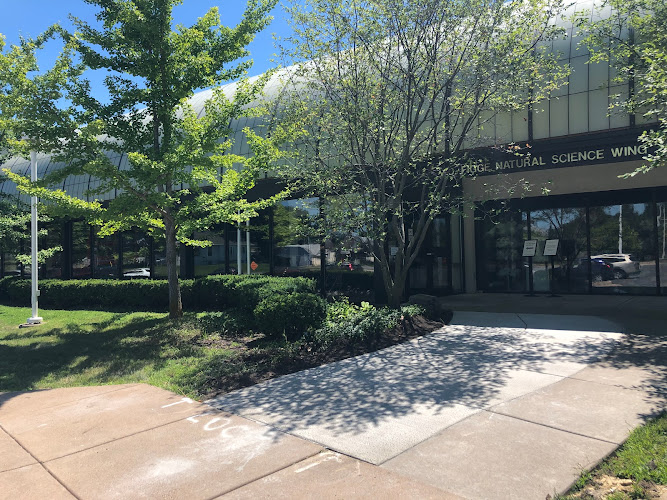
Putnam Museum and Science Center
About Putnam Museum and Science Center
Description
The Putnam Museum and Science Center stands in Davenport as a long-established educational landmark where history and hands-on science meet in a way that keeps people—kids especially—leaning forward. It is at once a history museum and a science center, hosting regional natural history displays, rotating exhibits that bring big ideas into small-town Midwestern life, and a giant screen theater that screens immersive films. Visitors who come expecting a dusty cabinet of curiosities often leave surprised: the museum makes stories of the Mississippi River region, ancient cultures, and scientific discovery feel immediate and, yes, a little bit personal.
At the heart of the Putnam experience are a handful of core strengths that travelers notice right away. The World Culture Gallery offers artifacts and storytelling that put local stories into a broader global context; paleontology-leaning displays and natural science exhibits connect the Quad Cities to deep time and the land around it; and the science center side invites tactile exploration—pushing buttons, spinning wheels, and trying out experiments that actually teach by doing. The giant screen theater is another draw. Not a movie multiplex, no—this is the kind of screen that makes a planet feel like it’s filling the room. Films and live presentations here often sell out on weekends and school breaks, so it’s worth planning ahead.
One practical thing travelers appreciate: the Putnam places accessibility near the top of its list. There are wheelchair-accessible entrances and parking, accessible restrooms, and even wheelchair rental available on site. That kind of on-the-ground thoughtfulness means families with strollers, older adults, and visitors with mobility needs can move through the exhibits with fewer hassles than at some older museums. Also, parking is free—an underrated perk when driving between attractions in the Quad Cities.
It helps to think of the Putnam as a layered place. There are the permanent galleries—those steady anchors that highlight regional natural history, archaeology, and culture—and then there are short-run exhibits that rotate through. These temporary shows introduce fresh topics, from cutting-edge science themes to traveling cultural exhibits. And the museum couples these visual exhibits with educational programming: public science demonstrations, workshops for kids, guided tours, and special events that bring experts and teachers to the floor. In short, it operates less like a static repository and more like an active learning hub.
Travelers who are museum shoppers—people who visit several museums on a trip—will notice the Putnam’s balance between local emphasis and broad appeal. It doesn’t try to be vast or overwhelming. Instead it leans into well-executed storytelling: a regional exhibit can open a surprising door to Egyptian artifacts, for instance, or to a show about space and technology. That tendency to surprise is one of the museum’s quiet charms. And yes, a few visitors have found some galleries compact compared to larger metropolitan institutions, but many say the tight focus is actually refreshing. There’s less fatigue walking from one mammoth hall to another; instead the Putnam invites lingering and curiosity.
For families, the museum is reliably kid-friendly. Interactive stations are labeled for different age ranges, hands-on tables encourage messy curiosity, and staff or volunteers can often be found leading short demos. Field trips here are common, and the museum’s public programs are tuned to different grade levels and interest groups. It’s a good place to let young learners test hypotheses with their hands, not just their eyes. Expect some noise and enthusiasm—this is a place where experiments are encouraged and questions are welcomed.
On the visitor services front, the Putnam covers a lot of bases. There’s an onsite gift shop for those small souvenirs and educational mementos, restroom facilities throughout the building, and ticketed admission that funds ongoing exhibits and programming. The museum offers tours and accommodates group visits, and there are discounts available to certain groups, including active military—something travelers who keep an eye on savings will appreciate. Staff are generally helpful and geared toward making visits smoother, from advising on exhibit logistics to pointing out timed theater showings.
There are also subtle cultural touches that make the Putnam stand out among regional museums. It keeps a curatorial rhythm that honors local stories—river trade, indigenous histories, and Quad Cities industry—while inviting perspectives from the larger world. This can make a visit unexpectedly rich: a single afternoon might include a hands-on science experiment, a display of artifacts tracing trade routes or cultural exchange, and a film showing that leaves people talking on the walk back to the car. For a traveler building an itinerary around the Quad Cities, the Putnam often becomes a satisfying stop that balances education and entertainment without feeling like a syllabus.
One small anecdote that captures the vibe: a family from out of state once visited on a rainy afternoon and, after an impromptu staff-led demo about water ecology, ended up staying through two theater screenings. The kids were thrilled, the parents appreciated the practical seating and accessible facilities, and the family left with a renewed curiosity about the local river system. Those are the kinds of unplanned, memorable moments the museum tends to spark. And that’s partly because it’s geared toward engagement—exhibits designed for touch, for questions, for conversation.
There are a few practical realities to know before planning a visit. Admission is fee-based, which supports both permanent collections and traveling exhibits; showtimes in the giant screen theater and special events often require separate tickets or timed entry. Museum hours can shift seasonally or for special programs, so checking the schedule before arriving saves disappointment. Expect the busiest days to be weekend afternoons and school holiday periods—those are when families and traveling groups converge.
Finally, for travelers who like to connect museums to a broader day of exploring: the Putnam is well-positioned to fit into a Quad Cities itinerary. It’s easy to combine with nearby cultural stops, riverfront walks, or afternoon cafés. And if someone wants a compact cultural experience that still feels substantial, the Putnam often delivers. It’s not trying to be the Museum of Everything, which honestly is a relief. Instead it refines a few strong offerings—regional natural history, hands-on science, a memorable screen theater, and rotating exhibits—into a visit that can educate and entertain in roughly two to three hours, depending on how much lingering and film-watching a traveler wants to do.
Key Features
More Details
Updated August 29, 2025
Table of Contents
Description
The Putnam Museum and Science Center stands in Davenport as a long-established educational landmark where history and hands-on science meet in a way that keeps people—kids especially—leaning forward. It is at once a history museum and a science center, hosting regional natural history displays, rotating exhibits that bring big ideas into small-town Midwestern life, and a giant screen theater that screens immersive films. Visitors who come expecting a dusty cabinet of curiosities often leave surprised: the museum makes stories of the Mississippi River region, ancient cultures, and scientific discovery feel immediate and, yes, a little bit personal.
At the heart of the Putnam experience are a handful of core strengths that travelers notice right away. The World Culture Gallery offers artifacts and storytelling that put local stories into a broader global context; paleontology-leaning displays and natural science exhibits connect the Quad Cities to deep time and the land around it; and the science center side invites tactile exploration—pushing buttons, spinning wheels, and trying out experiments that actually teach by doing. The giant screen theater is another draw. Not a movie multiplex, no—this is the kind of screen that makes a planet feel like it’s filling the room. Films and live presentations here often sell out on weekends and school breaks, so it’s worth planning ahead.
One practical thing travelers appreciate: the Putnam places accessibility near the top of its list. There are wheelchair-accessible entrances and parking, accessible restrooms, and even wheelchair rental available on site. That kind of on-the-ground thoughtfulness means families with strollers, older adults, and visitors with mobility needs can move through the exhibits with fewer hassles than at some older museums. Also, parking is free—an underrated perk when driving between attractions in the Quad Cities.
It helps to think of the Putnam as a layered place. There are the permanent galleries—those steady anchors that highlight regional natural history, archaeology, and culture—and then there are short-run exhibits that rotate through. These temporary shows introduce fresh topics, from cutting-edge science themes to traveling cultural exhibits. And the museum couples these visual exhibits with educational programming: public science demonstrations, workshops for kids, guided tours, and special events that bring experts and teachers to the floor. In short, it operates less like a static repository and more like an active learning hub.
Travelers who are museum shoppers—people who visit several museums on a trip—will notice the Putnam’s balance between local emphasis and broad appeal. It doesn’t try to be vast or overwhelming. Instead it leans into well-executed storytelling: a regional exhibit can open a surprising door to Egyptian artifacts, for instance, or to a show about space and technology. That tendency to surprise is one of the museum’s quiet charms. And yes, a few visitors have found some galleries compact compared to larger metropolitan institutions, but many say the tight focus is actually refreshing. There’s less fatigue walking from one mammoth hall to another; instead the Putnam invites lingering and curiosity.
For families, the museum is reliably kid-friendly. Interactive stations are labeled for different age ranges, hands-on tables encourage messy curiosity, and staff or volunteers can often be found leading short demos. Field trips here are common, and the museum’s public programs are tuned to different grade levels and interest groups. It’s a good place to let young learners test hypotheses with their hands, not just their eyes. Expect some noise and enthusiasm—this is a place where experiments are encouraged and questions are welcomed.
On the visitor services front, the Putnam covers a lot of bases. There’s an onsite gift shop for those small souvenirs and educational mementos, restroom facilities throughout the building, and ticketed admission that funds ongoing exhibits and programming. The museum offers tours and accommodates group visits, and there are discounts available to certain groups, including active military—something travelers who keep an eye on savings will appreciate. Staff are generally helpful and geared toward making visits smoother, from advising on exhibit logistics to pointing out timed theater showings.
There are also subtle cultural touches that make the Putnam stand out among regional museums. It keeps a curatorial rhythm that honors local stories—river trade, indigenous histories, and Quad Cities industry—while inviting perspectives from the larger world. This can make a visit unexpectedly rich: a single afternoon might include a hands-on science experiment, a display of artifacts tracing trade routes or cultural exchange, and a film showing that leaves people talking on the walk back to the car. For a traveler building an itinerary around the Quad Cities, the Putnam often becomes a satisfying stop that balances education and entertainment without feeling like a syllabus.
One small anecdote that captures the vibe: a family from out of state once visited on a rainy afternoon and, after an impromptu staff-led demo about water ecology, ended up staying through two theater screenings. The kids were thrilled, the parents appreciated the practical seating and accessible facilities, and the family left with a renewed curiosity about the local river system. Those are the kinds of unplanned, memorable moments the museum tends to spark. And that’s partly because it’s geared toward engagement—exhibits designed for touch, for questions, for conversation.
There are a few practical realities to know before planning a visit. Admission is fee-based, which supports both permanent collections and traveling exhibits; showtimes in the giant screen theater and special events often require separate tickets or timed entry. Museum hours can shift seasonally or for special programs, so checking the schedule before arriving saves disappointment. Expect the busiest days to be weekend afternoons and school holiday periods—those are when families and traveling groups converge.
Finally, for travelers who like to connect museums to a broader day of exploring: the Putnam is well-positioned to fit into a Quad Cities itinerary. It’s easy to combine with nearby cultural stops, riverfront walks, or afternoon cafés. And if someone wants a compact cultural experience that still feels substantial, the Putnam often delivers. It’s not trying to be the Museum of Everything, which honestly is a relief. Instead it refines a few strong offerings—regional natural history, hands-on science, a memorable screen theater, and rotating exhibits—into a visit that can educate and entertain in roughly two to three hours, depending on how much lingering and film-watching a traveler wants to do.
Key Highlights
Putnam Museum and Science Center
Location
Places to Stay Near Putnam Museum and Science Center
Find and Book a Tour
Explore More Travel Guides
No reviews found! Be the first to review!
Traveler Reviews for Putnam Museum and Science Center
There are no reviews yet. Be the first one to write one.
Have you visited Putnam Museum and Science Center? Help other travelers by sharing your review.
You Might Also Like

Vander Veer Botanical Park

Garfield Park

Prairie Heights Park
Find Accommodations Nearby
Recommended Tours & Activities
Visitor Reviews
There are no reviews yet. Be the first one to write one.
Share Your Experience
Have you visited Putnam Museum and Science Center? Help other travelers by leaving a review.