
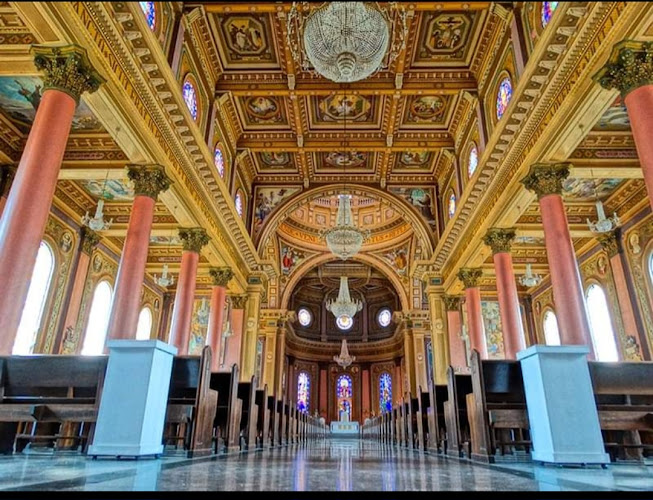
Basilica St. Antônio de Pádua Shrine
About Basilica St. Antônio de Pádua Shrine
Description
The Basilica St. Antônio de Pádua Shrine is one of those places that quietly works its way into your memory. Not because it’s flashy or loud, but because it slows you down without asking permission. Travelers often arrive expecting a traditional Catholic basilica, and yes, it is that. But it’s also a living space of devotion, habit, and small human moments that don’t always make it into guidebooks.
This shrine is dedicated to Saint Anthony of Padua, a saint many people know from childhood prayers or whispered pleas for lost things. And funny enough, I once overheard a visitor joking that they came to thank Saint Anthony for helping them find their passport the day before. Whether you believe or not, those little stories are everywhere here. You feel them in the air, especially during quieter hours.
Architecturally, the basilica holds its own. The façade feels grounded and confident, not overly ornate, but clearly intentional. Step inside and the atmosphere shifts. Light filters in softly, bouncing off stone and polished surfaces in a way that feels calm, almost hushed. It’s peaceful, yes, but not stiff. People come and go, some kneeling, some wandering, others just sitting and staring ahead. And that mix makes it feel real.
What stands out most is how the shrine functions both as a religious center and a tourist attraction without fully committing to either extreme. It doesn’t feel commercialized, yet it’s prepared for visitors. Restrooms are available. Parking is straightforward. Accessibility has clearly been thought through, which I appreciate more and more as I travel and watch others struggle where they shouldn’t have to.
There’s also an emotional honesty here. Not every corner is perfectly maintained, and that’s okay. It reminds you this place is used daily, not preserved behind glass. Some reviews from travelers hint at mixed expectations, usually from those expecting grandeur on the scale of Europe’s biggest basilicas. But if you arrive open-minded, you’ll likely leave impressed by something quieter and more personal.
Key Features
- Striking basilica architecture with a balanced, non-overwhelming design
- Dedicated shrine to Saint Anthony of Padua, drawing pilgrims year-round
- Peaceful interior spaces ideal for reflection, prayer, or quiet observation
- Wheelchair accessible entrance, restrooms, and parking areas
- Both free and paid parking options available nearby
- On-site restrooms, which honestly matter more than most guides admit
- A welcoming atmosphere for travelers, not just practicing Catholics
- Regular services and moments of communal worship
Best Time to Visit
Timing makes a big difference here. Early mornings are my personal favorite. The basilica feels like it’s exhaling after the night, and the quiet is almost tangible. If you arrive just after opening hours, you might share the space with a handful of locals and maybe a traveler or two who did their homework.
Late afternoons are another good option, especially if you enjoy watching light shift across interiors. There’s something grounding about sitting in a pew as the day winds down. And yes, it can get busier around traditional service times, which isn’t a bad thing if you want to see the shrine in its most active, communal state.
If you’re planning around Saint Anthony’s feast day in June, expect crowds. Pilgrims travel from far and wide, and the energy changes completely. It’s louder, more emotional, sometimes chaotic. But it’s also fascinating. Even if you’re not religious, witnessing that level of devotion is powerful.
Weekdays are generally calmer than weekends. And if you’re the type who likes to linger, avoid peak tourist hours. Nobody will rush you out, but the quieter moments allow the space to do its thing. Trust me on that.
How to Get There
Getting to the Basilica St. Antônio de Pádua Shrine is relatively straightforward, which makes it an easy addition to a travel itinerary. Whether you’re driving or using local transportation, signage and local awareness make navigation simple enough, even if you don’t speak much of the local language.
If you’re driving, parking is not the nightmare it can be at other major religious sites. There’s a mix of free and paid parking options, and they’re generally well-organized. I’ve been to places where parking alone made me want to turn around. This is not one of them.
Public transportation users will find the area accessible, though exact routes depend on where you’re coming from. Asking locals is surprisingly effective. People tend to know the shrine and are usually happy to point you in the right direction. And yes, sometimes you’ll get three different directions. That’s part of the adventure.
For those with mobility needs, the basilica does a commendable job. Wheelchair accessible entrances, restrooms, and parking areas make it one of the more inclusive religious attractions I’ve visited. It’s not perfect, but it’s clearly trying, and that counts.
Tips for Visiting
First things first: dress respectfully. You don’t need to overthink it, but this is an active place of worship. Shoulders covered, shorts not too short, you know the drill. If you forget, you won’t be the first, but it’s better to blend in.
Bring a little patience. Not everything runs on tourist time here. Services may start late. Areas may close briefly. And sometimes, you’ll need to wait while a group finishes praying. Instead of fighting it, lean into it. You’re not here to rush.
Photography is usually allowed, but be discreet. I’ve seen visitors get a little too enthusiastic, climbing into aisles or hovering near people in prayer. Don’t be that person. A few thoughtful photos are better than fifty rushed ones anyway.
If you’re traveling with kids, this shrine can actually work well. The open spaces and calm environment tend to settle them more than you’d expect. I once watched a child sit quietly for ten whole minutes, which felt like a small miracle in itself.
Plan to sit. Not just visit, but sit. Even if you’re not religious, give yourself ten minutes on a bench or pew. Let your thoughts wander. Some of my best travel memories come from moments where I wasn’t doing anything at all.
And finally, don’t overhype it in your mind. The Basilica St. Antônio de Pádua Shrine doesn’t need grand expectations. It works best when you meet it where it is: peaceful, sincere, a little worn, and quietly meaningful. If you allow that, it just might surprise you.
Key Features
- Striking basilica architecture with a balanced, non-overwhelming design
- Dedicated shrine to Saint Anthony of Padua, drawing pilgrims year-round
- Peaceful interior spaces ideal for reflection, prayer, or quiet observation
- Wheelchair accessible entrance, restrooms, and parking areas
- Both free and paid parking options available nearby
- On-site restrooms, which honestly matter more than most guides admit
- A welcoming atmosphere for travelers, not just practicing Catholics
- Regular services and moments of communal worship
More Details
Updated December 31, 2025
Table of Contents
- Description
- Key Features
- Best Time to Visit
- How to Get There
- Tips for Visiting
- Key Highlights
- Location
- Places to Stay Near Basilica St. Antônio de Pádua Shrine
- Find and Book a Tour
- Explore More Travel Guides
- Nearby Places You Might Like
- Traveler Reviews for Basilica St. Antônio de Pádua Shrine
- Share Your Experience
Description
The Basilica St. Antônio de Pádua Shrine is one of those places that quietly works its way into your memory. Not because it’s flashy or loud, but because it slows you down without asking permission. Travelers often arrive expecting a traditional Catholic basilica, and yes, it is that. But it’s also a living space of devotion, habit, and small human moments that don’t always make it into guidebooks.
This shrine is dedicated to Saint Anthony of Padua, a saint many people know from childhood prayers or whispered pleas for lost things. And funny enough, I once overheard a visitor joking that they came to thank Saint Anthony for helping them find their passport the day before. Whether you believe or not, those little stories are everywhere here. You feel them in the air, especially during quieter hours.
Architecturally, the basilica holds its own. The façade feels grounded and confident, not overly ornate, but clearly intentional. Step inside and the atmosphere shifts. Light filters in softly, bouncing off stone and polished surfaces in a way that feels calm, almost hushed. It’s peaceful, yes, but not stiff. People come and go, some kneeling, some wandering, others just sitting and staring ahead. And that mix makes it feel real.
What stands out most is how the shrine functions both as a religious center and a tourist attraction without fully committing to either extreme. It doesn’t feel commercialized, yet it’s prepared for visitors. Restrooms are available. Parking is straightforward. Accessibility has clearly been thought through, which I appreciate more and more as I travel and watch others struggle where they shouldn’t have to.
There’s also an emotional honesty here. Not every corner is perfectly maintained, and that’s okay. It reminds you this place is used daily, not preserved behind glass. Some reviews from travelers hint at mixed expectations, usually from those expecting grandeur on the scale of Europe’s biggest basilicas. But if you arrive open-minded, you’ll likely leave impressed by something quieter and more personal.
Key Features
- Striking basilica architecture with a balanced, non-overwhelming design
- Dedicated shrine to Saint Anthony of Padua, drawing pilgrims year-round
- Peaceful interior spaces ideal for reflection, prayer, or quiet observation
- Wheelchair accessible entrance, restrooms, and parking areas
- Both free and paid parking options available nearby
- On-site restrooms, which honestly matter more than most guides admit
- A welcoming atmosphere for travelers, not just practicing Catholics
- Regular services and moments of communal worship
Best Time to Visit
Timing makes a big difference here. Early mornings are my personal favorite. The basilica feels like it’s exhaling after the night, and the quiet is almost tangible. If you arrive just after opening hours, you might share the space with a handful of locals and maybe a traveler or two who did their homework.
Late afternoons are another good option, especially if you enjoy watching light shift across interiors. There’s something grounding about sitting in a pew as the day winds down. And yes, it can get busier around traditional service times, which isn’t a bad thing if you want to see the shrine in its most active, communal state.
If you’re planning around Saint Anthony’s feast day in June, expect crowds. Pilgrims travel from far and wide, and the energy changes completely. It’s louder, more emotional, sometimes chaotic. But it’s also fascinating. Even if you’re not religious, witnessing that level of devotion is powerful.
Weekdays are generally calmer than weekends. And if you’re the type who likes to linger, avoid peak tourist hours. Nobody will rush you out, but the quieter moments allow the space to do its thing. Trust me on that.
How to Get There
Getting to the Basilica St. Antônio de Pádua Shrine is relatively straightforward, which makes it an easy addition to a travel itinerary. Whether you’re driving or using local transportation, signage and local awareness make navigation simple enough, even if you don’t speak much of the local language.
If you’re driving, parking is not the nightmare it can be at other major religious sites. There’s a mix of free and paid parking options, and they’re generally well-organized. I’ve been to places where parking alone made me want to turn around. This is not one of them.
Public transportation users will find the area accessible, though exact routes depend on where you’re coming from. Asking locals is surprisingly effective. People tend to know the shrine and are usually happy to point you in the right direction. And yes, sometimes you’ll get three different directions. That’s part of the adventure.
For those with mobility needs, the basilica does a commendable job. Wheelchair accessible entrances, restrooms, and parking areas make it one of the more inclusive religious attractions I’ve visited. It’s not perfect, but it’s clearly trying, and that counts.
Tips for Visiting
First things first: dress respectfully. You don’t need to overthink it, but this is an active place of worship. Shoulders covered, shorts not too short, you know the drill. If you forget, you won’t be the first, but it’s better to blend in.
Bring a little patience. Not everything runs on tourist time here. Services may start late. Areas may close briefly. And sometimes, you’ll need to wait while a group finishes praying. Instead of fighting it, lean into it. You’re not here to rush.
Photography is usually allowed, but be discreet. I’ve seen visitors get a little too enthusiastic, climbing into aisles or hovering near people in prayer. Don’t be that person. A few thoughtful photos are better than fifty rushed ones anyway.
If you’re traveling with kids, this shrine can actually work well. The open spaces and calm environment tend to settle them more than you’d expect. I once watched a child sit quietly for ten whole minutes, which felt like a small miracle in itself.
Plan to sit. Not just visit, but sit. Even if you’re not religious, give yourself ten minutes on a bench or pew. Let your thoughts wander. Some of my best travel memories come from moments where I wasn’t doing anything at all.
And finally, don’t overhype it in your mind. The Basilica St. Antônio de Pádua Shrine doesn’t need grand expectations. It works best when you meet it where it is: peaceful, sincere, a little worn, and quietly meaningful. If you allow that, it just might surprise you.
Key Highlights
- Striking basilica architecture with a balanced, non-overwhelming design
- Dedicated shrine to Saint Anthony of Padua, drawing pilgrims year-round
- Peaceful interior spaces ideal for reflection, prayer, or quiet observation
- Wheelchair accessible entrance, restrooms, and parking areas
- Both free and paid parking options available nearby
- On-site restrooms, which honestly matter more than most guides admit
- A welcoming atmosphere for travelers, not just practicing Catholics
- Regular services and moments of communal worship
Location
Places to Stay Near Basilica St. Antônio de Pádua Shrine
Find and Book a Tour
Explore More Travel Guides
No reviews found! Be the first to review!
Traveler Reviews for Basilica St. Antônio de Pádua Shrine
There are no reviews yet. Be the first one to write one.
Have you visited Basilica St. Antônio de Pádua Shrine? Help other travelers by sharing your review.
You Might Also Like
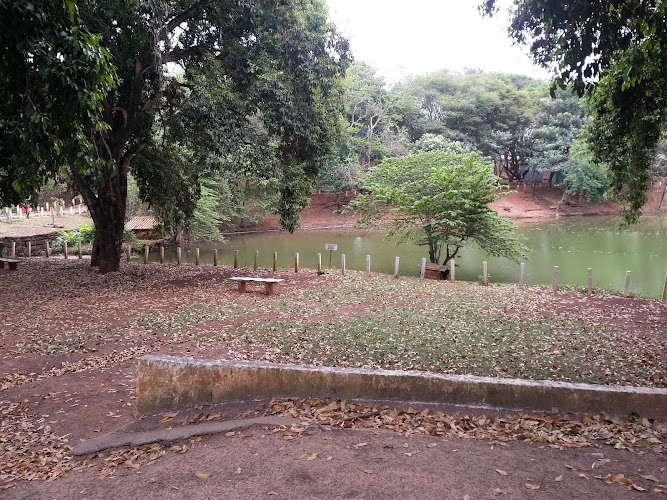
Bosque das Nascentes
Jardim Botânico Municipal de Americana "Prefeito Carroll Meneghel"
Find Accommodations Nearby
Recommended Tours & Activities
Visitor Reviews
There are no reviews yet. Be the first one to write one.
Share Your Experience
Have you visited Basilica St. Antônio de Pádua Shrine? Help other travelers by leaving a review.